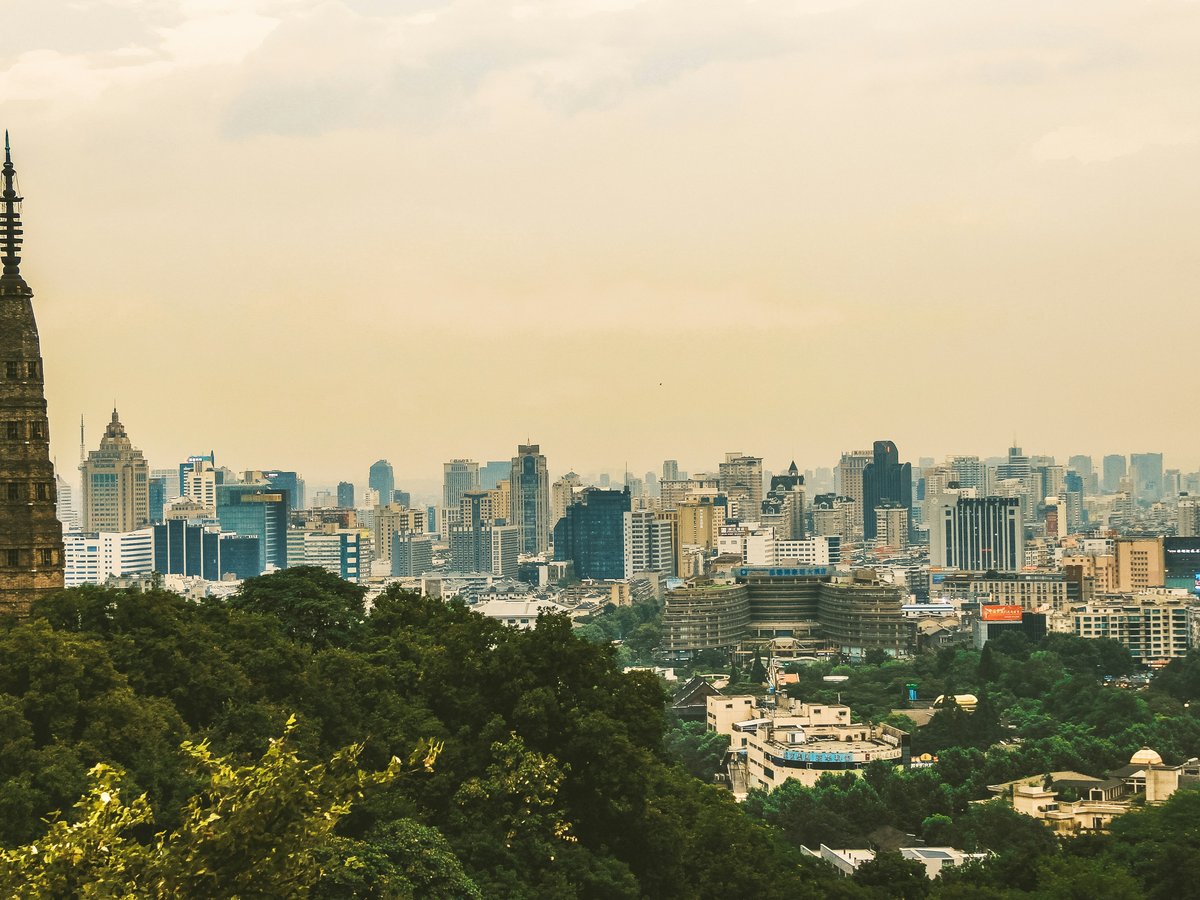
Nanjing's essential sights are less about any single landmark than about layers of the city's past sitting close together. The city wall dates from 1368, the mausoleum of the Hongwu Emperor is part of a UNESCO World Heritage Site, a mausoleum stands on Zijin Shan, a museum fills a former presidential palace, and a mosque dates from 1388. Two Yangtze crossings, one from 1968 and one from 2012, show how the city has dealt with its river, and between them come Buddhist temples on the national key list and a Confucius temple. This list is for travellers willing to spend their days walking stone, climbing steps and reading the city one era at a time. It is not for anyone who wants a single photo and a quick exit. We have ranked the places that repay a visit best, and the opinions in each entry are ours alone. Go slowly, start early, and let the tombs and walls set your pace.
-
1 Sun Yat-sen Mausoleum
A mausoleum on Zijin Shan, protected as a national-level historical and cultural site
High on Zijin Shan, the Sun Yat-sen Mausoleum makes for Nanjing's most serious morning out. The state lists it as a Major Historical and Cultural Site Protected at the National Level, and that status shows in how carefully the place is kept. Skip the midday tour-bus wave. The locals go early, before the approach fills and the light goes flat. Check the official site at zschina.org before you set out, because arrangements for visitors change and the hill does not forgive a wasted trip. Wear proper shoes, bring water, and give it a full morning rather than squeezing it between other stops. The climb is part of the point: you arrive slower, quieter and more ready to pay attention than when you started.
Major Historical and Cultural Site Protected at the National Level
-
2 Ming Xiaoling
The mausoleum of the Hongwu Emperor, part of a UNESCO World Heritage Site
Anyone curious about imperial Nanjing should start at Ming Xiaoling, the mausoleum of the Hongwu Emperor, which forms part of a UNESCO World Heritage Site, and that designation is well earned. This is a tomb that wants to be walked, not just observed. Skip the electric carts if your legs allow it; the approach is the experience, and riding through it strips away the sense of scale entirely. Come in the soft hours of morning or late afternoon, take your time over the stonework, and resist the urge to tick it off in thirty minutes. The visitors who rush leave with photographs. The ones who linger leave understanding why an emperor chose to be remembered this way.
Part of a UNESCO World Heritage Site
-
3 Presidential Palace of Nanjing
A museum inside a former presidential palace, protected at the national level
Few buildings in the city carry two job titles as openly as the Presidential Palace of Nanjing, which is both a museum and a former presidential palace, listed as a Major Historical and Cultural Site Protected at the National Level. It rewards the visitor who reads the rooms rather than races through them. If you are here for a selfie at the gate, the visit is not worth your time; the interest lies in the offices, corridors and courtyards where the country's modern politics took shape. Give it two unhurried hours, and go on a weekday if you can, because weekend crowds turn quiet rooms into a slow-moving queue. It is the best single place in the city to see how Nanjing's recent past was governed and staged.
Major Historical and Cultural Site Protected at the National Level
-
4 Nanjing Yangtze River Bridge
A Yangtze crossing dating from 1968
The Nanjing Yangtze River Bridge has carried the city across its great river since 1968. It is a bridge in Nanjing, and on paper that sounds like infrastructure rather than sightseeing, but in person it is a monument to its era, built at a scale that still reads as a statement. A quick drive across misses the point; see it from the riverbank first, then on foot, where the width of the river and the ambition of the structure come together properly. Late afternoon is best, when the water turns silver and the traffic noise sounds less like a commute and more like the city's pulse. Bring patience for the walk and a jacket for the wind.
Dates from 1968
-
5 City Wall of Nanjing
A wall built around the city, dating from 1368 and protected at the national level
Wind rolls along the top of the City Wall of Nanjing, a wall built around the city that dates from 1368 and now a Major Historical and Cultural Site Protected at the National Level. Walking a stretch of it is the clearest way to feel how old this city's ambitions run. Avoid the busiest gate sections at weekends; the locals prefer the quieter stretches, where you can walk for long minutes hearing nothing but your own steps and the traffic far below. Pick one section and walk it properly rather than hopping between photo points. Go near sunset, when the stone warms in colour and the modern skyline sits behind the old masonry. Few places make the gap between centuries this easy to see.
Dates from 1368 · Major Historical and Cultural Site Protected at the National Level
-
6 Jiming Temple
A working temple compound for an unhurried visit
Visitors who reach Jiming Temple find a temple compound rather than a single hall, and the best approach is to wander. Skip the rush to photograph every roofline; the locals go to sit, light incense, and take a slow lap, and you will get more from copying them than from chasing angles. Arrive early on a weekday, when the courtyards are calm and the city noise fades behind the walls. Dress modestly, keep your voice down, and treat it as a place of worship first and a sight second. It is a good counterweight to the grander tombs on this list: smaller, quieter, and better for an hour of stillness than for a checklist.
-
7 Ming Palace
A palace site protected at the national level
Protected at the national level, the Ming Palace is a Major Historical and Cultural Site that asks more of your imagination than most stops on this list. It is a palace, and that plain word is the right frame: come to think about power and scale rather than to tour polished interiors. If you need restored halls and gilded rooms to feel something, give it a miss; come instead with a little reading done in advance, walk the grounds slowly, and let the space do the work. Early morning suits it best, when the light is low and the site feels most like a place where an empire once kept its court. It is a thinking traveller's stop, and all the better for it.
Major Historical and Cultural Site Protected at the National Level
-
8 Qixia Temple
One of the National Key Buddhist Temples in Han Chinese Area
Serious students of Buddhism make the trip to Qixia Temple, listed among the National Key Buddhist Temples in Han Chinese Area. The building in Nanjing dates from 1919 and remains a place of practice rather than a museum piece. Skip the peak-weekend crowds; the locals prefer a weekday morning, when the halls are calm and the chanting carries. Give it half a day, because getting there is part of the commitment and rushing defeats the purpose. Dress modestly, move quietly, and leave room to sit for a while. Treat it as a retreat from the city, not another stop to clear before lunch.
Dates from 1919 · National Key Buddhist Temples in Han Chinese Area
-
9 Nanjing Fuzimiao
A Confucius temple at the heart of an old-city outing
Crowds hum around Nanjing Fuzimiao, a Confucius temple in Nanjing, from late morning onward. The temple is the reason to come, and it holds its dignity even when the surrounding streets turn busy. Skip the souvenir stalls and the generic snack lines; the value here is the temple itself and the sense of scholarship it was built to honour. Come early, see the halls before the crowds build, then decide whether you want to linger in the bustle afterwards. If you return after dark, treat it as an atmosphere walk, not a history lesson. Either way, keep your expectations honest: this is a living, popular place, not a quiet sanctuary, and that is part of its character.
-
10 Linggu Temple
One of the National Key Buddhist Temples in Han Chinese Area
Leaves rustle over the paths to Linggu Temple, a building in Nanjing listed among the National Key Buddhist Temples in Han Chinese Area. It is the calmest stop on this list and the one most likely to slow your heartbeat. Don't bother with it as a quick add-on to a packed day; it works best as a long, deliberate walk, with time to sit and do nothing. The locals know it as a place to breathe, and the visitors who match that pace get the most from it. Come in the cooler months or early in the day, wear comfortable shoes, and leave your schedule loose. It is less spectacular than the tombs and better for it: a place to recover from sightseeing rather than add to it.
National Key Buddhist Temples in Han Chinese Area
-
11 Nanjing Qixiashan Yangtze River Bridge
A road bridge over the Yangtze dating from 2012
The Nanjing Qixiashan Yangtze River Bridge is a road bridge in Nanjing that dates from 2012, and we'd approach it as a view rather than a destination. It earns its place as the modern bookend to the city's older crossing, a clear picture of how Nanjing keeps building over its river. Walking it is not worth the effort; this is a structure for traffic, and the pleasure lies in seeing it from a distance, ideally as the evening light fades over the water. Fold it into a day spent on that side of the city rather than making a special trip, and seen alongside the older bridge, it tells a short and useful story about the city's ambitions across six decades.
Dates from 2012
-
12 Jinjue Mosque
A mosque dating from 1388
Dating from 1388, the Jinjue Mosque is a mosque in Nanjing, Jiangsu, and one of the most quietly surprising entries on this list. It shows a side of the city's long history that most itineraries skip entirely, a reminder that Nanjing's story runs well beyond imperial tombs and Buddhist halls. Visit respectfully: dress modestly, avoid prayer times, and ask before taking photographs. It suits travellers who want to understand the city's communities, not just its monuments. Give it a short, attentive visit, and you leave with a fuller sense of who has called Nanjing home over the centuries.
Dates from 1388
Last verified by automated review (v1.7.2_nanjingms-1015-5006-20261019022553) on . What is automated review?