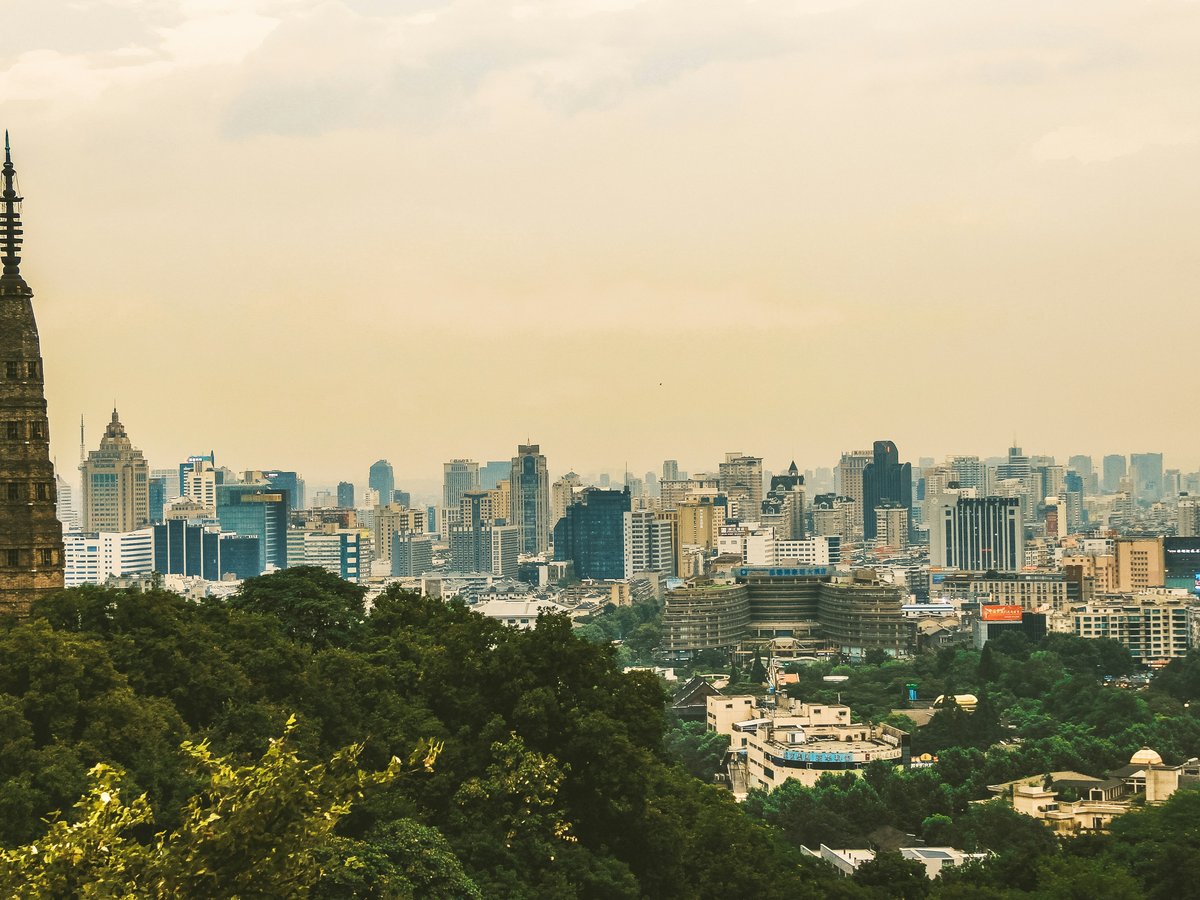
Nanjing spreads along the south bank of the Yangtze River, still partly ringed by roughly 25 kilometers of surviving Ming dynasty city wall (the original circuit ran about 35 kilometers when it was completed in 1393). The commercial center at Xinjiekou sits in the middle of the old city, with the Qinhuai River quarter to the south and Zijin Shan (Purple Mountain, 448 meters) rising to the east. Most visitors end up moving between 3 or 4 zones without needing to plan too carefully. The metro currently runs 12 lines, and nearly everything worth seeing falls within 40 minutes of Xinjiekou station. Nanjing tends to feel manageable compared to Shanghai or Beijing. The blocks are walkable once you're in the right district, though summer humidity above 90% will slow anyone down. Worth noting, solo-traveler safety scores 6.8/10 (see the TTDI Solo-Safety Index), and most central neighborhoods feel calm after dark. As of late September 2026, temperatures sit around 22°C with persistent drizzle and 95% humidity, so a light rain jacket earns its luggage space.
Neighborhoods
-
Xinjiekou
Nanjing's commercial center is loud, dense, and built to sell you things. Deji Plaza anchors the northwest corner of the Xinjiekou roundabout, 18 stories of luxury retail sitting above the metro interchange where Lines 1 and 2 cross. The sidewalks get packed by mid-morning, delivery scooters weave through pedestrian traffic, and the smell of grilled squid drifts between storefronts. The architecture is mostly post-2000 glass and steel, though a few Republican-era buildings survive along Zhongshan Road. At night the whole intersection glows with LED signage reflected off wet pavement. A 10-minute walk south on Shigu Road, the Cathedral of the Immaculate Conception (founded 1870) sits quietly behind its courtyard wall, largely overlooked by the shopping crowds heading the other direction.
- Best for
- Shoppers and first-time visitors who want maximum transit convenience, chain hotel options, and the widest selection of restaurants within walking distance
- Key streets
- Zhongshan Road runs north-south as the main spine. Hanzhong Road heads west toward Nanjing Railway Station. Hunan Road, about a 10-minute walk north, is known for restaurants and smaller shops. The underground shopping passage connecting the metro exits is worth a wander when the weather turns.
-
Fuzimiao (Confucius Temple)
The old Qinhuai River quarter sits about 2 kilometers south of Xinjiekou, built around the Confucius Temple that dates to 1034 CE. Tourist boats line the canal, and the whole strip along Gongyuan Street is thick with souvenir stalls and snack vendors. To be fair, it does feel commercial. But the food pulls locals too. The salt-water duck shops along the canal are the real draw. You'll smell the five-spice brine before you see the hanging carcasses in the shop windows. At night, red lanterns reflect off the Qinhuai and the old stone bridges fill with couples taking photos. The textures shift after 22:00, when the tourist stalls close and the river goes quiet.
- Best for
- Couples, food-focused travelers, and anyone who wants to eat through Nanjing's signature dishes in a single evening
- Key streets
- Gongyuan Street is the main tourist corridor. Pingjiang Fu Road runs south along the canal. Zhanyuan Road leads to the Zhan Garden, a Ming-era private garden behind a wall you might walk right past. Free entry some mornings.
-
Gulou (Drum Tower)
The university district north of Xinjiekou clusters around Nanjing University's Gulou Campus and the old Drum Tower at the intersection of Beijing West Road and Zhongshan Road. The pace here is noticeably slower. Students from Nanjing University and Nanjing Normal University fill the coffee shops along Shanghai Road, and the side streets have the density of small restaurants, print shops, and fruit vendors that a campus neighborhood generates. The architecture mixes 1950s Soviet-influenced university buildings with older Republican-era houses along the leafier blocks. You can hear bicycle bells more than car horns. Qingliang Park, on a low hill toward the western edge of the district, offers shaded walking paths and a Buddhist temple that gets little foot traffic on weekday mornings.
- Best for
- Budget travelers, readers, and anyone who wants a quieter base with local character and quick metro access to the rest of the city
- Key streets
- Shanghai Road is lined with independent cafes and secondhand bookshops. Guangzhou Road heads east toward the hospital district. Beijing West Road connects Gulou to Xuanwu Lake Park in about a 15-minute walk. The small lanes south of the Drum Tower have a few courtyard-style guesthouses.
-
Zijin Shan (Purple Mountain)
This is not a neighborhood you stay in. It is the 30-square-kilometer forested mountain that dominates Nanjing's eastern edge and holds the city's heavyweight historical sites. Sun Yat-sen Mausoleum sits at 158 meters elevation, and getting there means climbing 392 stone steps from the memorial archway. Ming Xiaoling, the tomb of the Hongwu Emperor who founded the Ming dynasty, spreads across the southern slope with a Sacred Way lined by stone animals carved in the 1380s. The Nanjing Botanical Garden, Memorial Sun Yat-Sen occupies the eastern slopes with 600+ plant species across the hillside. The air smells different up here, pine resin and damp earth, especially after rain. Cicadas are deafening in July and August.
- Best for
- History-focused visitors, hikers, and anyone willing to dedicate a full day to walking forested paths between major sites
- Key streets
- Linggu Road connects the three main sites (allow 3-4 hours on foot for the full loop). A cable car from the south gate saves about 40 minutes of uphill walking. Zhongshan Gate on the western side is the main metro-accessible entry point via Xiamafang station on Line 2.
-
Changfu Jie and the 1912 District
The area around the Presidential Palace of Nanjing occupies a walled compound that served as the seat of government for the Republic of China. The 1912 Bar District sits immediately east, named for the year the republic was established. Bars and restaurants fill converted Republican-era buildings along a pedestrianized lane, and the crowd skews young, mostly 20s and 30s, especially on Friday and Saturday nights. Music spills from open doorways, cocktails run 45-70 CNY, and the architecture is low-rise grey brick. During the day it feels almost empty. That contrast is part of the appeal. About 1.5 kilometers east along Zhongshan East Road, the Nanjing Museum (founded 1950) anchors the cultural end of this corridor. The ruins of the Ming Palace sit between the two, reduced to scattered stone foundations but still worth the 10-minute detour.
- Best for
- Nightlife seekers, history buffs combining the Presidential Palace with evening drinks, and travelers in their 20s and 30s looking for a social scene
- Key streets
- Changjiang Hou Jie is the main bar street. Taiping Bei Road runs north toward Xuanwu Lake. The Presidential Palace entrance faces Changjiang Road. Zhongshan East Road connects the district to the Nanjing Museum.
-
Hexi New Town
The modern business district west of the old city feels like it was built in the last 15 years, because it mostly was. Glass towers, wide boulevards, and the Nanjing Olympic Sports Center define the skyline. The Jiangsu Nanjing Broadcast Television Tower rises 318 meters and is visible from most of Hexi's streets. The Memorial Hall of the Victims in Nanjing Massacre by Japanese Invaders (founded 1985) sits on the eastern edge of the district along Shuiximen Street, a solemn counterweight to the commercial development surrounding it. The sidewalks are clean and broad but can feel underpopulated compared to Xinjiekou. That said, the newer hotels here tend to be 20-30% cheaper than equivalent rooms in the old center, and the metro reaches Xinjiekou in about 25 minutes.
- Best for
- Business travelers, families wanting newer hotel rooms with more space, and anyone who prefers a quiet, modern base over historic atmosphere
- Key streets
- Jiangdong Middle Road is the main commercial artery. The Baojia Garden area along the river has a 3-kilometer walking path that fills with joggers in the early morning. Jiqingmen Avenue connects east to the old city wall at Jiqingmen Gate.
-
Laomendong
A restored old quarter in the southeast corner of the Ming city walls, Laomendong reopened around 2013 after years of renovation. The narrow lanes are paved with grey flagstone, the shopfronts sell calligraphy brushes and handmade noodles, and the buildings are two-story Jiangnan style with white walls and dark timber framing. It is quiet on weekday mornings, genuinely peaceful. You can hear birds and the occasional clatter of mahjong tiles from upstairs windows. Mind you, the restoration is thorough enough that it sometimes feels like a film set. But the tea houses serve real Yuhua tea, and the older residents from surrounding blocks still walk through on their morning errands.
- Best for
- Photographers, architecture enthusiasts, and travelers who want a slower pace without leaving the city center. Families with younger children will find the flat, car-free lanes easy to navigate.
- Key streets
- Bianyingfang is the main pedestrian lane running through the center. Jiankang Road borders the district on the north side and connects to the Fuzimiao area in about a 15-minute walk. The eastern edge backs against a restored section of the Ming city wall where you can climb up for views over the neighborhood rooftops.
-
Jiangxinzhou (River Heart Island)
A large sandbar island in the Yangtze south of the main city, Jiangxinzhou was mostly farmland until the Nanjing Eye pedestrian bridge opened in 2014. The island now has a waterfront park, weekend food markets, and open green space that the rest of Nanjing lacks. The wind off the river carries a faint mineral smell, and in autumn the ginkgo trees along the waterfront path turn gold by late October. The whole island still feels like a work in progress, with construction cranes on the eastern end and half-finished residential towers. But the finished sections are pleasant for walking, and the quiet is a genuine contrast to the old city's density.
- Best for
- Families with kids who need running-around space, joggers, and anyone looking for a quiet afternoon away from traffic and concrete
- Key streets
- The riverside greenway loops around the western tip of the island, roughly 5 kilometers. Qingnian Road crosses the island north-south. The Nanjing Eye bridge is pedestrian-only and connects to the Hexi riverfront park, so you can combine both districts in one afternoon.
FAQ
Where should I stay in Nanjing for the first time?
Xinjiekou gives the best transit access, with two metro lines crossing directly beneath the roundabout. Most major sights fall within 30 minutes by subway from that station. Hotel prices in the Xinjiekou area run from about 300 CNY for a mid-range chain to 900 CNY and up for international brands. If you prefer a quieter base, the Gulou neighborhood near Nanjing University is one stop north on Line 1 and rooms tend to cost 15-20% less for comparable quality.
Is Nanjing a good city for families with children?
Family friendliness scores 6.5/10 (see the TTDI Family-Friendliness Index). The metro system, flat sidewalks in the central districts, and green spaces at Xuanwu Lake Park and Zijin Shan all work well with kids. Laomendong's car-free lanes suit strollers. The main challenge is summer heat, when temperatures regularly pass 38°C in July and August, making long outdoor days difficult for younger children. Spring (late March through May) and autumn (September through November) are the practical windows for family visits.
How walkable is Nanjing for getting between neighborhoods?
The old city center is more walkable than most Chinese cities of comparable size (population around 9.5 million in the urban core). You can walk from Xinjiekou to the Fuzimiao area in about 25 minutes, or from Gulou to Xuanwu Lake in 15. Zijin Shan and Hexi require the metro or a taxi. The metro runs from roughly 06:00 to 23:00 on most lines, and single-ride fares range from 2 to 7 CNY depending on distance. Wikivoyage's transit section has useful detail on routes and passes (https://en.wikivoyage.org/wiki/Nanjing#Get_around).
What is the LGBTQ+ travel experience like in Nanjing?
LGBTQ+ friendliness scores 2.5/10 (sourced from TTDI's editorial rubric). Nanjing has a small number of welcoming spaces, mostly in the 1912 District and around the university neighborhoods, but public same-sex affection draws stares outside those pockets. China has no legal recognition of same-sex partnerships as of 2026. The practical situation is one of tolerance without acceptance in most daily interactions. Wikivoyage's safety section provides broader context on navigating social norms (https://en.wikivoyage.org/wiki/Nanjing#Stay_safe).
Is Nanjing practical for digital nomads or remote workers?
Digital-nomad suitability scores 3.5/10 (sourced from TTDI's editorial rubric). Cafe wifi in the Gulou and Xinjiekou areas is generally reliable enough for video calls, and coworking spaces near Xinjiekou (Distrii and a few local operators) charge around 80-120 CNY per day. The bigger friction points are the VPN requirement for accessing Google, Slack, and most Western platforms, plus limited English in daily life outside the university district. Long-stay visa options for freelancers remain restricted in 2026.
What local dishes should I try and where do I find them?
Nanjing's signature foods are salt-water duck (yanshui ya), duck-blood vermicelli soup (yaxie fensi tang), and pan-fried beef dumplings (niurou jian jiao). The Fuzimiao area concentrates the most options in one walkable stretch, though prices run higher along the river as noted in the neighborhood section above. For a more local experience, the student-oriented noodle shops near Nanjing University's north gate on Yinxian Road serve dependable Jiangsu cooking at campus prices. Wikivoyage's food section covers more options and dietary notes (https://en.wikivoyage.org/wiki/Nanjing#Eat).
Last verified by automated review (v1.7.2) on . What is automated review?