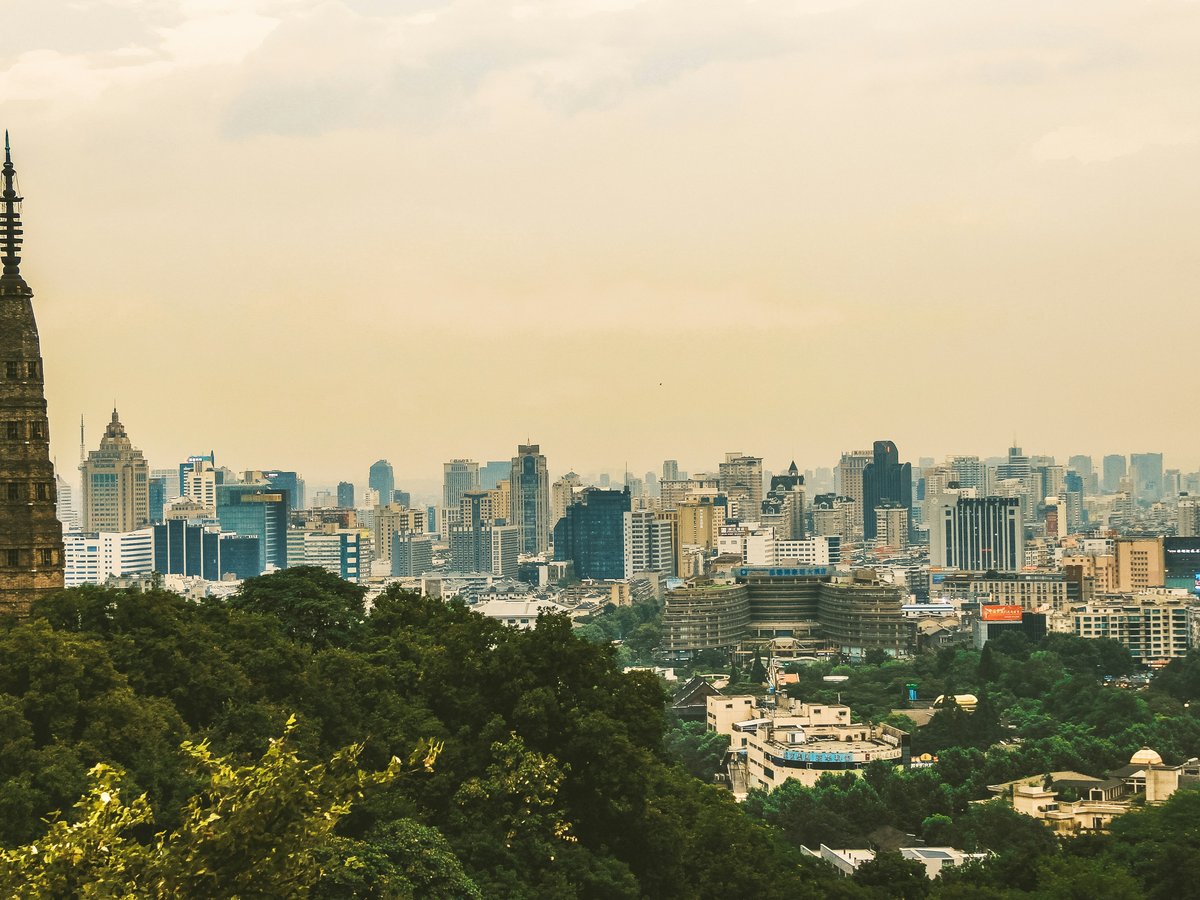
Nanjing has been a trading city since the Ming dynasty established its capital here in 1368, and the commercial instincts run deep. Three products define the city's craft reputation. Yunjin brocade, rain flower stones, and gold leaf have all been made here for centuries, and all three are still produced locally in quantities that supply much of China. Modern retail concentrates at Xinjiekou, which ranks among the busiest commercial intersections in eastern China. South of there, the Confucius Temple district handles the traditional and tourist end along the Qinhuai River. Nanjing is not where you chase the latest global fashion releases. Shanghai and Beijing still get those first. What the city offers instead is centuries-old craft traditions, distinctive food products, and, at roughly 6.7 CNY to 1 USD, pricing that tends to feel very accessible.
Shopping districts
-
Xinjiekou
mixed, from luxury to budgetXinjiekou sits at the intersection of Zhongshan Road and Hanzhong Road, functioning as Nanjing's commercial core. Deji Plaza, on the east side, ranks among China's highest-grossing luxury malls, with dedicated floors for brands like Hermès, Louis Vuitton, and Cartier. Across the intersection, Golden Eagle and Central Emporium anchor the mid-range tier. Underground corridors connecting the metro exits hum with pop music from hundreds of small booths selling affordable fashion at 50-200 CNY per piece. This is where Nanjing's university students do most of their browsing. The foot traffic is dense on weekends. Both Metro Line 1 and Line 2 stop directly at Xinjiekou.
Best for: Full-spectrum shopping, from high-end luxury to student-budget fashion
-
Confucius Temple (Fuzimiao)
mid-range to tourist-premiumThe Confucius Temple district stretches along both banks of the Qinhuai River, south of Jiankang Road. Tourist shops line the pedestrian streets, leaning heavily into traditional souvenirs. Rain flower stones, calligraphy sets, silk scarves, and loose-leaf tea fill the storefronts. The smell of duck fat and sesame oil drifts from the food stalls along the eastern walkway. Prices here tend to run higher than at Xinjiekou for comparable items, because foot traffic is almost entirely visitor-driven. That said, the evening atmosphere, when the wooden-fronted shops light up along the water, makes a few marked-up purchases feel reasonable. Bargaining is expected at the smaller stalls.
Best for: Traditional crafts, souvenirs, and evening atmosphere along the Qinhuai River
-
Hunan Road
mid-rangeHunan Road runs north-south through the Gulou District, about 2 km northwest of Xinjiekou. Mature plane trees shade the pedestrian stretch of this mid-range commercial street, which peaked in the early 2000s and has settled into a comfortable rhythm. Department stores and chain retailers line the main strip. Side alleys hold smaller boutiques selling local designers' clothing at 200-500 CNY per piece. Foot traffic is lighter than the city center, which means you can browse without being shouldered aside. Shiziqiao Food Street sits within a 5-minute walk, so the area pairs well with an afternoon of eating and shopping.
Best for: Relaxed browsing with fewer tourists and nearby food options
-
Laomendong
mid-rangeLaomendong sits south of Zhonghua Gate, rebuilt to recreate the wooden and brick architecture of late-Qing Nanjing. Narrow lanes hold a mix of artisan workshops, tea houses, and independent boutiques selling handmade jewelry, ceramics, and paper-cut art. The pace is noticeably slower than the commercial districts. You might spend an hour watching a craftsman shape a stone pendant in a workshop barely wider than a doorway. Most vendors here do not bargain, and prices are clearly marked. The block tends to close earlier than the malls, with most shops shutting by 21:00.
Best for: Artisan workshops, handmade goods, and slower-paced heritage shopping
-
Hexi New Town (Jianye District)
mid-rangeThe Hexi development zone, west of the old city center, is where Nanjing's newer residential and commercial towers have concentrated since roughly 2010. Shopping here caters to a growing local population rather than tourists. Large malls anchored by international mid-range brands, clean food courts, and family-oriented entertainment fill the area around Olympic Center metro station. Prices are comparable to Xinjiekou's mid-range offerings, but the atmosphere is quieter and more suburban. The area sits on Metro Line 2, which connects to Xinjiekou in about 15 minutes.
Best for: Everyday retail near newer hotels, with a local residential crowd
Markets
-
Chaotian Palace Antique Market
flea and antiquesThe antique market operates on weekend mornings in the grounds of the Chaotian Palace temple complex, about a 10-minute walk west of Xinjiekou. Vendors spread their goods on blankets and folding tables. You will find Cultural Revolution-era memorabilia, old coins, jade carvings, porcelain fragments, and calligraphy scrolls. The air smells like incense from the temple drifting over cigarette smoke from the dealers. Start bargaining at about 30-40% of the asking price and expect to settle somewhere around half. Most pieces are reproductions or recent craft, with genuine antiquities appearing rarely and requiring an experienced eye to identify.
Weekends, busiest 07:00-11:00
-
Confucius Temple Night Market
night marketThe night market fills the pedestrian streets around the Confucius Temple from early evening onward, with the densest crowds on weekends and holidays. Food stalls dominate the northern end, selling Nanjing specialties like duck blood vermicelli soup, tangbao (soup dumplings), and stinky tofu at 10-25 CNY per serving. The southern stretch has more souvenir and clothing vendors. In warmer months, the humidity off the Qinhuai River turns the whole area into something like a steam bath, and the crowd density on weekend evenings requires patience. Prices are tourist-adjusted but still modest by international standards.
Daily from around 18:00, busiest on weekends
-
Shiziqiao Food Street (Lion Bridge)
food streetShiziqiao runs about 200 meters near Hunan Road and packs in dozens of stalls and small restaurants serving Nanjing's duck-based cuisine and broader Jiangsu-style snacks. The smell of five-spice powder and sizzling oil hits you from the entrance. This street draws more locals than the Confucius Temple area, and prices reflect that difference. Most items run 10-40 CNY. The crowd thins after 21:00, but the best stalls sometimes sell out well before then.
Daily, peak hours 17:00-21:00
Souvenirs worth bringing home
Nanjing's most distinctive export is yunjin brocade, a silk-weaving tradition that UNESCO recognized as Intangible Cultural Heritage in 2009. Authentic pieces are handwoven on wooden draw looms whose design has not changed significantly since the 15th century. A small yunjin table runner or bookmark typically starts around 50-80 CNY, while full decorative panels can reach 2,000-10,000 CNY depending on complexity. The Nanjing Yunjin Museum shows the weaving process live and sells certified pieces in its gift shop. Gold leaf is the city's other signature craft. The Longtan district, east of the center, produces roughly 70% of China's total gold leaf output. Decorative gold leaf sheets, gold-flecked tea, and gold leaf bookmarks appear in shops throughout the Confucius Temple district and at the Nanjing Museum gift shop. That museum, established in 1950, stocks curated selections at fixed prices, which removes the guesswork on authenticity. Rain flower stones are polished agate pebbles named after the Yuhuatai area where they were traditionally collected. The natural color patterns inside each stone are unique, and a small polished specimen costs 20-50 CNY at a market stall. Stones with especially vivid or complex patterning sell for considerably more at specialty vendors. For food, vacuum-packed salt-water duck is the standard Nanjing take-home item. The cold-served, mildly briny duck has been a local staple since at least the Ming period. Pick it up at a local supermarket rather than a tourist shop for better pricing.
Practical tips
- Payment methods
- WeChat Pay and Alipay dominate transactions in Nanjing, from street food stalls to luxury malls. Since 2023, both platforms have allowed foreign visitors to link international Visa and Mastercard credit cards directly in the app. The setup process can be temperamental on older phone models, so configure it before you arrive in China. Cash remains accepted at markets and older shops, but some newer stores and all vending machines operate purely on mobile payment. ATMs at Bank of China and ICBC branches dispense renminbi from international cards with typical fees of 1-2% per withdrawal.
- Bargaining
- Bargaining is standard at outdoor markets, antique stalls, and small independent vendors throughout Nanjing. All malls and department stores, including Deji Plaza and Golden Eagle, use fixed pricing. At tourist-oriented stalls in the Confucius Temple area, vendors typically open at 2-3x their floor price, so counter confidently and do not feel rude about it. Keep the exchange friendly, smile, and walk away slowly if the gap is too wide. Vendors often call you back with a lower number. A few words of Mandarin, however rough, tend to produce better results than relying on a translation app.
- Tax refunds for visitors
- China's departure tax refund scheme allows foreign passport holders to reclaim a portion of VAT on purchases of 500 CNY or more at a single participating store. Look for the 'Tax Refund for Tourists' sign at the register and keep your receipt along with your passport. Process the refund at the designated counter in Nanjing Lukou International Airport's departure hall before your flight. Not every store participates, so confirm eligibility before making a large purchase.
- Opening hours and seasonal considerations
- Most Nanjing malls operate from 10:00 to 22:00 daily, with some extending to 22:30 on weekends. Night markets and food streets hit their stride from around 17:00. September weather in Nanjing currently brings warm, sticky air around 22°C with frequent light rain, so carry a compact umbrella if you plan to walk between shopping districts. The summer months from June through August push above 35°C with heavy humidity, which makes air-conditioned malls significantly more appealing than open-air markets.
FAQ
What is the best shopping area in Nanjing for first-time visitors?
Xinjiekou covers the widest range, from luxury malls to affordable underground corridors. If you have time for only one shopping stop, start there and work south toward the Confucius Temple area by Metro Line 1, which connects the two districts in 2 stops. That gives you both modern retail and traditional craft shopping in a single afternoon.
Is it safe to buy antiques at Nanjing's flea markets?
Most items sold at venues like Chaotian Palace are reproductions or modern craft pieces, not genuine antiques. Genuine antiquities require a trained eye and sometimes export permits from China's cultural heritage authorities. Buy what appeals to you at a price that feels fair, and treat the purchase as contemporary craftsmanship rather than historical provenance unless you have deep expertise.
Are Nanjing's main shopping districts accessible by metro?
Xinjiekou, the Confucius Temple district, and Hunan Road are all directly served by Nanjing Metro stations. Laomendong is a short walk from Zhonghuamen station on Line 1, one stop south of the Confucius Temple area. The metro runs from approximately 06:00 to 23:00, with trains every 3-5 minutes during peak hours. A single-ride ticket costs 2-9 CNY depending on distance.
What Nanjing food souvenirs travel well in luggage?
Beyond the well-known vacuum-packed salt-water duck, consider Nanjing-style dried tofu, osmanthus-flavored pastries, and locally produced Yuhua tea. All of these pack and transport well in checked luggage. Buy them at a local supermarket chain like Suguo rather than a tourist-facing shop near the temple area, and you will typically pay 30-50% less for the same products.
Last verified by automated review (v1.7.2) on . What is automated review?