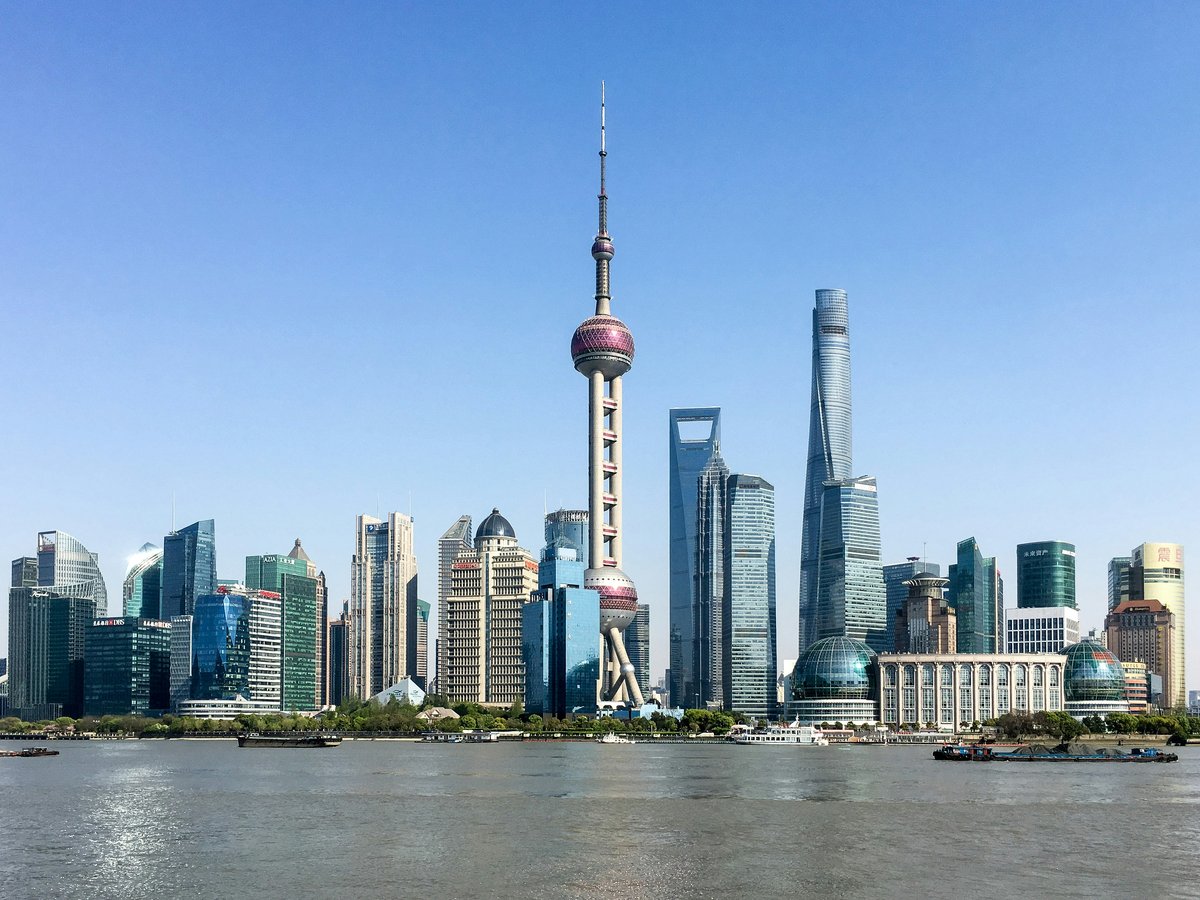
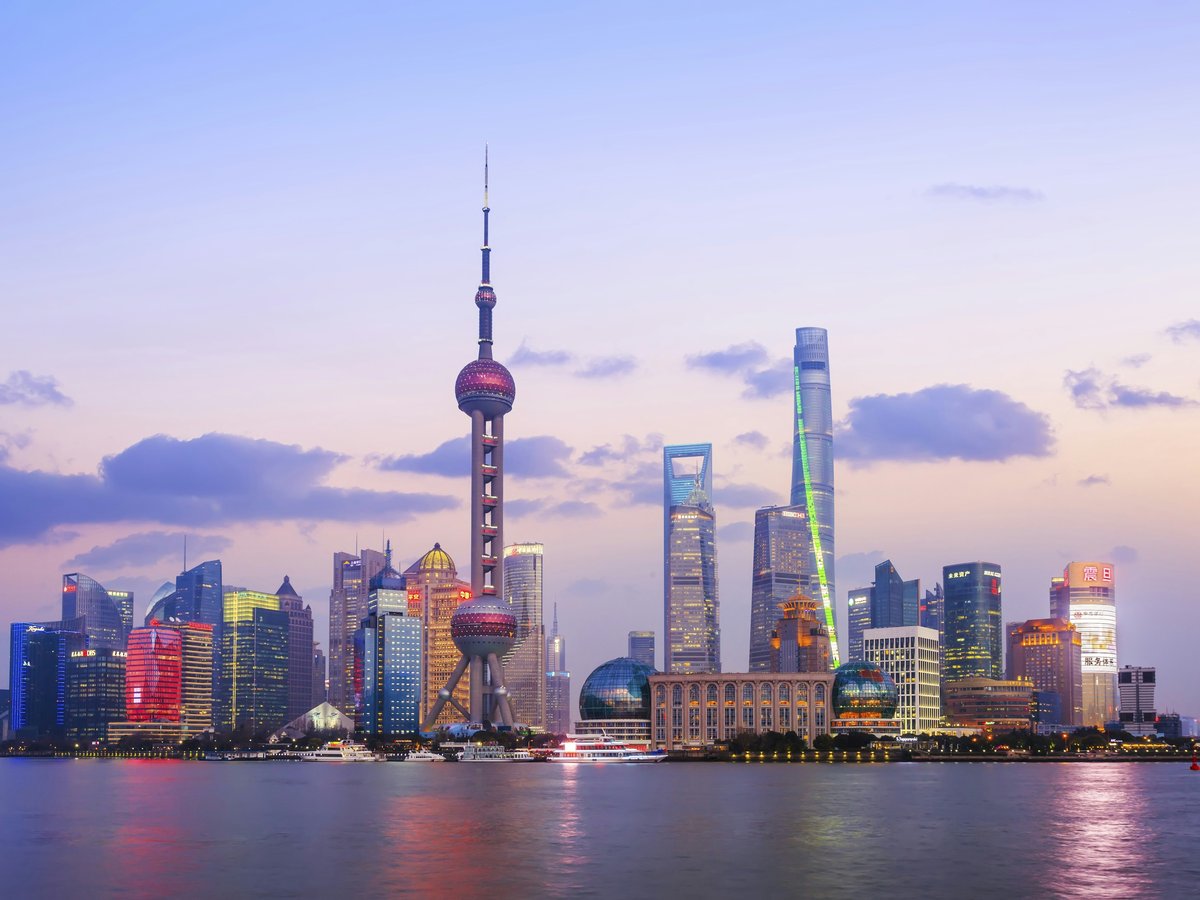
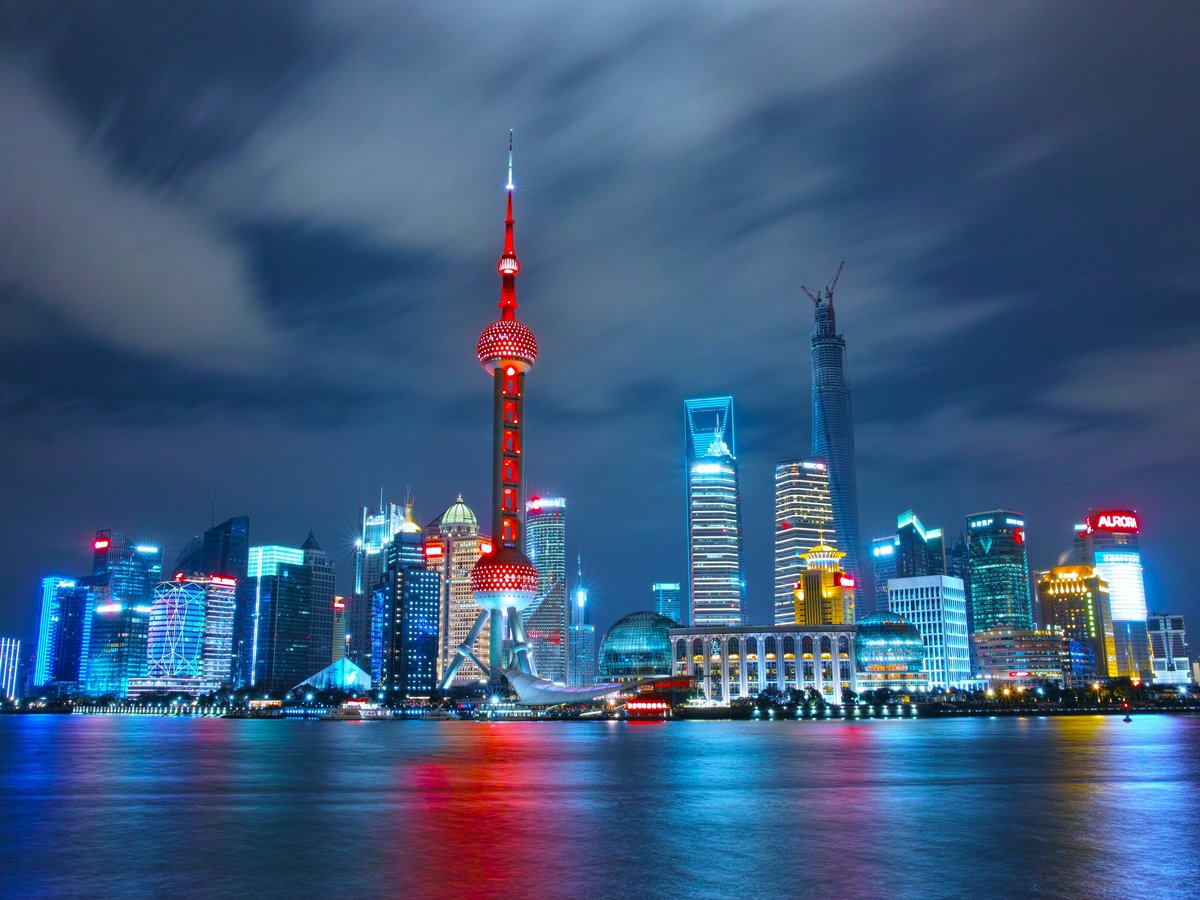
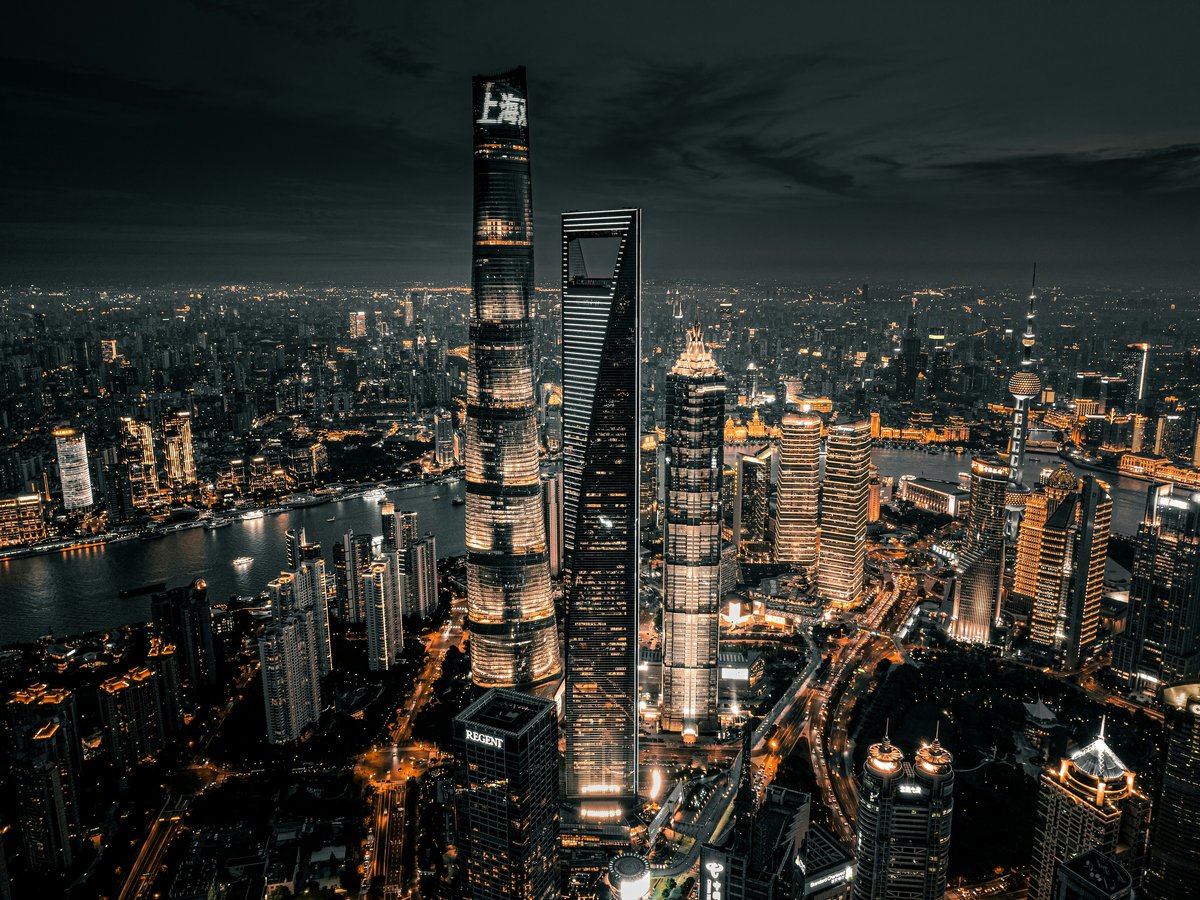
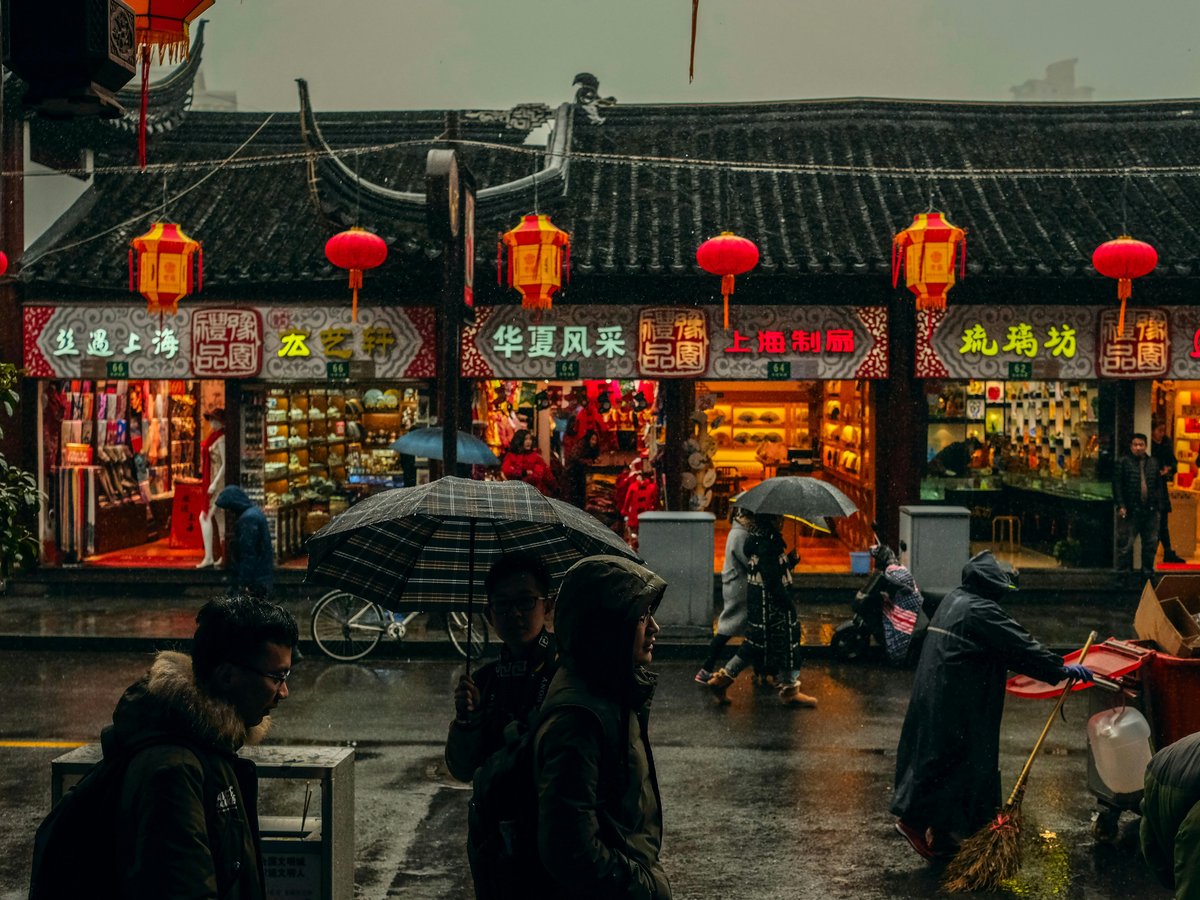
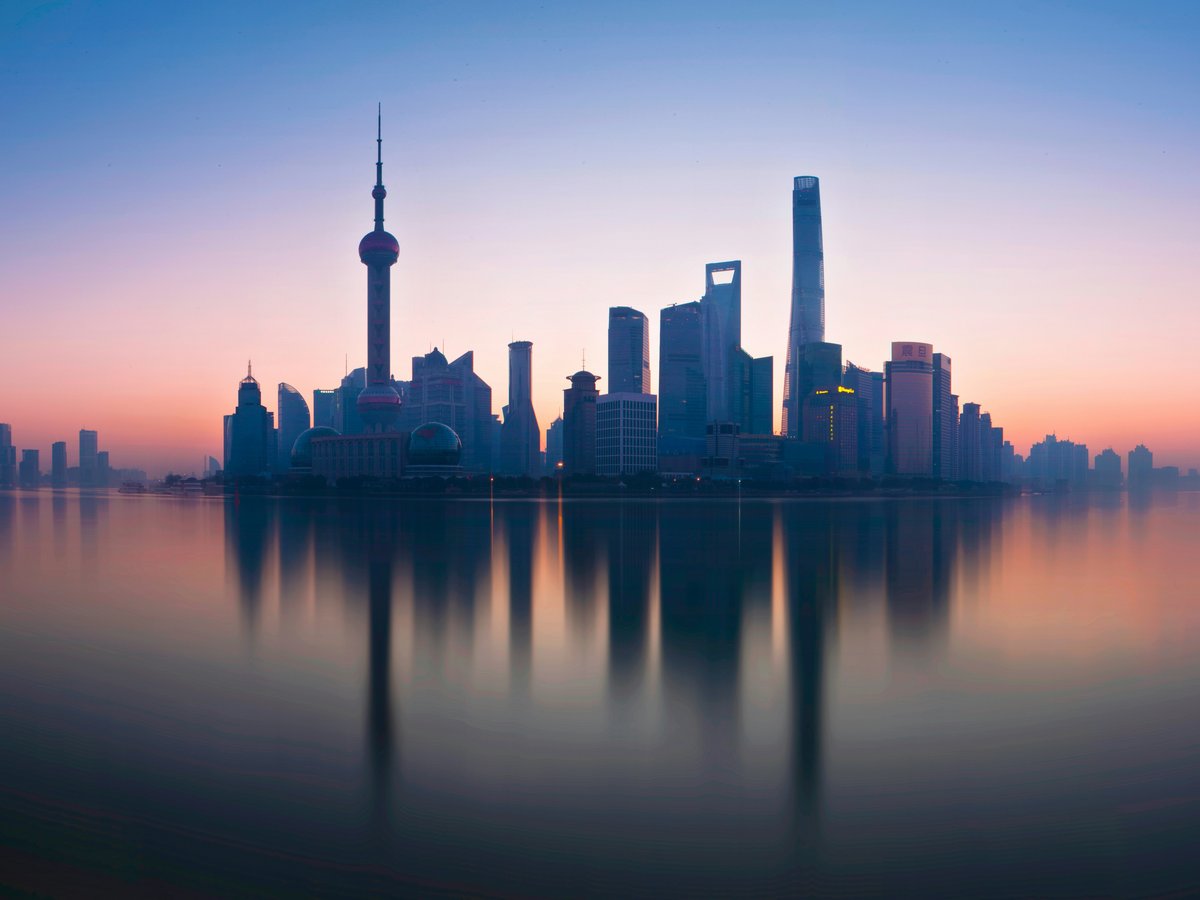
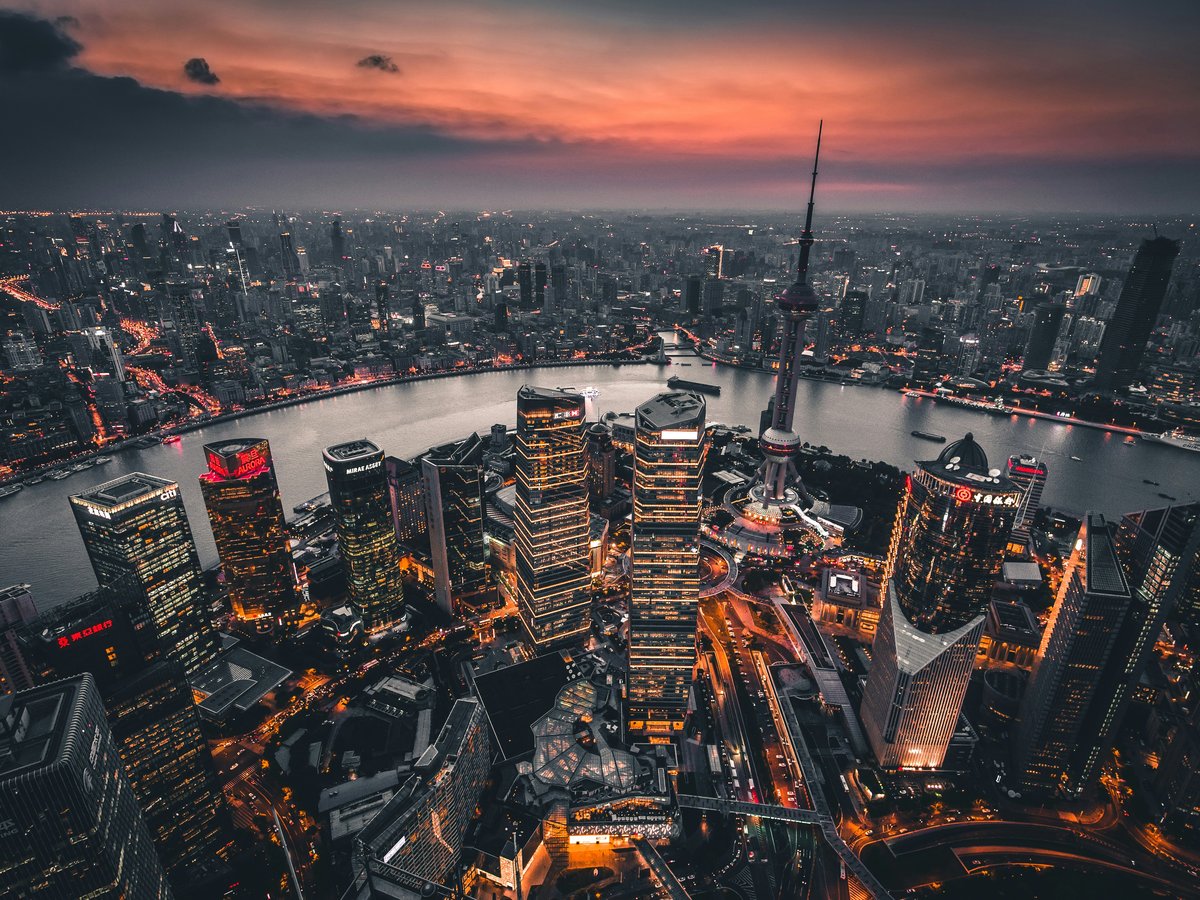
Shanghai sits where the Huangpu River bends toward the Yangtze Delta, a city of nearly twenty-five million people built on silt and commercial ambition in roughly equal measure. The skyline you recognize from photographs: the Oriental Pearl Tower, the bottle-opener silhouette of the World Financial Center, the spiraling Shanghai Tower at 632 metres: occupies Pudong, a district that was farmland until 1990. Cross the river westward and you are standing on the Bund, a kilometre of Edwardian banking halls and art deco towers that speak to the treaty-port decades when foreign capital reshaped a fishing settlement into Asia's busiest commercial hub. That layering defines the visitor's experience here: you move between eras by crossing a street. In the former French Concession, now split between Xuhui and the southern edge of Jing'an, London plane trees arch over low-rise lane houses built in the shikumen style: stone-framed doorways opening onto shared courtyards that once held entire extended families. A fifteen-minute metro ride north deposits you in Hongkou, where the brick-and-tile neighbourhoods feel more like a mid-sized Chinese city than anything on the Bund. Mornings tend to start late here; breakfast is a paper bag of shengjianbao from a sidewalk window, the pan-fried buns crisp on the bottom and scalding inside. Afternoons stretch. The heat between June and September is serious: subtropical, close, the kind that sends locals into air-conditioned malls for hours, so the rhythm of the day shifts toward evening, when the riverside promenades fill and the Pudong towers cycle through their light programmes. Shanghai rewards the visitor who treats it as a living city rather than a monument: its best details are ordinary ones, repeating every morning at the same noodle counter, the same quiet park where retired men set up their card tables under the same old camphor trees.
Shanghai in photos
Shanghai right now
Answers about Shanghai
-
Airport to city
From Shanghai Pudong (PVG), take the Maglev to Longyang Road station in 8 minutes for 50 CNY ($7.40), then transfer to Metro Line 2 for 25 more minutes to People's Square. Total about 45 minutes and 54 CNY ($8). After 10:30pm, metered taxis from the ground-floor queue cost 150-250 CNY ($22-37) to central Shanghai, roughly 40-60 minutes.
Read the full answer → -
Best time to visit
Go between mid-October and mid-November. Shanghai highs sit around 20 to 23°C, the summer humidity has broken, osmanthus scents the parks, and hairy crab season is on. Skip October 1-7, China's Golden Week, when the Bund turns into a slow-moving queue. Late April to mid-May is the runner-up, before the plum rains arrive in mid-June.
Read the full answer → -
Cost per day
Budget travelers can manage Shanghai on ¥200/day ($30) with a hostel dorm in Jing'an, metro rides, and street-stall noodles near Yunnan Nan Lu. Midrange spending sits around ¥640/day ($95) with a three-star near Nanjing Dong Lu, sit-down restaurants, and two paid attractions. Luxury runs ¥2,000+ ($300+) at Bund-side hotels.
Read the full answer → -
Cultural etiquette
Never stick chopsticks vertically in rice at any Shanghai restaurant. That position mimics funeral incense and everyone at the table will notice. Tipping is not expected and causes confusion. Download WeChat Pay before landing at Pudong International, since cash is nearly useless even at street food carts in Huangpu. Temples require covered shoulders and knees.
Read the full answer → -
Best day trips
Suzhou and Hangzhou are the two strongest single-day options, both under an hour by G-train from Shanghai Hongqiao. Suzhou's classical gardens suit couples who want a slow, walkable day. Hangzhou's West Lake works for pairs splitting between temples and tea villages. Zhujiajiao, the closest water town at 50 km, needs only half a day.
Read the full answer → -
Digital nomads
Shanghai rates 5.2/10 for digital nomads (sourced from TTDI's editorial rubric). The number reflects a city where the pipes are fast and the permissions aren't. Apartment fibre regularly tests at 500 Mbps for around 200 yuan a month, yet Google, Slack and Zoom all sit behind the Great Firewall, which changes the calculation considerably. Budget roughly US$2,800 a month if you're basing yourself in the Former French Concession. China has no nomad visa, so your passport determines how long you can stay.
Read the full answer → -
Family-friendly
Shanghai ranks among Asia's more family-friendly megacities. Shanghai Disneyland anchors any trip, the Science and Technology Museum in Pudong keeps kids under 12 absorbed for 3-4 hours, and the metro's elevator coverage makes stroller travel workable. Summer humidity above 35°C is the main challenge. Kid food is straightforward with steamed buns and plain noodles under ¥20.
Read the full answer → -
Food culture
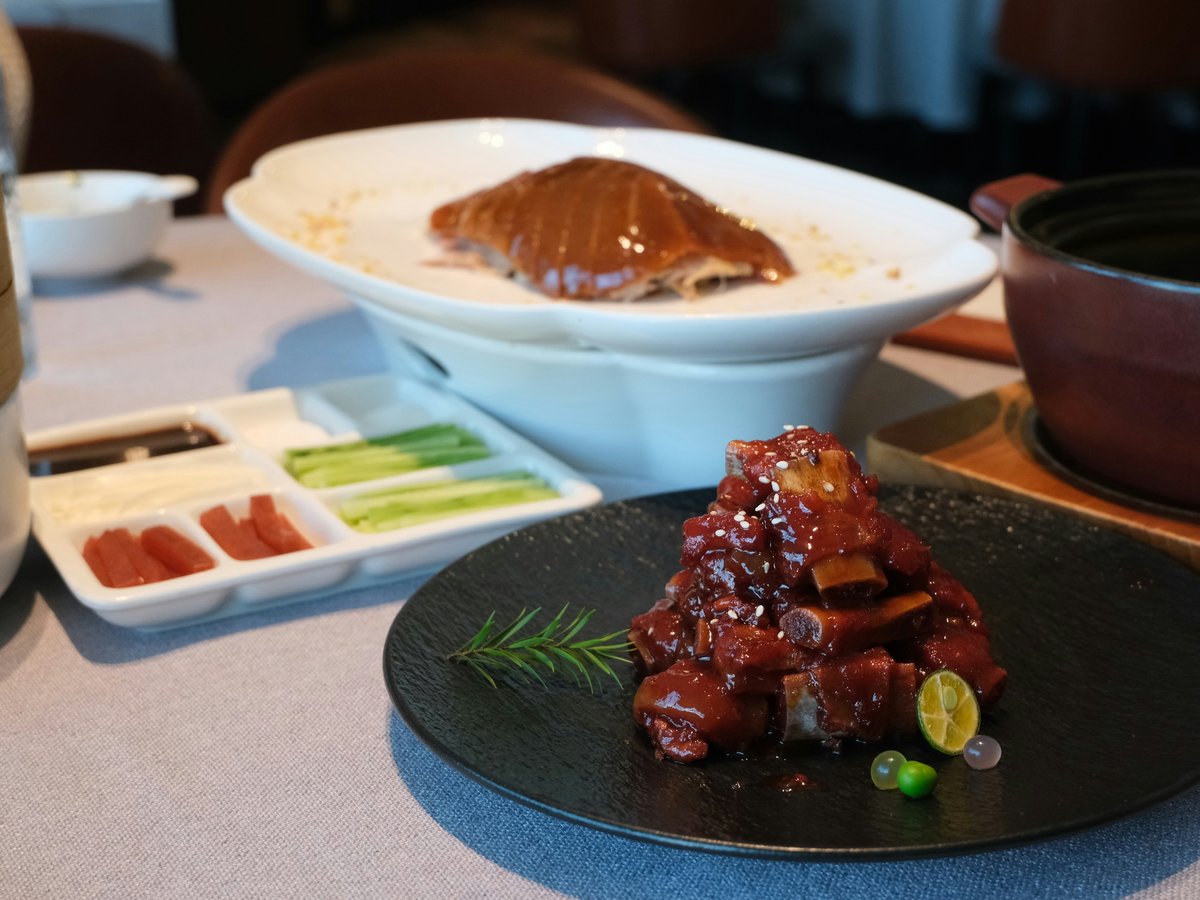
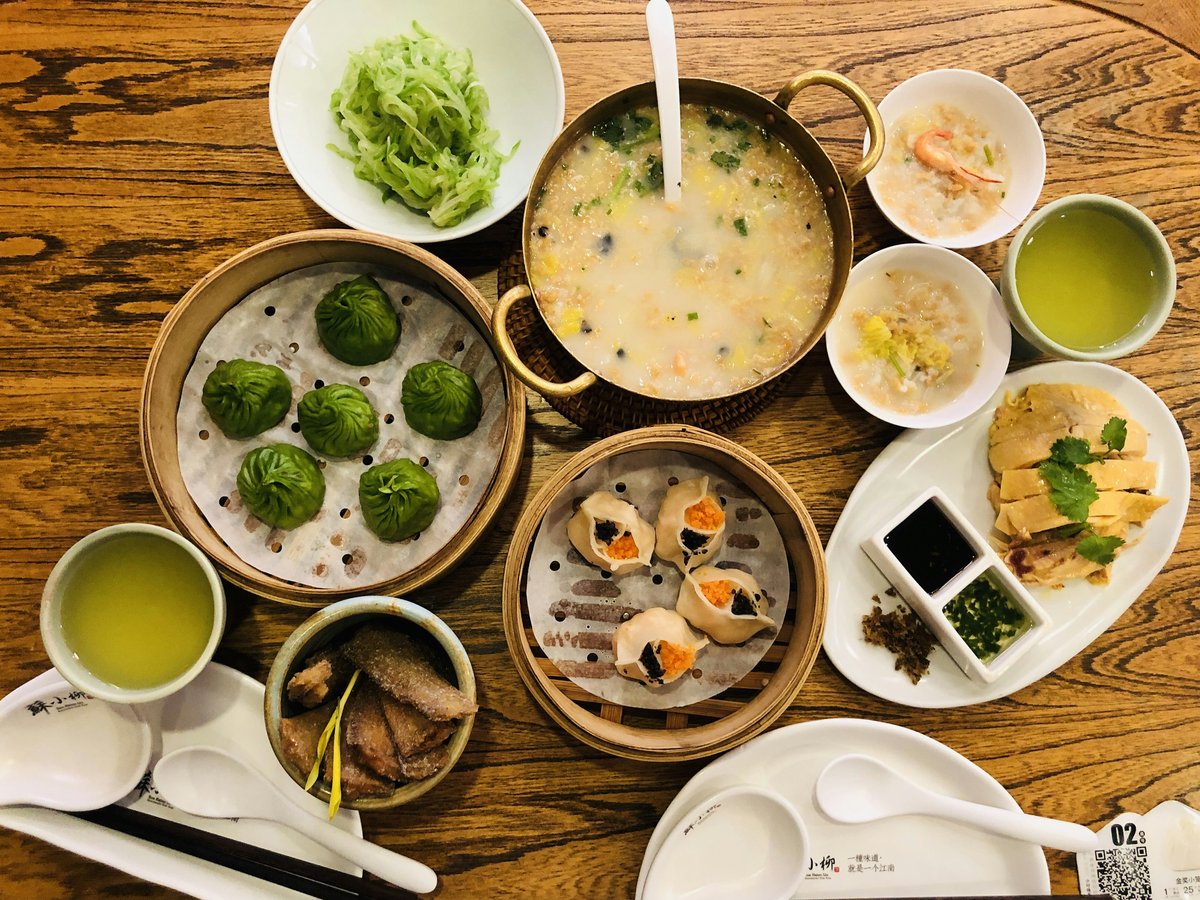
Shanghai eats sweet. Benbang cai, the city's native cuisine, builds on soy sauce, rock sugar, and Shaoxing wine, favoring slow-braised pork and river fish over the chili heat of Sichuan or Hunan. Xiaolongbao and pan-fried shengjianbao define the dumpling culture. Breakfast starts at 6am. Tipping does not exist. Budget 30-80 CNY ($4.50-12) per meal.
Read the full answer → -
Getting around
Metro for everything, DiDi for the gaps. Shanghai's 20-line subway reaches every tourist destination for 3 to 10 CNY per ride. Buy a Shanghai Transportation Card at any station (20 CNY deposit). DiDi replaces Uber. Download DiDi, Alipay, and Amap before landing. Google Maps needs a VPN here, and cash barely works.
Read the full answer → -
How to get there
Shanghai has two airports. Pudong International (PVG), 30 km east, handles most international flights. Hongqiao (SHA), 13 km west, serves domestic and regional routes to Tokyo, Seoul, and Taipei. Direct flights from Los Angeles run 12-13 hours on United, Delta, or China Eastern at $800-1,300 round-trip. From London, expect 11 hours nonstop at £500-850.
Read the full answer → -
Is it safe?
Shanghai is safe for solo travellers, and we score it 7.2/10 for solo-traveler safety (see the TTDI Solo-Safety Index). Violent crime against visitors is rare in Huangpu, Jing'an and Xuhui. The risks that remain are more particular: the tea-house scam around People's Square, near-silent electric scooters on the pavements, and a metro that shuts before midnight. Police answer on 110.
Read the full answer → -
Language basics
Mandarin Chinese, written in simplified characters. Shanghainese (a Wu dialect) persists among older residents, but Putonghua dominates daily life. China ranked 82nd out of 116 countries on the 2024 EF English Proficiency Index, and tourist-zone English in Shanghai reflects that low baseline. Hotel concierges and metro announcements work in English; taxi drivers, neighborhood restaurants, and market vendors don't. A translation app on your phone is non-negotiable.
Read the full answer → -
Layover guide
Yes, with 7 or more hours. The Maglev from Pudong International reaches Longyang Road in 8 minutes, and Metro Line 2 continues to central Shanghai in roughly 30 more. Many nationalities qualify under China's visa-free transit scheme, though eligibility depends on passport. Below that threshold, PVG's airside facilities are the better call.
Read the full answer → -
LGBTQ-friendly
Shanghai scores 3.5/10 for LGBTQ+ friendliness (sourced from TTDI's editorial rubric). China has no same-sex marriage or anti-discrimination protections, and the visible queer scene has contracted since 2020. Couples won't face danger in central districts, but public affection draws sustained attention. A few queer-friendly bars remain in the Former French Concession.
Read the full answer → -
Where locals go
Shanghai locals spend their early mornings in Fuxing Park, weekend afternoons at the People's Park marriage market, and Friday nights along the West Bund riverfront in Xuhui. On laptop days, Daxue Road in Yangpu and Shanghai Library East in Pudong are the better calls: the Anfu Road terraces in the Former French Concession fill with brunch crowds by 11am on Saturdays.
Read the full answer → -
Must-see
The Bund, Shanghai's 1.5-kilometre Huangpu River waterfront, is the single view that defines the city. Walk it after 7pm when Pudong's towers light up across the water and the 1920s neoclassical bank buildings behind you glow amber. Free, no reservation, best on your first night before jet lag wins.
Read the full answer → -
Solo travel
Shanghai rates 7/10 for solo travel. The city scores 7.2/10 for solo-traveler safety (see the TTDI Solo-Safety Index), the metro runs English signage on every platform, and single diners face zero stigma at any noodle counter or dumpling window. The real friction is the language barrier and China's internet restrictions, not personal safety.
Read the full answer → -
This week
Shanghai's week runs on heat and museum closures. Summer humidity limits outdoor time to mornings. Most major museums close Monday, with thinnest crowds Tuesday through Thursday. The Bund waterfront promenade peaks Friday and Saturday nights, so aim for a midweek evening instead. Yu Garden is walkable before 9am on weekdays, before tour groups arrive.
Read the full answer → -
3-day itinerary
Day 1 covers Yu Garden and the Bund in Huangpu on foot. Day 2 walks the plane-tree streets of the Former French Concession west to Jing'an Temple. Day 3 ferries to Pudong for the Shanghai Tower observation deck at 632 metres and the Science and Technology Museum. About 25 km of walking total across three days.
Read the full answer → -
What to avoid
Skip the tea ceremony invitation on Nanjing East Road, the taxi touts inside Pudong Airport arrivals, the Bund Sightseeing Tunnel, and the queue at the Oriental Pearl Tower. Eat soup dumplings near People's Square, not in the Yu Garden bazaar. Set up Alipay and an eSIM before you land, because Shanghai now runs on phone payments.
Read the full answer → -
What to pack
Install a VPN before you board. Shanghai's Great Firewall blocks Google Maps, WhatsApp, and Gmail, and you cannot download one after landing. Pack quick-dry layers for 30-38°C humid summers or 2-8°C damp winters, closed-toe walking shoes for uneven Former French Concession flagstone, and a 10,000 mAh portable charger for translation apps running through the VPN.
Read the full answer → -
Where to stay
Stay along the west bank of the Huangpu in Huangpu district, between People's Square and the Former French Concession. First-timers need Metro Lines 1, 2, and 10 within walking distance, plus Nanjing Road and the Bund on foot. Budget ¥400-750 ($60-110) for a mid-range hotel near Nanjing West Road station.
Read the full answer →
Deep guides for Shanghai
Curated lists for Shanghai
accommodation
-
Best boutique hotels
Shanghai's hotel map splits along the Huangpu River. West of the water, the old concession-era neighborhoods run from the Bund south through the French Concession and west toward Jing'an, each block trading colonial facades for plane-tree lanes for glass towers within a few metro stops. East of the river, Lujiazui's skyscraper cluster holds the skyline hotels, while the airport fringe and the engineered lakefront of Lin-gang sit farther out in Pudong, priced lower and pitched at travelers with early departures or science-museum itineraries. The mid-range tier dominates: Trip.com ratings cluster between 9.1 and 9.7 across these ten neighborhoods, and nightly rates sit between $93 and $192, a narrow band that makes location the real variable. Pick the Bund waterfront for the promenade walk, People's Square for metro connectivity, or Dapuqiao for the quieter edge of the French Concession. The farther you push from the Huangpu, the more space and the less nightlife you get. That tradeoff is the only decision that matters before you book.
See the picks → -
Best hostels
Shanghai's hostel and budget accommodation scene spreads across a city that runs on metro lines, not walking distance between districts. The neighborhoods worth booking divide cleanly: central squares and concession-era streets for culture-first travelers, airport and expo corridors for transit-focused overnights, and the Disney fringe for families who want theme-park proximity without theme-park prices. Budget beds here score well on Trip.com, with ratings regularly above 9.0, and nightly prices that dip below $30 in the right quarter. The budget hotspots run from People's Square down to the train station corridor, each shaped by a different version of Shanghai. Some are loud and commercial, others are quiet layover strips. What matters for each is what sits within walking range, which metro interchange gets you out, and whether the neighborhood rewards an extra night or just a clean sleep before an early departure. Pick the area first; the hostel follows.
See the picks → -
Best luxury hotels
Shanghai's luxury hotels divide into two species: city properties and resort-campus properties. The difference is not quality; it is purpose. A city property puts you on a sidewalk in a working district. A resort property puts you inside the gates, where the logistics of arriving with luggage and children are handled by the campus itself. Both species are well-represented here: two urban addresses in the Jing'an and Xujiahui districts, three inside Disney and LEGOLAND resort campuses. Read them as answers to different questions, not as a ranked hierarchy of interchangeable rooms. The city picks reward the traveler who wants a base for walking the neighborhoods; the resort picks reward the family who wants everything inside the fence. Knowing which question you are asking is the first step toward booking the right one.
See the picks → -
Where to stay
Shanghai's accommodation map splits along a few reliable seams. The old concessions west of the Huangpu hold the brick-lane walking neighborhoods: Jing'an, Xintiandi, Dapuqiao, and the avenues radiating from People's Square. Cross the river and the glass towers of Lujiazui trade lane-house charm for skyline views and conference proximity. Further out, the airport corridor and the Disney resort zone serve specific itineraries, not general exploration. The price spread is wide: budget beds near People's Square start at $16 a night, while the top-tier rooms in Jing'an reach $244. What matters more than the rate is matching the neighborhood to the trip. A traveler here for the Bund promenade and the French Concession cafes needs the Puxi side. Someone catching an early departure or spending two days at Shanghai Disneyland should not commute from the city center when clean, well-rated rooms sit minutes from the terminal or the park gate. Each of the ten areas below is framed by what is within walking distance, which transit lines connect it, and what kind of traveler it rewards. The picks are evidence of what is bookable at each tier, not a ranking of hotels.
See the picks →
attractions
-
Best free attractions
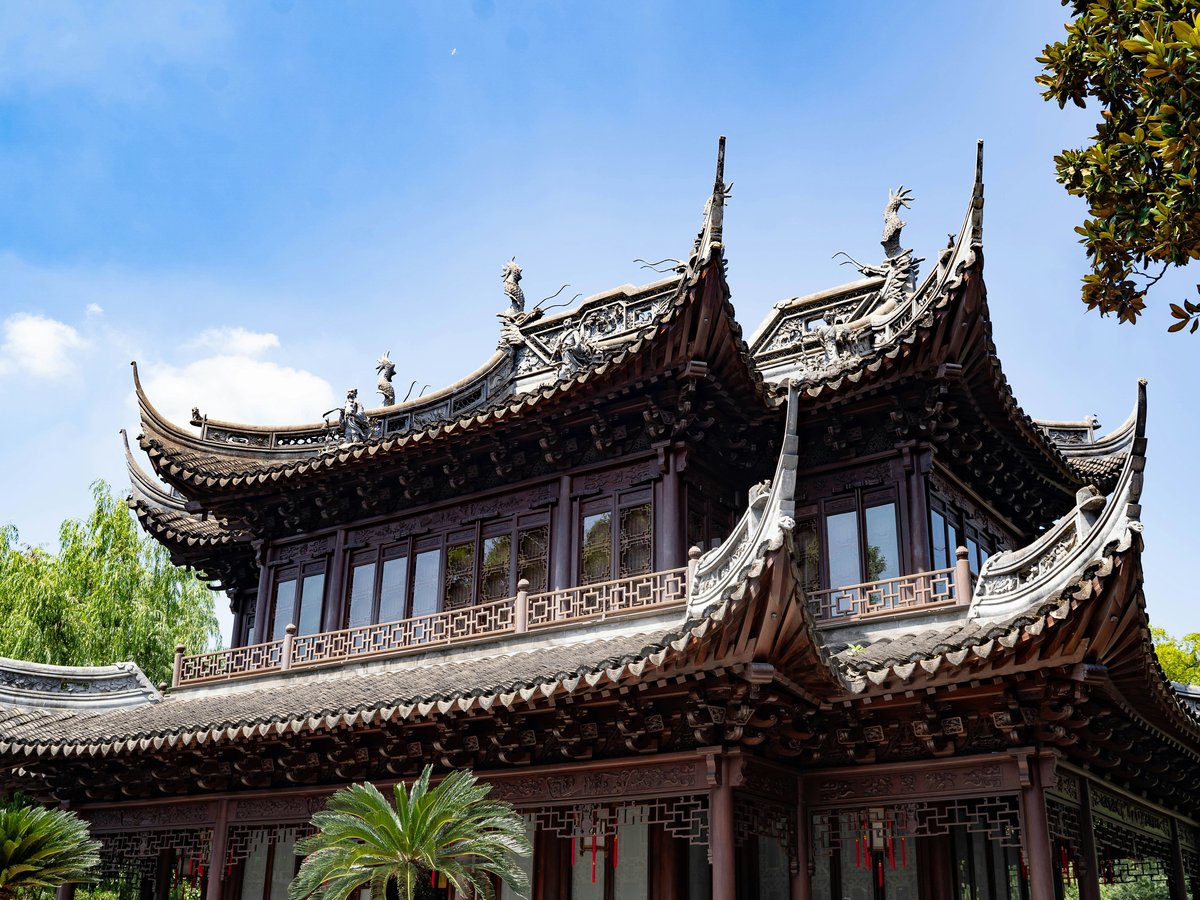
This list leans hard on green space, and that is the point. Shanghai's best free things to do are mostly gardens and parks, places where you can sit for an hour without buying anything. The range runs from a classical garden with national heritage protection to a riverside park dating from 1886, with forest, botany and plain neighbourhood lawns in between. It is for the traveller who has done the skyline and wants to see how the city spends its mornings and weekends. One honest caveat: we could not verify current admission terms for every entry, and some gardens set their own rules, so check at the gate or on the official site before you build a day around one. Hours are given where our sources record them. Treat the rest as an invitation to arrive early, walk slowly and leave the itinerary in your pocket.
See the picks → -
Best museums
Shanghai's museum map is unusually honest about the city itself: a working port that turned into a financial capital, still arguing with its own past. The list below sticks to venues you can verify on a map and reach on the metro, from the classical bronzes on Renmin Avenue to a private contemporary collection out past Luoshan Road. Expect two broad camps. On one side, the civic institutions clustered around People's Square and Nanjing Road, doing the work of a national museum in a city that has always been a rival to Beijing. On the other, the newer conversions along the Huangpu, where old industrial buildings have been rewired for contemporary art. In between sit the specialist rooms: natural history, urban planning, revolutionary history: that reward a slow afternoon more than a rushed morning. Read this as a two-day itinerary rather than a checklist; the Huangpu District institutions are close enough to walk between, and Pudong deserves its own trip.
See the picks → -
Must-see attractions
Shanghai's must-see list covers more ground than its skyline suggests. The towers are here, a TV tower from 1998 and a skyscraper from 2008, but the sights that tell you most about the city are its temples, a cathedral, a mosque, and a museum. The cathedral dates from 1910, the mosque from 1917, and the Jade Buddha Temple from 1928. Three of the Buddhist temples here are listed among the National Key Buddhist Temples in Han Chinese Area. Two bridges are on the list too, because in this city the river crossings are part of the view. We put this together for a visitor with two or three days who wants more than a single viewpoint: mix the vertical with the devotional and the historical, but plan the hours. Several of these places keep tight opening times, and arriving at the wrong one costs you half a day. Every address below is written as it appears on the ground, so you can show it to a driver.
See the picks →
food
-
Best cafes
Shanghai's cafe map runs from Japanese-inflected slow-drip counters in the old French Concession to third-wave roasters, patisseries, and the workaday chains that have made espresso a weekday habit here. This list picks 12 addresses that each earn their slot: a coffee shop with its own roasting kitchen on Yongkang Road, a Japanese-style room on the 41-block that opens late, a small operator on 陕西北路, and a scattering of chain outposts whose address, hours, or corner do more work than the brand alone. Each entry is anchored to an OpenStreetMap record so the address, hours, and phone number can be checked before you go. Read it as a working shortlist for the neighbourhoods you are already in, not a citywide ranking.
See the picks → -
Best restaurants
Shanghai eats in twelve languages before lunch. This list is a working editor's cross-section of that noise: a Turkish grill room in the basement off West Nanjing Road, a sheng jian counter that opens at 06:30 for the office crowd, a Sichuan dining room on Jiujiang Road that keeps two services a day, a ramen bar inside a Lujiazui mall, and a jazz club on Fuzhou Road that runs past midnight. These are not the tasting menus the concierge sends you to. They are places with a phone number, a street address, and a reason to sit down. The city rewards visitors who eat where the maps get specific, so every venue below is anchored to a coordinate and an operator you can call. Read the hours before you go, ring ahead for the weekend-only rooms, and treat the addresses as the argument. Skip the hotel restaurants that recycle the same room-service menu; the interesting cooking in Shanghai is happening at street level, at counters, in rooms with real doors and honest phones.
See the picks →
Browse by traveler type
- For foodies
Shanghai for foodies
- For families with kids
Shanghai for families
- For digital nomads
Shanghai for digital nomads
- For solo travelers
Shanghai for solo travelers
- For couples
Shanghai for couples
- For budget travelers
Shanghai on a budget
- For luxury travelers
Shanghai for luxury travelers
- For first-timers
Shanghai for first-time visitors
Book experiences in Shanghai
 Free cancellation
 Authentic Local Food Tour in Central Shanghai
City tour: 3 hours, free cancellation.
via Viator Free cancellation
 Private Shanghai Full Day City Tour with Old and New Highlights
Day trip: free cancellation.
via Viator Free cancellation
 Zhujiajiao Water Town and Shanghai City Private Day Tour
Day trip: 8 hours, free cancellation.
via Viator Free cancellation Shanghai Private Tour: Zhujiajiao Water Town and Boat Ride
Day trip: free cancellation.
via Viator Free cancellation
 Suzhou Private Day Trip from Shanghai with Bullet Train Option
Day trip: free cancellation.
via Viator Free cancellation
 Private Full-Day Tour: Incredible Shanghai Highlights
Day trip: 8 hours, free cancellation.
via Viator Free cancellation
 Shanghai City Guided Walking Tour | China's 1st and Best Rated
City tour: 4 hours, free cancellation.
via Viator Free cancellation
 4-Hour Flexible Private Shanghai City Tour
City tour: 4 hours, free cancellation.
via Viator Free cancellation
 Half-Day Bike Tour of Shanghai Old Town with Food Tasting
City tour: 4 hours, free cancellation.
via Viator Free cancellation
 Late Night Food Tour in the Shanghai's French Concession
City tour: 3 hours, free cancellation.
via Viator Free cancellation
 Private Shanghai Gangster Tour
City tour: 2 hours, free cancellation.
via Viator Free cancellation
 Full-Day Private Guided Tour of Shanghai
City tour: 8 hours, free cancellation.
via ViatorBrowse by interest
Compare Shanghai with
Find a flight to Shanghai
Live fares to Shanghai appear here once cookies are accepted.
Last verified by automated review (v1.7.2) on . What is automated review?