Is Shanghai good for digital nomads in 2026?
Shanghai rates 5.2/10 for digital nomads (sourced from TTDI's editorial rubric). The number reflects a city where the pipes are fast and the permissions aren't. Apartment fibre regularly tests at 500 Mbps for around 200 yuan a month, yet Google, Slack and Zoom all sit behind the Great Firewall, which changes the calculation considerably. Budget roughly US$2,800 a month if you're basing yourself in the Former French Concession. China has no nomad visa, so your passport determines how long you can stay.
The Great Firewall is the first thing that breaks. On Chinese broadband, Gmail, Google Docs, Notion and Slack's file previews load slowly or not at all, and commercial VPNs tend to drop around 9 pm when evening traffic across Shanghai peaks. Most long-stayers work around it with a foreign eSIM, because roaming data routes through the home carrier and skips the filter, so install one before you land at Pudong while your app store and email still open normally. China Telecom fibre in a serviced flat might show 500 Mbps on a Shanghai Speedtest server, but that same line can fall to 8 Mbps on a Zoom call to London with half a second of lag. Ask any landlord for a speed test to a Hong Kong or Tokyo server; a Shanghai result tells you nothing. Cafe and library wifi usually asks for a Chinese mobile number to receive an SMS login code, and a foreign eSIM can't receive that code, so tether from your phone instead.
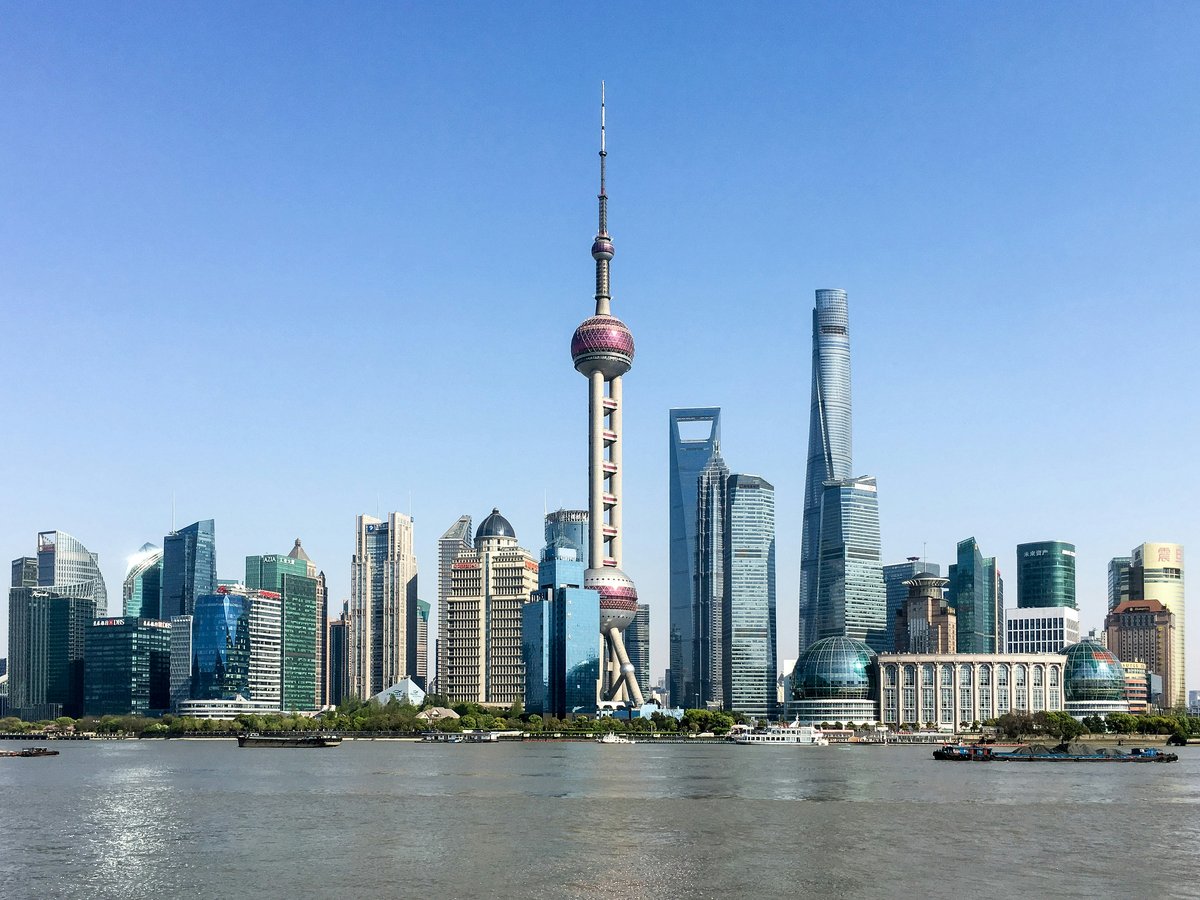
Pick your neighbourhood for the grocery run, not the skyline. The Former French Concession, around Anfu Road, Wukang Road and Yongkang Road, is the best base for a month: it has plane-tree shade, a FamilyMart on every second corner and laundromats off Huashan Road, and at 7 am the street stalls smell of scallion oil and frying jianbing. Serviced one-bedrooms there currently run 10,000 to 14,000 yuan a month. Jing'an, near Metro Lines 2 and 7, costs about 20 percent more and has the densest cluster of coworking floors, while Gubei in Changning is quieter and cheaper, with Carrefour and Japanese supermarkets that serve its Japanese and Korean residents. Skip Lujiazui. The towers around the Shanghai World Financial Center go dead after 8 pm, and groceries mean a mall basement. Airbnb dropped domestic China listings in 2022, and by law foreigners must also register with the local police within 24 hours of arrival; hotels and serviced apartments handle that automatically, but private landlords often don't, and the fine falls on you.
Coworking prices here suit people staying a month or longer, not day visitors. WeWork runs a dozen sites, including 696 Weihai Road in Jing'an, with hot desks at roughly 1,800 to 2,500 yuan a month; Distrii and Kr Space charge a little less, and their floors sound more like Mandarin sales calls than English standups. Day passes at 150 yuan or more become poor value past your first week. Manner Coffee is overrated as a workspace: the 15-yuan flat white is excellent, but most branches are a counter with two stools. Seesaw Coffee has real tables, though the Anfu Road branch fills by 3 pm with people photographing their oat lattes, and staff start eyeing laptops. The Shanghai Library on Huaihai Middle Road is free and silent apart from the hum of the air conditioning, with outlets at most desks; bring your passport to get a reader card.
Timing matters more here than in most Asian cities. The plum rain runs from mid-June into early July, then August reaches 35°C with sticky humidity and the cicadas in the plane trees get louder than your earbuds. Winter is damp, around 3°C, and most older flats have no central heating beyond a wall unit blowing dry air. Arrive in October, November, or April. For the monthly budget, a typical breakdown is about 11,000 yuan for rent and 2,000 yuan for a desk; food comes to about 4,000 yuan, since a bowl of Lanzhou beef noodles costs around 25 yuan and a jianbing about 8. Add 300 yuan for the Metro and 300 for connectivity. Alipay now accepts foreign Visa and Mastercard, but it tends to add a 3 percent fee on payments over 200 yuan, so pay rent by bank transfer to avoid that.
Composite of cafe + coworking download speeds and reliability.
Apartment, coworking membership, food, and transit at a comfortable level.
Coworking spaces
- WeWork 696 Weihai Road (Jing'an)
- Distrii
- Kr Space
- Ucommune
- Regus Shanghai
- Shanghai Library, Huaihai Middle Road (free)
Visa options
China has no digital nomad visa, and working remotely on a tourist stay is a legal grey zone. Many EU passports, plus Australia and New Zealand, currently get 30 days visa-free, and the 240-hour transit rule covers about 55 nationalities if you fly onward to a third country. Americans usually need an L visa, often 60 days per entry, with extensions handled at the Exit-Entry office at 1500 Minsheng Road, Pudong.
Last verified by automated review (v1.7.2) on . What is automated review?