How do I get around Shanghai?
Metro for everything, DiDi for the gaps. Shanghai's 20-line subway reaches every tourist destination for 3 to 10 CNY per ride. Buy a Shanghai Transportation Card at any station (20 CNY deposit). DiDi replaces Uber. Download DiDi, Alipay, and Amap before landing. Google Maps needs a VPN here, and cash barely works.
Book the connection
One search across trains, buses & flights: live times and prices for Shanghai.
Shanghai's metro carries about 10 million riders a day across over 20 lines. For a visitor, it reaches People's Square, the Bund, Pudong, Jing'an, and the Former French Concession on a single network. A ride costs 3 to 10 CNY ($0.45 to $1.50) depending on distance, and the system runs from about 5:30 AM to 10:30 PM. Pick up a Shanghai Transportation Card from any station's service center for a refundable 20 CNY deposit, then load 100 CNY. That covers 3 to 4 days of heavy use. The card scans on metro, bus, taxi, and the Maglev. Line 2 connects both Pudong and Hongqiao airports. Line 10 takes you from Nanjing East Road to the Former French Concession in about 15 minutes. Signage is bilingual, Chinese and English. The trains smell faintly of disinfectant, the AC runs cold even in June, and announcements play in Mandarin and English. Rush hours, roughly 7:30 to 9:30 AM and 5 to 7 PM, pack Lines 1 and 2 to the point where you might wait for the next train.
DiDi is China's equivalent of Grab or Lyft. Uber sold its China operations to DiDi in 2016, and no alternative has filled the gap. Download DiDi before you arrive and switch it to English mode. Fares show upfront, no negotiation. A 10 km ride across central Shanghai runs about 30 to 45 CNY ($4.50 to $6.70). Street taxis use meters. The flagfall is 14 CNY for the first 3 km, then 2.5 CNY per kilometer after. The catch is communication. Most taxi drivers speak no English, and you will need to show your destination in Chinese characters on your phone screen. DiDi handles this automatically. After midnight, a 50% surcharge applies to metered taxis, and DiDi prices rise to match. Tipping is not expected and will likely confuse the driver.
Pudong International Airport sits 30 km east of central Shanghai. The Maglev train covers that distance to Longyang Road station in 8 minutes and reaches up to 431 km/h on the cabin display. The hum at top speed is oddly quiet. A one-way ticket costs 50 CNY, or 40 CNY if you flash a metro ticket. From Longyang Road, transfer to Metro Line 2 for People's Square or the Bund. Total door-to-door time from the terminal to People's Square runs about 50 minutes including the transfer. Metro Line 2 also goes directly from Pudong Airport all the way downtown for 7 CNY, but it takes about 70 minutes and you'll feel every stop with luggage at rush hour. Hongqiao Airport, on the city's western edge, connects to Metro Lines 2, 10, and 17. A ride from Hongqiao to People's Square takes 40 minutes on Line 2 for about 5 CNY.
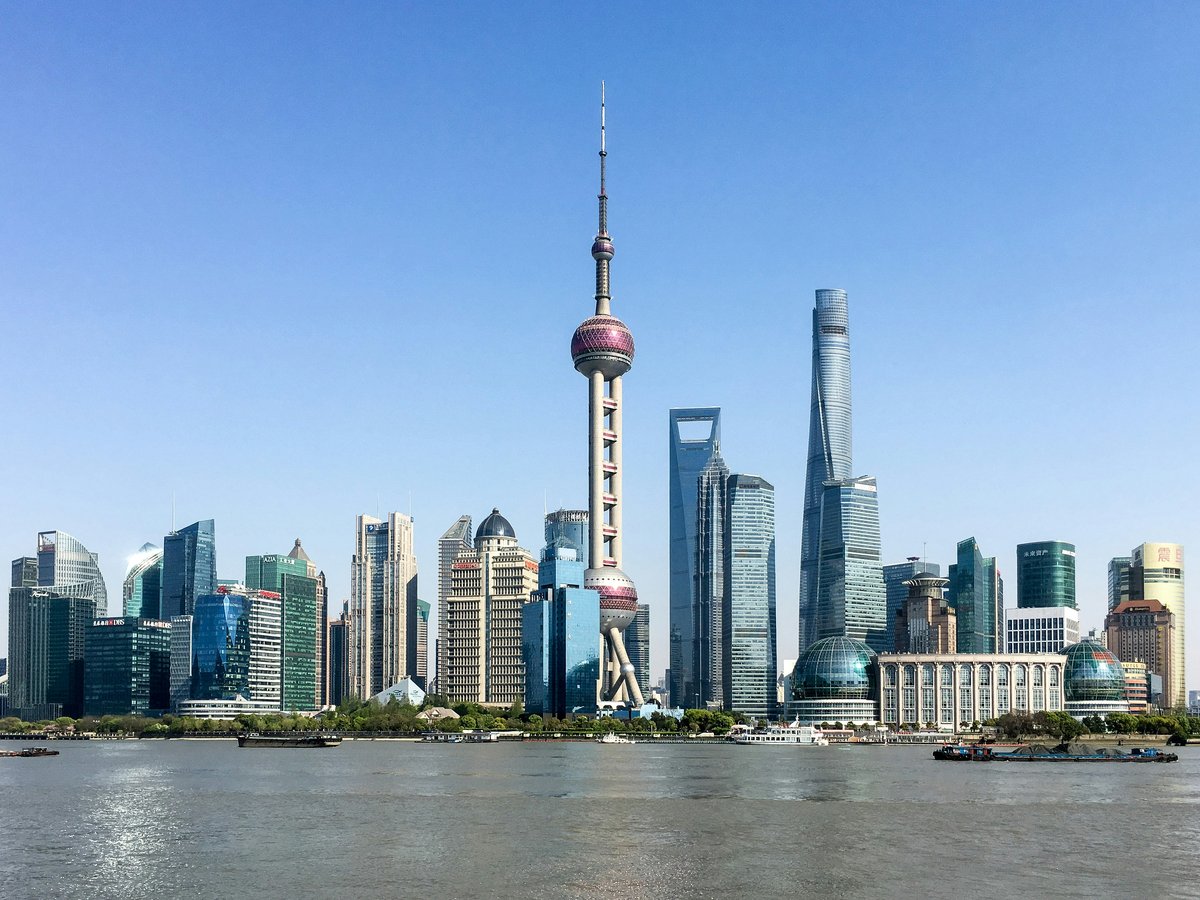
The Former French Concession is where walking works. Plane trees shade the sidewalks along Wukang Road and Yongkang Road, the blocks are short, and the warm, damp June air carries the smell of coffee from lane-house cafes. The Bund's 1.5 km riverside promenade is flat and wide, with the Pudong skyline across the Huangpu River. Pudong itself is different. The distances between towers on the Lujiazui strip look short on a map but turn into 20-minute treks through elevated walkways in sticky 30°C heat. For navigation, download Amap or Baidu Maps before arrival. Google Maps needs a VPN in China and still gives inaccurate walking routes and misses metro exits. That said, China's payment system catches visitors off guard. Cash is still legal tender, but many small shops and street food stalls only take Alipay or WeChat Pay. Alipay's Tour Pass lets foreign visitors link an international Visa or Mastercard and takes about 5 minutes to activate with a passport photo.
On-the-ground: metro available · ride-hail apps work.
Primary modes of transit
- Metro
- DiDi
- Taxi
- Maglev
- Walking
Ready to book the connection?
Compare trains, buses & flights to and around Shanghai on Omio: live times & prices in one search.
Compare on Omio →More transport questions
How do I get from the airport to Shanghai?
From Shanghai Pudong (PVG), take the Maglev to Longyang Road station in 8 minutes for 50 CNY ($7.40), then transfer to Metro Line 2 for 25 more minutes to People's Square. Total about 45 minutes and 54 CNY ($8). After 10:30pm, metered taxis from the ground-floor queue cost 150-250 CNY ($22-37) to central Shanghai, roughly 40-60 minutes.
Full answerHow do I get to Shanghai?
Shanghai has two airports. Pudong International (PVG), 30 km east, handles most international flights. Hongqiao (SHA), 13 km west, serves domestic and regional routes to Tokyo, Seoul, and Taipei. Direct flights from Los Angeles run 12-13 hours on United, Delta, or China Eastern at $800-1,300 round-trip. From London, expect 11 hours nonstop at £500-850.
Full answerWhat are the best day trips from Shanghai?
Suzhou and Hangzhou are the two strongest single-day options, both under an hour by G-train from Shanghai Hongqiao. Suzhou's classical gardens suit couples who want a slow, walkable day. Hangzhou's West Lake works for pairs splitting between temples and tea villages. Zhujiajiao, the closest water town at 50 km, needs only half a day.
Full answerLast verified by automated review (v1.7.2) on . What is automated review?