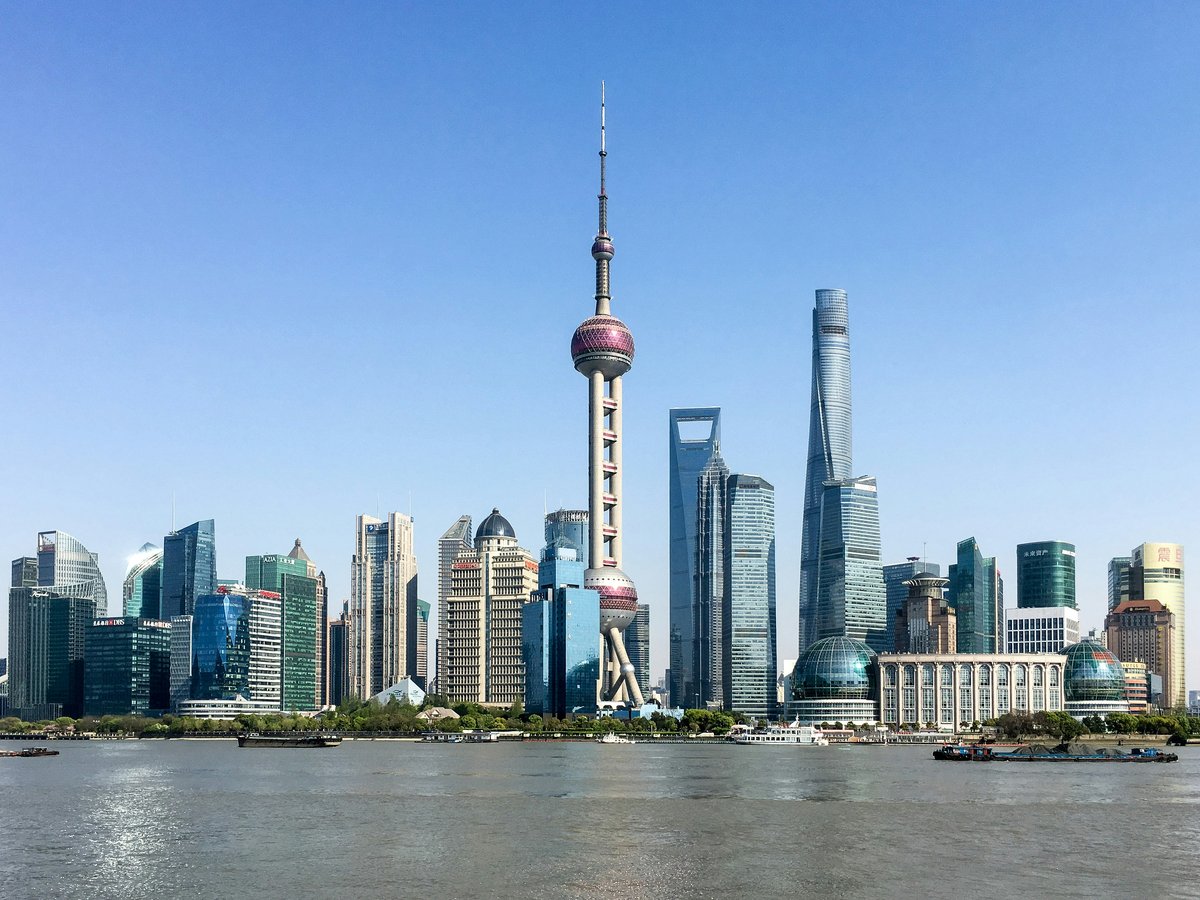
Best Time to Visit Shanghai, by Season
A month-by-month projection from five years of daily weather observations, naming the single best window for comfort seekers, budget travelers, photographers, and everyone locked into a summer schedule.
Published · Updated
1 April Owns the Best Numbers in Shanghai's Entire Calendar
The morning air carries enough chill to keep your coffee steaming on the walk from Jing'an Temple station. By noon you're peeling off one layer on the plane-tree-lined avenues of the Former French Concession, settling into the kind of warmth that asks nothing of you. April in Shanghai averages a high of 21.5°C and a low of 12.1°C, a spread that sits in shirtsleeve territory during the day and light-jacket territory after dark.
Compare that to May, where the average high reaches 25.4°C and the low climbs to 16.3°C. May sounds fine on paper, but those numbers mark the leading edge of the humid season. The 3.9-degree gap between April's 21.5°C high and May's 25.4°C high is the difference between pleasant and sticky. You feel it in your collar on the Bund promenade, in the way your shirt clings crossing the exposed courtyards of Yuyuan Garden by mid-afternoon.
March? The average high of 16.5°C with a low of 7.4°C means mornings that bite. You're carrying a proper coat past People's Square until 10 AM. The cool doesn't fully relent until early afternoon, and by then your window for warm outdoor time along the Suzhou Creek Waterfront is already half spent.
April threads the needle. The 12.1°C overnight low means nights are cool without being cold, comfortable for a 9 PM walk through Xintiandi's open-air restaurant lane. The 21.5°C daytime high means outdoor walking through Tianzifang's narrow alleys, photography on the Bund, and sitting in Fuxing Park all happen without overheating. The temperature swing between high and low sits at 9.4 degrees, tight enough that you don't need to plan around dramatic afternoon heat or morning frost.
Cherry blossoms at Gucun Park tend to peak between late March and mid-April, pulling photographers north of the city center. The Bund gets soft, diffused light through April's frequent high cloud, a different quality from October's sharper golden-hour contrasts. For budget travelers, April falls between the Qingming Festival holiday crowd (around April 4-6) and the May Day Golden Week surge, when Nanjing Road hotel rates can double.
April's 21.5°C high is the closest to human comfort's center point in Shanghai's entire dataset.
2 October Is the Autumn Rival, 5 Degrees Warmer at Night Than April
Late afternoon light in October hits the glass towers of Lujiazui at an angle that turns them golden. The air has weight but not burden. You walk for an hour along the Bund waterfront without thinking about temperature. That's the physical signature of October in Shanghai.
The numbers confirm the feeling. October averages 23.7°C at the high and 16.9°C at the low. Compare April's 12.1°C low to October's 16.9°C low and the difference is 4.8 degrees. That gap matters most at night, after dinner, when you're walking back along the Huangpu River past the illuminated Pudong skyline. In April you want a jacket by 8 PM. In October you might not reach for one until 11.
The tradeoff sits at the top of the range. October's 23.7°C high edges April's 21.5°C high by 2.2 degrees. Not dramatic, but noticeable during midday hours in exposed spaces like Century Park in Pudong or the garden terraces at Jing'an Sculpture Park. If you run hot, April wins. If you dislike cool evenings, October wins.
Mind you, the first week of October is National Day Golden Week. The Bund, Yuyuan Garden, and Nanjing Road fill with domestic travelers. Hotel prices along the Pudong waterfront can reach three times their mid-month rate. Target October 8 onward, when the crowds thin and the light stays warm through 5:30 PM.
September offers a warmer alternative at 29.4°C high and 23.0°C low, but those numbers push into genuine heat territory. The 5.7-degree jump from October's 23.7°C to September's 29.4°C changes the character of a walking day entirely. November drops to 18.2°C high and 10.2°C low. Worth noting, November is still visitable, but you've crossed from t-shirt weather into layering season at the French Concession's sidewalk cafes.
October's sweet spot is its evenings. The 16.9°C low means walks past the Waibaidu Bridge, rooftop drinks above the Bund, and outdoor dining at Xintiandi all work past 10 PM. April's 12.1°C low pushes those same activities indoors by 9 PM for anyone without a jacket.
In April you want a jacket by 8 PM. In October you might not reach for one until 11.
3 July and August Average 33°C and Will Break Your Itinerary
The heat hits your face the moment you step outside at 7 AM near the Huangpu River. By 9 the pavement along Nanjing East Road radiates upward through your shoes. By noon you're planning around air conditioning, not around sights. July averages 33.0°C at the high with a low of 26.0°C. August is fractionally worse at 33.8°C high and 26.2°C low. Those overnight lows tell the real story. When the temperature never drops below 26°C, the city cannot cool itself. The Huangpu holds the day's warmth through the night, and the concrete canyon of Lujiazui traps it at street level.
June starts the descent at 28.6°C high and 21.2°C low. That's survivable. You can still walk comfortably through the French Concession in the early morning and along the Bund after sunset. But July's jump from 28.6°C to 33.0°C crosses a line. At 33°C, outdoor time between 11 AM and 4 PM at exposed sites like Yuyuan Garden or the open plazas of Century Park becomes endurance, not leisure.
The indoor alternatives earn their keep in summer. Shanghai Museum at People's Square is free and air-conditioned. The Long Museum West Bund holds contemporary art across 33,000 square meters of temperature-controlled gallery space. K11 Art Mall on Huaihai Middle Road merges shopping and exhibitions below street level. These aren't consolation prizes. They're destinations that happen to solve the heat problem.
Summer's tight temperature band leaves no escape window in the day. July's range runs 33.0°C to 26.0°C, a gap of 7 degrees. Compare that to April's 9.4-degree spread or October's 6.8-degree spread. You cannot wake earlier or stay out later to dodge the heat because the low itself sits at 26°C.
If you're locked into summer, target early July over late August. The 0.8-degree difference between July's 33.0°C and August's 33.8°C is small, but August compounds heat day after day at the calendar's absolute ceiling. September's 29.4°C high offers a 4.4-degree reprieve across a single calendar turn. Budget travelers get one consolation. Summer hotel rates at properties along the Bund and in Pudong drop as leisure demand falls, and the Long Museum's free admission holds year-round.
When the temperature never drops below 26°C, the city cannot cool itself.
4 March and November Are the Gambler's Shoulder Months
Wind off the Huangpu in March still carries winter's edge. You zip your collar and walk faster past the Custom House clock tower on the Bund. The sun is bright but doesn't warm the way you expect after February's grey. March in Shanghai averages 16.5°C at the high and 7.4°C at the low. November mirrors it imperfectly at 18.2°C high and 10.2°C low.
These two months reward a specific kind of traveler. Someone who packs layers. Someone who doesn't mind cool mornings when the smell of shengjian bao from Yunnan South Road's breakfast carts is sharper in cold air. March's 7.4°C low means genuine cold at dawn along the riverside. You want a proper coat before 9 AM. By afternoon, 16.5°C is comfortable enough for walking the plane-tree-lined blocks of the Former French Concession, but you won't be sitting still on a bench in Fuxing Park without a jumper.
November gives you slightly better numbers at the bottom. The 10.2°C low sits 2.8 degrees above March's 7.4°C. That small difference means the early morning walk to the Jade Buddha Temple is brisk rather than biting. November's 18.2°C high also edges March's 16.5°C by 1.7 degrees. On paper, November wins the shoulder comparison.
The gamble is about direction. March is warming. Each week tends toward April's 21.5°C high. A late-March visit might catch 18 or 19°C days along the Suzhou Creek Waterfront, approaching the sweet spot. March is also Shanghai's driest stretch before the plum rains of June, and the low humidity at 16°C feels warmer than the number suggests. November is cooling. Each week moves toward December's 11.3°C high and 3.2°C low. A late-November visit can feel like early winter on the exposed rooftop terraces above the Bund.
For photographers, March's bare plane trees frame the Lujiazui skyline with skeletal branches. That stark composition is impossible to get in leafy October. November's low-angle sun produces long shadows across the Bund's colonial facades after 3 PM. Budget travelers find both months cooperative. Hotel rates in Pudong and along Nanjing Road sit well below the Golden Week and cherry blossom season peaks, and the queues at Yuyuan Garden rarely stretch past the entrance gate.
March's bare plane trees frame the Lujiazui skyline with skeletal branches, a composition impossible in leafy October.
5 December Through February Drop Below 10°C and Empty the Tourist Circuit
Fog sits over the Huangpu River at 7 AM in January. The Pudong skyline disappears above the 30th floor. Your breath hangs visible outside Yuyuan Garden's gate. The smell of shengjian bao drifts from a nearby breakfast stall, sharper in the cold. December averages 11.3°C high and 3.2°C low. January drops further to 8.5°C high and 0.7°C low. That makes January Shanghai's coldest month. February recovers slightly to 10.6°C high and 2.6°C low.
To be fair, Shanghai's winter rarely reaches true freezing. The 0.7°C January low is an average, not a nightly guarantee. But the damp cold off the river penetrates in a way that dry cold at the same temperature does not. Indoor heating in Shanghai is less consistent than in northern Chinese cities like Beijing, where centralized systems are standard above the Qinling-Huai River line. Some older hotels in the Former French Concession still rely on wall-mounted units that take 20 minutes to warm a room.
The winter trade works in your favor at the ticket counter and the front desk. The Yu Garden Lantern Festival runs through late January and February, and crowds thin noticeably after the Lunar New Year holiday week. Nanjing Road's pedestrian stretch is walkable in December without the shoulder-to-shoulder density of October's Golden Week. The Shanghai Museum, the Power Station of Art on the Huangpu's west bank, and the Rockbund Art Museum behind the Bund all operate at full schedule through winter.
Winter photography has one advantage the other seasons cannot match. Cold fronts from the north push Shanghai's persistent haze south, and the post-rain clarity on a 10°C December afternoon can produce visibility across the Huangpu that April's softer atmosphere rarely delivers. The Lujiazui skyline from the Bund promenade looks sharpest on these clear days.
Budget travelers find winter's floor. Hotel rates from December through February, excluding the Lunar New Year week, reach their annual low across both the Bund and Pudong districts. Crowds along Nanjing Road and at Yuyuan Garden during Lunar New Year rival or exceed Golden Week numbers, and prices spike accordingly. Outside that 7-to-10-day window, the tourist circuit runs at its quietest, and afternoon temperatures on the Bund waterfront sit below 10°C from late December through most of January.
Cold fronts push the haze south, and post-rain December afternoons produce visibility that April's softer atmosphere rarely matches.
6 The Photographer's Calendar Peaks Twice and the Budget Calendar Falls Between
Shanghai's light changes character four times per year, and each transition favors different gear and different subjects. April's diffused cloud cover wraps the Former French Concession's art-deco facades in even, shadow-free illumination. That soft quality works for architectural detail. The ornamental columns of the HSBC Building on the Bund, the ironwork balconies on Wukang Road, the curved facade of the Paramount on Yuyuan Road. These subjects need flat light to hold their texture without blown highlights.
October reverses everything. The sun drops lower and sharper. The Pudong skyline at 5 PM throws hard golden light across the river onto the Bund's stone facades. The contrast between the two seasons is not subtle. They are two different photographic palettes over the same city. For skyline work from elevated positions, October wins. The combination of warm-toned directional light and comfortable rooftop temperatures between 20°C and 24°C means every rooftop venue in Lujiazui and along the Bund fills with photographers around sunset. For street photography in the French Concession and Tianzifang, April's even light and thinner crowds offer more flexibility.
The budget calendar runs inverse to the crowd calendar. Shanghai's two price ceilings land on the May Day Golden Week (around May 1-5) and the National Day Golden Week (October 1-7). Hotels along the Bund and in Lujiazui can double or triple during those 12 combined days. The two price floors sit in mid-January through February (excluding Lunar New Year) and late November through mid-December.
The sweet spot for value sits in the weeks adjacent to the peaks. Mid-to-late April catches near-perfect 21.5°C weather at pre-Golden-Week rates. The second and third weeks of October deliver golden-hour light after the National Day crowds disperse. March works for travelers who tolerate 16°C highs and want empty sidewalks. These windows are narrow. A single week's difference on either side of a Golden Week can shift both the crowd density and the nightly room rate at properties along Nanjing Road or the Pudong waterfront.
For travelers locked into summer's 33°C ceiling, the budget advantage is real but the heat tax is steep. Early July tends to run cooler than late August by about 0.8°C, and hotel availability is higher than during the spring festival seasons. The best-value summer approach is morning outdoor time before 10 AM at sites like Lu Xun Park in Hongkou, indoor attractions through the afternoon at the Long Museum or Shanghai Museum, and evening walks along the Bund after the pavement releases its stored heat around 8 PM.
A single week's difference on either side of a Golden Week can shift both the crowd density and the nightly room rate.
Last verified by automated review (v1.7.0_onboard-shanghai-flagship-2026-06-07) on . What is automated review?