Compare every Spain city in March →
Stay in Segovia in March
23 hotels in the Trip.com pool for Segovia, from US$48 a night.
Opens Trip.com on Fri 5 Mar to Sun 7 Mar 2027; change the dates there.
March in Segovia is still winter. That might surprise you if you're imagining Mediterranean Spain, but this city sits at roughly 1,000 meters (3,280 feet) on the Castilian meseta, and at that altitude, March temperatures still belong to winter. Expect daytime highs near 11°C (52°F) and overnight lows around 3°C (37°F), with about 119mm of rain spread across 14 days. Some mornings, frost coats the granite blocks of the Roman Aqueduct before the sun climbs high enough to reach Plaza del Azoguejo.
The trade-off tends to work in your favor if you're the right kind of traveler. The tour buses that crowd Calle Real from May through October thin to almost nothing in March. You can walk through the Judería, climb the Alcázar tower, and sit in the Catedral de Segovia without competing for elbow room. Hotel rates in the Casco Antiguo drop to some of the lowest levels of the year, often 30-40% below summer pricing. In years when Semana Santa begins in late March, the cofradías carry their carved pasos through the old town's narrow streets in processions watched by maybe 200 people, not the packed thousands you'd find in Seville.
Be realistic about the experience, though. Segovia in March is a city best appreciated through its interiors. The mesones and asadores, the warm stone of the Cathedral, the Museo Esteban Vicente on a rainy afternoon. Outdoor terraces stay shuttered, evening walks happen in gloves, and the damp cold of the meseta tends to settle into your bones by 17:00. If you want long warm evenings on the Plaza Mayor, wait until June. If you want a Castilian UNESCO city at low-season prices with the tourist crowds switched off, March delivers.
Why visit in March
- Crowd levels sit near their annual low. The Roman Aqueduct, Alcázar, and Catedral de Segovia see a fraction of their May-through-October visitor numbers, which means shorter queues and room to photograph without 40 people in the frame.
- Hotel and restaurant prices drop to some of the cheapest of the year. Rooms in the Casco Antiguo typically run 30-40% below July or August rates.
- Cold weather is prime season for Segovia's signature dishes. Cochinillo asado, sopa castellana, and judiones de La Granja taste better when there's frost on the ground and wood smoke drifting from the asadores along Calle Cronista Lecea.
- In years when Semana Santa starts in late March, you get intimate processions through the old town without the massive crowds of Seville or Málaga. Segovia's cofradías are smaller and the atmosphere feels genuinely local.
Worth knowing
- Daytime highs of 11°C (52°F) with overnight lows near 3°C (37°F) make extended outdoor sightseeing uncomfortable without proper layering. Wind on the exposed meseta regularly pushes the feels-like temperature several degrees lower.
- Rain falls on about 14 of the month's 31 days, totalling 119mm. That's the third-wettest month of the year, behind November (130mm) and January (124mm).
- Several outdoor terrace restaurants and some smaller attractions operate reduced winter hours or stay closed until Easter week.
- The Eresma river valley trails can turn muddy and slippery after rain, limiting one of Segovia's best walking routes to dry-weather windows.
Best for
Think twice if
March in Segovia belongs to late winter. The city's 1,000-meter elevation on the Castilian meseta keeps temperatures well below what you might expect from central Spain. Days are grey more often than not, and rain comes in persistent spells rather than short showers. Early March mornings can drop below freezing, though by the final week, daytime temperatures occasionally touch 14-15°C on sunny afternoons. The wind is the factor most visitors underestimate. The meseta funnels cold northwesterly gusts through the old town's streets, and on exposed spots like the Aqueduct plaza, an 11°C day can feel closer to 5°C.
Seasonal caution
- Overnight temperatures regularly drop to 0-1°C in early March, with occasional dips below freezing. Ice can form on cobblestone streets in the Casco Antiguo before dawn, particularly on the steep slopes between San Millán and the old town.
- Segovia sits at roughly 1,000 meters elevation and is exposed to meseta winds. Wind chill can push perceived temperatures 5-8°C below the actual reading, especially around the Roman Aqueduct and along the exposed northern edge of the old town near the Alcázar.
Year-round climate
Averages from the last 5 years.
| Month | Avg high (°C) | Avg low (°C) | Rainfall (mm) |
|---|---|---|---|
| Jan | 8 | 0 | 124 |
| Feb | 10 | 1 | 78 |
| Mar | 11 | 3 | 119 |
| Apr | 15 | 5 | 78 |
| May | 19 | 8 | 59 |
| Jun | 24 | 13 | 52 |
| Jul | 29 | 15 | 3 |
| Aug | 29 | 16 | 5 |
| Sep | 22 | 11 | 34 |
| Oct | 19 | 10 | 100 |
| Nov | 11 | 4 | 130 |
| Dec | 9 | 2 | 87 |
Holidays and festivals in March
Public holidays
- Day of the Balearic Islands(Dia de les Illes Balears)1 March 2027
- Maundy Thursday(Jueves Santo)25 March 2027
- Good Friday(Viernes Santo)26 March 2027
- Easter Monday(Lunes de Pascua)29 March 2027
Best things to do in March
Explore the Alcázar de Segovia without the crowds
sightseeingThe fairy-tale castle at the western tip of the old town is one of Spain's most visited monuments, drawing over 500,000 visitors per year. In March, you can climb the 152 steps of the Torre de Juan II at your own pace, spend time in the Sala de Reyes and the Sala del Trono, and hear the audio guide over the silence. The castle sits on a rocky promontory above the Eresma and Clamores river confluence, and on misty March mornings, fog sometimes wraps around the base while the tower pokes above it.
March visitor numbers are a fraction of summer levels. No 45-minute queues for the tower climb.Booking tipBuy tickets online the day before to skip the box office, especially on weekends when Madrid day-trippers arrive.
Cochinillo tasting across the Casco Antiguo
foodMarch temperatures make Segovia's roast meats taste their best. Rather than committing to one restaurant, split your cochinillo experience across 2-3 meals. Try the famous houses like Mesón de Cándido on the Plaza del Azoguejo and José María on Calle Cronista Lecea, then compare with a smaller establishment. Each asador has its own oven, its own supplier, and its own take on the dish. The crackling of the skin, the steam rising off the plate, the smell of wood smoke and roasted pork in a stone-walled dining room. Cold weather makes this particular meal.
Cold March temperatures are when the heavy roast meats feel right, and low-season availability means you can get tables at the top asadores without booking weeks ahead.Booking tipFor Saturday lunch at José María or Mesón de Cándido, call a day ahead. Weekdays you can walk in.
Walk the Eresma river valley circuit
walkingThe loop from the Iglesia de la Vera Cruz down through the Eresma valley past the Monasterio de El Parral and back up to the old town takes about 90 minutes at a comfortable pace. In March, the poplars along the river are still bare, which opens up views of the monastery walls and the Alcázar from below that leaf cover hides from May onward. The river itself runs high and loud from March rains. You'll likely have the path to yourself on a weekday.
Bare winter trees reveal architectural views hidden by foliage in warmer months, and the rain-swollen Eresma adds atmosphere. Near-zero foot traffic on weekdays.Attend a Lenten concert at the Catedral de Segovia
cultureDuring Cuaresma (Lent), the Cathedral and several parish churches in the old town host organ recitals, choral performances, and sacred music events. The acoustics inside the late-Gothic Cathedral are remarkable, and hearing a pipe organ fill that 33-meter-high nave is a different experience from any concert hall. Events typically happen on Friday or Saturday evenings and are often free or cost under 10 euros.
Lenten concert programming runs through March. These events are tied to the liturgical calendar and don't happen outside the Cuaresma period.Booking tipCheck the Catedral de Segovia's website or the Turismo de Segovia office in Plaza del Azoguejo for the monthly schedule.
Day trip to La Granja de San Ildefonso
day tripThe Palacio Real de La Granja sits 11km southeast of Segovia in the foothills of the Sierra de Guadarrama. Built as a summer retreat for Philip V in the 1720s, it's often called the Spanish Versailles. In March, the gardens are quiet and the palace interior tours move at a relaxed pace. The town itself is where the famous judiones beans come from, so lunch at one of La Granja's small restaurants is part of the experience. The formal gardens, modeled on Versailles, have 26 ornamental fountains, though these only run on select summer dates.
March is low season at La Granja, meaning smaller tour groups inside the palace and a more contemplative feel in the gardens. Early spring crocuses may start appearing in the grounds by late March.Booking tipThe bus from Segovia's Estación de Autobuses runs roughly every 30 minutes and takes about 25 minutes. Check the return schedule before you go.
Photography at the Roman Aqueduct in morning mist
photographyThe 2,000-year-old Aqueduct stands 28.5 meters high at its tallest point in Plaza del Azoguejo, with 167 arches built from roughly 20,400 granite blocks stacked without mortar. March mornings sometimes bring low fog that fills the valley around San Millán while the upper arches catch the first light above the mist line. The combination of cold air, low sun angle, and absence of summer crowds creates conditions that photographers specifically seek out.
March fog and low-angle morning light create dramatic conditions around the Aqueduct that don't occur in the clear, bright months of summer. Far fewer people in the frame.Visit the Real Casa de Moneda on a rainy afternoon
museumSpain's first mechanized mint, built under Philip II in the 1580s along the Eresma river below the Alcázar. The restored industrial building houses original coin-pressing machinery and traces the history of Spanish currency from the Roman denarius through the real to the euro. The museum is well-designed, uncrowded in March, and entirely indoors. On a rainy afternoon, you might share the building with 10 other visitors.
March rain makes indoor attractions more valuable, and low-season visitor numbers mean you can examine the coin-pressing machinery and water-wheel mechanisms without being hurried along by groups.Booking tipNo advance booking needed in March. Allow about 90 minutes for the full visit.
What to eat in March
On menus now
Cochinillo asado
Segovia's signature roast suckling pig is available year-round, but the cold months are when the asadores along Calle Cronista Lecea and Plaza del Azoguejo do their heaviest trade. The piglets are typically 3-4 weeks old, roasted whole in wood-fired clay ovens until the skin turns glass-crisp. March cold makes the hot, crackling skin and tender meat feel especially satisfying. Mesón de Cándido and José María are the famous names, though locals might steer you toward smaller places with comparable quality.
Judiones de La Granja
Enormous white butter beans from the royal gardens at La Granja de San Ildefonso, about 11km from Segovia. They're slow-cooked with chorizo, morcilla, and pig ear in a thick stew that warms you from the inside out. March is the tail end of their natural season, and the dish appears on nearly every menú del día in the Casco Antiguo. The beans themselves have a Protected Geographical Indication (IGP) designation.
Sopa castellana
Castilian garlic soup. Stale bread, paprika, garlic, jamón, and a poached egg, all swimming in a clay cazuela of smoky broth. It's the kind of soup that exists because winters on the meseta are long and cold, and March still qualifies. You'll find it on most restaurant menus in the Casco Antiguo and San Millán for 4-7 euros as a starter.
Lechazo asado
Milk-fed lamb, roasted in a clay oven. While lechazo is available through much of the year in Castilla y León, spring lamb starts arriving at butchers and restaurants in late March. The meat is more delicate than the cochinillo, with a mild, almost sweet flavor. Several asadores in Segovia serve it as a seasonal alternative to the pork, typically at similar prices.
Festival food
Torrijas
Spain's Lenten sweet. Thick slices of day-old bread soaked in milk and honey, fried in olive oil, and dusted with cinnamon and sugar. They appear in every bakery, bar, and restaurant window across Segovia during Cuaresma, which runs through most of March. Some versions use wine instead of milk. The texture is custardy inside, crisp outside, and they pair well with a cortado in the mid-afternoon.
Regular events in March
Semana Santa de SegoviaFree
In years when Easter falls in early-to-mid April, the first processions of Semana Santa begin on Palm Sunday in late March. Segovia's cofradías carry their carved pasos through the streets of the Casco Antiguo in processions that are smaller and more intimate than those of Seville or Málaga. You'll hear drums echoing off the stone walls of the Judería and smell the incense from the thuribles in the cold night air. The exact dates shift every year with the Easter calendar.
Late March (Palm Sunday), variable depending on EasterDía de San JoséFree
March 19 is the Feast of Saint Joseph and Father's Day across Spain. While Castilla y León doesn't observe it as a regional public holiday (unlike Valencia, where it coincides with Las Fallas), restaurants and bars in Segovia tend to see a bump in family dining, and some churches hold special masses. Pastelerías in the Casco Antiguo often feature seasonal pastries tied to the celebration.
March 19Conciertos de CuaresmaFree
Lenten concert series held in the Catedral de Segovia and several parish churches during the weeks of Cuaresma. Programs typically feature sacred choral works, organ recitals, and chamber music performed in the Cathedral's Gothic nave. Events are usually on Friday or Saturday evenings and run from after Carnaval through to Semana Santa. Most are free or low-cost.
Fridays and Saturdays throughout March (Lenten season)Best places this March
Alcázar de Segovia
castleThe castle perched on the rocky promontory where the Eresma and Clamores rivers meet is one of Spain's most recognizable silhouettes. In March, the low visitor numbers mean you can linger in the Sala del Trono and the Sala de Reyes without being swept along by tour groups. The 152-step tower climb rewards you with views over the meseta and, on clear days, the snow-capped Sierra de Guadarrama to the south. On foggy March mornings, the castle seems to float above the valley.
Casco AntiguoCatedral de Segovia
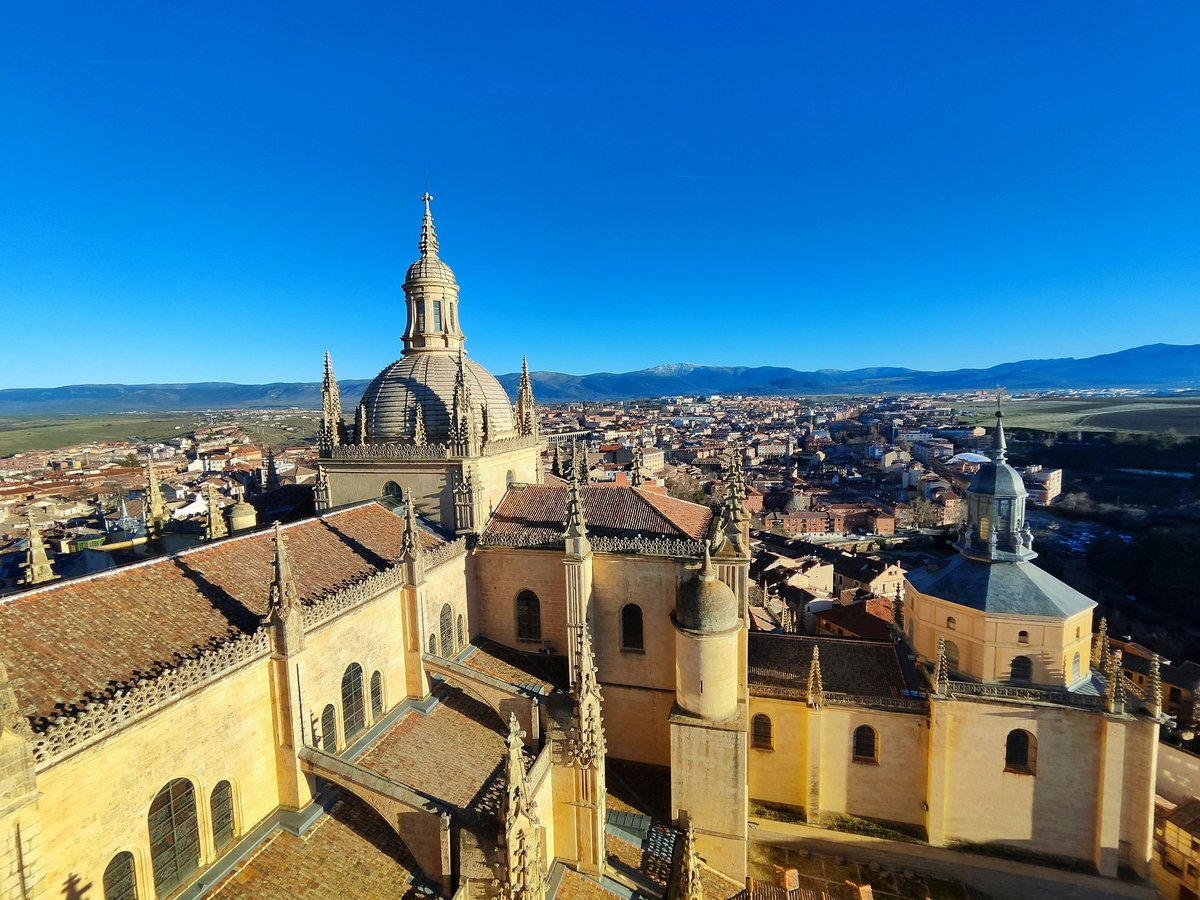
cathedralThe last major Gothic cathedral built in Spain, completed in the 16th century. Its 33-meter-high nave stays cool year-round, but in March the chill matches the season outside, and the candlelit interior feels more atmospheric than in summer. The cloister, originally from the old cathedral destroyed in 1521, is particularly quiet in the low season. Worth timing your visit to coincide with one of the Lenten organ recitals if the schedule aligns.
Casco AntiguoMirador de la Pradera de San Marcos
viewpointThe free viewpoint across the Eresma valley that gives you the classic Alcázar profile shot, with the castle's prow-shaped tower rising above the river. In March, late afternoon light between 17:00 and 18:00 hits the castle's western face at a low angle, and the dramatic cloud formations common this time of year make for a better backdrop than July's flat blue sky. Bring a tripod if you have one.
San MarcosReal Casa de Moneda
museumThe restored 16th-century royal mint sits along the Eresma below the Alcázar. Philip II commissioned it in 1583, and the water-wheel-driven coin-pressing machinery has been painstakingly restored. In March, you might share the entire museum with a handful of other visitors. The building itself is impressive, a stone-and-timber industrial complex that feels more like a cathedral of engineering than a typical museum.
San MarcosIglesia de la Vera Cruz
churchA 13th-century church on a small hill across the Eresma from the old town, built on a dodecagonal plan with a two-story inner chamber. The Knights of the Holy Sepulchre (or possibly the Templars, historians still debate it) are traditionally credited with its construction. In March, you may be the only visitor. The circular interior feels properly medieval in the silence, and the views back toward the Alcázar and the old town walls from the churchyard are worth the short walk from San Marcos.
San MarcosMonasterio de El Parral
monasteryA working Hieronymite monastery in the Eresma valley below the northern walls. The church and cloister are open to visitors at limited hours. In March, the poplars and elms along the approach path are bare, which reveals the monastery's full stone facade, a view that dense foliage blocks from May through October. The Gregorian chant at the monks' daily offices is audible from the nave if you time your visit right.
San LorenzoMuseo de Arte Contemporáneo Esteban Vicente
museumHoused in the 15th-century Palacio de Enrique IV, this contemporary art museum focuses on the work of Esteban Vicente, a Segovia-born painter who became part of the New York Abstract Expressionist movement alongside Rothko and de Kooning. A strong rainy-day option in March, when you'll have the galleries largely to yourself. The building itself, a mix of medieval stone and modern gallery spaces, is worth seeing even if abstract art isn't your primary interest.
Casco Antiguo
Your packing checklist
Tick items off as you pack. Your progress saves in this browser.
All packed — have a great trip.
Insider tips
The cochinillo along Calle Cronista Lecea and Calle Cervantes tends to run 3-5 euros less per portion than at the restaurants directly on Plaza del Azoguejo, and the quality is comparable. Mesón de Cándido has the ceremony (they cut the pig with a plate, then throw it), but locals are more likely to eat at José María or Casa Duque.
Visit the Alcázar right at 10:00 when the doors open. Even in March, the first coach groups from Madrid tend to arrive between 11:00 and 11:30, and the narrow spiral staircase up the Torre de Juan II means queues build fast once 3-4 groups hit at once.
The walk from the Iglesia de la Vera Cruz along the Eresma valley to the Monasterio de El Parral and back takes about 90 minutes and is one of Segovia's finest experiences. In March you'll likely have the path entirely to yourself, and the bare trees open up views of the monastery and the old town walls that are hidden by foliage the rest of the year.
If you're coming from Madrid by AVE, the Segovia-Guiomar station is about 6km from the old town. The Line 11 bus connects to the Aqueduct in roughly 15 minutes. Some visitors book taxis not realizing the bus exists and runs frequently.
Avoid these mistakes
- Underestimating the cold. Visitors from Madrid, only 90km to the southeast, often arrive in light jackets and regret it within an hour. Segovia sits about 700 meters higher than Madrid and can be 5-8°C colder on any given day, with wind chill making it worse. Pack as if you're visiting northern Europe, not central Spain.
- Trying to see the Alcázar, Cathedral, Roman Aqueduct, Vera Cruz, and the Eresma valley all in a single rushed day trip. The winter closing times at most sites are 17:30 or 18:00, the cobblestone walks between them take longer than Google Maps suggests (especially uphill on wet stone), and you'll miss the food, which is half the reason to come. Two nights is better than one, and one night is better than a 6-hour dash.
- Skipping the lower Eresma valley walk because the weather looks grey. The Iglesia de la Vera Cruz, Monasterio de El Parral, and the San Juan de la Cruz convent are some of Segovia's most atmospheric spots, and overcast March light with bare branches makes for better photographs than harsh summer sun. Save the walk for a dry window, but don't skip it.
- Eating only on the Plaza del Azoguejo. The restaurants ringing the Aqueduct charge a location premium and are geared toward day-trippers. Walk 5 minutes into the Casco Antiguo or down into San Millán and you'll find the same quality at lower prices, with a more local crowd even in low season.
Practical tips for March
March daylight in Segovia runs from roughly 07:45 to 18:50 in early March, extending to about 08:00 to 20:30 (CEST) by month's end after the spring clock change on the last Sunday of March. Spain switches to summer time that Sunday, so plan around the lost hour if you're visiting that weekend. Most restaurants in the Casco Antiguo serve lunch from 13:30 to 15:30 and dinner from 20:30 to 22:30, though some reduce weekday evening hours in the low season. The high-speed AVE from Madrid Chamartín to Segovia-Guiomar takes 28 minutes, and the connecting Line 11 bus runs from the station to the Aqueduct in about 15 minutes. If you're driving from Madrid, the AP-61 from the AP-6 takes about 75 minutes. Carry some cash for smaller bars and shops in the San Lorenzo and San Millán neighborhoods, as a few still don't accept cards for small amounts. Advance booking for the Alcázar tower is worthwhile on weekends, as the narrow staircase caps capacity. The Turismo office in the Plaza del Azoguejo, at the base of the Aqueduct, has current opening hours for all monuments and can tell you about any Lenten concerts scheduled that week.
FAQ
Is March a good time to visit Segovia?
It's fair, not great. You get the city's major monuments with almost no crowds, and prices are at their annual low. But March is cold (highs around 11°C / 52°F) and wet (119mm of rain across 14 days). If you don't mind bundling up and ducking into restaurants and museums when it rains, March has a quiet, atmospheric appeal. If you want comfortable outdoor sightseeing weather, May, June, or September are significantly better months.
What is the weather like in Segovia in March?
Cold and often rainy. Average daytime highs reach about 11°C (52°F) and overnight lows drop to around 3°C (37°F), with frost possible in early March. Rainfall averages 119mm across roughly 14 days. Humidity sits around 73%. Wind on the exposed meseta makes it feel colder than the numbers suggest, especially around the Roman Aqueduct and along the northern edge of the old town. Pack warm layers, waterproof shoes, and a rain jacket.
Is Segovia crowded in March?
No. March is one of the quietest months for tourism in Segovia. You'll share the Alcázar with a handful of other visitors on weekday mornings, and the Catedral de Segovia can feel almost empty. The one exception is Semana Santa, if it begins in late March. Even then, Segovia's processions draw a modest local crowd, nothing like the hundreds of thousands who line the streets in Seville. Weekend day-trippers from Madrid still come, but in far smaller numbers than from May through October.
Can I do a day trip from Madrid to Segovia in March?
Yes, and it's straightforward. The AVE high-speed train from Madrid Chamartín to Segovia-Guiomar takes 28 minutes, with connecting buses to the Aqueduct. Alternatively, the La Sepulvedana bus company runs direct coaches from Madrid's Moncloa station to Segovia's Estación de Autobuses in about 75 minutes. A day trip works, but one overnight lets you see the city in evening light, eat cochinillo asado at a proper sit-down dinner, and catch the Aqueduct in early morning mist before the first buses from Madrid arrive.
What should I eat in Segovia in March?
Start with cochinillo asado, the roast suckling pig that defines Segovia's food identity. March cold makes it taste its best. Follow with judiones de La Granja, a stew of enormous white beans from nearby La Granja de San Ildefonso, cooked with chorizo and morcilla. Sopa castellana, a garlic soup with bread, jamón, and a poached egg, is the classic cold-weather starter. Since March falls during Cuaresma (Lent), you'll also find torrijas, honey-soaked fried bread dusted with cinnamon, in every bakery and bar in the old town.
Things to Do in Segovia in March
 Free cancellation
 Hot-Air Balloon Ride over Segovia with Optional Transport from Madrid
Outdoor experience: free cancellation.
via Viator Free cancellation
 Hot Air Balloon Flight Over Segovia or Toledo
Outdoor experience: 4 hours, free cancellation.
via Viator Free cancellation
 Hot Air Balloon over Segovia with Optional Transfers from Madrid
Outdoor experience: 4 hours, free cancellation.
via Viator Free cancellation
 Segovia from the Skies: Sunrise Balloon Ride
Outdoor experience: free cancellation.
via Viator Free cancellation
 Segovia Balloons
Outdoor experience: 4 hours, free cancellation.
via Viator Free cancellation
 Balloon flight at sunrise in Segovia
Outdoor experience: 3 hours, free cancellation.
via ViatorFind a flight to Segovia
Live fares to Segovia appear here once cookies are accepted.
Last verified by automated review (v1.7.2) on . What is automated review?