Compare every Spain city in July →
Stay in Segovia in July
23 hotels in the Trip.com pool for Segovia, from US$48 a night.
Opens Trip.com on Fri 2 Jul to Sun 4 Jul 2027; change the dates there.
July in Segovia brings about 3mm of rain for the entire month. That makes it the driest stretch of the year by a wide margin, and it shapes everything about how the city feels. Daytime temperatures reach about 29°C (84°F), which sounds moderate on paper. But the Castilian meseta sun at 1,000 metres elevation has a sharpness that catches people off guard. Mornings start cool near 15°C (59°F), and the stone streets of the Judería still hold the night's chill at 8 a.m. By 2 p.m., the Plaza del Azoguejo below the Aqueduct feels like a sunbaked amphitheatre with no shade.
To be fair, Segovia in July is far more bearable than Madrid, which sits 90 kilometres to the southeast and routinely hits 35°C or higher. The elevation buys you 5 to 6 degrees of relief and, more importantly, humidity that tends to hover around 42%. Evenings cool down enough that you might want a light layer for dinner on the Plaza Mayor. That is the tradeoff with July. You get bone-dry weather and daylight past 9:30 p.m., but the midday heat pushes you indoors between roughly 1 p.m. and 5 p.m., which happens to be when many restaurants close for lunch service anyway.
The defining event of July in the wider Segovia province is the Concierto de las Velas in Pedraza, about 37 kilometres northeast. On the first two Saturdays of the month, the entire medieval village goes dark except for thousands of candles, and classical musicians perform in the candlelit Plaza Mayor. Tickets sell out weeks in advance. If you are considering a July trip to this part of Castilla y León, that concert is likely the single strongest reason to commit to these specific dates.
Why visit in July
- Virtually zero rainfall at 3mm for the month, so outdoor plans almost never get disrupted by weather
- Segovia sits at 1,000m elevation, keeping July temperatures 5-6°C cooler than Madrid, 90km away
- The Concierto de las Velas in Pedraza on the first two Saturdays of July is one of the most atmospheric outdoor concerts in central Spain
- Daylight lasts past 9:30 p.m., giving you long evenings for the paseo through the Barrio de los Caballeros and along the Eresma valley
Worth knowing
- Midday temperatures above 30°C make the exposed walk along the Aqueduct and up to the Alcázar uncomfortable between 1 p.m. and 5 p.m.
- Day-trip crowds from Madrid peak in July, and the Plaza del Azoguejo can feel congested by 11 a.m. on weekends
- Hotel rates run 30-50% above the annual average, and popular restaurants like those on Calle Cervantes fill their terraces by 9 p.m.
- The UV index regularly hits 9 or 10 at this elevation, which is higher than most visitors expect for a city that does not feel particularly southern
Best for
Think twice if
July in Segovia is the driest month of the year, with about 3mm of total rainfall and humidity around 42%. The meseta sun at 1,000 metres feels more intense than the temperature alone suggests. Mornings are pleasantly cool near 15°C, but by early afternoon temperatures typically reach 29°C with occasional spikes above 33°C during heat waves. The dry air means shade offers genuine relief, and evenings cool rapidly after sunset around 9:45 p.m.
Seasonal caution
- UV index regularly reaches 9-10 at Segovia's 1,000m elevation. Sunburn can happen in under 20 minutes of direct exposure, even on hazy days
- Heat waves occasionally push temperatures past 35°C (95°F) for 3-5 consecutive days in July, particularly in the second half of the month. The Spanish meteorological agency AEMET issues orange alerts for Castilla y León during these events
- The temperature swing between morning lows near 15°C and afternoon highs near 29°C is about 14 degrees. Visitors who dress for the midday heat often find themselves cold on evening walks along the Eresma valley
Year-round climate
Averages from the last 5 years.
| Month | Avg high (°C) | Avg low (°C) | Rainfall (mm) |
|---|---|---|---|
| Jan | 8 | 0 | 124 |
| Feb | 10 | 1 | 78 |
| Mar | 11 | 3 | 119 |
| Apr | 15 | 5 | 78 |
| May | 19 | 8 | 59 |
| Jun | 24 | 13 | 52 |
| Jul | 29 | 15 | 3 |
| Aug | 29 | 16 | 5 |
| Sep | 22 | 11 | 34 |
| Oct | 19 | 10 | 100 |
| Nov | 11 | 4 | 130 |
| Dec | 9 | 2 | 87 |
Holidays and festivals in July
Public holidays
- Santiago Apóstol(Santiago Apóstol)25 July 2027
- Day of the Cantabrian Institutions(Día de las Instituciones de Cantabria)28 July 2027
Headline events
Concierto de las Velas de Pedraza
First two Saturdays of July
The medieval village of Pedraza, 37km from Segovia, extinguishes all electric light and fills its streets and Plaza Mayor with thousands of candles. Classical musicians perform in the candlelit square. The event has run since 1992 and typically draws over 5,000 visitors per night, making it one of the most distinctive summer concerts in Spain.
Best things to do in July
Concierto de las Velas in Pedraza
culturalAttend one of Spain's most atmospheric summer concerts. The medieval village of Pedraza goes dark, lit only by thousands of candles, while classical musicians perform in the Plaza Mayor. The 37km drive from Segovia takes about 35 minutes.
The concert takes place only on the first two Saturdays of July. No other dates.Booking tipTickets sell out 2-4 weeks in advance. Buy through the official Pedraza Villa Medieval website. Consider staying overnight in Pedraza since traffic after the concert backs up for over an hour.
Watch the fountain displays at La Granja de San Ildefonso
culturalThe 18th-century royal palace gardens 11km from Segovia contain 26 ornamental fountains. On select dates in summer, the fountains run in sequence with their original water-pressure mechanisms, some shooting over 40 metres high. The display lasts about 30 minutes per fountain group.
July 25, the Día de Santiago, is one of the handful of dates all year when the full set of fountains runs. It typically draws several thousand visitors.Booking tipArrive at La Granja by 5 p.m. on fountain days. The gardens fill quickly and parking along the Carretera de Segovia is limited. The palace entry fee covers the garden.
Early morning photography walk along the Aqueduct
sightseeingThe east-facing Roman Aqueduct catches the first sunlight around 7 a.m. in July, casting long shadows through its 167 arches. At that hour the Plaza del Azoguejo is nearly empty. By 10 a.m. the tour buses start arriving.
July's clear skies and early sunrise at roughly 7:00 a.m. give a 3-hour window of perfect light with no clouds and no crowds. The dry air keeps the stone golden rather than grey.Evening paseo and dinner in the Barrio de los Caballeros
sightseeingAfter the heat breaks around 7 p.m., the old noble quarter between the Cathedral and the Alcázar empties of day-trippers. The narrow streets of the Barrio de los Caballeros stay cool, shaded by stone walls on both sides. Dinner service at most restaurants begins at 9 p.m.
July's long twilight lasts until nearly 10 p.m., giving you a 3-hour window of comfortable temperatures and golden light for walking the old town before a late dinner.Sunset from the Pradera de San Marcos
sightseeingThe meadow below the city walls on the north side of the Eresma river gives the widest panoramic view of Segovia. The Alcázar, Cathedral, and Aqueduct line the skyline. Locals bring blankets and bottles of wine on summer evenings.
July sunsets at this latitude happen around 9:45 p.m., so the temperature has already dropped to around 22°C. The dry air keeps the sky clear and the stone glows orange.Morning hike in the Sierra de Guadarrama
outdoorThe Peñalara massif and the Puerto de Navacerrada trailheads sit about 30km south of Segovia. In July, the snow has melted and the alpine meadows are dry enough for comfortable hiking. Temperatures at 1,800-2,000m are 8-10°C cooler than in the city.
July is one of only two months when the highest trails in the Sierra de Guadarrama are fully clear of snow and ice. Start early. By noon, even the mountain trails get hot.Booking tipThe Parque Nacional de la Sierra de Guadarrama limits daily visitors in summer. Check the park website for permit requirements on the Peñalara route.
Afternoon retreat to the Real Casa de Moneda
culturalThe 16th-century Royal Mint sits at the bottom of the Eresma valley below the Alcázar. The thick stone walls and proximity to the river keep the interior noticeably cooler than street level. The hydraulic machinery exhibits are genuinely interesting, not filler.
In July, the Real Casa de Moneda is the best indoor option during the 1-5 p.m. heat window. The museum is rarely crowded even in peak season, and the shaded walk along the Eresma to get there is one of the coolest routes in the city.Day trip to the walled village of Pedraza
day_tripEven outside the Concierto de las Velas weekends, Pedraza is worth the 37km drive. The village has a single entrance through a medieval gate, a castle, and several restaurants serving lechazo asado in wood-fired ovens.
The dry July weather makes the open landscape between Segovia and Pedraza look its most Castilian, with stubble fields stretching to the horizon. The village restaurants set up outdoor tables that are rarely available in cooler months.What to eat in July
In season: fruit
Cerezas del Jerte
Cherry season from the Jerte Valley in Extremadura peaks in late June and the first two weeks of July. You will find them piled at the Mercado de Abastos and served as postre in many restaurants. The window is short.
On menus now
Gazpacho castellano
Segovia's take on cold soup tends to be thicker than the Andalusian version, with more bread and less vinegar. Restaurants across the old town add it to the menú del día in July as a starter.
Melón con jamón
Castilian cantaloupe melon reaches peak sweetness in July. Paired with thin slices of jamón ibérico or serrano, it appears as a starter on nearly every summer menu in the San Millán and San Lorenzo neighbourhoods.
Ponche segoviano
Segovia's signature layered cake of sponge, pastry cream, and marzipan, topped with a caramelized sugar crust. Available year-round but the lighter summer appetite makes a single slice feel like the right portion after a heavy cochinillo lunch.
What to drink
Tinto de verano
Red wine over ice with lemon soda. In July, this outsells sangria at every terrace along the Plaza Mayor and Calle Real. A glass typically costs 2-3 euros.
Regular events in July
Día de Santiago ApóstolFree
Spain's patron saint day on July 25 is a national holiday. In Segovia, it means modified shop hours, special Mass at the Catedral de Segovia, and the fountain displays at La Granja de San Ildefonso. Restaurants fill early for the holiday lunch.
July 25Fuentes Monumentales de La Granja
The ornamental fountains in the gardens of the Palacio Real de La Granja de San Ildefonso run on select dates through the summer, typically including several Wednesday and Saturday evenings in July beyond the headline July 25 display.
Select Wednesdays and Saturdays in July, plus July 25Feria de Artesanía de SegoviaFree
An open-air crafts market that sets up on the Plaza Mayor and surrounding streets during summer weekends. Ceramics from the Segovia province, leather goods, and hand-forged ironwork from workshops in the smaller villages of Castilla y León.
Weekend mornings throughout JulyBest places this July
Acueducto Romano and Plaza del Azoguejo
monumentThe 1st-century Roman aqueduct stands 28 metres at its tallest point, with 167 arches spanning the valley. The Plaza del Azoguejo at its base is the natural starting point for the old town. Come before 9 a.m. in July to see it without tour groups.
San MillánAlcázar de Segovia
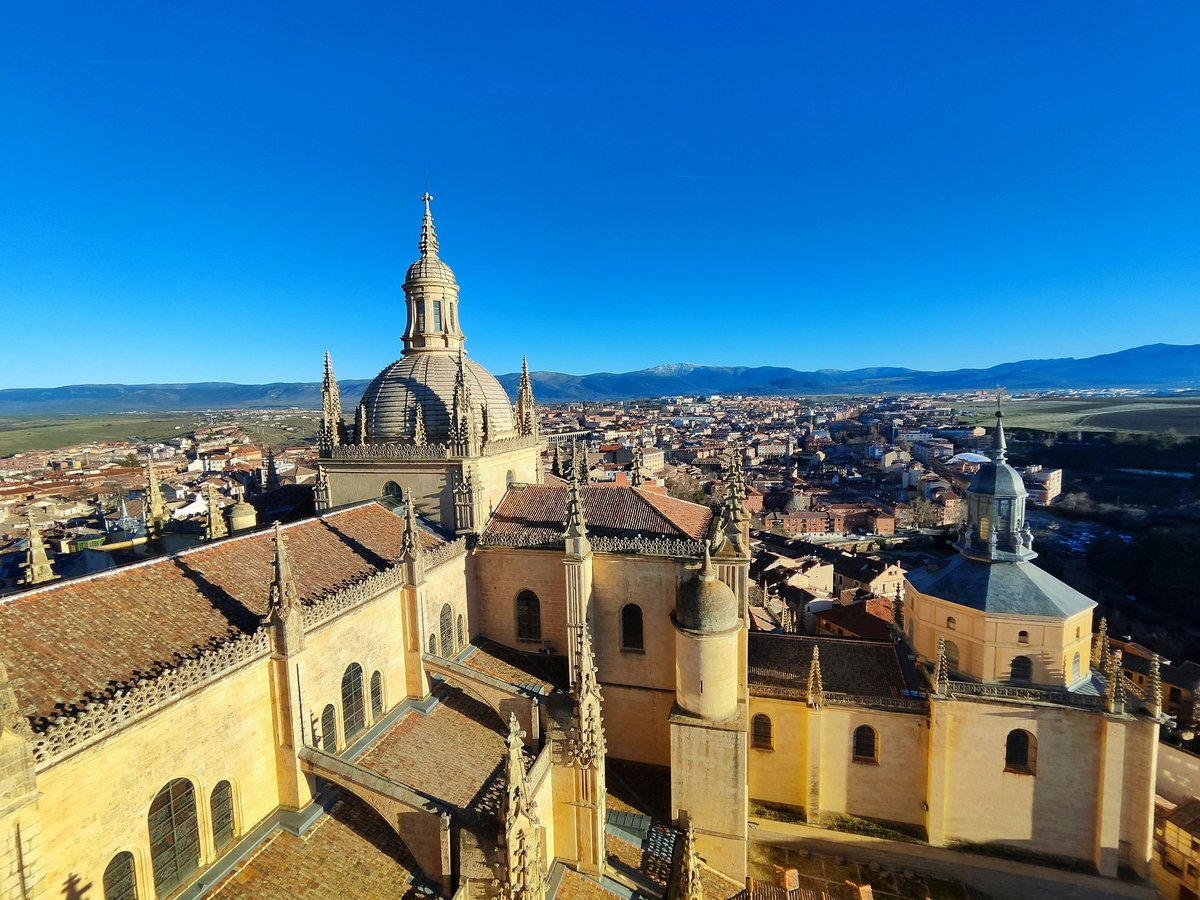
monumentThe fortress at the western tip of the old town, perched above the confluence of the Eresma and Clamores rivers. The tower climb gives the best aerial view of the meseta, and in July the light is clear enough to see the Sierra de Guadarrama peaks from the top.
Barrio de los CaballerosReal Casa de Moneda
museumA 16th-century hydraulic mint built by Philip II along the Eresma river below the Alcázar. The thick stone walls stay cool in summer, and the walk down through shaded gardens along the river is one of the most pleasant routes in the city during July.
San MarcosIglesia de la Vera Cruz
churchA 13th-century round church outside the city walls, attributed to the Knights Templar. The walk from the old town crosses the Pradera de San Marcos and takes about 15 minutes. In July, the dry grass and open sky give it an austere beauty.
San MarcosMonasterio de Santa María del Parral
monasteryAn active Hieronymite monastery in the Eresma valley, about a 20-minute walk from the Alcázar through a shaded riverside path. The cloister is usually accessible in the morning. The walk along the river is noticeably cooler than the exposed old town streets.
San LorenzoMirador de la Canaleja
viewpointA small lookout point on Calle Juan Bravo with a view south over the San Millán neighbourhood and the plains beyond. Less visited than the bigger viewpoints, and there is usually shade from the surrounding buildings in the late afternoon.
La JuderíaLa Granja de San Ildefonso
palaceThe 18th-century Bourbon summer palace 11km southeast of Segovia, with formal gardens and ornamental fountains. The palace interiors are cool in summer and the gardens provide shade that the city centre lacks. On July 25, the full fountain display runs.
Pradera de San Marcos
parkThe large meadow on the north bank of the Eresma river, directly below the city walls. In July evenings, locals bring picnics here and watch the sunset light up the Alcázar and Cathedral above. The grass is dry and golden, not green.
San Marcos
Your packing checklist
Tick items off as you pack. Your progress saves in this browser.
All packed — have a great trip.
Insider tips
The Aqueduct faces east. If you want the classic photograph with the arches lit golden by direct sunlight, you need to be at the Plaza del Azoguejo between 7 a.m. and 8:30 a.m. By 10 a.m. the light is overhead and flat, and the tour groups have arrived.
Skip the restaurants directly on the Plaza Mayor for your main meal. Walk 2-3 blocks into the Barrio de los Caballeros or down toward San Millán, where the menú del día costs 13-16 euros instead of 20-25, and the cochinillo is the same quality from the same suppliers.
The walk from the Alcázar down to the Real Casa de Moneda and then along the Eresma river to the Monasterio de El Parral is the coolest route in the city. The river and tree cover drop the felt temperature by 5-8°C compared to Calle Real. In July, this is the difference between miserable and pleasant.
If you are going to the Concierto de las Velas in Pedraza, eat dinner in Pedraza before the concert, not after. Every restaurant in the village has a 2-hour wait after the performance ends, and the drive back to Segovia takes twice as long because everyone leaves at once.
The AVE train from Madrid Chamartín to Segovia-Guiomar takes 27 minutes, but Segovia-Guiomar station is 5km outside the old town. Bus 11 connects them, but the last bus back to the station leaves earlier than most visitors expect. Check the return schedule before you settle into a long dinner.
Avoid these mistakes
- Scheduling the walk from the Aqueduct to the Alcázar at midday. The route is about 2km, mostly uphill, with almost no shade along Calle Real and Calle Juan Bravo. In July at 1 p.m. the stone radiates stored heat and the sun is directly overhead. Do it before 10 a.m. or after 6 p.m.
- Assuming Segovia is a half-day trip from Madrid. The day-trip crowd arrives at 11 a.m. and leaves by 5 p.m. They see the Aqueduct and the Alcázar but miss the evening paseo, the sunset from the Pradera de San Marcos, and the late dinner culture. One overnight changes the trip completely.
- Dressing for 29°C and forgetting the 15°C mornings and evenings. The 14-degree daily swing is one of the widest in Spain in July, and visitors in shorts and sandals are visibly cold at 10 p.m. on the Plaza Mayor.
- Not booking the Concierto de las Velas de Pedraza tickets in advance. The concert sells out every year, often 2-3 weeks before the date. Showing up in Pedraza without a ticket on concert Saturday means you can see the candles in the streets but not enter the Plaza Mayor for the performance.
Practical tips for July
Most shops in the old town still close for siesta between 2 p.m. and 5 p.m. in July. Restaurants serve lunch from 1:30 p.m. to 3:30 p.m. and dinner from 9 p.m. to 11 p.m. Plan your day around this schedule, not against it. The Catedral de Segovia and Alcázar stay open through the afternoon, so use siesta hours for indoor sightseeing. The fastest route from Madrid is the AVE train to Segovia-Guiomar station (27 minutes, roughly 13 euros), then Bus 11 into the centre. The slower but more scenic option is the regional Cercanías train to the old Segovia station, which drops you closer to the Aqueduct but takes about 2 hours. Book cochinillo restaurants at least a day ahead for weekend lunches in July. If you are driving to the Concierto de las Velas in Pedraza, leave Segovia by 6 p.m. to find parking before the village fills.
FAQ
Is July a good time to visit Segovia?
July is a good but not ideal time. The weather is reliably dry with about 3mm of rain, and the long daylight hours give you time for evening walks and late dinners. The main drawback is midday heat around 29°C (84°F) with intense sun at 1,000m elevation, plus summer crowds from Madrid day-trippers. The best months are likely June and September, when temperatures are milder and the city is less busy. That said, July has the Concierto de las Velas in Pedraza, which alone can justify the timing.
What is the weather like in Segovia in July?
Hot and dry. Average highs reach 28.7°C (84°F) with lows around 15.2°C (59°F). Rainfall is virtually zero at 3mm for the entire month, and humidity stays around 42%. The elevation means the UV index is high, often 9-10, so sunburn happens quickly. Mornings feel cool enough for a light layer, afternoons are hot with little shade on the main streets, and evenings drop to a comfortable 18-20°C.
Is Segovia crowded in July?
The main monuments are noticeably crowded, especially on weekends. The Aqueduct, Alcázar, and Cathedral see peak visitor numbers between 11 a.m. and 4 p.m. Most of this comes from Madrid day-trippers who arrive late morning and leave by evening. The old town empties considerably after 5 p.m. when the tour buses depart. If you stay overnight, the evening and early morning hours feel like a different city.
How do I get tickets for the Concierto de las Velas in Pedraza?
Tickets for the Concierto de las Velas typically go on sale 4-6 weeks before the event through the Pedraza Villa Medieval website and occasionally through regional ticketing platforms. They sell out 2-3 weeks in advance most years. The concert takes place on the first two Saturdays of July. Each night has a different programme and performer lineup. Plan to arrive in Pedraza by 6 p.m. for parking, eat dinner before the concert, and expect a slow drive back to Segovia afterward.
Should I stay overnight in Segovia or day-trip from Madrid?
Stay overnight if your schedule allows. The 27-minute AVE train makes day-tripping easy, but you would arrive when the crowds do and leave before the city's best hours. The evening paseo through the Barrio de los Caballeros, sunset from the Pradera de San Marcos, and dinner on a terrace at 10 p.m. are all experiences the day-trip crowd misses entirely. One night is enough to see the difference.
Things to Do in Segovia in July
 Free cancellation
 Hot-Air Balloon Ride over Segovia with Optional Transport from Madrid
Outdoor experience: free cancellation.
via Viator Free cancellation
 Hot Air Balloon Flight Over Segovia or Toledo
Outdoor experience: 4 hours, free cancellation.
via Viator Free cancellation
 Hot Air Balloon over Segovia with Optional Transfers from Madrid
Outdoor experience: 4 hours, free cancellation.
via Viator Free cancellation
 Segovia from the Skies: Sunrise Balloon Ride
Outdoor experience: free cancellation.
via Viator Free cancellation
 Segovia Balloons
Outdoor experience: 4 hours, free cancellation.
via Viator Free cancellation
 Balloon flight at sunrise in Segovia
Outdoor experience: 3 hours, free cancellation.
via ViatorFind a flight to Segovia
Live fares to Segovia appear here once cookies are accepted.
Last verified by automated review (v1.7.2) on . What is automated review?