Compare every Spain city in August →
Stay in Segovia in August
23 hotels in the Trip.com pool for Segovia, from US$48 a night.
Opens Trip.com on Fri 6 Aug to Sun 8 Aug 2027; change the dates there.
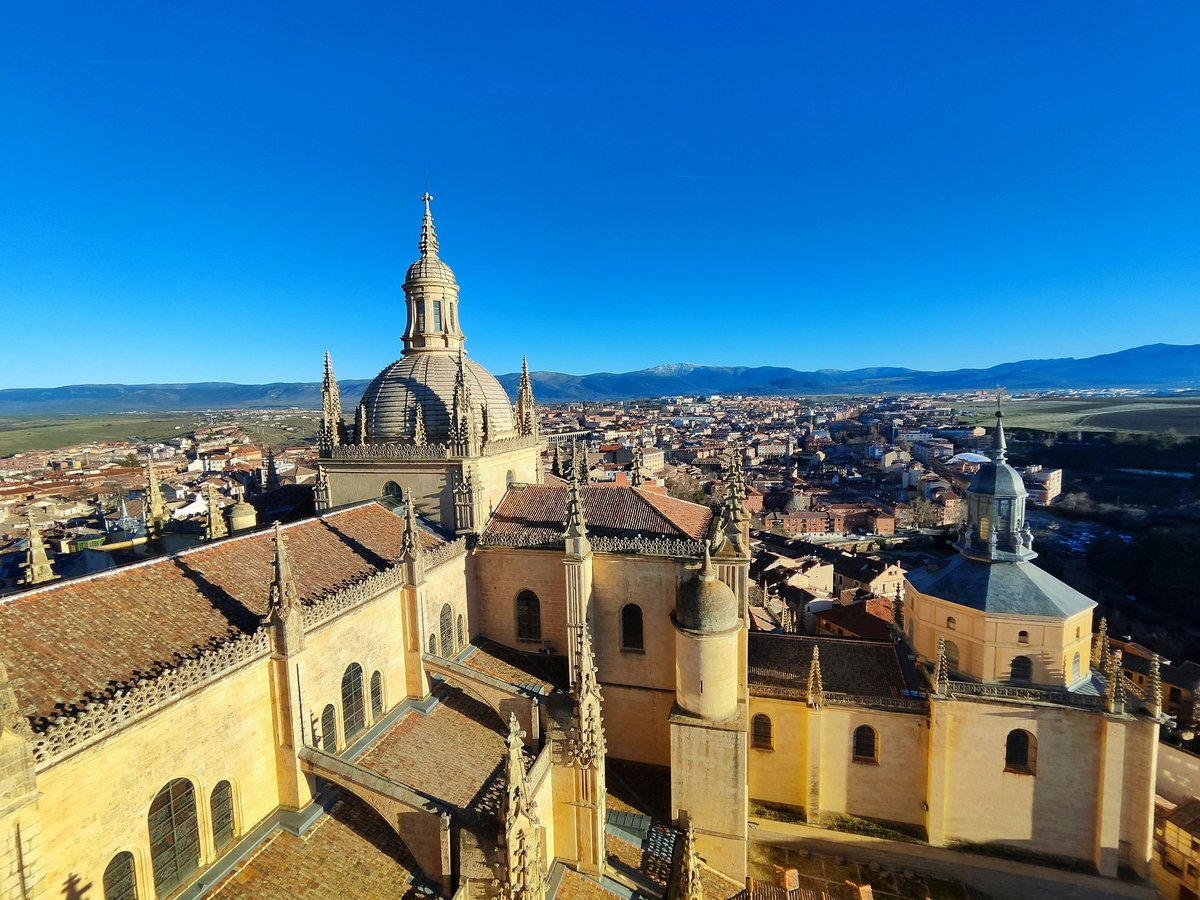
August in Segovia is hot, dry, and Spanish-tourist-heavy. That is the single most important thing to know. Daytime temperatures typically reach 29°C (85°F), which sounds manageable on paper, but the Castilian meseta delivers that heat with direct, unrelenting sun and almost zero cloud cover. Rainfall averages a negligible 5mm for the entire month. You will not see rain. The flip side is that Segovia sits at 1,000 metres (3,280 feet) elevation, so nights drop to a genuinely pleasant 16°C (61°F). That temperature swing is the secret weapon of an August visit here.
Madrid empties in August. Half the capital's population seems to scatter, and a good number of madrileños head to Segovia for weekend escapes or the Asunción long weekend around August 15. The Casco Antiguo gets noticeably crowded on Friday and Saturday evenings, and the queue at the Alcázar can stretch 45 minutes by 11 a.m. That said, the domestic crowd thins considerably on weekdays, and mornings before 10 a.m. still feel like your own private medieval city. Some smaller shops and family restaurants close for their own August holidays, typically the first two weeks, so you might find a favourite spot shuttered.
To be fair, Segovia in August is a far more comfortable proposition than Madrid, Seville, or Córdoba at the same time. The 29°C average high here is roughly 7-8 degrees cooler than Madrid's August average. If you are already planning a summer trip to central Spain and want to escape the worst of the heat, Segovia works well as a multi-day base rather than the typical rushed day trip from Madrid.
Why visit in August
- Nearly zero rainfall (5mm average) means you can plan outdoor activities with confidence, and the Roman Aqueduct photographs beautifully against clear blue skies every single day.
- Evening temperatures drop to around 16°C (61°F), making after-dark walks through the Barrio de la Judería and dinner on Plaza Mayor genuinely comfortable compared to the suffocating nights in Madrid or Seville.
- The extended daylight (sunrise around 7:15 a.m., sunset near 9:30 p.m.) gives you a long window for early-morning visits to the Alcázar or Catedral before the day-trip crowds arrive from Madrid around 11 a.m.
- The ornamental fountains at the Real Sitio de San Ildefonso (La Granja), 11 km southeast of Segovia, run on select August dates including San Luis on August 25. The full fountain display happens only about 6 times per year.
Worth knowing
- Midday heat between 1 p.m. and 5 p.m. makes walking the exposed stretches along the Aqueduct and up Calle Real genuinely unpleasant. The stone streets radiate stored heat, and shade is sparse on the main tourist corridor.
- August 15 (Asunción de la Virgen) is a national holiday, and the surrounding long weekend brings peak domestic crowds. Hotel rates for that weekend can reach 2x the July average, and restaurants in the Casco Antiguo fill by 1:30 p.m.
- Many family-run restaurants and small shops close for their own vacations during the first two weeks of August. The bigger mesones and tourist-facing places stay open, but you lose some of the local character.
- This is the most expensive month of the year in Segovia. A double room in a mid-range hotel near Plaza Mayor that runs 70-85 EUR in May can reach 120-150 EUR in August weekends.
Best for
Think twice if
August in Segovia is the joint-hottest month alongside July, but the high-altitude meseta location keeps it tolerable. Days are consistently sunny and dry with almost no cloud cover. Humidity sits around 40%, which means the heat feels dry rather than oppressive. The 13-degree swing between the average high of 29°C and the average low of 16°C is the defining feature. You might start the morning in a light layer and strip down to a t-shirt by 10 a.m. Rain is essentially a non-factor at 5mm for the entire month, typically delivered in a single brief thunderstorm if it comes at all.
Seasonal caution
- UV radiation at Segovia's 1,000m elevation is roughly 15-20% stronger than at sea level. Sunburn happens faster than most visitors expect, particularly along the exposed Aqueduct promenade and the Alcázar ramparts where there is no shade.
- Heat spikes above 35°C (95°F) occur roughly 3-5 days per August. On those days, the stone-paved streets in the Casco Antiguo amplify the heat, and the climb from Plaza del Azoguejo up to the Catedral becomes genuinely taxing. Carry water.
Year-round climate
Averages from the last 5 years.
| Month | Avg high (°C) | Avg low (°C) | Rainfall (mm) |
|---|---|---|---|
| Jan | 8 | 0 | 124 |
| Feb | 10 | 1 | 78 |
| Mar | 11 | 3 | 119 |
| Apr | 15 | 5 | 78 |
| May | 19 | 8 | 59 |
| Jun | 24 | 13 | 52 |
| Jul | 29 | 15 | 3 |
| Aug | 29 | 16 | 5 |
| Sep | 22 | 11 | 34 |
| Oct | 19 | 10 | 100 |
| Nov | 11 | 4 | 130 |
| Dec | 9 | 2 | 87 |
Holidays and festivals in August
Public holidays
- Assumption(Asunción)15 August 2027
Best things to do in August
Evening walk along the Aqueduct after sunset
sightseeingThe Roman Aqueduct, all 167 arches and 28 metres of granite height, is dramatically lit after dark. An evening walk from Plaza del Azoguejo south along Calle Fernández Ladreda lets you see the full scale of the structure without the midday crowds or the punishing sun. The stone radiates stored warmth well into the night, and the lighting stays on until about midnight.
August sunsets at 9:30 p.m. mean the golden-hour-to-floodlight transition happens at a comfortable hour, and the 16°C evening temperature makes the walk genuinely pleasant rather than a cold-weather endurance test.Booking tipNo booking needed. Start at Plaza del Azoguejo around 9 p.m. for the best light transition.
Ornamental fountain display at La Granja de San Ildefonso
culturalThe Royal Palace of La Granja, 11 km from Segovia, has 26 ornamental fountains designed in the 18th century to rival Versailles. They run on gravity-fed pressure alone, no pumps, and only operate on a handful of dates per year. The full display sends water 40 metres into the air from the Fuente de la Fama.
August 25, the feast of San Luis, is one of the few annual dates when all 26 fountains run simultaneously. The display draws thousands of visitors to the palace gardens.Booking tipArrive before 5 p.m. to secure a good viewing position near the Fuente de la Fama. Parking fills by 4 p.m. on fountain days. The bus from Segovia's Estación de Autobuses runs every 30 minutes.
Early-morning climb of the Alcázar tower
sightseeingThe 152-step spiral staircase inside the Torre de Juan II at the Alcázar delivers 360-degree views across the meseta, the confluence of the Eresma and Clamores rivers, and the Sierra de Guadarrama. The tower is narrow and the stairs are worn smooth, so it is best tackled before the heat and the crowds.
August mornings are warm but not yet hot before 10 a.m., and the near-zero humidity means visibility across the meseta can stretch 50-60 km to the mountains. The clarity of the views in August is noticeably better than in the hazier spring months.Booking tipThe Alcázar opens at 10 a.m. (10:30 a.m. on Sundays). Be in the queue by 9:45 a.m. and head straight for the tower before doing the interior rooms.
Sunset from the Mirador de la Pradera de San Marcos
viewpointThe grassy meadow below the Alcázar on the north bank of the Eresma River is where locals gather on summer evenings. The view upward at the Alcázar from this angle, perched on its rocky spur with the cathedral behind, is the one you see on postcards. Bring something to sit on and a bottle of tinto de verano from the shop on Calle de la Alameda del Eresma.
The August sunset angle illuminates the Alcázar's western face in warm orange light. The dry grass and the low Eresma water level in August also open up more of the meadow for sitting than you get in wetter months.Day trip to the Hoces del Río Duratón for griffon vulture watching
natureThe Duratón River gorge, about 55 km northeast of Segovia near Sepúlveda, is home to one of Europe's largest colonies of griffon vultures, roughly 500 breeding pairs. The gorge walls rise 100 metres from the river, and the vultures circle on thermals directly overhead. The Ermita de San Frutos, a Romanesque hermitage perched on a cliff above the gorge, is the main viewpoint.
August thermals are the strongest of the year, which means the vultures are most active and visible between 10 a.m. and 2 p.m. The fledglings from the spring breeding season are also making their first flights in late August, so the colony is at peak population.Booking tipCanoe permits for the gorge are limited to 30 boats per day and sell out weeks ahead in August. Book through the Parque Natural office in Sepúlveda. The cliff-top viewpoint at Ermita de San Frutos requires no permit.
Self-guided Romanesque church tour through San Millán and San Esteban
culturalSegovia has more Romanesque churches per square kilometre than almost any city in Spain. A walking loop from the Iglesia de San Millán (11th century, with Moorish-influenced arches) through San Martín on Plaza de Medina del Campo, up to San Esteban (tallest Romanesque bell tower in Spain at 56 metres) covers five or six churches in about 2 hours.
August's long daylight hours and dry conditions make this walking-intensive tour feasible in the cooler morning or late afternoon. Several of these churches open extended summer hours through September, with San Millán staying open until 7 p.m. rather than the winter closing time of 5 p.m.Booking tipStart by 9 a.m. or after 6 p.m. to avoid the midday heat on the exposed stretches between churches.
Visit the Real Casa de Moneda (Royal Mint)
museumSpain's first mechanised mint, built in 1583 on the banks of the Eresma below the Alcázar, has been restored into an interactive museum. The original water-wheel machinery still works, and the exhibits trace Segovia's role in minting Spain's colonial coinage. The building itself, designed by Juan de Herrera (architect of El Escorial), is worth seeing for the hydraulic engineering alone.
The mint building sits in the shade of the river gorge and stays noticeably cooler than the upper old town, making it an ideal midday escape during August heat. The museum also runs extended summer hours, closing at 8 p.m. instead of the winter 6 p.m.Booking tipTicket includes access to the aqueduct interpretation centre. Combined tickets save about 3 EUR over buying separately.
Evening stroll and dinner in the Barrio de la Judería
culturalSegovia's former Jewish quarter, a tangle of narrow alleys south of the cathedral between Calle de la Judería Vieja and the city walls, is one of the best-preserved in Spain. The Didactic Centre of the Jewish Quarter on Calle de la Judería Vieja provides historical context, and the surrounding streets hold several small restaurants with courtyard seating that catch the evening breeze.
The narrow alleys provide natural shade that makes the Judería walkable even on hotter August afternoons, and the courtyard restaurants are at their best when you can eat outdoors until 11 p.m. without needing a jacket.Booking tipReserve courtyard tables for dinner by Thursday if visiting on a weekend. Many places have only 4-6 outdoor tables.
What to eat in August
In season: fruit
Higos frescos de la sierra
Fresh figs from the Sierra de Guadarrama reach their peak in August. You will find them at the Mercado de Abastos and piled on restaurant dessert menus, often served with Manchego cheese or a drizzle of local honey. The green-skinned variety tends to be sweeter than the purple ones.
Melocotones de Aranda
Peaches from the Aranda de Duero region, about 120 km north, hit their sweetest point in August. They show up in desserts across Segovia, sometimes roasted with wine, sometimes raw alongside ponche segoviano.
On menus now
Gazpacho segoviano
Every restaurant in the Casco Antiguo serves gazpacho in August, but the Segovian version tends to be thicker than the Andalusian original, sometimes closer to a salmorejo, and often garnished with diced serrano ham and chopped hard-boiled egg rather than croutons alone.
Ponche segoviano
Segovia's signature pastry, a sponge cake layered with marzipan cream and topped with a caramelized sugar glaze. Available year-round, but August sees bakeries in the Barrio de San Lorenzo pushing lighter, chilled versions that work better in the heat. The Catedral-adjacent bakeries along Calle Marqués del Arco tend to keep the most traditional recipe.
Ensalada de judiones de La Granja
The famous giant white beans of La Granja de San Ildefonso are typically served in a heavy stew during winter, but August menus offer them cold in salads with tuna, roasted peppers, and olive oil. Same earthy, creamy bean, lighter preparation.
What to drink
Tinto de verano
The warm evenings on Plaza Mayor call for tinto de verano, red wine mixed with lemon soda over ice, which outsells sangria among locals by a wide margin. Cheaper and more refreshing than sangria, and nobody will judge you for ordering it at 4 p.m.
Regular events in August
Asunción de la Virgen (Assumption Day)Free
National public holiday on August 15. The Catedral de Segovia holds a special Mass, and the streets of the Casco Antiguo fill with domestic tourists on the surrounding long weekend (puente). Most museums and monuments stay open, but smaller shops close. The restaurant scene is at full capacity.
August 15Noches de Patrimonio (Heritage Nights)Free
The Segovia city council has run summer evening programming in recent years that opens select monuments for night visits with guided tours. The Catedral, certain Romanesque churches, and the city walls have all participated. Programming typically runs Thursday through Saturday evenings in July and August.
Thursdays through Saturdays in July and AugustFuentes de San Luis at La Granja de San Ildefonso
The full ornamental fountain display at the Royal Palace of La Granja runs on the feast of San Luis, August 25. All 26 fountains operate simultaneously, a spectacle that happens only about 6 times per year. Thousands of visitors converge on the palace gardens for the afternoon display.
August 25Festival de Segovia (Semana de Música de Cámara)
A chamber music series that stages concerts in historic venues across the city, including the Romanesque churches of San Juan de los Caballeros and San Millán, the Alcázar courtyard, and the Real Casa de Moneda. The programming typically spans late July through mid-August and draws performers from across Europe.
Late July through mid-AugustBest places this August
Jardines del Alcázar (Alcázar Gardens)
parkThe terraced gardens below the Alcázar's entrance are often overlooked by visitors heading straight for the ticket queue. In August, the shade from mature trees makes this one of the coolest spots in the upper old town. The views down to the Eresma valley are excellent, and there is usually a bench free on weekday mornings.
Casco AntiguoPlaza del Azoguejo
squareThe main square at the base of the Aqueduct is the natural starting point for any visit. In August, the early-morning light (before 9 a.m.) hits the upper arches at a low angle that makes the granite glow. The terrace bars here charge a premium, but a coffee with this view at dawn is still one of the cheaper thrills in European travel.
San MillánPaseo de la Alameda del Eresma
walkA shaded riverside walk along the Eresma below the northern city walls. The mature poplar trees create a green tunnel that stays 4-5 degrees cooler than the streets above. The path runs from the Monasterio de El Parral west to the Iglesia de la Vera Cruz, about 1.5 km of flat, easy walking.
San LorenzoIglesia de la Vera Cruz
churchA 12-sided Romanesque church from 1208, historically linked to the Knights Templar, perched on a hillside across the Eresma from the old town. The interior is austere and cool, and the walk up from the river provides one of the best framing angles for photographing the Alcázar with the cathedral spire behind it.
San MarcosMercado de Abastos (Central Market)
marketSegovia's covered market on Calle del Cronista Lecea is small but functional. In August, the fruit stalls carry local figs, peaches, and melons. The market closes by 2 p.m., so visit in the morning. Worth noting that this is where locals shop, not a tourist attraction with inflated prices.
Casco AntiguoMonasterio de Santa María del Parral
monasteryA 15th-century Hieronymite monastery on the north bank of the Eresma, still active with a small community of monks. The cloister and church are open to visitors, and the setting in the shaded river valley below the city walls makes it a peaceful retreat from the August heat in the old town above. The monks maintain a garden that is particularly green in summer.
San LorenzoMirador de la Canaleja
viewpointA small lookout point at the southern edge of the old town, near where Calle de Juan Bravo meets Calle de Cervantes. The views stretch south across the Clamores valley toward the distant meseta. In August, this is a popular spot for sunset watching, though the angle is better for the evening light in summer than in winter.
Casco Antiguo
Your packing checklist
Tick items off as you pack. Your progress saves in this browser.
All packed — have a great trip.
Insider tips
The Aqueduct gets all the attention, but the best free view in Segovia is from the Paseo de San Juan de la Cruz, a path along the southern city walls near the Puerta de San Andrés. You look down into the Clamores valley with the Sierra de Guadarrama in the background, and in August there is almost nobody there because tourists cluster at the northern viewpoints near the Alcázar.
Cochinillo asado (roast suckling pig) is Segovia's signature dish, but ordering it for two people in August heat can feel overwhelming. Most of the established mesones along Calle de Cervantes will serve a half-portion if you ask, even if it is not on the menu. A half-cochinillo with a salad and a bottle of Ribera del Duero is a better August meal than the full spread.
If you are visiting on the August 25 fountain day at La Granja, skip the car and take the La Sepulvedana bus from the Estación de Autobuses. Parking at La Granja on fountain days is a disaster. The last bus back to Segovia leaves around 9 p.m., so check the return schedule before you go.
The Catedral charges 4 EUR admission, but Sunday morning Mass (10:30 a.m. and 12 p.m.) is free. You will not get to wander the chapels and cloister, but you see the main nave, hear the organ, and spend nothing. The 10:30 service is less crowded than noon.
Segovia's tap water comes from the Sierra de Guadarrama and is excellent. Paying 2-3 EUR for bottled water at restaurants is unnecessary. Ask for agua del grifo with confidence.
Avoid these mistakes
- Treating Segovia as a half-day trip from Madrid. The AVE train takes 28 minutes from Madrid Chamartín to Segovia-Guiomar, which makes it tempting to arrive at noon and leave by 6 p.m. But the Casco Antiguo, the river valley walks, and the surrounding sites like La Granja and the Hoces del Duratón need at least 2 full days. In August, the midday heat kills 3-4 hours of productive sightseeing anyway, so a day trip means you see the Aqueduct, the Alcázar, and nothing else.
- Scheduling outdoor sightseeing between 1 p.m. and 5 p.m. The exposed walk along the Aqueduct and up Calle Real to the Catedral is brutal in August midday sun. Plan your museum and indoor visits (Real Casa de Moneda, Catedral interior) for the hot hours and save the walking for morning or evening.
- Not booking weekend accommodation in advance. August weekends in Segovia fill 2-3 weeks ahead, and the Asunción long weekend around August 15 often sells out a month ahead. Last-minute arrivals end up in industrial-zone hotels near the Segovia-Guiomar train station, 5 km from the old town.
- Assuming every restaurant is open. Many family-run places in the Casco Antiguo close for 2-3 weeks in early August. The big mesones (Cándido, Duque, José María) stay open, but the smaller places that locals prefer can go dark without warning. Check Google Maps or call ahead.
Practical tips for August
Book accommodation in the Casco Antiguo or San Millán barrio to be within walking distance of everything. The Segovia-Guiomar AVE station is 5 km southwest of the old town and connected by bus 11, which runs every 20 minutes but stops around 10:30 p.m. The conventional train station (Segovia Central) is closer, about 1.5 km from the Aqueduct, but serves slower regional trains. August restaurant hours typically shift later than the rest of the year. Lunch service runs 1:30 p.m. to 4 p.m., dinner from 9 p.m. to 11:30 p.m. Arriving at a restaurant at 7 p.m. for dinner will get you an empty room and a confused waiter. The Oficina de Turismo on Plaza del Azoguejo (at the base of the Aqueduct) stocks free maps and keeps an updated list of which monuments are running extended summer hours. August dress code in churches is loose but consistent. Cover your shoulders for the Catedral, the Iglesia de la Vera Cruz, and the Monasterio de El Parral. Knees are generally fine. Tipping is not expected in Spain, but rounding up or leaving 5-10% at sit-down restaurants is appreciated.
FAQ
Is August a good time to visit Segovia?
August is a solid but not ideal time. The weather is reliably dry and sunny, which is great for sightseeing, but daytime highs around 29°C (85°F) with strong meseta sun make midday uncomfortable. Domestic tourist crowds peak around the August 15 holiday, and hotel prices are at their annual high. If you are already in central Spain in summer, Segovia is a much cooler alternative to Madrid (7-8 degrees lower), but May, June, and September offer better temperatures, lower prices, and fewer crowds.
What is the weather like in Segovia in August?
Hot and dry. Average highs reach 29°C (85°F) and lows drop to 16°C (61°F). Rainfall is negligible at 5mm for the month, and humidity stays around 40%. The defining feature is the large day-to-night temperature swing. Expect scorching midday sun and pleasantly cool evenings. Occasional heat spikes above 35°C (95°F) happen 3-5 days per month. The UV at 1,000m elevation is stronger than you might expect.
Is Segovia crowded in August?
Yes, particularly on weekends and around the August 15 national holiday. Segovia is a popular escape for madrileños, and the AVE train makes it only 28 minutes from Madrid Chamartín. The Aqueduct area, Alcázar, and Catedral see their highest visitor numbers of the year. Weekday mornings before 10 a.m. are the least crowded times. The river valley walks along the Eresma (Paseo de la Alameda) and the southern city walls stay relatively quiet even at peak times.
How many days do I need in Segovia in August?
Two full days minimum. One day for the Casco Antiguo (Aqueduct, Catedral, Alcázar, Romanesque churches, Barrio de la Judería) and one for the surrounding area (La Granja de San Ildefonso, the river valley walks, the Real Casa de Moneda). In August, the 3-4 hour midday siesta period when outdoor activity is impractical means you get less usable sightseeing time per day than in spring or autumn. Three days gives you time for a day trip to the Hoces del Duratón gorge.
Should I stay in Segovia or visit as a day trip from Madrid?
Stay overnight if you can. The AVE from Madrid takes 28 minutes, which makes day trips easy, but August day-trippers arrive around 11 a.m. and leave by 7 p.m., missing both the early-morning quiet and the evening atmosphere. Segovia's best August experiences happen after dark, when the Aqueduct is lit and the Casco Antiguo cools to 16°C. Dinner on a courtyard terrace in the Judería at 10 p.m. is worth the hotel booking alone.
Things to Do in Segovia in August
 Free cancellation
 Hot-Air Balloon Ride over Segovia with Optional Transport from Madrid
Outdoor experience: free cancellation.
via Viator Free cancellation
 Hot Air Balloon Flight Over Segovia or Toledo
Outdoor experience: 4 hours, free cancellation.
via Viator Free cancellation
 Hot Air Balloon over Segovia with Optional Transfers from Madrid
Outdoor experience: 4 hours, free cancellation.
via Viator Free cancellation
 Segovia from the Skies: Sunrise Balloon Ride
Outdoor experience: free cancellation.
via Viator Free cancellation
 Segovia Balloons
Outdoor experience: 4 hours, free cancellation.
via Viator Free cancellation
 Balloon flight at sunrise in Segovia
Outdoor experience: 3 hours, free cancellation.
via ViatorFind a flight to Segovia
Live fares to Segovia appear here once cookies are accepted.
Last verified by automated review (v1.7.2) on . What is automated review?