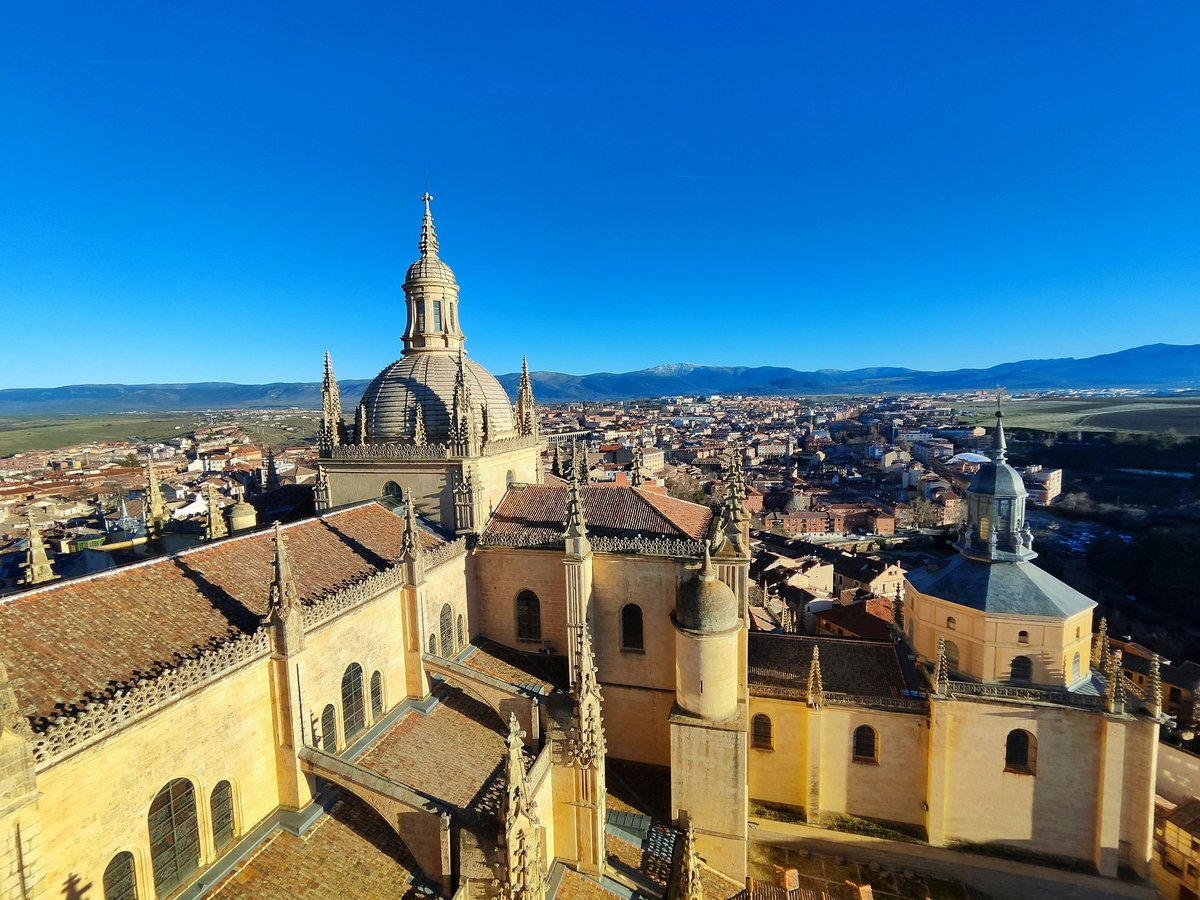
Segovia is a city of maybe 52,000 people perched on a rocky promontory in Castilla y León, about 90 kilometers northwest of Madrid. Its nightlife reflects that scale. You won't find superclubs or velvet ropes here. What you will find is a concentrated, walkable bar scene threaded through medieval streets, fueled by Ribera del Duero reds and cheap cañas, and kept alive largely by IE University students during the academic year (September through June). The old town sits between the Eresma and Clamores rivers, and on a Friday night most of the action happens along a 700-meter stretch from the Aqueduct to Plaza Mayor. Things tend to start late by northern European standards but earlier than Madrid. Dinner wraps around 10:30 PM, the first bars fill by 11, and by 2 AM on a Saturday you'll likely have seen most of what the night has to offer. Mind you, that's not a criticism. Segovia's nightlife works precisely because it's small. You end up running into the same people at 3 different bars, conversations spill between groups, and the limestone walls hold the warmth of the day well into the night. The smell of roast cochinillo drifts out of restaurant kitchens even at midnight.
Where Segovia Drinks
The bar scene in Segovia clusters along two main axes. The first runs through the Casco Antiguo along Calle Real and its continuation, Calle Juan Bravo, from the Aqueduct up toward Plaza Mayor. The second fans out from Plaza Mayor itself into the side streets around Calle de los Escuderos and Calle de la Judería Vieja. Most bars in the old town are small, stone-walled spaces with maybe 30-40 seats inside and a few tables on the street when weather permits. Cocktail culture has arrived but remains modest. A handful of spots along Calle Juan Bravo now mix gin-tonics (the Spanish format, served in balloon glasses with botanical garnishes) and you'll pay somewhere around 8 to 10 euros for one. That said, the default drink order in Segovia is still a caña (a small draft beer, usually around 1.50 to 2.50 euros) or a chato de vino (a short glass of red, typically from Ribera del Duero or Rueda). Many bars along Calle Real still serve a free tapa with each drink, a tradition that has faded in Madrid but holds on in Castilla y León. The tapa might be a slice of tortilla, a few olives, or a small montadito. Nothing fancy, but it adds up over 3 or 4 rounds. Wine bars tend to cluster closer to Plaza Mayor and in the Judería. These are quieter, often candlelit, with hand-chalked lists leaning heavily on Castilla y León denominaciones. Expect Verdejo whites from Rueda, Tempranillo-based reds from Ribera del Duero, and the occasional Toro or Cigales rosado. A glass of house wine runs 2.50 to 4 euros in most places. The good stuff, a Reserva or Gran Reserva from a recognized bodega, might reach 8 to 12 euros per glass. Rooftop bars barely exist in Segovia. The old town's buildings are 3 to 4 stories at most, and terrace culture here means ground-level tables in plazas, not sky bars. Plaza Mayor has the broadest terrace scene, with several cafés and bars spreading tables across the square under the shadow of the Cathedral. Plaza de Medina del Campo, a smaller square near the Aqueduct end, also fills with drinkers on warm evenings. On a July night, you might find yourself sitting outside until 1 AM with a copa de vino, the Aqueduct lit up in amber 200 meters away. Dive bars exist mostly in the streets between the Aqueduct and Plaza Mayor. These are the narrow, no-sign places with fluorescent lighting, a TV showing La Liga, and locals who have been drinking there for 20 years. A caña here costs closer to 1.50 euros. The floors might be sticky. Worth it.
Dancing After Midnight
Segovia does not have a real club scene in the way Madrid, Barcelona, or even Salamanca does. This is worth knowing before you set expectations. The city has a few discotecas, mostly located in the newer part of town below the Aqueduct or on the outskirts along the roads toward La Granja de San Ildefonso. These tend to open around midnight on Fridays and Saturdays and run until 4 or 5 AM. The music leans toward reggaeton, commercial house, and Spanish pop hits. Thursday nights during the university term (roughly October through May) see some activity, since IE University students treat Thursday as the start of the weekend. Dress codes are relaxed by Spanish standards. Clean trainers, jeans, and a decent shirt will get you in almost anywhere. No one is checking for designer labels. Cover charges, when they exist, tend to fall in the 5 to 10 euro range and usually include a drink. Some places waive cover before a certain hour, often 1 AM. The crowd skews young, 18 to 25, and heavily student. If you're over 30, you'll likely feel more at home in the bar scene. To be fair, many Segovians who want a proper club night take the AVE high-speed train to Madrid. The ride is about 27 minutes from Segovia-Guiomar station, and the last return train currently runs around 10 PM, so serious clubbers either drive, share a BlaBlaCar, or stay the night in Madrid. This exodus is a known pattern. Friday and Saturday nights, you'll sometimes hear groups at the Aqueduct debating whether to stay or head to Malasaña. During the Fiestas de San Juan y San Pedro in late June, the nightlife temporarily expands. Temporary stages and outdoor bars appear around the city, concerts run past 2 AM in public spaces, and the normal rhythms shift. Expect more people on the streets past 3 AM during that week than any other time of year.
Live Sound in a Small City
Segovia's live music scene is modest but genuine. The city has a handful of bars that host acts on weekends, typically Thursday through Saturday. Genres lean toward singer-songwriter, flamenco fusion, jazz, and Spanish rock. You might also catch Celtic-influenced folk, which has a following in Castilla y León that surprises people. The Teatro Juan Bravo on Plaza Mayor is the city's main performance space, hosting concerts, theater, and dance throughout the year. It seats around 750 and books a mix of national touring acts and local performers. Check their seasonal program, which typically refreshes in September and January. Smaller venues along Calle Real and in the streets near Plaza de San Martín occasionally host acoustic sets. These tend to start around 10:30 or 11 PM. No cover, no tickets. You walk in, order a caña, and there's someone playing guitar in the corner. The sound bounces off stone walls in a way that gives even a modest acoustic set real warmth. During the summer months (July and August), the city programs outdoor concerts in courtyards, plazas, and gardens as part of its cultural calendar. The Patio de Columnas at the Alcázar and the grounds of the Real Casa de Moneda along the Eresma have both hosted evening performances. The Hay Festival Segovia, which has run intermittently in September, sometimes includes musical programming alongside its literary events. Flamenco shows appear periodically but Segovia is not Andalucía. These are more likely to be touring performers or special events rather than a permanent tablao. If flamenco is a priority, Madrid is 27 minutes away by AVE and has dedicated venues open every night of the week. Worth noting, Segovia's proximity to Madrid means that touring bands sometimes play a Madrid date and skip Segovia entirely. The city compensates with a strong local music community. University students bring their own energy, and open-mic nights surface during term time.
Nightlife neighborhoods
-
Calle Real and Calle Juan Bravo Corridor
The main artery of Segovia's old town nightlife. Narrow, stone-paved, and lined with bars that open directly onto the street. On a warm Friday, the sound of conversation and clinking glasses carries from one end to the other, about 700 meters of it. Foot traffic peaks between 11 PM and 1 AM.
- Best for
- Bar-hopping on foot, first-timers who want to find the night without a map, groups of 4 to 6 who want to move between spots easily
-
Plaza Mayor
The Cathedral looms at one end, the terrace tables spread across the square, and the pace slows down. This is where you sit with a glass of Ribera del Duero and talk for 2 hours. Warmer months see tables occupied until well past midnight. The stone of the plaza holds the day's heat, and the ambient light from the Cathedral makes the whole square glow a soft yellow.
- Best for
- Wine drinkers, couples, anyone who wants to sit rather than stand, Sunday vermút
-
La Judería (Jewish Quarter)
Southwest of Plaza Mayor, the streets narrow further and the tourist foot traffic drops. A few wine bars and small cocktail spots have settled into the old stone buildings here. The mood is quieter, more intimate. You can hear your own footsteps on the cobbles. Candlelight spills through doorways.
- Best for
- Quiet drinks with 1 or 2 people, wine-focused evenings, a slower pace after dinner
-
Plaza del Azoguejo and Aqueduct Area
The Aqueduct marks the boundary between the old and new towns. The plaza at its base is a gathering point, especially on weekend nights when groups cluster under the 28-meter granite arches before heading uphill or downhill. Bars in the streets radiating from this plaza tend to be more casual, slightly cheaper, and draw a younger crowd. The Aqueduct itself, lit up against the dark sky, is an oddly cinematic backdrop for a beer.
- Best for
- Pre-going-out drinks, student crowds on Thursday nights, meeting friends before deciding where to head next
-
New Town (Below the Aqueduct)
South and east of the Aqueduct, the architecture shifts from medieval stone to 20th-century apartment blocks. This is where most of Segovia's few discotecas and late-night spots are located. The streets are wider, the music is louder, and the crowd is younger. It lacks the charm of the Casco Antiguo but it's where you end up if you want to keep going past 2 AM.
- Best for
- Late-night dancing, student parties during term time, anyone still standing after the old town bars close
Safety after dark
Segovia is a safe city by most measures. Violent crime is rare, and the old town is well-lit along the main streets even at 3 AM. That said, a few things are worth keeping in mind. The cobblestone streets in the Casco Antiguo are uneven and can be slippery when wet, which matters more after a few drinks. Wear shoes with grip if you're planning a long night. The streets off the main corridor, particularly in the Judería and around the Calle de Daoíz, get dark once you leave the main path. They're not dangerous, but a phone flashlight helps.
Pickpocketing is uncommon compared to Madrid or Barcelona, but it does happen around the Aqueduct area during peak tourist season (July and August), especially in crowded situations during fiestas. Keep your phone in a front pocket. Drink spiking is not a widely reported problem in Segovia, but standard awareness applies. Don't leave drinks unattended, particularly in crowded bars during university term.
Getting home is straightforward if you're staying in the old town, since most bars are within a 10-minute walk of each other. Taxis are available from ranks near the Aqueduct and Plaza Mayor. A ride from the old town to Segovia-Guiomar AVE station runs about 8 to 10 euros. Uber and Cabify have limited availability in Segovia. You might get a car, but don't count on it past midnight. Save a local taxi number in your phone before going out.
If you're driving back to Madrid or elsewhere, designate a sober driver or plan to stay the night. The N-603 and AP-61 are mountain roads with curves, and Guardia Civil checkpoints for alcohol testing (controles de alcoholemia) are common on weekend nights along the routes out of Segovia.
Practical tips
- Tipping at bars
- Tipping is not expected at bars in Segovia. Leaving small change (rounding up to the nearest euro) is appreciated but not required. At sit-down cocktail bars or wine bars with table service, a euro or two per round is generous by local standards.
- When to go out
- Dinner in Segovia typically starts at 9:30 or 10 PM. Bars begin to fill around 11 PM on Fridays and Saturdays. The peak window for the old town bar scene is roughly midnight to 1:30 AM. Thursday night has a second life during the university term (October through May), driven by IE University students who treat it as the weekend opener.
- What to order
- A caña (small draft beer) is the default order and costs 1.50 to 2.50 euros in most bars. Tinto de verano (red wine with lemon soda) is popular in summer and cheaper than sangría. For wine, ask for a Ribera del Duero tinto or a Rueda blanco. If someone offers you orujo at the end of a meal, it's a grape marc spirit traditional to this part of Spain. It burns. Say yes anyway.
- Free tapas culture
- Many bars in Segovia still serve a complimentary tapa with each drink. This is a Castilla y León tradition that has largely disappeared from Madrid. Don't ask for a menu of tapas at these spots. You order a drink, a small plate appears. The tapa changes at the bartender's discretion. If you want to choose your food, look for a bar with a menu de raciones instead.
- Cover charges and entry
- Most bars in the old town have no cover charge. The few discotecas in the new town may charge 5 to 10 euros on Friday and Saturday nights, typically including one drink. Arriving before 1 AM sometimes waives the cover. Dress codes are relaxed compared to Madrid or Marbella. Clean and presentable is the bar.
- Language
- English is spoken at some bars in the tourist core around Plaza Mayor and the Aqueduct, but less reliably than in Madrid or Barcelona. A few phrases in Spanish go a long way. 'Una caña, por favor' and 'la cuenta' will cover most situations. Staff in the old town tend to be patient with visitors who make the effort.
FAQ
What time do bars close in Segovia?
Most bars in the Casco Antiguo close between 1:30 and 3 AM on weekends, with some staying open later on Fridays and Saturdays. Weeknight closings are earlier, often by midnight or 1 AM. The few discotecas in the new town stay open until 4 or 5 AM on weekends. During the Fiestas de San Juan y San Pedro in late June, some venues extend hours.
Is Segovia's nightlife worth visiting or should I go to Madrid instead?
It depends on what you want. Segovia's nightlife is intimate, walkable, and cheap. You can hit 5 bars in an evening without a taxi or a cover charge, and drink Ribera del Duero for 3 euros a glass. Madrid has the clubs, the late-night scene past 5 AM, and the sheer variety. If you're staying in Segovia, the local scene is more than enough for a good night. If clubbing is the goal, the AVE to Madrid takes 27 minutes from Segovia-Guiomar station, though the last train back currently leaves around 10 PM, so you'd need to arrange a return another way.
Do I need to book bars or restaurants in advance for a night out?
Bars in Segovia rarely take reservations and don't need them. For dinner before going out, booking is a good idea on Friday and Saturday nights, especially at the well-known cochinillo restaurants near Plaza Mayor and Calle Real. A 9:30 or 10 PM reservation gives you time to eat and still hit the bars by 11:30 PM.
What should I wear going out in Segovia?
Segovia is casual. Smart-casual is more than enough for any bar or discoteca in the city. Jeans, a clean shirt, and decent shoes work everywhere. Trainers are fine at most spots. The main practical consideration is footwear. The old town's cobblestone streets are uneven and sometimes steep, so heels higher than a few centimeters become a liability after midnight. Flat shoes with good grip are the local move.
Is Segovia's nightlife seasonal?
Somewhat. The university term (October through May) brings the most consistent bar and nightlife activity, particularly on Thursdays. Summer sees tourist traffic fill the terrace bars around Plaza Mayor and the Aqueduct, but student-driven spots quiet down from mid-June through September. The Fiestas de San Juan y San Pedro in late June are the annual peak, with outdoor concerts, temporary bars, and crowds in the streets past 3 AM. January and February are the quietest months.
Last verified by automated review (v1.7.2) on . What is automated review?