Stay in Santiago in July
77 hotels in the Trip.com pool for Santiago, from US$14 a night.
Opens Trip.com on Fri 2 Jul to Sun 4 Jul 2027; change the dates there.
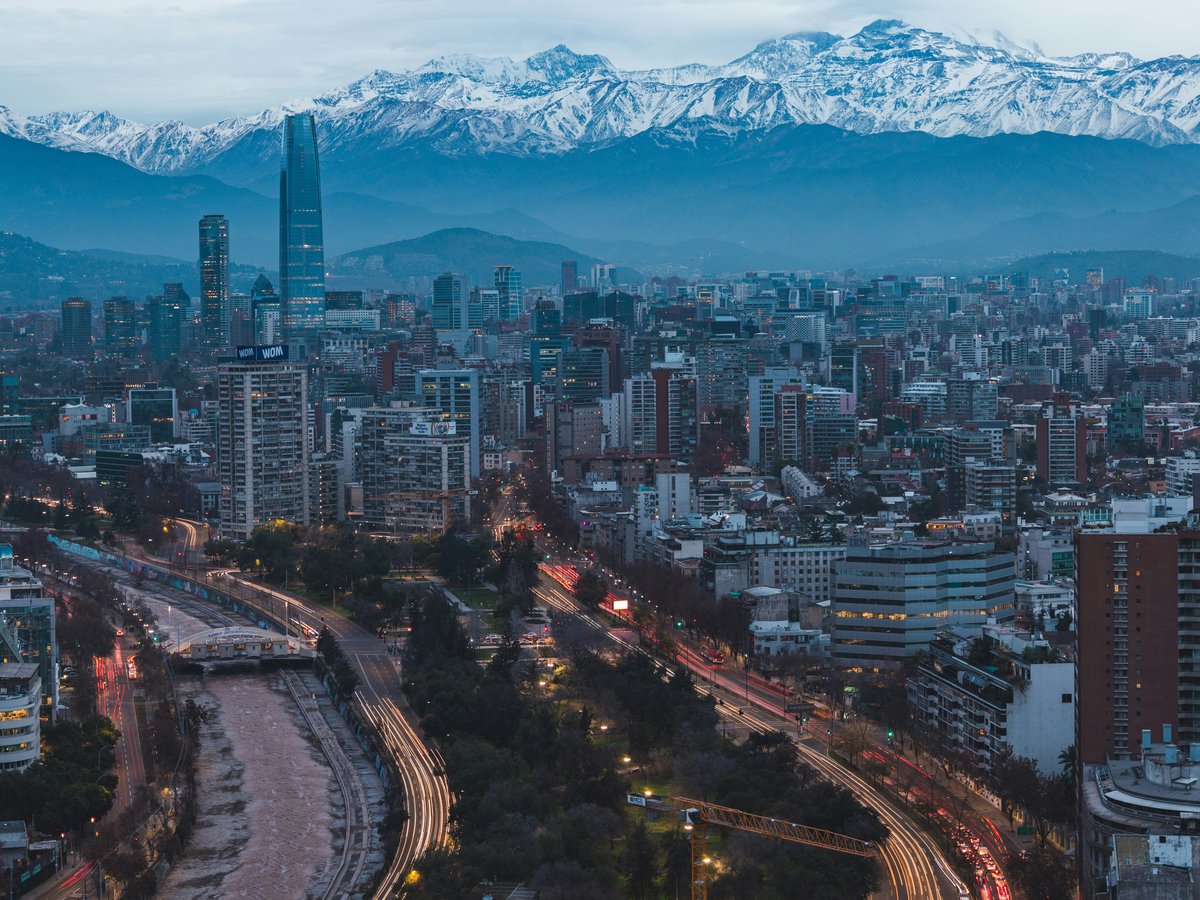
July in Santiago is winter, full stop. The Andes rise white and heavy on the eastern skyline, the sun drops before 18:00, and mornings along the Mapocho River carry that particular damp chill of a valley city buttoned up against the cold. Daytime temperatures sit in the mid-teens Celsius (upper 50s to low 60s Fahrenheit), enough to feel tolerable in direct sun but noticeably sharp once you step into shade or the wind picks up. Worth noting, though, July is the driest of the three winter months. June and August both see roughly 3 times the rainfall. That makes July the most workable winter window if your dates are flexible.
Valle Nevado, El Colorado, and La Parva sit within 90 minutes of downtown by car, and their seasons peak in July with reliable snow above 3,000 meters. You can spend a morning on the slopes and be back in Barrio Lastarria for a pisco sour by evening. That proximity sets Santiago apart from most South American capitals. But Santiago's bowl-shaped valley between the Andes and the Cordillera de la Costa traps winter pollution at ground level. Pre-emergencia air quality alerts fire several times in a typical July when PM2.5 readings spike.
Tourism drops to its annual low between June and August. Hotel rates in Providencia and Las Condes run well below the December-March summer peak, and the queues at places like the Chilean Museum of Pre-Columbian Art (founded 1981) thin out to near nothing. The vacaciones de invierno school holiday, typically 2 weeks in mid-July, fills cultural centers with family programming, but international visitor numbers stay low. If you want Santiago warm and photogenic, come in March or November. If you want quiet streets, lower costs, and Andean snow within reach, July is the month where low-season discounts overlap with peak ski conditions.
Why visit in July
- Peak ski season at the Andes resorts above Santiago, with some of the shortest city-to-slope commutes on the continent.
- Accommodation and dining costs drop to their lowest levels of the year, particularly in the hotel-dense central neighborhoods.
- July is the driest winter month, with rain on only a handful of days compared to the heavier stretches in June and August.
- Several of Santiago's most notable museum collections are free year-round, and in July you'll have them nearly to yourself on weekday visits.
Worth knowing
- Thermal inversions trap pollution in Santiago's valley several times each month, and pre-emergencia air quality alerts can cut outdoor plans short.
- Daylight hours are at their shortest, with roughly 10 hours between sunrise and sunset and grey skies on many mornings.
- Indoor heating is inconsistent, especially in budget and mid-range hotels. Many older buildings in neighborhoods like Barrio Brasil lack central heating entirely.
- Outdoor attractions like the Cerro San Cristóbal funicular may operate on reduced winter schedules or close during poor weather.
Best for
Think twice if
Average highs reach 15.5°C (60°F) and lows drop to 6.8°C (44°F). Occasional cold snaps push overnight readings below 5°C in elevated eastern comunas near the Andean foothills. Rain falls on roughly 3 days during the month for a total of about 34mm. Humidity sits around 62%, which gives the cold a bite that the thermometer alone won't prepare you for. Clear winter days in Santiago feel warm in sheltered, sun-facing spots. The snow-covered Andes stand sharp along the eastern horizon on those mornings.
Seasonal caution
- Winter thermal inversions concentrate particulate pollution at ground level in Santiago's valley. The city government's air quality index can spike into unhealthy ranges on still, windless days, sometimes triggering vehicle circulation restrictions and formal health advisories against outdoor exercise.
- Early-morning frost forms on roads, sidewalks, and bridges in higher-elevation areas near the Andean foothills. Black ice is a risk for drivers heading to ski resorts before dawn.
Year-round climate
Averages from the last 5 years.
| Month | Avg high (°C) | Avg low (°C) | Rainfall (mm) |
|---|---|---|---|
| Jan | 30 | 15 | 15 |
| Feb | 30 | 16 | 4 |
| Mar | 28 | 14 | 5 |
| Apr | 24 | 12 | 16 |
| May | 18 | 9 | 47 |
| Jun | 16 | 7 | 94 |
| Jul | 16 | 7 | 34 |
| Aug | 16 | 7 | 100 |
| Sep | 18 | 8 | 33 |
| Oct | 23 | 10 | 18 |
| Nov | 26 | 12 | 14 |
| Dec | 29 | 14 | 2 |
Holidays and festivals in July
Public holidays
- Our Lady of Mount Carmel(Virgen del Carmen)16 July 2027
Best things to do in July
Skiing or snowboarding at Valle Nevado
outdoorChile's largest ski resort sits roughly 60 km east of Santiago at elevations between 2,860 and 3,670 meters. The resort offers about 40 runs across terrain that ranges from gentle groomed slopes to steep off-piste chutes. El Colorado and La Parva, the two other major resorts, sit nearby and are sometimes accessible on a combined pass.
July typically has the season's deepest and most reliable snowpack, with coverage across nearly all runs and the best powder conditions of the Chilean winter.Booking tipWeekday lift passes are cheaper and less crowded than weekends, when Santiago families drive up for day trips. Some resorts offer combined transport-plus-lift packages from the city.
Winter wine tasting in the Maipo Valley
food and drinkThe vineyards south of Santiago lie dormant in winter, with vines stripped to bare canes and the valley quiet. Cellar-door tastings focus on the most recent vintage's barrel samples and reserve bottles that aren't poured during the busy summer visitor season. The tasting rooms smell of oak and damp earth, a different sensory profile from the floral summer visits.
Winemakers have more time for visitors in winter, and some cellars open their reserve libraries only during the slower off-season months.Booking tipContact vineyards directly, as some reduce their tour schedules in winter and may require advance booking.
Winter museum circuit along Parque Forestal
cultureThe cluster of museums along the south bank of the Mapocho includes the Chilean National Museum of Fine Arts (founded 1880) and the Santiago Museum of Contemporary Art (founded 1947). Both are walkable in a single afternoon, and the park itself is pleasant for a winter stroll under bare plane trees with coffee vendors along the paths.
Visitor numbers drop to their annual low, and several institutions extend their winter exhibition calendars to coincide with the school holiday weeks.Catching a Campeonato Nacional football match
sportsThe Chilean Primera División runs through winter. Matches at the Estadio Monumental (opened 1975) or the Julio Martínez Prádanos National Stadium (opened 1938) draw committed supporters, and the atmosphere at a Colo-Colo or Universidad de Chile home fixture is raw and loud. The cold air carries the chants and drum rhythms farther than summer crowds.
The league is in full swing during winter, and weeknight July matches have a focused intensity with fewer casual spectators than summer fixtures.Booking tipBuy tickets through the clubs' official websites or at the stadium box office on match day. Clásico fixtures between Colo-Colo and Universidad de Chile tend to sell out.
Day trip to Cajón del Maipo and Baños Morales
outdoorThe Maipo Canyon southeast of Santiago narrows into a dramatic gorge flanked by snow-dusted peaks. The road follows the Maipo River through San José de Maipo and San Alfonso before climbing to Baños Morales, a small settlement at about 1,880 meters with natural hot springs where mineral water seeps through riverside rocks. The smell of sulfur mixes with cold mountain air, and the warm water is a genuine relief after a cold drive.
Snow on the surrounding peaks, fewer visitors than summer, and the appeal of warm thermal water on a cold winter day make July the most atmospheric window for this trip.Booking tipRoads can ice over at higher elevations. Check conditions before driving and carry chains, or book a guided transfer that handles the logistics.
Café-hopping through Barrio Italia
food and drinkThe blocks between Avenida Italia and Condell in the Ñuñoa district have become Santiago's densest stretch of independent coffee roasters, vintage-furniture cafés, and small galleries. In winter, many switch their menus to emphasize cortados, submarinos (hot milk with a bar of melting chocolate), and baked goods. The air inside smells like fresh grounds and warm pastry.
Cold weather turns these indoor-heavy spaces into all-day destinations. Summer's sidewalk-table scene gives way to a slower, warmer indoor rhythm.Winter season at Teatro Municipal de Santiago
cultureChile's oldest performance venue, inaugurated in 1857, hosts its principal opera and ballet season through the winter months. The neoclassical interior features gilded balconies and a painted dome that make the building worth entering for the architecture alone, regardless of what's on the program.
The opera and ballet calendar peaks during winter, with July often featuring the season's most prominent productions and visiting international companies.Booking tipBook through the teatro's website several weeks ahead for popular productions. Upper-tier seats are considerably cheaper and still offer good sightlines.
What to eat in July
In season: fruit
Mandarinas
Central Chile's mandarin harvest peaks during winter, with July at the sweetest point of the season. Corner kioscos and market stalls sell them by the kilo throughout the city. The skins peel easily and the segments are sweeter than what you'll find in supermarkets the rest of the year.
On menus now
Cazuela
Chile's signature winter stew, built on slow-simmered beef or chicken with pumpkin, corn, potato, and green beans. Restaurants list it from April through September, with July deep into peak demand. The smell of it simmering, rich and faintly sweet from the squash, fills the doorways of traditional restaurants in the Centro on cold afternoons.
Pastel de jaiba
A baked crab gratin topped with breadcrumbs and melted cheese, traditionally made with fresh Chilean jaiba. It appears on seafood restaurant menus year-round, but winter jaiba from the Pacific coast tends to be sweeter and firmer. The crust cracks with a satisfying crunch into warm, briny filling.
Charquicán
A thick stew of diced beef, potato, pumpkin, and corn, historically made with charqui (dried meat, the word that gave English 'jerky'). Restaurants in Ñuñoa and around Barrio Franklin serve traditional versions through the coldest months. The texture is dense and earthy, closer to a hash than a soup.
Street food peaks
Sopaipillas
Street vendors fry rounds of pumpkin-leavened dough the moment rain starts to fall. They appear at metro exits and bus stops across Santiago within minutes of the first drops. July's intermittent drizzle days bring them out reliably without the heavier, sustained downpours of June or August. Ask for sopaipillas pasadas if you want them soaked in warm chancaca (raw cane sugar) syrup.
What to drink
Navegado
Chilean mulled wine, red wine heated with orange peel, cinnamon, cloves, and sugar. Bars in Bellavista and Barrio Italia pour it through the winter months, and it's a standard order after a cold day of walking or skiing. The warmth hits your chest before the wine does.
Regular events in July
Día de la Virgen del CarmenFree
Chile's national religious holiday honoring the patron saint of the armed forces. In Santiago, the main observance includes a Te Deum mass at the cathedral on Plaza de Armas and military parades. Most shops, banks, and government offices close for the day.
July 16Vacaciones de Invierno (Winter School Holiday Programming)Free
Santiago's cultural centers, including Centro Cultural GAM and Matucana 100, run 2 weeks of children's workshops, puppet shows, and family theater during the school break. The city scores 7.2/10 for family friendliness (see the TTDI Family-Friendliness Index), and the winter break is when that investment in family infrastructure is most visible. Many events are free or discounted.
Typically the second and third weeks of JulyCampeonato Nacional (Chilean Primera División)
The top-flight football league runs through winter, with matches most weekends and some weeknights at Santiago's major stadiums. Attendance dips slightly in cold weather, which makes tickets easier to find than during the warmer months.
Weekends throughout JulyBest places this July
Mercado Central
marketSantiago's ornate iron-frame seafood market sits on the north bank of the Mapocho in the Centro Histórico. The upper-floor restaurants tend to offer better prices and more local clientele than the ground-floor tourist-facing stalls. Winter is peak season for congrio (conger eel) and erizo (sea urchin), and on cold days the steam from the kitchen vents fills the hall with a briny, warm fog.
CentroLa Vega Central
marketThe city's largest produce market sits across the river from the seafood market. In July, winter citrus fills the stalls, with mandarins, oranges, and lemons stacked in bright pyramids. La Vega Chica, the smaller adjoining hall, has cheaper prepared-food counters where a filling lunch runs well under 5,000 CLP. The covered interior stays sheltered from rain and cold.
RecoletaCerro San Cristóbal (Parque Metropolitano)
park and viewpointSantiago's largest urban park rises 880 meters above sea level. Winter strips the summer haze from the air, and on clear days the snow-capped Andes fill the eastern horizon with a sharpness that warmer months rarely match. The summit has a 14-meter statue of the Virgen de la Inmaculada visible from much of the city below.
Recoleta and ProvidenciaCerro Santa Lucía
park and viewpointA compact hill park in the city center, originally the site of Santiago's 1541 founding by Pedro de Valdivia. The terraced walkways and stone staircases are less slippery in July than in the wetter months on either side, and the winter light through bare trees gives the park a quieter, more contemplative character than its leafy summer look. The view from the Terraza Caupolicán at the top takes in the Plaza de Armas district and the Andes beyond.
CentroCatedral Metropolitana de Santiago
landmarkThe cathedral on the west side of Plaza de Armas dates to 1800 in its current neoclassical form. It serves as the site of the Te Deum mass during the Virgen del Carmen holiday and is one of the warmer refuges in the city center on cold afternoons. The interior is dim and quiet, with the faint smell of incense and old wood.
CentroMuseo de la Memoria y los Derechos Humanos
museumOpened in 2010 near Quinta Normal park, this museum documents the political repression of the Pinochet era (1973-1990) through photographs, documents, and video testimony. Winter weekdays are the quietest time to visit, and the weight of the exhibits benefits from an unhurried pace. Admission is free.
Quinta NormalBarrio Yungay
neighborhoodOne of Santiago's oldest residential neighborhoods, declared a national heritage zone. The streets around Plaza Yungay have galleries, antique shops, and traditional restaurants that feel quieter than their Lastarria equivalents. The Chilean National Museum of Natural History, founded in 1830, sits at the neighborhood's northern edge in Quinta Normal park and is one of the oldest such institutions in South America.
Yungay
Your packing checklist
Tick items off as you pack. Your progress saves in this browser.
All packed — have a great trip.
Insider tips
Check Santiago's air quality index on the government's SINCA website before planning a long outdoor walk or hike. On pre-emergencia days, skip the cerros and spend the afternoon in an indoor museum instead.
Sopaipilla vendors materialize on street corners within minutes of the first raindrops. The best ones use a pumpkin-heavy dough that fries to a deep orange. Ask for sopaipillas pasadas if you want them soaked in warm chancaca syrup, a preparation that most visitors never hear about.
Winter is the easiest season to get a table at Santiago's top restaurants in Lastarria and Providencia. Places that need 2-week advance booking in January will often seat walk-ins on a July weeknight.
The teleférico cable car on Cerro San Cristóbal offers the sharpest Andes panorama in its first hour of operation on winter mornings. By afternoon, valley haze builds and dims the view noticeably.
Ski equipment rental at shops in Las Condes and Vitacura runs well below resort-counter prices. Pick up gear the evening before and drive up early to skip the on-mountain rental queues.
Avoid these mistakes
- Planning full-day outdoor sightseeing without checking the air quality forecast. On pre-emergencia days, PM2.5 levels can spike enough to irritate lungs and eyes, and strenuous outdoor exercise is formally discouraged by health authorities.
- Packing for the daytime temperature and forgetting how cold unheated interiors can be. July nights in budget or mid-range accommodation without proper heating are genuinely uncomfortable without extra layers you can sleep in.
- Driving to ski resorts without checking road conditions or carrying chains. The road to Farellones and Valle Nevado above 2,000 meters requires chains by law when snow or ice is present, and Carabineros enforce it at checkpoints.
Practical tips for July
Book ski transfers at least a week ahead, as weekend spots during peak snow season fill fast. Most museums shift to shorter winter hours and close by 17:30, so start gallery visits in the morning. The Metro runs its full schedule year-round and is the fastest way to cross the city. Tipping in restaurants follows a 10% convention, and most places in central neighborhoods take credit cards, though market stalls tend to be cash-only. Carry CLP notes in smaller denominations. The current exchange rate is approximately 913 CLP to 1 USD. If your visit overlaps with the mid-July Virgen del Carmen holiday, expect closures at shops, banks, and government offices for the day.
FAQ
Is July a good time to visit Santiago?
It's a fair choice, not the best and not the worst. You get honest winter weather with cool days, limited daylight, and the occasional smog day. The advantages are genuine: low prices, minimal crowds, and peak conditions at the Andes ski resorts east of the city. For skiers or budget-focused travelers, July works well. For warm-weather outdoor sightseeing, March, October, or November are stronger options.
What is the weather like in Santiago in July?
Cool and mostly dry by winter standards. Days feel mild in sunshine and sharp in shade, nights need proper layers, and rain tends to appear on only about 3 days during the month. The air can feel cold indoors because many Santiago buildings lack effective central heating. The bigger weather concern on some days is air quality, when thermal inversions hold smog close to the ground.
Can you ski near Santiago in July?
Yes. The resorts east of the city are close enough for day trips, and July typically has the season's deepest and most reliable snowpack. Weekday visits tend to be less crowded and cheaper than weekends, when Santiago families head up in large numbers. Equipment rental is available both in the city and at the resorts.
Is Santiago safe for solo travelers in July?
Santiago scores 5.8/10 for solo-traveler safety (see the TTDI Solo-Safety Index). Standard urban precautions apply, particularly after dark and in less-trafficked areas. The Metro is well-lit and generally safe at all hours. Winter's shorter daylight means you're more likely to be walking in darkness by early evening, so plan around sunset and stick to well-populated streets in central neighborhoods like Lastarria, Providencia, and Bellavista.
Is July a good time to visit Chilean wine country near Santiago?
The vines are dormant and the valleys are bare, so it's not the most photogenic season for vineyard photography. But winery tasting rooms are quieter and more personal in winter, with winemakers more available for conversation and sometimes pouring wines that summer visitors never see. The Maipo Valley south of Santiago is the closest option, reachable in under an hour by car.
Things to Do in Santiago in July
 Free cancellation
 Cable Car, Funicular and Sightseeing Bus in Santiago one day
City tour: 2 hours, free cancellation.
via Viator Free cancellation
 Tour to Valparaíso, Viña del Mar, Pablo Neruda Museum and Vineyard
Day trip: 10 hours, free cancellation.
via Viator Free cancellation
 Discover Santiago: Tourist Bus, Cerro San Cristobal and Wine
City tour: free cancellation.
via Viator Free cancellation
 Farellones Park Tour
Day trip: 10 hours, free cancellation.
via Viator Free cancellation
 Andes Range Tour at Inca Lagoon & InSitu Winery Snack Included
Day trip: 10 hours, free cancellation.
via Viator Free cancellation
 Full Day Trip to Cajón del Maipo Yeso Reservoir + Toast
Day trip: 10 hours, free cancellation.
via ViatorLast verified by automated review (v1.7.2) on . What is automated review?