What should I pack for Santiago?
Layers for Santiago's 3-30°C daily temperature swing, sturdy walking shoes for cobbled hills like Santa Lucía, a Type C or Type L plug adapter (220V), and SPF 50+ sunscreen year-round. Chile's ozone thinning means UV hits harder than the temperature suggests. Skip the umbrella. Farmacias Ahumada sells them on every block.
Shop the packing list (17 items)Santa Lucía Hill's stone stairways are uneven and slick when wet, so bring walking shoes with ankle support, not fashion sneakers. Cerro San Cristóbal rises 300 meters above the city, and the trails up have loose gravel that eats flat soles in an afternoon. Even Barrio Lastarria's side streets are cobblestoned. You'll feel every stone through thin rubber. The sidewalks in Bellavista tend to be cracked and buckled from tree roots, with surprise curb drops after dark. Count on 12,000-15,000 steps in a typical day between Plaza de Armas, the Santiago Metropolitan Cathedral, and Mercado Central's fish stalls. In winter, your feet stay cold and damp from fog that settles over the Mapocho River. In January, the pavement throws stored heat back through your soles. Merino socks dry in 8 hours on a hotel rack. Cotton stays wet all day.
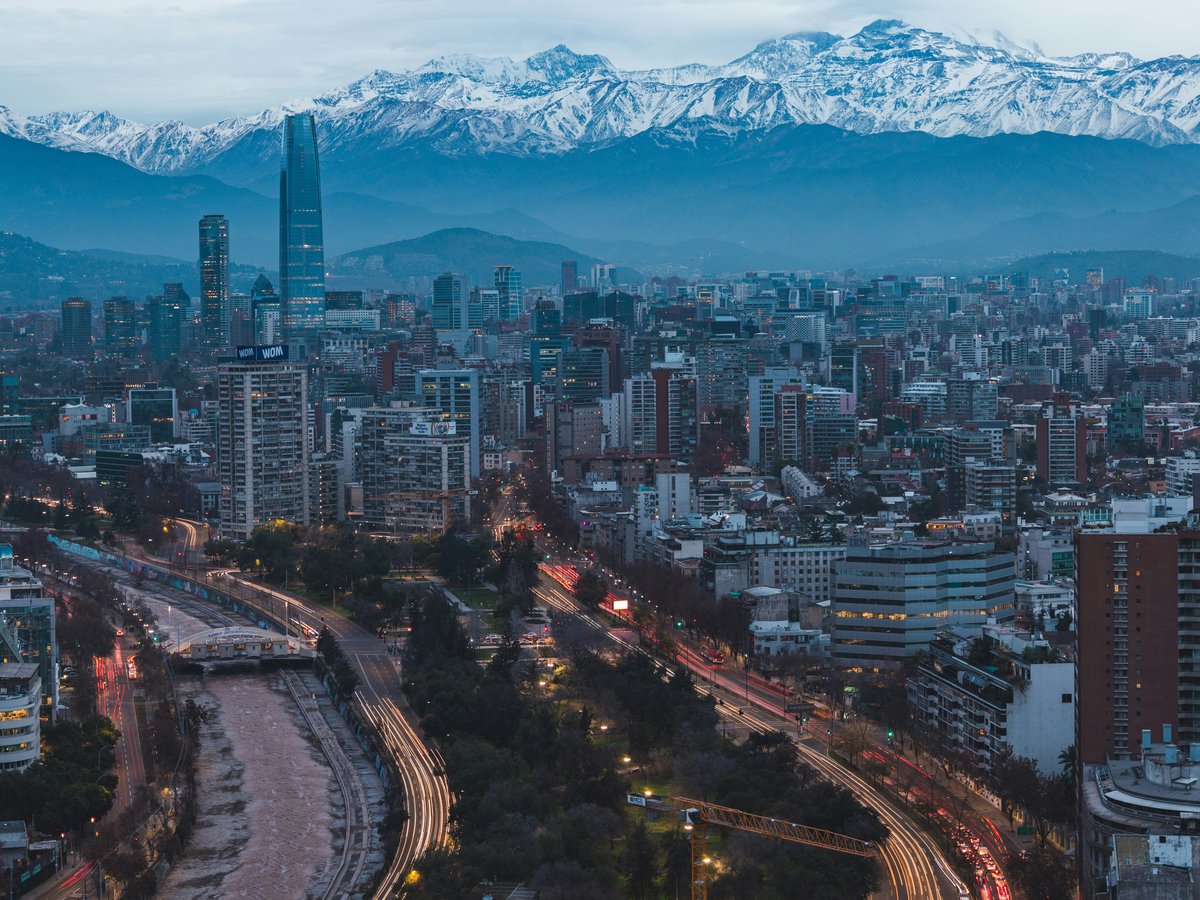
Santiago sits in a basin between the Andes and the Coastal Range. That geography drives temperature swings of 15°C in a single day. A winter morning in Providencia might start at 3°C with thick fog that smells of diesel and eucalyptus. By 2 PM the sun breaks through and reaches 15°C. From December through February, the pattern flips. Mornings hover around 15°C, and afternoons hit 33°C with dry air that cracks your lips within hours. A merino base layer, a fleece mid-layer, and a wind-resistant shell handle March through November. Peak January needs only a cotton t-shirt and shorts. Worth noting, the UV index in Santiago reaches 11-13 during those same warm months. Chile's proximity to the Antarctic ozone thinning means you burn in 15 minutes without SPF 50+, even on cloudy afternoons.
Chile uses Type C and Type L outlets at 220V. Your phone charger handles the voltage fine if the label reads '100-240V', but you still need a plug adapter. Many universal kits skip the three-prong Type L, so verify yours includes it before you fly. Pack a portable battery with at least 10,000 mAh. The Metro's BIP! card app and Google Maps will drain your phone across a full day of transfers between Baquedano and Los Héroes. Winter visitors should bring an N95 mask. Santiago's thermal inversions trap particulate matter in the basin from May through August. On bad days the air tastes gritty. PM2.5 readings near Estación Central can reach 3-4 times WHO guidelines during June and July.
Farmacias Ahumada and Cruz Verde stock every toiletry you need, so skip packing more than a single day's worth. Both chains have locations throughout Providencia and Las Condes. Sunscreen from La Roche-Posay or Eucerin sells for 30-40% below US retail. Lip balm with SPF 30+ is harder to find in Chilean pharmacies, so bring that from home. Umbrellas cost around 3,000 CLP (about $3.30 at the current rate of 913 CLP per dollar) at any pharmacy. That said, La Vega Central sells warm alpaca beanies and thick wool socks for 2,000-5,000 CLP, far cheaper than packing them from abroad. Chilean Carménère from Concha y Toro runs 4,000-6,000 CLP per bottle at Líder or Jumbo, roughly a third of what the same label costs at a US retailer.
Essentials
- Sturdy walking shoes with ankle support for cobbled hills and uneven stone stairs Shop
- Type C and Type L plug adapter, 220V (verify your universal kit includes the three-prong Chilean Type L) Shop
- SPF 50+ sunscreen, year-round Shop
- Portable battery pack, 10,000+ mAh (Metro navigation and maps drain batteries fast) Shop
- 3 pairs merino or synthetic-blend socks (cotton holds moisture all day) Shop
- Lip balm with SPF 30+ (hard to find in Chilean pharmacies) Shop
- Reusable water bottle (Santiago tap water is drinkable) Shop
- Light daypack for hill days and market visits Shop
- Photocopy of passport stored separately from the original
- Wind-resistant shell jacket (afternoon basin winds year-round) Shop
Seasonal extras
- Thermal base layer (June-August, mornings drop to 0-3°C) Shop
- N95 mask (May-August, winter smog from thermal inversions in the basin) Shop
- Packable rain jacket (May-September, 5-8 rainy days per month) Shop
- Wool beanie and gloves for early mornings, June through August Shop
- Wide-brim hat (December-February, UV index 11-13) Shop
- Swimwear (December-February, hotel pools and coast day trips to Valparaíso) Shop
- Light cotton shorts and t-shirts (January-February, afternoons reach 33°C) Shop
- Fleece mid-layer (March-May and September-November, 8-20°C daily range) Shop
Buy on arrival
- Umbrella at any Farmacias Ahumada or Cruz Verde (around 3,000 CLP)
- Sunscreen, La Roche-Posay or Eucerin (30-40% below US prices at pharmacy chains)
- Alpaca beanies and wool socks at La Vega Central (2,000-5,000 CLP)
- Chilean wine at Líder or Jumbo supermarkets (Carménère, 4,000-6,000 CLP per bottle)
- Prepaid SIM from Entel or Claro (5,000-8,000 CLP for 10-15 GB data)
Last verified by automated review (v1.7.2) on . What is automated review?