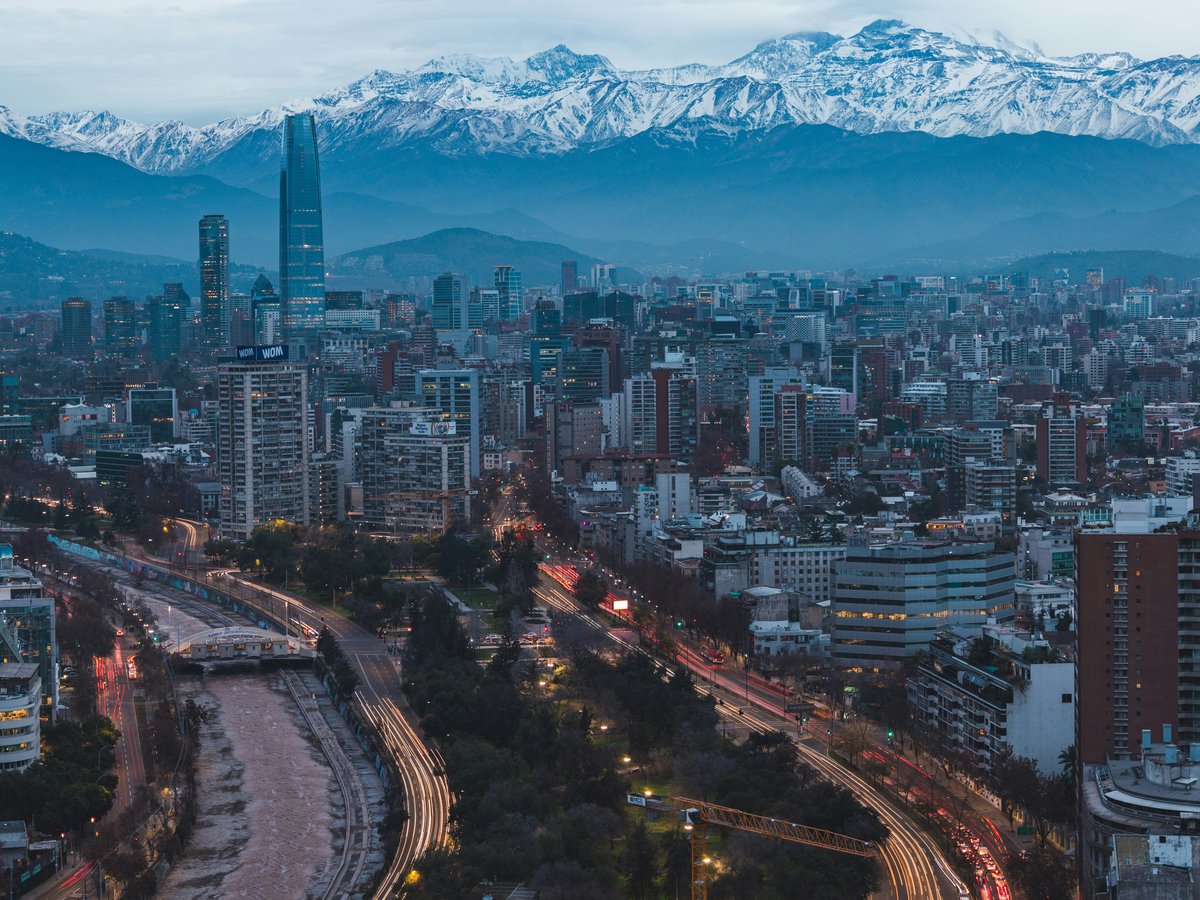
Santiago's night runs on a different clock. Dinner across Providencia and Lastarria rarely starts before 9 PM, and the real drift toward bars tends to begin around midnight. The previa, a house gathering fueled by pisco and Chilean wine, fills the hours between dinner and going out. Groups of 6 or 8 crowd into apartments, passing bottles and mixing drinks before anyone checks the time. Friday and Saturday nights stretch past 5 AM across much of the city. Winter currently has Santiago at about 7.1°C after dark, with humidity that can reach 95% on cold, still nights. That pushes the scene almost entirely indoors from June through August. In warmer months, November through March, rooftop terraces and outdoor patios fill with cigarette smoke and conversation that carries well past 3 AM. The culture tends to feel unhurried and group-oriented. Solo travelers will find the city scores 5.8/10 for solo-traveler safety (see the TTDI Solo-Safety Index), and hostel-organized bar crawls in Bellavista offer an accessible starting point where English speakers are more common.
Where Santiago Drinks
Chile's national spirit is pisco, a grape brandy produced in the northern valleys of Elqui and Limarí. The pisco sour, made with lime juice, sugar, and egg white, appears on nearly every cocktail menu in the city. You'll find refined versions in the small bars along Lastarria, where the Chilean National Museum of Fine Arts (founded 1880) anchors the neighborhood's cultural identity and bartenders tend to put more effort into presentation. Tall glasses, crushed ice, the sharp citrus smell cutting through the warm air of a crowded room. That said, Santiago's cocktail scene has been expanding beyond pisco in recent years. Bars in Providencia and along Avenida Italia in Barrio Italia now feature gin-forward menus and fermented-fruit experiments alongside the classics. For something rougher around the edges, Bellavista's side streets off Pío Nono hold small, loud, inexpensive bars where a pisco sour might cost around 3,000 CLP. The floors are sticky. The music is too loud. Nobody cares what you're wearing. These spots fill with university students from nearby campuses starting around 11 PM on Thursdays. Wine bars have become more common across Providencia and Barrio Italia in recent years, which makes sense given that the Maipo Valley starts less than 40 km south of the city center. Carmenere, Chile's signature red grape, shows up on nearly every list. Bottles from the Casablanca Valley, about 100 km northwest toward the coast, are popular for whites. A decent glass of wine in a Lastarria bar currently runs somewhere in the 4,000 to 6,000 CLP range. Rooftop options tend to cluster in Las Condes and the eastern end of Providencia, where taller buildings offer views toward the Andes when the sky is clear. Mind you, Santiago's winter smog can obscure the mountains for weeks at a time, so the views are seasonal. Cocktails at rooftop spots run noticeably higher than at street-level bars. Wikivoyage's Santiago drinking guide (https://en.wikivoyage.org/wiki/Santiago#Drink) covers additional bar recommendations and local customs for visitors.
After Midnight
Things tend not to get going at Santiago's clubs until well after 1 AM. On a typical Friday or Saturday, the dance floor fills between 2 and 3 AM, and the peak energy in most venues seems to land around 3:30 to 4 AM. Reggaeton dominates the playlist at the majority of clubs, particularly in Bellavista and along the commercial strips in Providencia. You'll hear Bad Bunny and Daddy Yankee mixes bleeding through the walls from half a block away. Electronic and techno have been gaining ground, with a smaller but dedicated scene that draws a slightly older, more international crowd. Latin house mixes cumbia samples with four-on-the-floor beats, and it has been growing in local DJ sets over the past few years. Dress codes vary sharply by neighborhood. In Bellavista, sneakers and jeans are standard. In Las Condes and the eastern Providencia clubs near Sanhattan, collared shirts and closed-toe shoes are often expected, and doormen can be selective about groups of men arriving without women. Worth noting that many upscale clubs in this area operate on a lista system, where you add your name to a promoter's guest list through social media before arriving. Without it, you might wait 30 to 45 minutes or get turned away entirely. Cover charges at Santiago clubs fluctuate, and many places include 1 or 2 drinks in the entry price. Expect to pay more at the upscale eastern venues than at the student-heavy spots in Bellavista or near Plaza Ñuñoa. Most clubs accept cards, but carrying some cash for smaller bars and street food afterward is still a good habit. Legal drinking age in Chile is 18, and most clubs ask for ID at the door.
Live Sound
Santiago's live music scene leans into several distinctly Chilean genres. Cumbia chilena, adapted from Colombian roots over decades, fills dance floors at venues across Bellavista and Barrio Yungay with warm brass arrangements and rolling percussion. Cueca, the national dance, appears more at fondas and cultural events, particularly around Fiestas Patrias in September, than at weekly bar gigs. Nueva canción, the folk-protest tradition linked to Víctor Jara and Violeta Parra, still has a presence at smaller venues around Plaza Ñuñoa. Thursday and Friday open-mic nights there occasionally surface singer-songwriters working in that tradition. Rock en español has a steady following. Chilean rock bands draw reliable weeknight crowds at mid-size venues in Providencia and Bellavista. Jazz tends to cluster in Lastarria and around the Parque Forestal area, where small basement bars host trios and quartets on Wednesday and Thursday evenings. The sound drifts up the stairwells and mixes with street noise from the park. For larger acts, both international and Chilean, the Julio Martínez Prádanos National Stadium (built in 1938) and Estadio Monumental (built in 1975) host major concerts. The Claro Arena and other mid-size venues handle touring shows. Worth noting that concert tickets in Chile tend to sell through limited online platforms, and popular shows can sell out weeks in advance. Weeknight gigs at smaller bars might have a modest door charge, while weekend shows at dedicated venues run higher.
Nightlife neighborhoods
-
Bellavista
Loud, crowded, and unapologetic about it. Pío Nono street fills with street vendors, drink hawkers, and clusters of backpackers every weekend. The air smells like anticuchos grilling on sidewalk carts and cheap beer. Graffiti covers most walls, and the scene peaks between 1 and 3 AM. The Santiago Museum of Contemporary Art, founded in 1947, sits at the neighborhood's edge near the Parque Forestal bridge, a quiet counterpoint to the noise a few blocks south.
- Best for
- Backpackers, students, budget nights, first-time visitors wanting a low-stakes introduction to Santiago after dark
- Standouts
- The Pío Nono corridor and the side streets branching off it between the Mapocho River and Cerro San Cristóbal
-
Barrio Lastarria
Quieter and more considered than Bellavista, with wine bars and cocktail spots tucked into narrow streets near the fine arts museum and Santa Lucía Hill. The crowd tends to be slightly older, mid-20s to 40s, and conversations carry because the music stays at background level. Stone facades and warm lighting from bar interiors give the streets a golden tone after dark.
- Best for
- Date nights, wine tastings, cocktail exploration, people who want to hear themselves talk
- Standouts
- The blocks surrounding Plaza Mulato Gil de Castro and the streets between Merced and José Victorino Lastarria
-
Barrio Italia
Antique shops and design studios by day, wine bars and low-key conversation spots by night. Avenida Italia between Irarrázaval and Diagonal Paraguay holds most of the action. The crowd here tends to be locals rather than tourists, and the pace is noticeably slower. You might find a bar with 8 tables and a handwritten wine list on a chalkboard.
- Best for
- Wine drinkers, couples, anyone who prefers a quiet neighborhood bar over a packed dance floor
- Standouts
- Small venues along Avenida Italia and the cross streets near Avenida Condell
-
Plaza Ñuñoa
The plaza fills with university students and young professionals, especially on Thursday and Friday nights. Live music bars surround the square, playing everything from folk and trova to Chilean rock. The feel is more local and less self-conscious than Bellavista. Beer is the default order here, and the smell of draft lager drifts through open doorways.
- Best for
- Live music, beer culture, meeting local university-age crowds, Thursday nights
- Standouts
- Bars and live venues ringing the central plaza and the streets radiating from it
-
Providencia and Avenida Suecia
The after-work drinking strip. Bars along and around Avenida Suecia fill with the office crowd from nearby Providencia towers starting around 7 PM on Thursdays and Fridays. Loosened ties, cold Escudo or Cristal beers, conversations about the week. The scene transitions to a younger, louder crowd after 11 PM. More polished than Bellavista, less formal than Las Condes.
- Best for
- After-work drinks, mid-range cocktails, a transitional stop before heading to clubs
- Standouts
- Avenida Suecia and the surrounding blocks between Los Leones and Pedro de Valdivia Metro stations
-
Las Condes and El Golf
Santiago's most upscale nightlife zone, sometimes called Sanhattan for its glass towers and international restaurant strips. Clubs here have doormen, dress codes, and lista systems. Cocktails cost roughly double what you would pay in Bellavista. The crowd dresses sharply and arrives late, often past 1:30 AM. The thump of bass carries from behind heavy doors onto otherwise quiet commercial streets.
- Best for
- Upscale clubbing, international DJ sets, a polished night out with a higher budget
- Standouts
- Venues clustered around Isidora Goyenechea and the El Bosque Norte corridor
-
Barrio Yungay
An older residential neighborhood west of the center that has been drawing a more alternative crowd in recent years. Art galleries double as bar spaces. Indie bands play in converted houses. The scene still feels emergent, less established than Bellavista's, and tends to attract Santiago's creative and artistic set. Streets are quieter, which means planning your ride home ahead of time.
- Best for
- Alternative and indie music, gallery openings with drinks, a less commercial night out
- Standouts
- Gallery-bars and small live venues along Compañía, Huérfanos, and the streets near the Barrio Yungay plaza
Safety after dark
Getting home safely means planning the ride before you go out. Uber and Cabify both operate in Santiago and tend to be more reliable than street taxis after 2 AM. Official taxis have black bodies with yellow roofs and should run the meter. If a driver refuses, find another. Avoid unlicensed colectivos or strangers offering rides outside bars late at night.
Drink awareness matters in tourist-heavy areas. Spiking has been reported in busier bars along the main strip in Bellavista. Keep your glass in your hand or in your line of sight.
Phone theft is the most common after-dark crime in crowded bar districts. Keep your phone in a front pocket or zipped jacket pocket, especially when walking between venues after 2 AM. Don't leave it on bar tables or counters.
The city's solo-traveler safety considerations, mentioned in the introduction, are real but manageable with basic awareness. The Mapocho River area between Bellavista and the city center deserves extra caution after midnight. Wikivoyage's safety section for Santiago (https://en.wikivoyage.org/wiki/Santiago#Stay_safe) covers common scams and emergency numbers.
The Metro closes around 11 PM on weeknights and about 11:30 PM on weekends, which means it is rarely an option for getting home from a night out. Your phone battery is your lifeline for rideshare apps. Carry a portable charger.
Practical tips
- Currency and payments
- The Chilean peso currently trades at about 913 CLP per US dollar. Most bars in Providencia and Las Condes accept credit and debit cards, but smaller bars in Bellavista and Barrio Yungay may be cash-only. ATMs are common along Avenida Providencia and in Metro stations.
- Tipping at bars
- Tipping 10% is standard in Chile. Many restaurants and some bars add a 10% propina sugerida to the bill, which you can technically decline but almost nobody does. At a bar counter where you are ordering individual drinks, tipping is less expected but still appreciated.
- Timing your night
- The previa tradition means bars rarely hit their stride before midnight. Clubs fill between 2 and 3 AM. If you show up at a club at 11 PM expecting a crowd, you will likely be sharing the dance floor with the DJ and a bartender.
- LGBTQ+ nightlife
- Santiago scores 7.5/10 for LGBTQ+ friendliness (sourced from TTDI's editorial rubric). Bellavista has the most visible queer nightlife, with several bars and clubs in the neighborhood catering to LGBTQ+ patrons. Acceptance tends to be higher in the central and eastern neighborhoods than in the periphery.
- What to carry
- Bring your passport or a photocopy. Chilean law requires foreigners to carry identification, and clubs check at the door. A portable phone charger is worth packing since rideshare apps are your primary way home after a late night.
- Language at night
- Chilean Spanish is fast, full of local slang, and tends to drop consonants. Outside of tourist-heavy Bellavista and international restaurants in Las Condes, English is limited. Knowing how to order a pisco sour, ask for the bill (la cuenta), and give a taxi address in Spanish will make the night noticeably smoother.
FAQ
What time do bars and clubs close in Santiago?
Most bars in Bellavista and Providencia stay open until around 3 or 4 AM on Friday and Saturday nights. Clubs often continue until 5 or 6 AM, sometimes later. On weeknights, expect closings around 1 to 2 AM. The after-hours scene is smaller than in Buenos Aires but does exist in certain eastern venues.
What is a terremoto and where can I try one?
A terremoto, meaning 'earthquake,' is a tall glass of pipeño (a sweet, young Chilean wine) mixed with grenadine and a scoop of pineapple ice cream. It tastes sweeter than you expect and hits harder than it should. The follow-up drink, the réplica (aftershock), is a smaller version. September's Fiestas Patrias celebrations are peak terremoto season, but traditional bars serve them year-round.
Is Santiago's nightlife expensive compared to other South American cities?
Compared to Buenos Aires or Bogotá, Santiago tends to run a bit pricier. A cocktail at a mid-range bar in Lastarria might cost between 5,000 and 7,000 CLP. Club entry varies and many places include a drink or two. Bellavista and Plaza Ñuñoa are the most budget-friendly neighborhoods for a night out.
Do clubs in Santiago have dress codes?
It depends on the neighborhood. In Bellavista, casual clothing including sneakers and jeans is fine. In Las Condes and eastern Providencia, upscale venues often expect collared shirts, closed-toe shoes, and a more polished look. Some Sanhattan-area clubs use a lista (guest list) system, and groups of men without women in the party may face longer waits at the door.
What nights are best for going out in Santiago?
Friday and Saturday draw the biggest crowds and the latest closings. Thursday has become a popular going-out night, especially around Plaza Ñuñoa and Providencia, where the after-work crowd extends into proper nightlife. Wednesday tends to be quieter but still active in Bellavista. Weekday bar promotions sometimes include discounted pisco sours or 2-for-1 beer.
Last verified by automated review (v1.7.2) on . What is automated review?