Stay in Santiago in January
77 hotels in the Trip.com pool for Santiago, from US$14 a night.
Opens Trip.com on Fri 1 Jan to Sun 3 Jan 2027; change the dates there.
January is peak summer in Santiago, and the single most important thing to know is that the city empties. Schools break in mid-December, and by January most santiaguinos have scattered to the beaches of Viña del Mar, the lakes around Pucón, or the cooler south. Restaurants along Avenida Providencia and the bars on Calle Dardignac in Bellavista shut their doors for 2-3 weeks. The vintage shops on Avenida Italia go dark. Galleries along Alonso de Córdova in Vitacura tape up handwritten 'Nos vemos en febrero' signs. The result is a strangely calm capital of 7 million people.
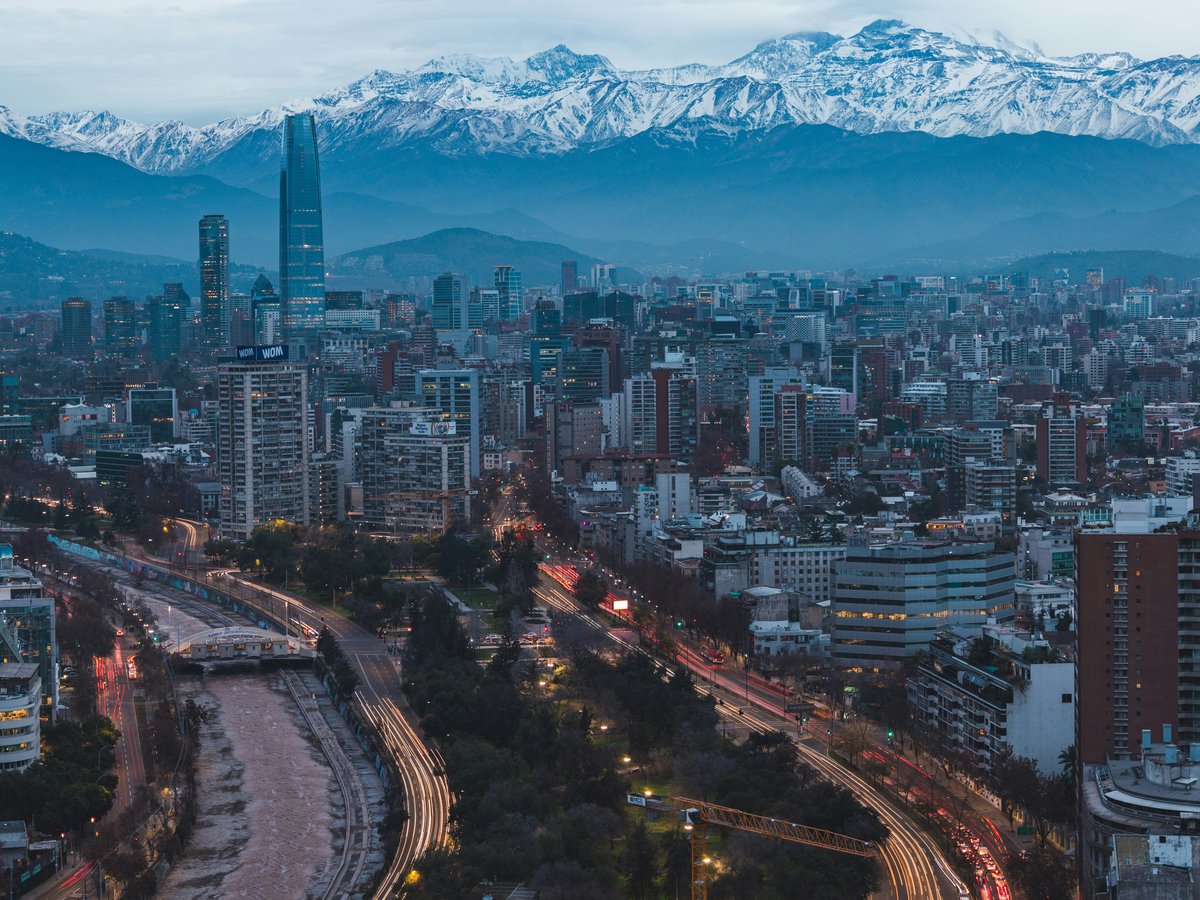
Daytime temperatures average 30°C (86°F) and drop to about 15°C (59°F) at night, with roughly 15mm of rain the entire month. Humidity sits around 49%, and the Andes stand out in relief against a nearly cloudless sky. Santiago sits at 520 meters elevation in a basin beneath the cordillera, and the thinner ozone layer this far south pushes UV to fierce levels. Sunburn happens in 15-20 minutes of unprotected midday exposure.
The reason January is still worth considering is Festival Internacional Santiago a Mil, one of Latin America's largest performing arts festivals. It fills venues from the Teatro Municipal to improvised stages in Parque Forestal and on Plaza de la Constitución throughout the month, with international companies from over 20 countries. Free outdoor performances draw nightly crowds on the grass along the Mapocho. If you time your visit around the festival and accept that Santiago is running on summer hours, you get clear weather, open tables at places like Liguria in Lastarria or Galindo in Bellavista that normally need a reservation, and the kind of dry heat that calls for mote con huesillo from a street cart on the Alameda.
Why visit in January
- Festival Internacional Santiago a Mil brings over 100 performing arts shows to the city throughout January, with dozens of free outdoor performances in Parque Forestal, Plaza de la Constitución, and plazas across multiple comunas.
- The driest stretch of Santiago's year, with near-certain blue skies for photography and Andes panoramas from the summit of Cerro San Cristóbal.
- Normally packed restaurants like Galindo on Calle Dardignac and Liguria in Lastarria suddenly have open tables as locals flee to the coast. Reservations that need 2-week notice in October are available same-day in January.
- Sunset lands around 8:45pm, giving long summer evenings for walking Calle José Victorino Lastarria past its bookshops and Emporio La Rosa's ice cream, or up Pío Nono into Bellavista, in comfortable post-dark air.
Worth knowing
- Midday heat between noon and 4pm makes extended outdoor sightseeing uncomfortable, with pavement temperatures along Paseo Ahumada and around Plaza de Armas climbing well above ambient air readings.
- Independent restaurants, commercial galleries along Alonso de Córdova in Vitacura, and design boutiques on Avenida Italia close for veraneo (summer holiday), thinning dining and cultural options across Providencia and Barrio Italia for 2-3 weeks.
- Hotel rates for international visitors climb to their annual high during the summer peak, driven by Northern Hemisphere winter demand.
- The city feels noticeably quieter than in autumn or spring. Calle Lastarria, normally packed with after-work crowds at its cafés and bookshops, thins out by 9pm on weeknights.
Best for
Think twice if
Santiago's January sits firmly in the dry season. Cloud cover is rare, with perhaps one day of light rainfall across the whole month. Mornings begin mild enough for an early walk through Parque Forestal or along the Mapocho before the heat climbs sharply after 10am. By mid-afternoon the air shimmers above Paseo Ahumada in the centro. The low humidity makes the warmth more tolerable than comparable readings in tropical cities like Bangkok or Manila. Once the sun drops behind the Andes, temperatures fall enough to sit comfortably at an outdoor table in Barrio Lastarria in shirtsleeves. The dominant pattern is sun, day after day, broken only by the occasional late-afternoon cloud build-up over the cordillera that rarely produces rain.
Seasonal caution
- UV index regularly reaches 11-13 (extreme category) throughout January. The combination of elevation and Southern Hemisphere ozone thinning intensifies exposure beyond what most Northern Hemisphere visitors expect. SPF 50+ sunscreen with reapplication every 90 minutes is a minimum, not a suggestion.
- Occasional heat waves push afternoon temperatures to 35-37°C (95-99°F) for 3-5 consecutive days, typically clustering in mid-to-late January. Many older buildings in Santiago Centro and Barrio Yungay lack air conditioning, making these episodes uncomfortable for sleeping.
Year-round climate
Averages from the last 5 years.
| Month | Avg high (°C) | Avg low (°C) | Rainfall (mm) |
|---|---|---|---|
| Jan | 30 | 15 | 15 |
| Feb | 30 | 16 | 4 |
| Mar | 28 | 14 | 5 |
| Apr | 24 | 12 | 16 |
| May | 18 | 9 | 47 |
| Jun | 16 | 7 | 94 |
| Jul | 16 | 7 | 34 |
| Aug | 16 | 7 | 100 |
| Sep | 18 | 8 | 33 |
| Oct | 23 | 10 | 18 |
| Nov | 26 | 12 | 14 |
| Dec | 29 | 14 | 2 |
Holidays and festivals in January
Public holidays
- New Year's Day(Año Nuevo)1 January 2027
Headline events
Festival Internacional Santiago a Mil
Early January through late January (typically January 3-31)
One of Latin America's largest performing arts festivals, running since 1994. Over 100 shows spanning theater, contemporary dance, and circus fill venues from the Teatro Municipal to open-air plazas across the city. International companies from 20+ countries participate each January. Free outdoor performances in Parque Forestal, on Plaza de la Constitución, and in neighborhood plazas make the festival accessible even without tickets to the headlining indoor programs at the Teatro Municipal or Centro Cultural Gabriela Mistral.
Best things to do in January
Attend Santiago a Mil performances
cultureThe festival programs over 100 shows in venues across the city, from the Teatro Municipal's gilded interior to improvised stages in Parque Forestal. Indoor ticketed shows range from experimental European theater to Chilean contemporary dance. Outdoor shows, often physical theater and circus, perform to crowds sitting on the grass in the evening warmth along the Mapocho and on Plaza de la Constitución.
The festival runs only in January. It is the single largest cultural draw of Santiago's calendar year.Booking tipThe program publishes in late December. Headlining indoor shows at the Teatro Municipal and GAM sell out within days. Book online at the festival site as soon as the schedule drops.
Hike in Cajón del Maipo
outdoorThe canyon southeast of Santiago opens fully in summer. Trails to Embalse el Yeso (2,500m elevation) reward with turquoise glacial water backed by snow-patched peaks. The Monumento Natural El Morado trail leads to a hanging glacier visible from 2,400m, with wildflowers along the route in early January. The town of San José de Maipo, about an hour from the city center, serves as the staging point, and its roadside restaurants offer cazuela and empanadas to fuel the drive up.
Snow-free trails, low river levels for safe crossings, and 15 hours of daylight for longer routes. Access roads that close in winter are fully open.Booking tipEl Morado requires a CONAF entry permit. Arrive before 9am on weekends or the parking area fills.
Early-morning hike up Cerro San Cristóbal
outdoorThe 880-meter hill in Parque Metropolitano offers the clearest panoramic view of Santiago and the full Andes cordillera. Walking up via the Pedro de Valdivia Norte entrance takes about 45 minutes and avoids the funicular crowds. The summit terrace faces east toward the snowline. The Japanese Garden on the lower slopes, with its koi ponds and stone paths, offers a quieter detour on the descent.
January's dry air and relatively low pollution (compared to winter) produce the sharpest Andes views of the year. A 7am start means comfortable temperatures and soft morning light.Booking tipThe funicular opens at 10am on weekdays. Walking up is free and available from sunrise.
Day trip to Maipo Valley wine country
food and drinkThe nearest wine valley to Santiago, about 45 minutes south by car, produces some of Chile's most respected Cabernet Sauvignon and Carmenere. Several vineyards offer tastings and tours through their cellars and barrel rooms. The drive passes through dry hills and irrigated vineyard rows heavy with pre-harvest fruit.
Vines are loaded with ripening grapes in the weeks before the late-February vendimia (harvest). Warm afternoons make outdoor tastings pleasant, and the vineyards look their greenest.Booking tipMost vineyards require advance booking for tours. Weekday slots are easier to secure than weekends.
Evening walk through Barrio Lastarria and Parque Forestal
walkingAfter 7pm the heat breaks and the cafés along Calle José Victorino Lastarria fill with santiaguinos who stayed in the city. Emporio La Rosa's Lastarria location serves its artisan ice cream late into the evening. The Parque Forestal strip along the Mapocho River hosts street performers, especially during Santiago a Mil. The Chilean National Museum of Fine Arts, founded in 1880, anchors the park's western end with its neoclassical facade lit up at night.
Summer evenings are the most comfortable time to explore on foot, with temperatures settling into the low 20s°C and daylight extending well past 8pm.Browse La Vega Central at peak summer produce
food and drinkSantiago's largest wholesale market fills several blocks near the Mapocho River with stalls of fruit, vegetables, seafood, and flowers. In January the stone-fruit and corn stalls dominate, and the air is thick with the scent of ripe peaches. The food stalls inside serve lunch plates from around 3,000-5,000 CLP. The Mercado de las Flores on the market's southern edge sells bouquets at prices that seem almost aggressive compared to florists in Providencia.
January is the apex of Chilean summer-fruit season. The variety, ripeness, and prices of stone fruits, melons, and corn at La Vega are at their yearly best.Booking tipGo between 8am and 11am for the best selection. The market thins out by early afternoon.
Museum circuit for midday heat escape
cultureThe Chilean Museum of Pre-Columbian Art (founded 1981) near Plaza de Armas and the Museum of Memory and Human Rights (opened 2010) near Quinta Normal both have air-conditioned galleries and offer serious, thought-provoking collections. The Pre-Columbian Art museum's textile and ceramics rooms alone merit an hour. MAVI on Plaza Mulato Gil de Castro in Lastarria makes a lighter third stop, with contemporary Chilean art in a compact space and a courtyard café for a mid-circuit break.
The midday heat between noon and 4pm makes outdoor sightseeing inadvisable. These museums provide 2-3 hours of climate-controlled depth, and all three are less crowded than usual thanks to the local exodus.Booking tipAll three museums close on Mondays. The Museum of Memory is free. The Pre-Columbian Art museum and MAVI charge modest entry fees.
What to eat in January
In season: fruit
Duraznos (Chilean peaches)
January is the peak of Chilean stone-fruit season. Freestone peaches at La Vega Central sell for a fraction of supermarket prices, and the fragrance of ripe fruit fills the market's aisles. The yellow-fleshed varieties tend to be sweeter than their red-skinned counterparts at this point in the season.
On menus now
Pastel de choclo
Fresh summer corn (choclo) grated into a sweet paste and baked over a filling of ground beef, chicken, olives, and hard-boiled egg in a clay bowl. The dish depends entirely on the quality of the corn, which peaks in January. The top develops a golden, slightly caramelized crust that cracks under the spoon. Picadas in Barrio Yungay like Peluquería Francesa serve it with a weight and sweetness that restaurants in the eastern comunas rarely match.
Humitas
Grated fresh corn mixed with basil and onion, wrapped in corn husks and steamed. Another dish that only works with peak-season choclo, which is starchier and sweeter in January than anything available the rest of the year. Traditionally served with a spoonful of sugar or alongside tomato salad. The stalls inside La Vega Central sell them by the pair.
Ensalada chilena
Sliced tomatoes and white onions dressed with olive oil, salt, and sometimes fresh cilantro. The simplicity depends on January tomatoes being at their peak sweetness. It appears on nearly every table as a side dish at restaurants from Galindo in Bellavista to the picadas in Barrio Yungay, and the gap in quality between January and winter versions is impossible to miss.
Street food peaks
Mote con huesillo
Glass carts selling this cold drink of husked wheat grains and stewed dried peaches in caramelized syrup appear across the centro and along the Alameda as soon as summer hits. Each glass typically costs 1,000-1,500 CLP. The sweetness and cold temperature make it Santiago's most effective edible relief from a hot afternoon.
Regular events in January
Año Nuevo (New Year's Day)Free
National public holiday on January 1. Most businesses, museums, and restaurants close for the day. The city is quiet as families recover from the midnight fireworks at Torre Entel and celebrations across the capital.
January 1Summer programming at Centro Cultural Gabriela Mistral (GAM)Free
GAM's campus in Barrio Lastarria, on Avenida Libertador Bernardo O'Higgins, runs a free summer series of live music, open-air film screenings, and family workshops on its outdoor terraces throughout January. The brutalist concrete architecture provides welcome shade for the late-afternoon time slots.
Weekends and select weekdays throughout JanuaryFerias artesanales in Barrio Bellavista and Los DominicosFree
Weekend craft markets appear along Pío Nono in Bellavista and at the Pueblito Los Dominicos complex in Las Condes, off Avenida Apoquindo. Summer draws more vendors selling leather goods, lapis lazuli jewelry, and hand-thrown ceramics from across Chile.
Saturdays and Sundays throughout JanuaryBest places this January
Cerro San Cristóbal (Parque Metropolitano)
parkThe 880-meter hill is Santiago's largest urban green space, with trails, gardens, a funicular built in 1925, and a summit viewpoint facing the full Andes range. January's clear, dry air makes for the sharpest mountain views of the year. The Japanese Garden on the lower slopes offers shade and koi ponds as a quieter alternative to the summit terrace.
Providencia / BellavistaSanta Lucía Hill
parkA compact, terraced hill in the city center with stone staircases, fountains, and lookout points. Less strenuous than Cerro San Cristóbal and reachable in a 15-minute walk from the Alameda. The Neptune Terrace at the top catches a breeze that the streets below miss, and the mature trees provide shade for the climb.
Santiago CentroLa Vega Central and Mercado Central
marketTwo markets separated by a few blocks near the Mapocho River. La Vega is the locals' wholesale market for produce and cheap lunches, with interior stalls serving caldillo de congrio and ceviche. Mercado Central, housed under an 1872 iron-and-glass roof prefabricated in England, leans toward seafood restaurants and international visitors. In January, La Vega's stone-fruit aisles and the fragrance of ripe peaches are the draw.
RecoletaBarrio Yungay
neighborhoodOne of Santiago's oldest residential neighborhoods, centered on Plaza Yungay with its Defensor de la Patria monument. Low colonial-era houses, crumbling facades, and a slower pace than the eastern comunas. The Museo de la Memoria sits on its northern edge along Calle Matucana. Barrio Yungay doesn't empty as dramatically in January because many of its residents stay in the city for summer. Picadas like Peluquería Francesa on Calle Compañía, a restaurant inside a preserved 19th-century barbershop, remain open through the month.
Barrio YungayParque Bicentenario
parkA modern 30-hectare park in Vitacura with reflecting pools, native plantings, and a black-necked swan pond. In January, the sprinkler zones become de facto play areas for families trying to cool down, and the flat paths are pleasant for an early-morning run before the heat sets in.
VitacuraBarrio Italia
neighborhoodA grid of streets lined with vintage shops, design studios, and small restaurants in repurposed houses. January's closures thin the options, but the antique shops along Avenida Italia and the design stores on Calle Caupolicán still operate on weekend hours. Tree-canopy shade on the side streets makes afternoon browsing tolerable, and the cafés that stay open tend to be the neighborhood's most established.
Ñuñoa / Providencia borderSantiago Metropolitan Cathedral and Plaza de Armas
landmarkThe neoclassical cathedral facing the Plaza de Armas, with a history dating to 1800. The stone interior stays cool even on the hottest January afternoons. Plaza de Armas itself, Santiago's founding square, has mature trees that shade the chess players and street musicians who gather year-round beneath them. The Chilean Museum of Pre-Columbian Art sits one block south on Calle Bandera.
Santiago Centro
Your packing checklist
Tick items off as you pack. Your progress saves in this browser.
All packed — have a great trip.
Insider tips
La Vega Central sits 3-4 blocks from Mercado Central but serves comparable seafood at roughly half the price, because its clientele is almost entirely local. The ceviches and caldillo de congrio at the interior stalls are fresher than most of what you will find across the Mapocho in the tourist-facing market.
Santiago a Mil's free outdoor shows in Parque Forestal and Plaza de la Constitución fill up fast. Arrive 30-45 minutes before showtime with a blanket to claim a spot on the grass. Mind you, the paid indoor headliners at the Teatro Municipal sell out within days of the December program release, but the free program is often equally strong.
The Costanera Center mall in Providencia has aggressive air conditioning and serves as the unspoken midday refuge for locals who stay in the city through January. The Sky Costanera observation deck on floors 61 and 62 offers 360-degree Andes views, and the queue is shorter in summer than in shoulder season.
If a restaurant in Providencia or on Avenida Italia looks closed, check their Instagram before writing it off. Many post specific veraneo closure dates and reopen in the second or third week of January rather than staying dark the full month.
MAVI (Museo de Artes Visuales) on Plaza Mulato Gil de Castro in Lastarria rarely draws more than a handful of visitors on a January weekday. Its rotating contemporary Chilean art exhibitions are strong, and the building's courtyard café offers shade and quiet in the middle of the neighborhood.
Peluquería Francesa on Calle Compañía in Barrio Yungay operates as a restaurant inside a preserved 19th-century barbershop with the original mirrors and barber chairs still on the walls. It stays open through January because Yungay doesn't empty like Providencia. The pastel de choclo and pisco sours draw a local crowd year-round.
Avoid these mistakes
- Scheduling a full day of walking sightseeing between 11am and 4pm. The afternoon heat combined with extreme UV makes midday outdoor plans genuinely miserable and medically risky along exposed stretches like Paseo Ahumada and the Alameda. Plan museums or lunch indoors for those hours and save walking for early morning or after 5pm.
- Arriving in Santiago on January 1 expecting a normal city. Año Nuevo shuts virtually everything, from the Museo de Bellas Artes to La Vega Central to most restaurants in Lastarria. If your flight lands January 1, plan a low-key day with supplies purchased beforehand or at a hotel.
- Assuming a restaurant on Avenida Providencia or Avenida Italia will be open without checking ahead. The veraneo closures catch visitors who have planned a dinner at a specific spot only to find a handwritten closure notice taped to the door. Call ahead or check Instagram before making the trip across town.
- Applying sunscreen once in the morning and considering it handled. At Santiago's January UV levels, that protection is gone well before lunch. Reapplication every 90 minutes is not cautious; it is the baseline for avoiding a painful evening.
Practical tips for January
Many businesses close for veraneo in January. Always verify hours on Instagram or by calling before taking the Metro across the city for a specific venue. For a reliable meal during veraneo, the food stalls inside La Vega Central, the Patio Bellavista complex off Pío Nono, and the picadas in Barrio Yungay along Calle Compañía are safer bets than Providencia or Avenida Italia. Museums close on Mondays year-round, with the exception of some temporary Santiago a Mil programming. Book festival tickets as soon as the program publishes in late December. The Metro runs normally throughout January and its air-conditioned cars are the most comfortable way to cross the city in the heat. Tipping in restaurants is customary at 10%, usually added to the bill as 'propina sugerida,' which you can accept or adjust. Santiago's tap water is safe to drink. The BIP! card for Metro and buses can be purchased and recharged at any station; it works on both systems. International pharmacies like Cruz Verde and Ahumada on Paseo Ahumada remain open through January and stock high-SPF sunscreen, though at higher prices than you would likely pay at home. For neighborhood-level transit detail and walking-distance context, the Wikivoyage entry for Santiago is a useful complement to map apps.
FAQ
Is January a good time to visit Santiago, Chile?
January is a solid but not ideal month. The weather is reliably dry and warm, and the city is less crowded than usual. That said, the veraneo closures thin the dining and gallery scene noticeably. Restaurants along Avenida Providencia go dark for 2-3 weeks, and commercial galleries on Alonso de Córdova in Vitacura post their January closure dates on Instagram. The afternoon heat limits outdoor time between noon and 4pm. Festival Internacional Santiago a Mil, if your interests run to performing arts, gives January an edge that other summer months lack. For the full scope of what Santiago offers, March or November tend to be stronger picks.
What is the weather like in Santiago in January?
Hot and dry. Santiago's January sits at the warmest end of its annual cycle, with very low rainfall and moderate humidity. The bigger practical concern is the extreme UV, which requires serious sun protection that most visitors underestimate. Mornings are comfortable for walking along the Alameda or through Parque Forestal before the heat climbs sharply after 10am. Midday through mid-afternoon is best spent indoors, and evenings cool rapidly after sunset into pleasant territory. Expect cloudless skies on most days, with the Andes sharply visible from Cerro San Cristóbal through the dry air.
Is Santiago crowded in January?
Less crowded than you might expect. A large portion of the local population leaves for beach towns and the south during veraneo, so the city operates at reduced capacity. International tourists are present, especially around Santiago a Mil performances at venues like the Teatro Municipal and in Parque Forestal, but the overall density is lower than in autumn or spring. Metro Line 1 under the Alameda is noticeably quieter, and normally packed restaurants like Liguria in Lastarria and Galindo on Calle Dardignac in Bellavista have open tables without reservations.
What should I pack for Santiago in January?
Lightweight, breathable clothing in light colors forms the base. A wide-brim hat and high-SPF sunscreen are non-negotiable given the UV intensity. Bring one light layer for outdoor dining after dark in Barrio Lastarria or Bellavista, when temperatures drop considerably. Closed-toe shoes with ventilation handle hot pavement better than sandals for full-day walking through neighborhoods like Barrio Yungay and the centro. A refillable water bottle matters because public fountains are scarce and the dry heat dehydrates faster than you might expect.
Is Santiago safe for solo travelers in January?
Santiago scores 5.8 out of 10 for solo-traveler safety (see the TTDI Solo-Safety Index). Petty theft, especially in crowded areas around Metro stations and along Paseo Ahumada in the centro, is the primary concern. January's lower foot traffic may slightly reduce pickpocketing exposure, but standard precautions still apply. Avoid displaying expensive electronics openly, use registered taxis or ride-hailing apps, and stay aware on Pío Nono and Calle Constitución in Bellavista late at night. Violent crime targeting tourists remains uncommon.
Things to Do in Santiago in January
 Free cancellation
 Cable Car, Funicular and Sightseeing Bus in Santiago one day
City tour: 2 hours, free cancellation.
via Viator Free cancellation
 Tour to Valparaíso, Viña del Mar, Pablo Neruda Museum and Vineyard
Day trip: 10 hours, free cancellation.
via Viator Free cancellation
 Discover Santiago: Tourist Bus, Cerro San Cristobal and Wine
City tour: free cancellation.
via Viator Free cancellation
 Andes Range Tour at Inca Lagoon & InSitu Winery Snack Included
Day trip: 10 hours, free cancellation.
via Viator Free cancellation
 Full Day Trip to Cajón del Maipo Yeso Reservoir + Toast
Day trip: 10 hours, free cancellation.
via Viator Free cancellation
 Santiago Half-Day Private City Tour Hotel Pick up & Food Sample
City tour: 6 hours, free cancellation.
via ViatorLast verified by automated review (v1.7.2) on . What is automated review?