Stay in Santiago in August
77 hotels in the Trip.com pool for Santiago, from US$14 a night.
Opens Trip.com on Fri 6 Aug to Sun 8 Aug 2027; change the dates there.
August sits in the back half of Santiago's wet season, averaging around 51mm of rain across roughly 6 days. That's less than June's peak, but the cold makes each spell feel longer than the numbers suggest. Daytime highs hover near 16°C (61°F) and overnight lows sit around 7°C (45°F). The city occupies a basin between the Andes and the coastal range, and in winter that geography traps cold, damp air under low cloud for days at a stretch. On the worst mornings a brownish smog clings to the skyline, the pavements stay slick well past noon, and the mountains disappear entirely.
There are compensations, though. The nearest ski resorts sit close enough for day trips, and mid-August tends to deliver the season's deepest snowpack. The Chilean Museum of Pre-Columbian Art, founded in 1981, and the Museum of Memory and Human Rights, opened in 2010, feel spacious and unhurried compared to the summer crush. The cold drives social life indoors, and a glass of carménère in a Santiago Centro bar while rain hammers the windows carries a different weight than the same drink in December.
The Metro's 7 lines run until 23:00 on weekdays and stay unaffected by the surface flooding that occasionally stalls bus routes near the Mapocho. Bellavista's restaurant row along Pío Nono fills tables by 8pm even in midwinter, with kitchens leaning into cazuela, carbonada, and slow-cooked congrio through the colder months. Lastarria's wine bars stay lively past midnight on Fridays. Street vendors wheel sopaipillas carts to metro exits the moment rain starts. SANFIC runs in the second half of August, filling independent cinemas across Providencia and Santiago Centro with 80-100 competition features and shorts. On pollution days, which tend to hit 3 to 5 times through the month, the Intendencia Metropolitana posts vehicle restrictions by license-plate number before 7am. Worth checking if you've rented a car.
Why visit in August
- The nearest Andes ski resorts carry their deepest snowpack of the season, and Santiago serves as a practical base for day-trip skiing.
- Hotel rates sit at their annual floor, well below the December through February peak, across neighborhoods like Providencia and Las Condes.
- Major museums, galleries, and cultural venues operate with minimal queues and winter-quiet rooms.
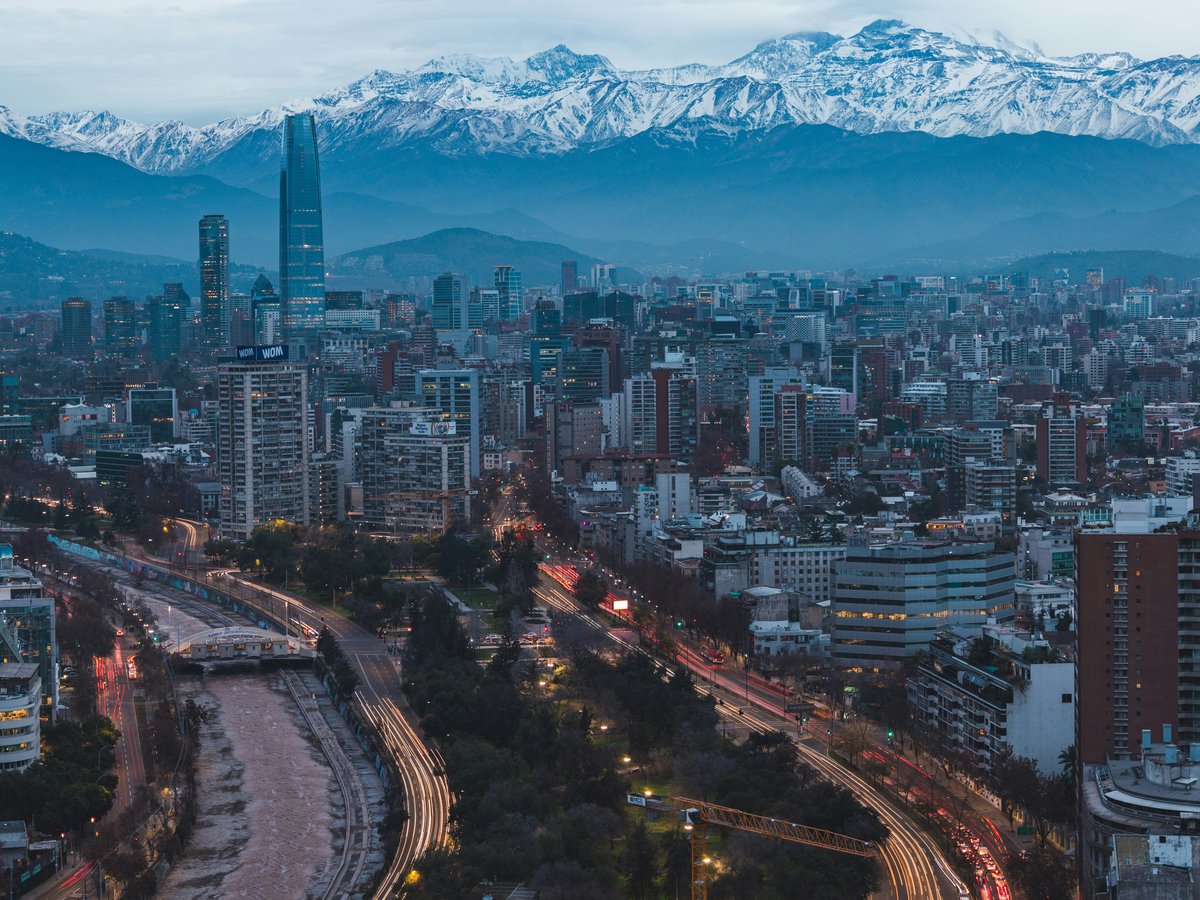
- On clear days between weather fronts, the snow-covered Andes appear sharper and closer than at any other time of year, with none of the summer haze that softens the ridgelines from October onward.
Worth knowing
- Rain typically falls on 6 or more days through the month, and individual showers can pin you indoors for entire afternoons when they settle in.
- Winter smog can settle over the basin for days when thermal inversions form, sometimes triggering government-imposed vehicle restrictions and visible haze.
- Sunset arrives before 6pm, narrowing the usable daylight window for outdoor sightseeing to a band between roughly 10am and 5:30pm.
- Most rooftop bars and outdoor terraces close for the season or retreat behind glass, limiting the city's nightlife geography.
Best for
Think twice if
Winter in Santiago feels more London than Patagonia. Days tend to be overcast, with periods of steady drizzle rather than dramatic downpours. Mornings start cold enough for visible breath, warming into the mid-teens by noon before cooling sharply by late afternoon. The ambient dampness makes the chill feel heavier than the thermometer reads. Between weather fronts, clear days reveal sharp Andean ridgelines against blue sky, and the midday sun carries genuine warmth on your face. Those breaks might account for a third of August, though they're hard to predict more than 48 hours out.
Seasonal caution
- Temperature inversions can trap vehicle exhaust and residential wood smoke in Santiago's valley for 3-5 consecutive days. During severe episodes the regional authority declares alertas ambientales or preemergencias, restricting vehicle circulation by license-plate number and banning wood-burning stoves. These episodes cluster from June through August. Check air quality readings at sinca.mma.gob.cl before planning extended outdoor activities, particularly if traveling with children or anyone with asthma.
Year-round climate
Averages from the last 5 years.
| Month | Avg high (°C) | Avg low (°C) | Rainfall (mm) |
|---|---|---|---|
| Jan | 30 | 15 | 15 |
| Feb | 30 | 16 | 4 |
| Mar | 28 | 14 | 5 |
| Apr | 24 | 12 | 16 |
| May | 18 | 9 | 47 |
| Jun | 16 | 7 | 94 |
| Jul | 16 | 7 | 34 |
| Aug | 16 | 7 | 100 |
| Sep | 18 | 8 | 33 |
| Oct | 23 | 10 | 18 |
| Nov | 26 | 12 | 14 |
| Dec | 29 | 14 | 2 |
Holidays and festivals in August
Public holidays
- Assumption of Mary(Asunción de la Virgen)15 August 2027
Best things to do in August
Day-trip skiing in the Andes
outdoorsValle Nevado sits above 2,800m and tends to have the most consistent powder. El Colorado occupies the same massif and offers more intermediate terrain. Farellones, the lowest and closest of the three, has a terrain park and family-oriented slopes. All three are reachable from Santiago in under 90 minutes by road.
August typically carries the season's deepest snowpack, with 2-3m base depths at the upper elevations and the most reliable coverage of the year.Booking tipWeekday lift tickets run 20-30% cheaper than weekends. Book a shared shuttle from the Escuela Militar area rather than renting a 4WD, since the mountain road requires chains after fresh snowfall.
The Museo Mile between Bellas Artes and MAC
cultureThe Chilean National Museum of Fine Arts, founded in 1880, fills one wing of the Palacio de Bellas Artes. The Santiago Museum of Contemporary Art (MAC) has occupied the opposite wing since 1947. Parque Forestal's bare winter trees line the walk between the two buildings. On a wet August day you can move between exhibitions without straying far from cover.
Rain makes outdoor plans unreliable, and both museums are nearly empty on winter weekdays. Temporary exhibitions often rotate in August ahead of spring programming.Booking tipBoth museums are free to enter. Arrive after 11am when the gallery spaces have had time to warm up.
Winter wine tasting in the Maipo Valley
food_and_drinkThe Maipo Valley's bodegas, roughly 45 minutes (30 miles) south of central Santiago, run cellar tastings and barrel-room tours through winter. Without summer crowds, groups are smaller and you're more likely to taste with the winemaker rather than a guide.
Winter is off-season for the vineyards. Group sizes drop, tasting rooms feel intimate, and some estates pour reserve wines and library vintages they hold back during the busy months.Booking tipMost bodegas require advance reservation for winter visits. Email 3-5 days ahead. Some close Mondays entirely.
Hot springs in the Cajón del Maipo
outdoorsThe Cajón del Maipo canyon, about 100km (62 miles) southeast of Santiago, holds several thermal spring complexes surrounded by snow-dusted Andean foothills. Pool temperatures sit between 35-40°C (95-104°F), and the contrast against cold mountain air and the mineral smell of sulfur makes winter the right season for these.
August temperatures make the hot springs feel genuinely restorative rather than novelty. The canyon road is usually passable, though sections can close briefly after heavy rain.Booking tipBook weekday morning slots to avoid Santiago families on weekend day trips. Bring your own towel and sandals.
Browsing Barrio Italia's covered design galleries
cultureThe indoor antique shops, design studios, and cafe-galleries along Avenida Italia come into their own in winter. The foot traffic thins, shopkeepers have time to talk, and the espresso machines fog the windows against the cold outside.
Rainy days push visitors indoors, and the neighborhood's covered passages and courtyard galleries make it one of the few areas where a wet afternoon improves the experience.Evening film festival screenings
cultureThe city's annual international film festival fills screening rooms across several neighborhoods with competition features, short films, and Chilean premieres. Evening screenings tend to draw smaller, more engaged audiences than the weekend matinees, and most end with a 20-minute director conversation.
The festival runs through the latter half of August, turning a month with limited outdoor options into the strongest window on Santiago's cultural calendar.Booking tipFestival passes sell faster than individual tickets. The program typically publishes 3 weeks before opening night, and popular competition titles sell out within days.
Winter seafood at Mercado Central
food_and_drinkThe cast-iron market hall, dating to the 1870s, feels warmer and more animated in winter when the steam from fish stews fills the upper level and the clatter of plates echoes off the ironwork ceiling. The ground-floor stalls serve faster and at lower prices than the sit-down restaurants above.
Winter is peak season for Chilean congrio, reineta, and merluza. Cold Pacific currents bring the best coastal catches between June and September, and the market reflects that abundance.Booking tipGo before noon on weekends to beat the family lunch rush. Weekday lunchtimes are calmer and the fish is equally fresh.
What to eat in August
On menus now
Cazuela
Chile's defining winter stew, served in a single clay bowl with bone-in beef or chicken, half a corn cob, potato, squash, and green beans in clear broth. Every fonda and picada in the older neighborhoods keeps a pot going through August.
Carbonada
A thick, slow-cooked soup of diced beef, pumpkin, potato, corn kernels, and oregano in rich broth. Less famous than cazuela but arguably more satisfying on a cold, wet afternoon when you need something that sits heavy and warm.
Chupe de jaiba
Crab gratin baked with breadcrumbs, cream, and melted cheese until the top crisps. Winter is peak season for jaiba along Chile's central coast, and the catch feeds Santiago's restaurant kitchens from June through September.
Street food peaks
Sopaipillas
Fried pumpkin-flour discs that appear at street carts near metro exits on rainy days, served hot in paper bags. The pasadas version comes soaked in warm chancaca syrup with cinnamon and clove. Follow the smell of frying dough.
What to drink
Navegado
Chilean mulled red wine heated with orange peel, cinnamon sticks, and raw sugar. Traditional bars and winter street vendors serve it through the coldest months, and the warmth hits your hands through the glass before it hits your stomach.
Regular events in August
SANFIC (Santiago Festival Internacional de Cine)
Santiago's main international film festival, screening 80-100 features and shorts across independent cinemas. International and Chilean competition programs run in parallel, with jury prizes awarded at closing.
Mid-to-late August (typically 10 days, exact dates vary by year)Asunción de la VirgenFree
National public holiday. Banks, government offices, and many shops close. The Santiago Metropolitan Cathedral, standing on Plaza de Armas since 1800, holds a principal Mass. When the holiday falls near a Friday or Monday, the long weekend sends santiaguinos to the coast, leaving the city noticeably quieter.
August 15 (fixed date)Día del NiñoFree
Chile's Children's Day brings family-oriented events, puppet shows, and reduced museum admission for kids at parks and cultural venues across the city. Santiago's major green spaces typically host free activities through the afternoon.
Second Sunday of AugustBest places this August
Cerro San Cristóbal
viewpointThe 880m hill offers panoramic views, and on clear winter mornings the snow-capped Andes stretch across the entire eastern horizon with a crispness that summer haze obscures for months. The funicular runs year-round. Worth the climb on any dry day for the 20-minute gondola ride across the summit ridge.
RecoletaSanta Lucía Hill
parkSmaller and more central than its taller neighbor across the river. The stone terraces and bare winter trees give the hill a quiet, European quality in August. The 360-degree view from the top takes in the cathedral's towers and, on clear days, the full Andean front.
Santiago CentroLa Vega Central
marketThe working-class produce and seafood market across the Mapocho River from the tourist-facing fish market. Winter stock includes peak-season citrus, root vegetables, and fresh shellfish at prices roughly 40% below what the stalls across the river charge. The Vega Chica section has Chilean-Korean and Chilean-Persian food stalls that draw the lunch crowd.
RecoletaBarrio Yungay
neighborhoodOne of Santiago's oldest residential neighborhoods, with 19th-century facades, small galleries, and a Saturday morning flea market in Plaza Yungay. The winter light hits the pastel-painted colonial houses at a lower angle than in summer, more directional and more photogenic on the rare bright day.
Santiago CentroParque Bicentenario
parkVitacura's modern park features a long reflecting pool, resident flamingos, and wide walking paths lined with deciduous trees that go bare in August. The Andes backdrop is strongest from the park's eastern edge on clear winter mornings, before the afternoon haze builds.
VitacuraQuinta Normal park and museum complex
parkA cluster of four museums, including the National Museum of Natural History (founded in 1830, the oldest in Chile), surrounds a green space that doubles as a winter-morning walking circuit. The park's lagoon stays active with pedal boats on dry weekends, and the museum's permanent collections are extensive enough for a full rainy afternoon.
Quinta Normal
Your packing checklist
Tick items off as you pack. Your progress saves in this browser.
All packed — have a great trip.
Insider tips
When the regional authority declares a preemergencia ambiental, diesel vehicles with certain license-plate endings cannot circulate and wood-burning stoves are banned across the city. This happens 3-5 times in a typical August. If you've rented a car, check your plate number against the daily restriction before heading out each morning.
Sopaipillas pasadas, the sweet version soaked in chancaca syrup, appear at street carts only on rainy days. The vendors tend to set up near metro exits in the city center and along Providencia. If the rain stops, so do they.
The Andes resorts run promotional midweek rates on Tuesdays and Wednesdays in August, when Santiago locals are at work and slope queues drop to nearly zero. A midweek day costs roughly a third less than a Saturday.
Ñuñoa's cafe scene, concentrated along Irarrázaval and its side streets, operates at a slower, more local pace than the tourist-oriented spots closer to the center. Winter is when the regulars are most visible and the baristas most willing to talk about which beans they're roasting.
The Persa Biobío flea market, south of the city center near the Bio-Bío metro station, operates rain or shine on weekends. Winter is when the antique dealers bring out better stock, since summer tourists have gone home and the serious collectors come through.
Avoid these mistakes
- Booking 5 consecutive days of outdoor walking tours. August will likely wash out at least 2 of those days with rain. Mix in museums, markets, and wine-tasting day trips so a wet afternoon becomes a change of pace rather than a cancellation.
- Driving to the ski resorts without checking road conditions first. The mountain roads above 2,500m can close without warning after snowfall, and chains or a 4WD vehicle are mandatory at elevation. The shared shuttle services from the city handle all of this.
- Packing for cold only and forgetting the temperature swing. A clear winter day in Santiago can occasionally warm to 18-19°C (64-66°F) in direct sun by noon, catching people who dressed for the early-morning forecast low.
- Assuming restaurants keep summer hours. Many kitchens in the smaller neighborhoods stop seating by 9pm in winter, and some close entirely on Monday and Tuesday. Check hours before walking 20 minutes through the rain.
Practical tips for August
The Chilean peso traded at roughly 913 CLP to 1 USD as of late August 2026. Most restaurants and shops in tourist-facing neighborhoods accept contactless card payments, though fondas and market stalls in older parts of the city still prefer cash. Winter business hours tend to shift. Some shops open later (11am instead of 10am) and close earlier (7pm instead of 9pm), particularly on weekdays. The Santiago Metro runs its regular schedule year-round, but above-ground bus routes can slow during heavy rain due to street flooding at lower-lying intersections. If you're heading to the ski resorts, book shared mountain shuttles a day ahead for weekends. For the film festival, check the program the moment it publishes and buy passes early. Pack for indoor heating that can be uneven, since many older buildings rely on gas heaters rather than central systems, and heritage-building restaurants can run cold. Tipping at sit-down restaurants follows the standard 10% propina, which appears as a suggestion on the bill but is not mandatory.
FAQ
Is August a good time to visit Santiago?
August is a fair time to visit, not a great one. It sits in the heart of winter, with steady rainfall and temperatures that keep you in layers all day. That said, hotel rates drop to their annual floor, museums are uncrowded, and the Andes resorts carry their best snow. If you're combining city time with skiing, or if low-season pricing matters, August works on those terms. If you want warm weather and outdoor dining, come between November and March.
What should I wear in Santiago in August?
Dress in layers. Mornings start cold enough for visible breath and can warm noticeably by noon on a clear day, so you need the flexibility to adjust. A waterproof jacket is essential given the frequent rain, and water-resistant shoes save you from pooling sidewalks. A scarf and light gloves help at dawn and dusk. If you're heading to the mountains, add a thermal base layer underneath everything.
Can I go skiing near Santiago in August?
Yes, and August is typically the strongest month for it. The three main resorts east of Santiago sit within a comfortable day-trip range, and August snow conditions are generally the most reliable of the season. Shared shuttles run daily from the city and handle the mountain driving. Weekday visits cost significantly less and draw far fewer people than weekends.
Is Santiago crowded in August?
No. August is deep low season for tourism. Museums, restaurants, and cultural venues operate well below capacity. The exception is the mid-August public holiday weekend, when ski resorts fill with local families and some santiaguinos leave the city for the coast. Outside that long weekend, the city feels noticeably quiet compared to the December through March high season.
Things to Do in Santiago in August
 Free cancellation
 Cable Car, Funicular and Sightseeing Bus in Santiago one day
City tour: 2 hours, free cancellation.
via Viator Free cancellation
 Tour to Valparaíso, Viña del Mar, Pablo Neruda Museum and Vineyard
Day trip: 10 hours, free cancellation.
via Viator Free cancellation
 Discover Santiago: Tourist Bus, Cerro San Cristobal and Wine
City tour: free cancellation.
via Viator Free cancellation
 Farellones Park Tour
Day trip: 10 hours, free cancellation.
via Viator Free cancellation
 Andes Range Tour at Inca Lagoon & InSitu Winery Snack Included
Day trip: 10 hours, free cancellation.
via Viator Free cancellation
 Full Day Trip to Cajón del Maipo Yeso Reservoir + Toast
Day trip: 10 hours, free cancellation.
via ViatorLast verified by automated review (v1.7.2) on . What is automated review?