Stay in Santiago in June
77 hotels in the Trip.com pool for Santiago, from US$14 a night.
Opens Trip.com on Fri 4 Jun to Sun 6 Jun 2027; change the dates there.
June is winter in Santiago, and the city feels it. Daytime temperatures sit around 15.6°C (60°F), falling to 7.4°C (45°F) after dark, with 94mm of rain spread across roughly 6 days. The air carries the smell of roasted chestnuts from street carts near the Alameda, and sopaipilla vendors set up across Barrio Brasil the moment the first drops fall. This is not a month that flatters the city for first-time visitors hoping for sunshine.
That said, Santiago's winter has a quiet pull for the right traveler. International crowds thin out, hotel rates in Lastarria and Las Condes drop well below their December peaks, and cultural institutions like the Chilean Museum of Pre-Columbian Art (founded 1981) are close to empty on weekday mornings. Teatro Municipal runs its winter opera and ballet season. The indoor life of the city takes over, with warm cafe interiors and fogged-up windows replacing the terrace seating that empties by May.
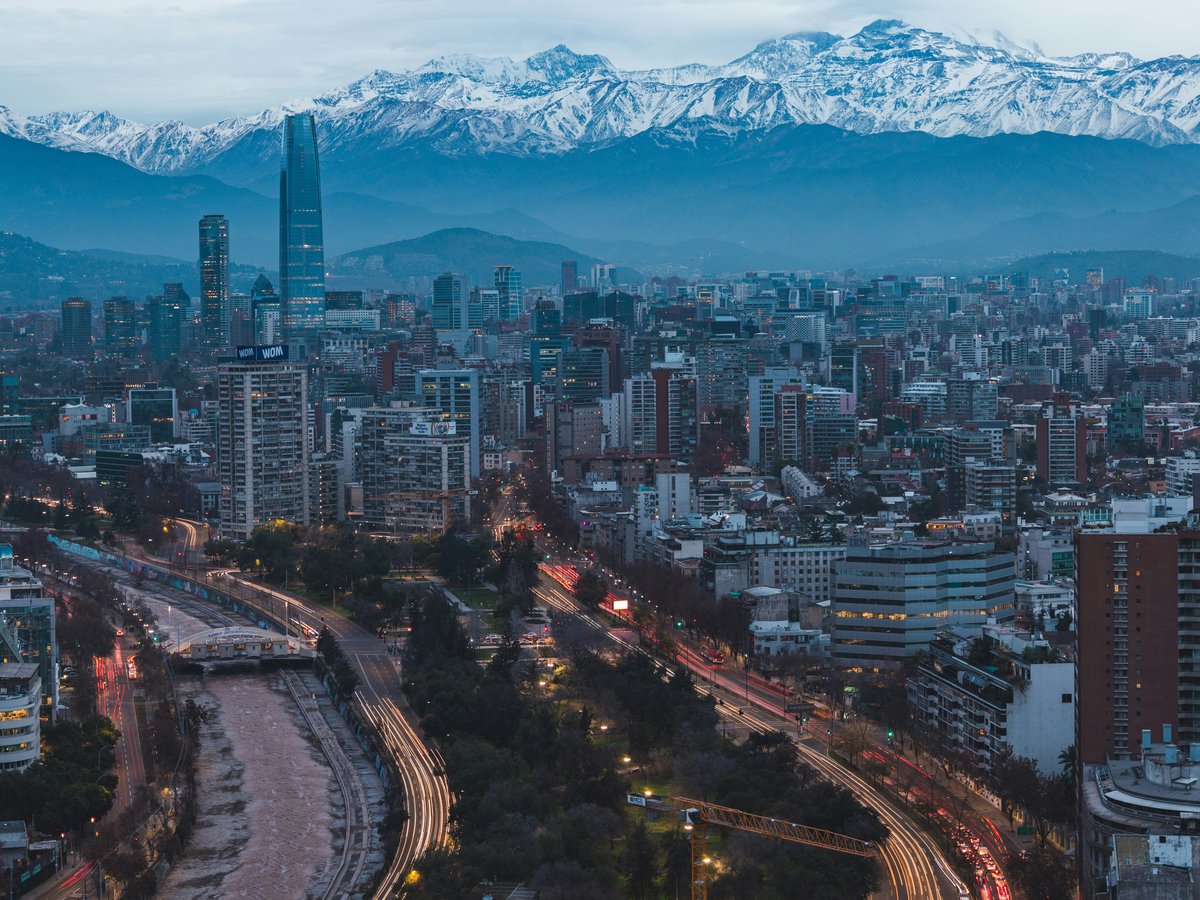
The daily rhythm shifts in ways you feel before you notice. Morning fog off the Mapocho rarely lifts before 10:00, and locals start later, filling bakeries along Irarrázaval for hallullas and café con leche around 09:30 instead of summer's 07:00 rush. By mid-afternoon the clouds sometimes break, and for 2 or 3 hours the snow on the Andes catches low winter light at an angle that turns the entire eastern skyline pink. Santiaguinos treat these moments seriously, stopping on bridges and overpasses to look east. By 18:00 the streets are dark, the navegado is warming, and the city has turned entirely inward.
Why visit in June
- Ski resorts in the Andes open by mid-June, and the day-trip format works. Morning skiing followed by city dining is a realistic single-day combination that few other capitals can offer.
- Hotel and Airbnb rates across Providencia drop 30-40% compared to peak-season December through February pricing. Restaurants that need reservations in summer seat walk-ins without a wait.
- Santiago's major museums, including the Museo de la Memoria and the Museo Nacional de Bellas Artes, see minimal weekday crowds. No advance booking needed for any of them.
- Winter comfort food peaks in June. Sopaipillas, cazuela, and navegado (Chilean mulled wine) appear on menus and street corners across the city, and the cold weather makes them taste right.
Worth knowing
- June is the second-wettest month of the year. Rain tends to arrive in multi-day fronts from the Pacific that can keep you indoors for 48 hours straight.
- Winter temperature inversions trap vehicle emissions and wood-burning smoke in the Santiago valley. The Intendencia Metropolitana sometimes declares pre-emergencia ambiental days, restricting vehicle circulation and making outdoor air unpleasant to breathe.
- Daylight is limited. Sunset falls around 17:45, and mornings stay grey until well past 08:00, cutting into sightseeing hours by roughly 4 hours compared to December.
- Several outdoor attractions and terrace restaurants reduce their hours or close entirely from May through August.
Best for
Think twice if
Santiago's June weather tends to feel colder than the thermometer suggests, thanks to the dampness that settles over the Mapocho River valley on grey mornings. Fog sometimes lingers until 10:00 before lifting to reveal the snow-covered Andes to the east. Most days are dry between fronts, but when rain arrives it tends to come in slow Pacific systems that may last a full day or two before clearing. Afternoons along the Paseo Ahumada rarely feel warm enough for a t-shirt alone, even on sunny days. Sunset comes early, around 17:45 by month's end, and evenings cool off quickly after that. You will want a warm layer for any time spent outside past mid-afternoon.
Seasonal caution
- Santiago sits in a valley ringed by the Andes and the Cordillera de la Costa. In June and July, thermal inversions trap pollution from vehicles and wood-burning stoves, sometimes pushing PM2.5 levels above WHO guidelines. The Intendencia Metropolitana declares pre-emergencia or emergencia ambiental alerts several times each winter, restricting driving and outdoor activities. Check Santiago's air quality index before planning outdoor excursions.
- Mountain roads to ski resorts like Valle Nevado and Farellones can close without warning after heavy snowfall. Chains are mandatory above the snow line, and Carabineros enforce this at checkpoints on the Camino a Farellones.
Year-round climate
Averages from the last 5 years.
| Month | Avg high (°C) | Avg low (°C) | Rainfall (mm) |
|---|---|---|---|
| Jan | 30 | 15 | 15 |
| Feb | 30 | 16 | 4 |
| Mar | 28 | 14 | 5 |
| Apr | 24 | 12 | 16 |
| May | 18 | 9 | 47 |
| Jun | 16 | 7 | 94 |
| Jul | 16 | 7 | 34 |
| Aug | 16 | 7 | 100 |
| Sep | 18 | 8 | 33 |
| Oct | 23 | 10 | 18 |
| Nov | 26 | 12 | 14 |
| Dec | 29 | 14 | 2 |
Holidays and festivals in June
Public holidays
- Battle of Arica(Asalto y Toma del Morro de Arica)7 June 2027
- National Day of Indigenous Peoples(Día Nacional de los Pueblos Indígenas)21 June 2027
- Saint Peter and Saint Paul(San Pedro y San Pablo)28 June 2027
Best things to do in June
Day-trip skiing in the Andes
outdoorValle Nevado sits roughly 60km east of Santiago. La Parva and El Colorado are slightly closer. All three can be reached by car in about 90 minutes from downtown, conditions permitting. The skiing itself suits intermediates well, with wide groomed runs and views across the cordillera that feel disproportionately dramatic for a day trip.
Early-season snowpack typically reaches skiable depth by mid-June, and opening-week crowds are thinner than July's school-holiday rush.Booking tipBook transport to the resorts a day ahead. Shared shuttle services run daily departures from Las Condes and Providencia when the road is open.
Winter museum circuit in Barrio Lastarria
cultureLastarria concentrates three major institutions within a 10-minute walk. The national fine arts museum sits at the edge of Parque Forestal, the Museo de Artes Visuales overlooks Plaza Mulato Gil de Castro, and the Gabriela Mistral Cultural Centre (GAM) hosts rotating exhibitions and performances. On a rainy Wednesday you might have entire galleries to yourself.
June's rain and low tourist volume mean no queues and no tour-bus crowds at any of Santiago's major galleries.Booking tipMost museums are free on Sundays. Weekday mornings before 11:00 are the quietest.
Mercado Central seafood lunch
foodThe wrought-iron market hall near Estación Mapocho has served Santiago since 1872. The central restaurants cater to tourists and charge accordingly, but the stalls along the outer ring serve the same paila marina and fresh catch at roughly half the price. The market's interior stays warm and dry regardless of the weather outside.
Winter is peak season for congrio and other cold-water species. June prices for fresh fish at the market tend to run lower than in the summer tourist months.Booking tipArrive before 12:30 to beat the lunch rush. Outer-ring stalls do not take reservations.
Termas de Colina hot springs
outdoorNatural thermal pools in the Andes northeast of Santiago, reached by a drive of about 2 hours through the Colina valley. The water temperatures range from lukewarm to genuinely hot across multiple pools. The surrounding landscape is bare mountain terrain, occasionally snow-dusted in June, and the silence up there is striking after the city.
Soaking in hot thermal water while cold mountain air bites your face is a winter-specific experience. The temperature contrast is the entire draw.Booking tipGo on a weekday. Weekend crowds can be heavy even in winter. Start early to allow for afternoon cloud cover on the drive back.
Wine tasting in the Maipo Valley
foodThe Maipo Valley, Santiago's closest wine region, sits 45 minutes south of the city center. Major estates like Concha y Toro in Pirque and Santa Rita in Alto Jahuel run tours and tastings year-round. Winter visits come with bare-vine landscapes and empty tasting rooms, and the cool air tends to make the reds taste richer.
June is the quietest month at most Maipo Valley wineries. You are likely to get a more personal tour, and some estates discount tasting fees during the off-season.Booking tipBook at least 2 days ahead for English-language tours. Most wineries close on Mondays.
Teatro Municipal winter performance season
cultureSantiago's main opera and ballet house, built in 1857 and rebuilt after the 1906 earthquake, runs its heaviest programming from May through September. The building itself, on Calle Agustinas near Plaza de Armas, is worth visiting for the interior architecture alone.
June falls in the heart of the winter season, with opera and ballet productions running most weekends. This is when the theater's calendar is densest.Booking tipBuy tickets through the Teatro Municipal website 1-2 weeks ahead. Upper-level seats in the galería cost a fraction of the orchestra and still offer good acoustics.
Café crawl through Barrio Italia
foodBarrio Italia, centered on Avenida Italia between Irarrázaval and Diagonal Paraguay, is Santiago's densest concentration of independent coffee shops, antique stores, and design studios. In winter, the cafés fill with locals settling in with books and laptops. The coffee scene here leans specialty, with single-origin Chilean-roasted beans and latte art that the baristas seem to take personally.
Cold, grey June weather is the reason these cafés exist the way they do. The neighborhood's appeal is built around being a warm indoor refuge. Summer dilutes the atmosphere.What to eat in June
In season: fruit
Mandarinas
Chilean mandarins hit peak season in June and July, arriving from central valley orchards south of Santiago. Sweeter and cheaper than at any other time of year, sold by the kilo at La Vega Central for a fraction of supermarket prices. The juice stains your fingers and smells sharp and bright in the cold air.
On menus now
Cazuela
Chile's signature winter stew, built around a piece of beef or chicken with corn on the cob, potato, squash, and rice in a clear broth. Every traditional restaurant in Barrio Yungay serves its own version from May through August, and the portions tend to be enormous. The broth's warmth on a cold June evening is hard to overstate.
Caldillo de congrio
Conger eel soup, thick and creamy, made with onion, potato, tomato, and cream. Pablo Neruda wrote an ode to this dish in 1954. Winter brings peak catches of congrio along the Chilean coast, and the rich broth becomes a daily fixture at fish markets and neighborhood restaurants through June.
Street food peaks
Sopaipillas
Fried pumpkin-flour discs sold from street carts across Santiago whenever rain falls. June's frequent wet days mean vendors appear on nearly every block near Plaza de Armas and through Providencia, serving them plain with pebre or drizzled with chancaca, a dark cane syrup. The combination of warm, crispy dough and cold rain is the defining sensory pairing of Chilean winter.
Castañas asadas
Roasted chestnuts sold from coal-fired metal drums on street corners downtown and near Estación Mapocho. The sweet, smoky smell is the signature street scent of Santiago from May through July. A paper cone of warm chestnuts costs roughly 1,000 to 1,500 CLP.
What to drink
Navegado
Chile's version of mulled wine. Red wine heated with orange peel, cinnamon, cloves, and sugar, served in ceramic mugs at old-school bars in Bellavista and along Calle Dardignac. The warm spice smell drifts out of doorways on cold evenings and tends to pull you inside before you have planned to stop.
Regular events in June
Día Nacional de los Pueblos Originarios and We TripantuFree
Chile's public holiday honoring indigenous peoples, established by law in 2021 and observed on the winter solstice. The date coincides with We Tripantu, the Mapuche New Year, which marks the return of the sun after the longest night. Ceremonies and cultural events take place at Cerro Santa Lucía and Plaza de la Ciudadanía, with Mapuche music, food, and craft displays. The atmosphere tends to be reflective rather than festive.
June 21 (winter solstice)Fiesta de la MúsicaFree
Santiago's version of the global Fête de la Musique, with free live performances at bars, cultural centers, and public spaces across the city. Venues in Bellavista, Lastarria, and Barrio Yungay typically participate, with sets spanning classical, jazz, folk, and rock. The quality varies, but stumbling on a good set in a small bar is part of the appeal.
June 21San Pedro y San PabloFree
National public holiday. Government offices, banks, and many shops close for the day. Restaurants and museums in tourist areas generally remain open. Expect some domestic travel as Chileans use the long weekend for short trips to the coast or the south.
June 29Best places this June
Cerro San Cristóbal (Parque Metropolitano)
parkSantiago's largest urban park, rising 880 meters above the city. On clear winter mornings, the panoramic views of the Andes from the summit are the sharpest of the year. Cold air and rain wash away the haze that blurs summer views. Take the funicular from Bellavista, which runs year-round.
BellavistaCerro Santa Lucía
parkA hilltop park in the city center, on the site where Pedro de Valdivia founded Santiago in 1541. The terraced gardens feel quieter in June than in any other month. Morning fog sometimes fills the lower paths, giving the stone staircases and fountains an atmospheric quality that disappears in warmer months.
CentroLa Vega Central
marketSantiago's main wholesale produce market, across the Mapocho River from Mercado Central. Winter brings peak-season citrus, root vegetables, and cheap avocados to the vendor stalls. The food court upstairs (La Vega Chica) serves enormous Chilean lunch plates for 3,000 to 5,000 CLP. The market is noisy, crowded with locals, and completely different from the tourist-facing seafood hall nearby.
RecoletaMuseo de la Memoria y los Derechos Humanos
museumOpened in 2010, this museum documents Chile's 1973-1990 military dictatorship through testimonies, documents, and artifacts. The building sits in Barrio Yungay, west of the city center. Admission is free. Allow at least 2 hours, and expect the experience to be heavy.
Barrio YungayMuseo Nacional de Bellas Artes
museumChile's national art museum, founded in 1880 and housed in a Beaux-Arts palace at the eastern edge of Parque Forestal. The permanent collection spans colonial religious art through Chilean contemporary work. The glass-domed central hall catches winter light in a way that the summer crowds never let you appreciate.
LastarriaSantiago Metropolitan Cathedral
landmarkCompleted in 1800, the Cathedral faces the Plaza de Armas at the heart of the old city. The interior is noticeably warmer than the street outside, and the carved-wood altar and side chapels reward a slow 30-minute visit. Free entry.
CentroBarrio Yungay
neighborhoodOne of Santiago's oldest residential neighborhoods, with crumbling 19th-century facades, independent bookshops, and a growing cluster of natural-wine bars. Less polished than Lastarria and more interesting to walk through. The residential blocks mix colonial architecture with street art, and weekends bring small neighborhood markets to the side streets.
Yungay
Your packing checklist
Tick items off as you pack. Your progress saves in this browser.
All packed — have a great trip.
Insider tips
Sopaipillas taste best from the carts that appear only when it rains. The vendors near Estación Mapocho and along Calle Puente tend to use more pumpkin in their dough than the permanent shops, giving a deeper orange color and slightly sweeter flavor. Ask for 'con chancaca' to get the full experience.
If you are day-tripping to ski resorts, fill your car's gas tank in Las Condes the night before. The last station on the Camino a Farellones sits at the base of the mountain and sometimes runs out on busy weekends. Tire chains can be rented at the police checkpoint for roughly 15,000 to 20,000 CLP.
The outer ring of Mercado Central serves essentially the same seafood as the tourist-facing center restaurants at roughly half the price. Look for the stalls labeled 'cocinerías' and point at what the person next to you is eating if the menu is too fast to follow.
Santiago's Metro runs until 23:00 on weeknights and 23:30 on Fridays and Saturdays. The Bip! transit card can be purchased at any station. Loading it with around 10,000 CLP covers roughly a dozen trips at off-peak fare.
On pre-emergencia ambiental days, vehicles with certain license-plate endings cannot circulate. Check Santiago's Restricción Vehicular announcement each morning if you are renting a car. On these days, the air quality in the city center can be genuinely unpleasant for outdoor exercise, so plan museum or cafe time instead.
Avoid these mistakes
- Planning a full day of outdoor sightseeing without checking the weather forecast. June rain in Santiago often comes in multi-day systems, and a packed outdoor itinerary during a rainy stretch will leave you frustrated. Build 2 or 3 indoor alternatives into each day.
- Driving to Andes ski resorts without tire chains or without checking the road status. The Camino a Farellones closes after heavy snowfall, sometimes for days. Carabineros turn away vehicles without chains at the mountain checkpoint. No exceptions.
- Assuming December-style restaurant hours. Many Santiago restaurants in June open later for lunch (13:00 instead of 12:00) and close earlier (22:00 instead of midnight). Call ahead if you are planning a late dinner, especially on weeknights in Providencia or Ñuñoa.
- Packing only for cold weather and forgetting sun protection. Clear June days at Santiago's latitude still deliver meaningful UV, and the reflection off Andes snow at altitude amplifies exposure considerably. Sunscreen and sunglasses are not optional on mountain day trips.
Practical tips for June
The Chilean peso trades at approximately 913 CLP to 1 USD as of late August 2026. ATMs on the Redbanc network are widely available in Providencia, Las Condes, and Metro stations, though some charge withdrawal fees that can run 3,000 to 5,000 CLP per transaction. Credit cards are accepted at most restaurants and shops in tourist-facing neighborhoods, but La Vega Central and street food vendors are cash-only.
Book ski transport and Maipo Valley wine tours 2 to 3 days ahead during June, as operators run reduced winter schedules and may cancel with fewer than 4 bookings. The Turbus and Pullman Bus terminals near Estación Alameda run regular service to Valparaíso (90 minutes) and Viña del Mar if you want a coastal day trip, though June weather on the coast is similarly cold and grey.
Two public holidays fall in June. Banks and government offices close on both dates, though museums in the centro and Lastarria typically stay open. Book inter-city travel around these weekends early, as domestic travelers fill buses and flights.
Santiago's dress code is relaxed by South American capital standards. Dark jeans and a jacket work for most restaurants, including upscale ones in Vitacura. Teatro Municipal performances warrant slightly smarter attire, but no one enforces a strict code.
FAQ
Is June a good time to visit Santiago, Chile?
June is winter in Santiago, with cool temperatures, rain, and shorter days. It is not the strongest month for first-time visitors who want outdoor sightseeing and warm weather. That said, it offers the lowest hotel prices of the year, empty museums, and proximity to Andes ski resorts that open by mid-month. If you are interested in skiing, Chilean winter food culture, or budget travel, June has genuine appeal. If you want sunshine and rooftop dining, October or November is a better fit.
What is the weather like in Santiago in June?
Expect afternoon highs around 16°C (61°F) and overnight lows near 7°C (mid-40s°F). Rainfall approaches 95mm for the month but falls in concentrated fronts, so most days between systems are dry. Humidity averages in the mid-60s. Pack layers, a waterproof jacket, and closed-toe shoes. The dampness in the valley tends to make the cold feel more penetrating than you might expect from the numbers alone.
Can I go skiing near Santiago in June?
Likely yes, but it depends on when snowfall begins. Ski resorts at Valle Nevado, La Parva, and El Colorado usually reach opening conditions by mid-to-late June, though exact dates shift year to year based on early-season snowfall. All three sit within easy day-trip range of central Santiago by car. Check resort websites for opening announcements as the month approaches. Early June might be too early for good coverage, while late June is usually reliable.
Is Santiago crowded in June?
No. June is the quietest month for international tourism in Santiago. Major museums and attractions have minimal queues, restaurants do not require advance reservations with rare exceptions, and public transit feels noticeably less packed than in the December through February summer. The exceptions are the two public holidays (June 21 and June 29), when domestic travelers create modest bumps in bus and flight demand.
Is Santiago safe for solo travelers in June?
Santiago's solo-safety assessment (see the TTDI Solo-Safety Index) reflects a city that is generally comfortable during daytime in well-touristed neighborhoods like Providencia, Lastarria, and Las Condes. June's early sunset means darkness arrives before many travelers finish their day, so plan accordingly. Stick to well-lit streets and use the Metro or ride-hailing apps after dark. Petty theft, specifically pickpocketing and phone snatching, is the primary concern rather than violent crime.
Things to Do in Santiago in June
 Free cancellation
 Cable Car, Funicular and Sightseeing Bus in Santiago one day
City tour: 2 hours, free cancellation.
via Viator Free cancellation
 Tour to Valparaíso, Viña del Mar, Pablo Neruda Museum and Vineyard
Day trip: 10 hours, free cancellation.
via Viator Free cancellation
 Discover Santiago: Tourist Bus, Cerro San Cristobal and Wine
City tour: free cancellation.
via Viator Free cancellation
 Farellones Park Tour
Day trip: 10 hours, free cancellation.
via Viator Free cancellation
 Andes Range Tour at Inca Lagoon & InSitu Winery Snack Included
Day trip: 10 hours, free cancellation.
via Viator Free cancellation
 Full Day Trip to Cajón del Maipo Yeso Reservoir + Toast
Day trip: 10 hours, free cancellation.
via ViatorLast verified by automated review (v1.7.2) on . What is automated review?