Stay in Lisbon in September
71 hotels in the Trip.com pool for Lisbon, from US$18 a night.
Opens Trip.com on Fri 25 Sep to Sun 27 Sep 2026; change the dates there.
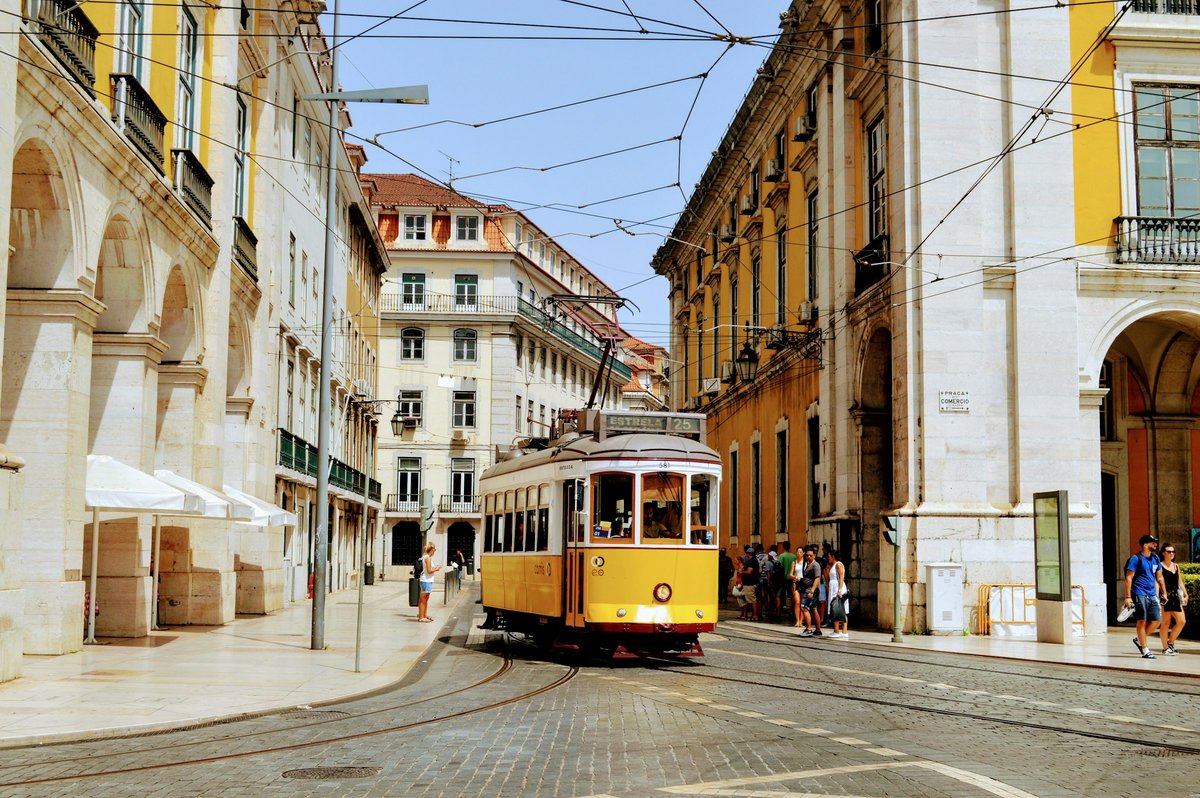
September might be Lisbon's best-kept timing secret. The August crowds: both the international tourists and the Portuguese themselves returning from their own holidays: have largely cleared out, yet the weather still holds on to summer. Daytime temperatures sit around 25.8°C (78°F), cooling to a comfortable 17.3°C (63°F) at night, which is a relief if you spent July climbing the steep lanes of Alfama in 29°C heat. The light shifts too. That harsh midday glare softens into something warmer, more golden: the kind that makes the azulejo tile facades along Rua Augusta seem to glow in the late afternoon.
What makes September particularly worth considering is the Atlantic. Counterintuitively, the ocean reaches its warmest point of the entire year right now, having soaked up heat all summer long. The beaches at Carcavelos and Costa da Caparica, packed shoulder-to-shoulder in August, suddenly have room to breathe. Mind you, "warm" is relative for the Portuguese Atlantic: you're still looking at around 19-20°C (66-68°F), which will shock anyone expecting Mediterranean temperatures.
The trade-off is the rain. September marks the slow return of Lisbon's wet season, with roughly 48mm across about six rainy days. These tend to be brief afternoon showers rather than the all-day soakings of November and December. The overall feel is of a city settling back into its own rhythm: restaurants that needed reservations two weeks ago suddenly have open tables, the trams in Graça aren't quite so sardine-packed, and locals seem genuinely happier to chat now that they aren't outnumbered.
Why visit in September
- Summer crowds thin noticeably after August: tram 28, the Torre de Belém, and Jerónimos Monastery all become significantly more approachable without peak-season queues that can stretch past 90 minutes
- The Atlantic Ocean hits its warmest temperatures of the year, making September the single best month for beach days at Carcavelos, Tamariz, or the Costa da Caparica stretch south of the city
- Shoulder-season pricing kicks in: hotel rates typically drop 20-30% from the July-August peak, with mid-to-late September offering the strongest value
- The quality of light shifts from harsh summer glare to a softer golden tone that turns the city's tile facades, river views, and hilltop miradouros into something a camera can barely do justice to: there's a reason Portuguese painters historically favored autumn
- Wine harvest season (vindimas) in the nearby Setúbal and Douro regions means fresh-pressed grape juice, harvest festivals, and cellar-door tastings that simply aren't available the rest of the year
Worth knowing
- Rain returns after the bone-dry summer: 48mm across roughly six days. Usually brief afternoon showers, but enough to interrupt an outdoor lunch or a walking tour if your timing is unlucky
- Early September still carries residual August energy, with some restaurants and smaller family-run shops closed for the last week of owners' holidays: you might find a favorite tasca shuttered until the 10th or so
- Wildfire smoke from the Portuguese interior can occasionally drift into the city during early September, reducing air quality and hazing out what should be clear blue skies. It doesn't happen every year, but it's not rare either
- The big festival energy has passed: Lisbon's signature street party, Santos Populares in June, is months behind you. September is culturally rich but noticeably quieter in terms of city-wide celebrations
Best for
Think twice if
September in Lisbon feels like summer's graceful exit. Afternoons are warm without the punishing edge of July and August: you can walk the steep Alfama lanes at midday without arriving at the top drenched in sweat. Mornings tend to start with a soft haze over the Tagus that burns off by 10am, leaving clear skies that hold until the occasional late-afternoon rain cloud rolls through. Humidity sits around 71%, noticeable near the river but nothing close to tropical. Evenings cool enough that you'll want a light layer if you're sitting on a rooftop terrace past 9pm, watching the lights come on across the 25 de Abril bridge.
Seasonal caution
- Wildfire smoke from Portugal's interior forests can occasionally reach Lisbon in early September, particularly during prolonged dry spells. Check air quality indices if you have respiratory sensitivities: the smoke usually clears within a day or two as Atlantic winds reassert themselves
- Late-season heatwaves, while uncommon, can push temperatures above 35°C (95°F) for two or three days, usually in the first half of September. Older buildings and traditional guesthouses in Alfama and Mouraria often lack air conditioning
Year-round climate
Averages from the last 5 years.
| Month | Avg high (°C) | Avg low (°C) | Rainfall (mm) |
|---|---|---|---|
| Jan | 15 | 9 | 78 |
| Feb | 17 | 10 | 77 |
| Mar | 18 | 11 | 84 |
| Apr | 20 | 12 | 59 |
| May | 23 | 14 | 18 |
| Jun | 26 | 17 | 22 |
| Jul | 29 | 18 | 3 |
| Aug | 29 | 19 | 0 |
| Sep | 26 | 17 | 48 |
| Oct | 24 | 16 | 91 |
| Nov | 19 | 12 | 83 |
| Dec | 16 | 10 | 110 |
Best things to do in September
Beach days at Costa da Caparica
outdoorsThe long stretch of Atlantic beaches south of Lisbon (reachable by bus from Praça de Espanha in about 40 minutes) finally has breathing room after the August crush. The water temperature peaks in September at around 19-20°C (66-68°F), which is about as warm as the Portuguese Atlantic gets. The mini-train that runs along the beach stops still operates through September, letting you hop between different stretches of sand. The southern beaches tend to be quieter, with fewer facilities but more space.
Ocean at its yearly peak temperature combined with significantly fewer beachgoers than July-August: the best ratio of swimmable water to available sand all yearBooking tipNo booking needed. The beach bus (TST 161) from Praça de Espanha runs frequently. Arrive before 11am on weekends for the best spots near the northern beaches.
Wine harvest visits in the Setúbal Peninsula
food and drinkThe Setúbal wine region sits just 30 minutes south of Lisbon across the 25 de Abril bridge, producing the famous Moscatel de Setúbal fortified wine along with increasingly respected table wines. During September's vindimas, several quintas (estates) open for harvest participation, grape stomping, and tastings of juice straight from the press. The landscape of rolling limestone hills covered in vines, with the Serra da Arrábida in the background, makes the trip worthwhile even before you taste anything.
Vindimas happens from late August through September: the only time of year you can participate in the actual harvest and taste grape must fresh from pressingBooking tipContact quintas directly at least a week ahead for harvest experiences. Smaller producers often offer more hands-on experiences than the larger commercial estates.
Walking the Alfama and Graça hills
sightseeingLisbon's oldest neighborhoods are built on steep hills paved with calçada portuguesa: polished limestone cobblestones that are picturesque but genuinely exhausting to climb in July's 29°C heat. September's gentler temperatures, topping out around 26°C (78°F), make the steep ascent from the riverfront through Alfama's narrow lanes up to the Graça miradouro significantly more comfortable. The late-afternoon light turns the tiled facades and cramped alleys into something a camera struggles to capture properly. You'll hear fado drifting from open windows as evening settles in.
Comfortable temperatures for hill climbing that would be punishing in July-August, paired with the warm golden light that September brings to tile-covered facadesDay trip to Sintra without peak-season queues
day tripThe fairytale palaces and forested hills of Sintra, 30 minutes by train from Lisbon's Rossio station, draw enormous summer crowds: hour-long waits for Pena Palace are standard in August. September's crowd thinning makes a tangible difference here. You'll still encounter other visitors, but queue times at Pena Palace, the Moorish Castle, and Quinta da Regaleira drop noticeably. The forested paths between sites are cooler and mistier than in high summer, which honestly suits the romantic atmosphere of the place better.
Queue times at major palaces drop from peak-season averages of 60-90 minutes to around 20-30 minutes, and cooler forest temperatures make uphill walks between sites far more pleasantBooking tipBuy tickets online in advance for Pena Palace and Quinta da Regaleira even in September: you skip the remaining ticket-counter queue entirely. Take the earliest train from Rossio (usually around 8:30am) to reach the sites before the day-trip buses arrive.
Rooftop terraces at sunset
nightlifeLisbon has more rooftop bars per square kilometer than most European capitals, and September is arguably the ideal month for them. Evenings hover around 20-22°C (68-72°F): warm enough to sit outside comfortably, cool enough that you're not sweating into your glass. The sunset over the Tagus, seen from spots in Bairro Alto, Príncipe Real, and the waterfront, carries that particular September warmth to it. The whole atmosphere shifts from August's frantic party energy to something more relaxed and conversational.
The sweet spot of warm-enough evenings without summer's oppressive heat, paired with a golden hour that stretches later as days shorten, and you can get a table without arriving two hours earlyBooking tipPopular rooftop spots in Bairro Alto and Príncipe Real still fill up for sunset on weekends. Arrive 30-45 minutes before sunset to grab a table, or try weeknights when the crowd skews more local.
Surfing at Ericeira and Carcavelos
outdoorsSeptember marks the beginning of the autumn swell season along Portugal's coast. The Atlantic starts producing more consistent, larger swells compared to summer's frequently flat conditions, while water temperatures remain at their yearly peak. Ericeira, about an hour north of Lisbon, is a World Surfing Reserve with breaks for every level. Carcavelos, just 20 minutes from the city center by train, offers forgiving beach breaks suitable for beginners and intermediates. The salt spray and onshore breeze are part of the deal.
Autumn swells bring more consistent and larger waves than the often-flat summer months, while the water temperature is still at its annual maximum: the best combination of wave quality and comfort all yearBooking tipSurf schools at both Carcavelos and Ericeira operate through September. Book lessons 2-3 days ahead for weekends; weekdays are usually walk-up.
Evening fado in Alfama and Mouraria
cultureThe traditional fado houses in Alfama and Mouraria are easier to get into once the August tourist peak subsides. September's cooler evenings suit the intimate, sometimes melancholy atmosphere of a proper fado session: sitting in a small stone-walled room with a glass of red wine while a fadista sings about saudade and the room goes quiet. The better houses, the ones locals frequent rather than the dinner-show tourist traps, start to feel less performative once the crowd composition shifts back toward Portuguese regulars.
Post-August crowd thinning means better availability at the more authentic fado houses that are booked solid in summer, and the cooler evening air suits the genre's contemplative moodBooking tipReserve 3-4 days ahead for well-known houses. Look for venues in Mouraria rather than the most heavily touristed streets of Alfama for a more local experience.
Coastal hiking in Arrábida Natural Park
outdoorsThe limestone cliffs and sheltered coves of Serra da Arrábida, about 40 minutes south of Lisbon, offer some of the most striking coastal hiking in the region. The trails along the ridge give views over turquoise coves that look more Mediterranean than Atlantic: the color comes from the sheltered, shallow limestone seabed. September temperatures make the exposed ridgeline hikes comfortable rather than brutal, and the coves at the base (Praia de Galapinhos, Praia dos Coelhos) are warm enough for swimming in water that's calmer and slightly warmer than the open Atlantic beaches.
Ridgeline hiking is comfortable in September's mid-20s rather than dangerously hot as in July-August, and the sheltered coves are at their warmest and least crowded of the yearBooking tipVehicle access to some beaches is restricted during peak summer but typically opens up after mid-September. Check the ICNF website for current road access. The hiking trails from the ridge down to the coves are open year-round.
What to eat in September
In season: fruit
Figos frescos (fresh figs)
September is peak fig season in Portugal, and market stalls from Mercado da Ribeira to smaller neighborhood markets pile high with green Pingo de Mel and deep purple varieties. The flavor peaks right now: sun-warm, jammy, almost honey-like when you bite through the thin skin. You'll find them served with presunto (cured ham) at wine bars, baked into tarts, or just eaten out of hand. A bag from the market costs next to nothing.
Uvas de mesa (table grapes)
Vindimas (grape harvest season) means table grapes are at their cheapest and sweetest across Lisbon's markets. The Moscatel variety from the Setúbal peninsula, grown less than 30 minutes from the city, has a perfumed sweetness that's difficult to find outside Portugal. Market vendors sell them by the kilo for pocket change.
Pêra Rocha
This PDO pear from the Oeste region north of Lisbon starts its season in September. Crunchy, sweet, slightly granular in texture: distinct from the soft pears common elsewhere in Europe. Locals eat them with queijo da Serra (sheep's cheese) as a snack or dessert. The combination of the pear's crispness with the cheese's salty creaminess is genuinely worth seeking out.
Street food peaks
Sardinhas assadas (grilled sardines)
The tail end of sardine season, which peaks during June's Santos Populares festivals. September sardines are still fat and oily from summer feeding, though you'll find fewer of the impromptu street-grilling setups that define June. Tascas and cervejarias still serve them through September: charred skin, smoky flesh, a squeeze of lemon, and bread to soak up the juices. By October they're largely off menus until the following spring.
In markets
Percebes (goose barnacles)
Late summer through early autumn is prime season for percebes, the strange claw-shaped barnacles harvested from wave-battered rocks along the Atlantic coast. Served simply boiled in salted water, eating them involves snapping the outer casing and pulling out the tender, intensely briny flesh inside. The texture sits somewhere between clam and lobster tail. Cervejarias in Baixa and along the waterfront serve them by the portion: they tend to be expensive because harvesting them is genuinely dangerous work on exposed rock faces.
Regular events in September
Santa Casa Alfama
Lisbon's dedicated fado festival, spread across multiple stages and venues throughout the Alfama neighborhood over a weekend. Established and emerging fadistas perform in the courtyards, churches, and small squares of the old quarter. The setting (outdoor stages set among medieval streets with the Tagus visible below) gives the performances a different energy from the year-round fado houses. The festival has grown considerably in recent years and now draws international audiences alongside Portuguese fado devotees.
Late September (usually the last weekend)Festa do Avante!
One of Portugal's largest cultural and political festivals, organized annually by the Portuguese Communist Party at Quinta da Atalaia in Seixal, across the Tagus from central Lisbon. Regardless of your politics, the festival draws tens of thousands for its music stages (Portuguese and international acts), book fair, and food stalls representing regional cooking from the Alentejo, Trás-os-Montes, and the Azores: specialties that are difficult to find concentrated anywhere else.
First weekend of SeptemberJornadas Europeias do Património (European Heritage Days)Free
Part of the continent-wide heritage program, Lisbon opens dozens of normally restricted buildings to the public for free: palaces, government offices, private quintas, and historic theaters. A chance to see interiors that remain off-limits the other 51 weekends of the year. The program varies annually but Lisbon typically offers 30-50 participating sites.
Last weekend of SeptemberBest places this September
Praia de Carcavelos
beachLisbon's most accessible proper beach, reachable by train from Cais do Sodré in about 20 minutes. September is the ideal month: water at its warmest, sand no longer packed with August holidaymakers, and the beach bars still operating. The stretch is wide enough that even on a busy September weekend you'll find space. Sunrise here, with the Cascais coastline curving away to the west, is worth setting an alarm for.
Carcavelos (Cascais municipality)Miradouro da Graça
viewpointOf Lisbon's many hilltop viewpoints, Graça offers arguably the widest panorama: the Castelo de São Jorge, the Baixa grid, the river, and the 25 de Abril bridge all visible in one sweep. September's golden late-afternoon light makes this the best time of year for photography from up here. The terrace café serves decent coffee and cold beer. The climb up from Martim Moniz is steep but manageable in September's temperatures.
GraçaJardim da Estrela
parkA quieter alternative to the heavily touristed Jardim Botânico, this 19th-century garden across from the Basílica da Estrela has mature trees providing real shade, a duck pond, and an iron bandstand where occasional concerts happen on weekends. September's gentler warmth makes the shaded paths ideal for a slow afternoon with a book. The garden café under the trees serves pastéis de nata that rival the more famous spots, without the queue.
EstrelaLX Factory
cultural districtA converted industrial complex under the 25 de Abril bridge, now housing independent shops, design studios, restaurants, and a bookshop (Ler Devagar) worth seeing for its converted-warehouse interior alone. The weekend brunch scene picks back up in September as residents return from holiday. The outdoor terraces between the old factory buildings catch good afternoon light without the suffocating August heat.
AlcântaraMercado da Ribeira
marketLisbon's central market hall, now partly occupied by a food court. The market side (as opposed to the food court) is where September's seasonal produce shows up: figs, grapes, pears, percebes. Go in the morning for the produce vendors, when you might get offered a fig to taste and the light through the market's skylights catches the fruit displays at their best. The food court side is still busy but more manageable than August.
Cais do SodréBelém waterfront
historic districtThe Belém district: home to the Jerónimos Monastery, Torre de Belém, and the MAAT contemporary art museum: benefits enormously from September's crowd thinning. Walking the waterfront promenade from MAAT toward the Torre at sunset, with the river widening toward the Atlantic and the Cristo Rei statue catching the last light across the water, is one of Lisbon's best free experiences. The queue at Pastéis de Belém also drops from what can only be described as absurd in August to merely long.
Belém
Your packing checklist
Tick items off as you pack. Your progress saves in this browser.
All packed — have a great trip.
Insider tips
The Atlantic is at its yearly warmest in September, not August: most visitors assume the opposite and skip beach time this month. Locals know this. You'll see more Portuguese families at the beach on September weekends than the guidebooks might lead you to expect.
Skip the tourist-targeted fado houses on the main Alfama streets that offer dinner-and-show packages for steep per-person prices. Walk a couple of blocks deeper into the neighborhood, or head to Mouraria (the birthplace of fado) where smaller venues charge a modest drink minimum and the performers play for audiences that include actual Portuguese regulars.
The produce market side of Mercado da Ribeira (not the Time Out food court section) is worth an early-morning visit specifically in September for figs and table grapes. Arrive before 10am, when vendors are still setting up and happy to let you taste. By midday the best seasonal fruit tends to be picked over.
If you're planning a Sintra day trip, take the train from Rossio station rather than the bus: it's faster, more scenic along the way, and drops you closer to the old town center. The first departure gets you there before the day-trip buses from the cruise terminal arrive around 10am.
For wine tasting without the Douro Valley commitment (that's a 3-hour train ride each way) the Setúbal Peninsula is 30 minutes across the bridge and produces Moscatel that's been made there since the 13th century. September harvest visits there cost a fraction of Douro tour prices.
Avoid these mistakes
- Booking outdoor activities for the first week of September and assuming full summer conditions: early September can still push past 30°C on hotter days, but it's also when the first real rain showers arrive after months of dry weather. Keep outdoor plans flexible and have indoor alternatives (museums, fado houses, markets) ready for a wet afternoon.
- Packing only summer clothes and underestimating how cool the evenings get: 17°C (63°F) combined with the river breeze means anyone sitting on a rooftop terrace past 9pm in just a t-shirt will be uncomfortable. Locals layer for September evenings. Visitors shiver.
- Paying full summer rates without checking: some hotels and guesthouses quietly switch to shoulder-season pricing in September but leave the higher summer price on booking platforms. Emailing the property directly or checking their own website can sometimes save 15-20% over the aggregator price, particularly for stays of three nights or more.
- Treating September as interchangeable with August and booking the same tourist-heavy itinerary: the month's real advantage is access to experiences that are miserable or impractical in peak summer heat. A three-hour walking tour through Alfama's hills, a full day hiking Arrábida's ridge, or a dawn-to-dusk wine harvest experience in Setúbal are all September activities in a way they simply aren't in August.
Practical tips for September
September is a transitional month and a few logistical quirks follow from that. Some smaller restaurants and family-run shops take their holidays in late August and don't reopen until the first or second week of September: if you arrive on September 1st, check operating hours before making a trip to a specific address. Train schedules to Sintra and Cascais run at full summer frequency through the month, so day trips are straightforward. Tram 28, the famous route through Alfama and Graça, is still busy enough to warrant boarding at the start of the line (Martim Moniz or Campo Ourique) rather than trying to squeeze on mid-route. For dining, the local rhythm shifts as evenings cool and shorten: peak dinner time moves from 9-10pm back toward 8-8:30pm. Reservations at popular restaurants in Chiado and Príncipe Real are easier to come by than in August but still recommended for weekend evenings. The metro runs the same schedule year-round (roughly 6:30am to 1am), and ride-hailing apps are reliable and notably cheaper than in most Western European capitals.
FAQ
Is September a good time to visit Lisbon?
September is one of the best months to visit Lisbon, typically ranking around third after May and June. You get warm weather with highs around 26°C (78°F), the ocean at its warmest, noticeably fewer crowds than July-August, and shoulder-season hotel prices that tend to run 20-30% below the summer peak. The trade-off is the return of occasional rain (about six rainy days averaging 48mm across the month) but these are usually brief afternoon showers rather than full-day washouts. If you can handle ducking into a café for 30 minutes during a passing shower, September delivers an excellent overall experience.
What is the weather like in Lisbon in September?
Expect daytime highs around 25.8°C (78°F) and nighttime lows around 17.3°C (63°F), with about 71% humidity. Rainfall averages 48mm across roughly six rainy days: a clear step up from August's bone-dry 0mm, but still modest compared to the 110mm December brings. Most September rain falls in brief afternoon showers. Mornings tend to be clear, afternoons warm and comfortable for outdoor activity, and evenings cool enough to warrant a light layer. The UV index remains moderate to high, so sunscreen is still necessary for extended time outdoors.
Is Lisbon crowded in September?
Noticeably less crowded than July and August, though still busier than the true low season of November through February. The difference shows most at major sites: queue times at Belém, Sintra, and tram 28 can drop by 30-50% compared to August. Early September still carries some summer spillover, particularly the first week. By mid-to-late September the crowds thin further as European school schedules are fully underway. You'll share the city with other travelers, but the oppressive shoulder-to-shoulder compression of August is largely gone.
Can you swim in the ocean near Lisbon in September?
September is the single best month for ocean swimming near Lisbon. The Atlantic reaches its warmest temperatures of the year (typically 19-20°C (66-68°F)) having absorbed heat throughout the summer. That's still brisk compared to the Mediterranean, and the initial plunge will likely make you gasp, but it's noticeably warmer than June's water by several degrees. Carcavelos (20 minutes by train), Costa da Caparica (40 minutes by bus), and the sheltered coves of Arrábida are all swimmable and significantly less crowded than in August.
Does it rain a lot in Lisbon in September?
September marks the gradual return of rain after the dry summer, averaging about 48mm across six rainy days. For context, August typically sees 0mm, while November brings 83mm and December 110mm. September rain tends to arrive as brief afternoon showers: the sort where you step into a café or under an arcade, wait 20-30 minutes, and walk back out to clearing skies. All-day downpours are uncommon. Carrying a compact rain jacket is sensible, but September rain rarely derails a full day of plans.
Things to Do in Lisbon in September
 Free cancellation
 True 4Hour Private Tuk Tuk Tour: Discover Lisbon with a Local!
Day trip: 4 hours, free cancellation.
via Viator Free cancellation
 Sintra and Cascais Small-Group Day Trip from Lisbon
Day trip: 8 hours, free cancellation.
via Viator Free cancellation
 Best of Lisbon Small-Group Guided Walking Tour
City tour: free cancellation.
via Viator Free cancellation
 Private Lisbon Sightseeing Tuk-Tuk Tour: Alfama, Belém & More
Day trip: free cancellation.
via Viator Free cancellation
 Small Group Tour to Sintra, Pena Palace, Cabo Roca and Cascais
Day trip: 8 hours, free cancellation.
via Viator Free cancellation
 Three Cities in One Day: Porto, Nazare and Obidos from Lisbon
Day trip: 13 hours, free cancellation.
via ViatorFind a flight to Lisbon
Live fares to Lisbon appear here once cookies are accepted.
Last verified by automated review (v1.7.1) on . What is automated review?