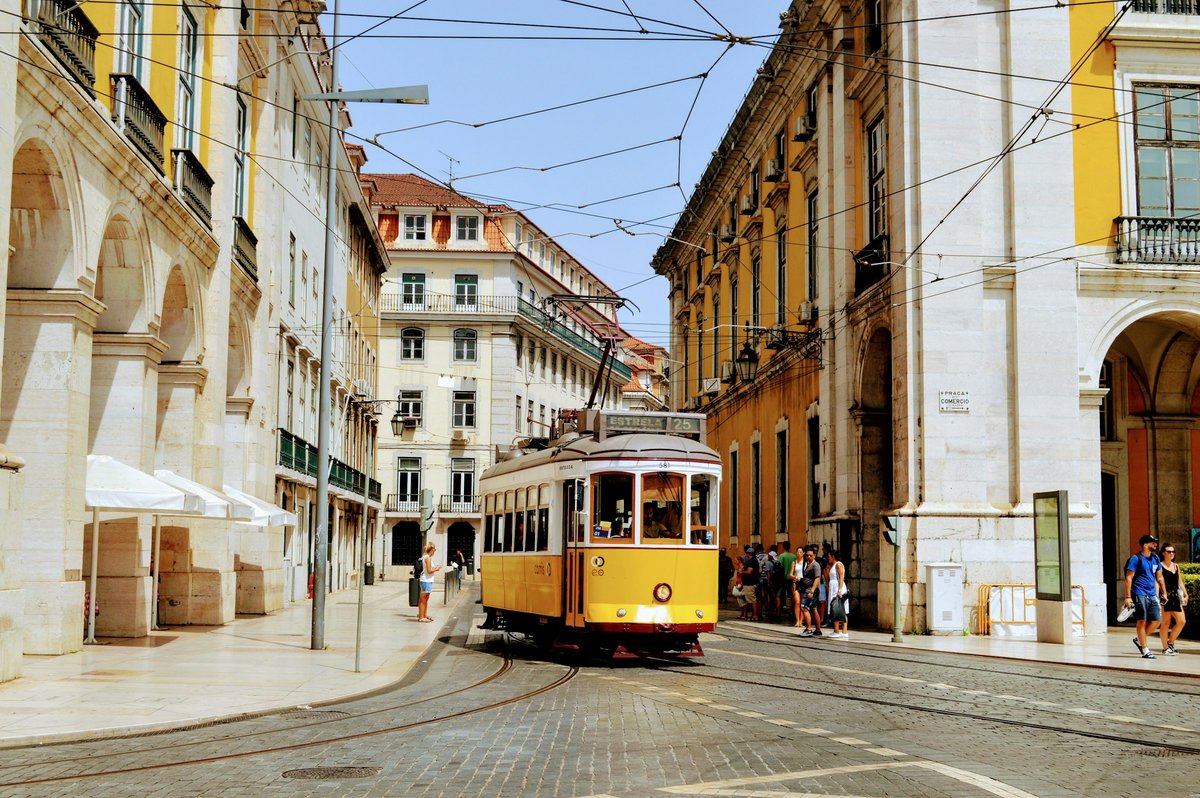
Stay in Lisbon in February
71 hotels in the Trip.com pool for Lisbon, from US$18 a night.
Opens Trip.com on Fri 5 Feb to Sun 7 Feb 2027; change the dates there.
February in Lisbon is, above all, mild. While much of Europe hunkers down under grey skies and temperatures hovering near freezing, Lisbon tends to sit around 17°C (62°F) during the day: cool enough for a jacket, warm enough to linger at an outdoor café if the sun decides to cooperate. And it cooperates more than you might expect. You'll likely get stretches of two or three gorgeous days between the rain, with that particular Atlantic winter light that makes the city's azulejo tilework practically glow.
That said, this is still winter. Expect roughly 77mm of rainfall spread across about eight rainy days, which can mean anything from a quick morning shower to a full day of steady drizzle rolling in off the Atlantic. The real upside, though, is substantial: Lisbon in February is close to empty by its own standards. The summer crowds that clog Tram 28 and turn the Jerónimos Monastery into a sweaty queue are months away. Hotel rates drop to their lowest point of the year. Restaurants that demand reservations in July will seat you on a whim.
Carnival typically falls in February, and while Lisbon's celebration is quieter than Rio or Venice, it still brings parades, costume street parties, and a shot of energy to the city. There's a particular cosiness to winter Lisbon: fado drifting out of doorways in Alfama, the sharp sweetness of Algarve oranges piled high at market stalls, and the ginjinha bars near Largo de São Domingos doing brisk trade in tiny cups of sour cherry liqueur. If you're after a European city break that won't drain your savings or test your patience with crowds, February is honestly a strong choice.
Why visit in February
- Hotel rates hit their annual low: expect 30-50% less than summer prices for the same properties in Alfama and Baixa
- Major attractions like Belém Tower, Jerónimos Monastery, and Sintra's palaces have minimal queues, often under 15 minutes versus 60-90 in summer
- Daytime temperatures around 17°C (62°F) are comfortable for walking the city's famously steep hills without overheating
- Carnival brings street parades, traditional pastries like filhós, and a festive atmosphere that gives the month its own character
- Peak citrus season means Algarve oranges and tangerines flood the markets at rock-bottom prices: some of the sweetest you'll taste in Europe
Worth knowing
- Rain is a real factor: roughly eight days of the month will see meaningful rainfall, and Atlantic systems can bring two or three consecutive grey, wet days that limit outdoor plans
- Daylight hours are noticeably shorter, with sunset around 6pm compared to 9pm in summer, which limits late-afternoon sightseeing and golden-hour photography at the miradouros
- Some seasonal restaurants and beach-adjacent businesses in Cascais and the Costa da Caparica remain closed until spring, narrowing your dining and day-trip options
- The Atlantic breeze adds a damp chill that makes 10°C (50°F) mornings feel colder than the number suggests, particularly in shaded streets and along the Tagus riverfront
Best for
Think twice if
February in Lisbon is the tail end of the Atlantic wet season, though it's milder than most of continental Europe. Days tend to follow a pattern: cool, sometimes misty mornings that burn off by midday, with temperatures climbing to around 17°C (62°F) before dropping back toward 10°C (50°F) after sunset. When the rain comes, it's usually a steady, soaking drizzle rather than dramatic downpours: the kind that wets your jacket through if you don't have proper waterproofing. Between the rainy spells, though, you'll get crisp, bright days with a clarity to the air that makes the Tagus estuary look almost turquoise from the miradouros. Humidity sits at about 79%, which you'll mostly notice in the mornings as a damp coolness in the shaded alleys of Alfama and Mouraria.
Seasonal caution
- Atlantic low-pressure systems occasionally sweep through in February, bringing sustained winds of 50-70 km/h and two to three consecutive days of heavy rain: enough to cause temporary flooding in low-lying parts of Baixa near Rossio and along the Cais do Sodré waterfront. Check the IPMA (Portuguese meteorological service) forecast before planning day trips to exposed coastal spots like Cabo da Roca or the Berlengas.
Year-round climate
Averages from the last 5 years.
| Month | Avg high (°C) | Avg low (°C) | Rainfall (mm) |
|---|---|---|---|
| Jan | 15 | 9 | 78 |
| Feb | 17 | 10 | 77 |
| Mar | 18 | 11 | 84 |
| Apr | 20 | 12 | 59 |
| May | 23 | 14 | 18 |
| Jun | 26 | 17 | 22 |
| Jul | 29 | 18 | 3 |
| Aug | 29 | 19 | 0 |
| Sep | 26 | 17 | 48 |
| Oct | 24 | 16 | 91 |
| Nov | 19 | 12 | 83 |
| Dec | 16 | 10 | 110 |
Holidays and festivals in February
Public holidays
- Carnival(Carnaval)9 February 2027
Headline events
Carnaval de Lisboa
Weekend before through Shrove Tuesday (typically mid-to-late February, varies with Easter)
Portugal's Carnival brings parades, street parties, and costume revelry across the city. Lisbon's celebration is more low-key than Rio or Venice: think neighbourhood processions, samba groups along Avenida da Liberdade, and a family-friendly parade in Parque das Nações rather than a massive spectacle. Mind you, the nearby town of Torres Vedras (about an hour north) runs Portugal's largest and most raucous carnival, making a compelling day trip. The national holiday means many businesses close, and the city takes on a relaxed, festive energy for the long weekend.
Best things to do in February
Sintra palaces without summer crowds
day tripThe fairy-tale palaces of Sintra (Pena Palace, Quinta da Regaleira, Monserrate) are genuinely atmospheric in winter. Mist wraps through the forested hillsides, the stonework glistens after rain, and you'll have rooms and gardens largely to yourself. The walking paths through the Serra de Sintra feel almost eerie in their emptiness compared to the packed summer experience.
Summer visitors queue 60-90 minutes at Pena Palace alone; February means walk-in access to nearly everything, and the winter mist gives the Romantic-era architecture the moody atmosphere its designers intended.Booking tipBuy tickets online regardless of season to skip the small queue that does exist. The 434 bus from Sintra station to the palaces runs less frequently in winter: check the return schedule before you start.
Fado evenings in Alfama
cultureFado (the melancholic Portuguese song tradition) is best experienced in the small, candlelit casas de fado that line Alfama's narrow streets. In February, the intimate rooms feel appropriately atmospheric: rain tapping on the windows, the scent of grilled sardines from a nearby kitchen, and a fadista singing about saudade to a room of maybe twenty people. The sound carries differently in a half-full room than a packed one.
Smaller winter audiences mean more intimate performances and walk-in availability at venues that require reservations months ahead in summer. Some musicians prefer the winter crowds: more locals, fewer phones.Booking tipFor the more established casas de fado in Alfama and Mouraria, booking a day or two ahead is still wise for Friday and Saturday nights. Weeknight performances are typically walk-in.
Carnival street celebrations
festivalLisbon's Carnival is a spread-out affair: neighbourhood parades, costume parties in Bairro Alto's bars, a family-friendly procession through Parque das Nações, and samba groups along Avenida da Liberdade. The atmosphere is relaxed and participatory: locals dress up, kids throw confetti, and the whole thing feels less like a spectacle and more like a city letting off steam. For the bigger, wilder version, catch a train to Torres Vedras, about an hour north.
Carnival falls in February in most years. It's the only time Lisbon's streets fill with costumes, music, and the particular energy of a national holiday weekend.Booking tipNo tickets needed for street celebrations. If you want to attend a Carnival ball or themed party at a club, buy tickets online a week ahead: some sell out.
Walk Belém's monuments in peace
sightseeingThe riverside Belém district holds the concentration of Lisbon's major monuments: Torre de Belém, Jerónimos Monastery, the MAAT contemporary art museum, and Padrão dos Descobrimentos. In February, you can stand inside the Monastery's cloister and appreciate the Manueline stonework without being pressed shoulder-to-shoulder with tour groups. The custard tarts at Pastéis de Belém still draw a queue, but a short one.
Summer queues at Jerónimos regularly exceed an hour. February means 10-15 minutes at most, and the interior spaces feel contemplative rather than chaotic.Booking tipJerónimos Monastery is free on the first Sunday of the month, but so is every other museum, so it draws more visitors than a typical February weekday.
Explore Lisbon's museum circuit
cultureRainy February days are made for Lisbon's under-visited museums. The Museu Nacional do Azulejo (housed in a former convent) traces the history of Portuguese tilework and is mesmerising for hours. The Berardo Collection in Belém has world-class modern art. MAAT's contemporary exhibitions and striking riverside architecture reward a half-day. The National Coach Museum holds ornate royal carriages that are more impressive than they sound.
Rain pushes you indoors, and February's low crowds mean you can stand in front of exhibits as long as you like. First Sunday of the month is free admission at most national museums.Booking tipNo advance booking needed for any Lisbon museum in February. Just show up.
Miradouro sunset circuit
sightseeingLisbon is built on seven hills, and each one seems to have a viewpoint (miradouro) overlooking the terracotta rooftops and the Tagus. The classic circuit hits Miradouro da Graça, Miradouro da Senhora do Monte, Miradouro de Santa Luzia, and Miradouro de São Pedro de Alcântara. On a clear February late afternoon, the low-angle sunlight turns the entire city golden, and you'll share the view with a handful of locals rather than a crowd.
Winter sun sits lower on the horizon, creating warmer, more dramatic light on the city's facades than summer's overhead glare. Sunset around 6pm means you don't have to wait until 9pm for the golden hour. Fewer people competing for the railing.Wine tasting in the Setúbal Peninsula
food and drinkThe Setúbal wine region, just 45 minutes south of Lisbon across the Tagus, produces distinctive Moscatel dessert wines and increasingly serious reds. February is the quietest time at the estates: winemakers have finished the harvest work and have time to talk you through what you're tasting. The rolling vineyards have a stark winter beauty, and the region's seafood restaurants in Sesimbra and Setúbal are excellent.
Low season means personal attention at wineries that run assembly-line tastings in summer. No booking pressure: you can often call the morning of. Winter reds pair perfectly with the heavier dishes available this time of year.Booking tipEmail or call wineries a day or two ahead. Most operate by appointment year-round, but February is flexible enough that same-day requests often work.
Graze through Time Out Market on a rainy day
food and drinkThe Mercado da Ribeira, better known as Time Out Market, gathers stalls from some of Lisbon's more notable chefs under one covered roof near Cais do Sodré. The quality is a clear step above typical food halls: think properly made ceviche, aged steak, real gelato, and serious wine by the glass. On a wet February day, the warmth and noise of the market is a genuine comfort. The produce section of the original market, still operating alongside the food stalls, has peak-season citrus and winter greens.
Rain makes covered food halls particularly appealing, and the market is noticeably less frantic in February than the shoulder or peak months. You can find a seat without circling for twenty minutes.Booking tipNo reservations. Lunch service (12-2pm) gets busiest. Go at 11:30 or after 2:30 for the most relaxed experience.
What to eat in February
In season: fruit
Laranjas do Algarve
Peak citrus season runs December through March, and February is right in the sweet spot. Algarve oranges flood Lisbon's markets: intensely sweet, thin-skinned, and absurdly cheap. You'll find them at Mercado de Campo de Ourique and piled on pushcarts throughout the city. Fresh-squeezed orange juice at any café costs next to nothing this time of year.
On menus now
Caldo verde
Portugal's definitive winter soup: a silky potato-based broth with finely shredded couve galega (collard greens) and slices of smoky chouriço floating on top. February is when you want it most: a thick ceramic bowl of it after walking the hills in the rain is restorative in a way that no summer dish can be. Nearly every tasca in the city serves it.
Percebes
Goose barnacles: bizarre, finger-shaped crustaceans harvested from wave-battered Atlantic rocks. Winter is peak season because rough seas make them harder to collect (and thus more prized). The flavour is intensely briny, like the ocean concentrated into a single bite. Expensive even at cervejarias, but February is the month to try them. Best at the seafood restaurants around Rua das Portas de Santo Antão.
Açorda alentejana
A rustic bread soup from the Alentejo region that feels right in winter: stale bread soaked in a garlic-and-coriander-infused broth, finished with a poached egg and a generous pour of olive oil. Dense, warming, the sort of thing a farmer eats to get through a cold morning. You'll find it at traditional tascas and Alentejano-focused restaurants in Bairro Alto.
What to drink
Ginjinha
Sour cherry liqueur served year-round but at its most welcome in February's chill. Tiny cups poured from unlabelled bottles at dedicated ginjinha bars: the ones clustered near Largo de São Domingos and Rossio have been serving it the same way for decades. Sweet, tart, slightly medicinal. Some places serve it with a brandied cherry at the bottom of the cup.
Festival food
Filhós
Traditional Carnival fritters made from thin, stretched dough that gets fried until golden and dusted with sugar and cinnamon. The texture is somewhere between a crispy crêpe and a churro: shatteringly light at the edges, slightly chewy in the centre. Every bakery in the city makes them in the two weeks around Carnival, and they're best eaten warm, still smelling of hot oil and cinnamon.
Regular events in February
Torres Vedras CarnivalFree
Portugal's largest and most boisterous Carnival celebration takes place in Torres Vedras, roughly an hour north of Lisbon by train. It's significantly wilder than Lisbon's own celebrations: satirical floats, elaborate costumes, organised mayhem in the streets. The whole town shuts down for the party. Trains run frequently from Lisbon's Santa Apolónia and Entrecampos stations.
Thursday before through Shrove Tuesday (same week as Lisbon Carnival, varies with Easter)Feira da Ladra flea marketFree
Lisbon's long-running flea market spreads across Campo de Santa Clara near the São Vicente de Fora church every Tuesday and Saturday. In February, the tourist-targeted stalls thin out and you get more genuine finds: vintage tiles, old books, brass hardware, vinyl records. The surrounding neighbourhood of São Vicente is worth the walk regardless.
Every Tuesday and Saturday, morning through early afternoonFree museum SundaysFree
Most Portuguese national museums and monuments offer free admission on the first Sunday of each month. In February, this means Jerónimos Monastery, the National Tile Museum, the National Coach Museum, the Berardo Collection, and others. Expect somewhat larger crowds than a typical February day, particularly at Jerónimos, but nothing approaching summer levels.
First Sunday of FebruaryBest places this February
Estufa Fria
gardenA semi-open greenhouse complex tucked into Parque Eduardo VII, filled with tropical and subtropical plants, ferns, waterfalls, and winding stone paths. The dappled light filtering through the slatted roof creates a lush, otherworldly atmosphere that feels particularly welcome after walking through February rain. Warm and sheltered without being stuffy. One of Lisbon's most underrated spots.
Marquês de PombalAlfama
neighborhoodLisbon's oldest neighbourhood, a dense labyrinth of narrow streets, tiled facades, and steep stairways spilling down from the castle to the riverfront. February strips away the summer crowds, and the neighbourhood returns to something closer to its actual character: laundry hanging between buildings, fado leaking from closed doors, cats sunning on the rare dry windowsill. The acoustics of the empty alleys carry sound in a way you can't hear when they're full of tourists.
AlfamaMiradouro da Graça
viewpointArguably the best of Lisbon's hilltop viewpoints, looking out over the Castelo de São Jorge, the Baixa grid, the Tagus, and the red-rooftop cascade of Alfama below. In February, the pine trees framing the terrace are the deepest green, and the low winter sun hits the castle walls in the late afternoon with a warmth that photographs beautifully. There's a small café with outdoor seating if the weather cooperates.
GraçaLX Factory
marketA converted industrial complex under the 25 de Abril bridge, now home to independent bookshops, design studios, restaurants, and weekend food markets. The mix of covered and semi-covered spaces makes it a reliable rainy-day option. Ler Devagar, a bookshop built into the old printing press hall, is worth the visit alone. Sunday brunch here has a loyal following among locals.
AlcântaraMuseu Nacional do Azulejo
museumHoused in the former Madre de Deus Convent, this museum traces five centuries of Portuguese tile-making. The building itself is as impressive as the collection: gilded Baroque chapels, cloistered courtyards, and an extraordinary panoramic tile panel of pre-earthquake Lisbon stretching an entire wall. In February, you can stand in front of that panel for as long as you want without someone jostling past.
XabregasOceanário de Lisboa
attractionEurope's second-largest aquarium, sitting in the Parque das Nações waterfront development. The central tank (a massive open-ocean habitat with sharks, rays, tuna, and a sunfish) is genuinely mesmerising. A solid option for a fully rainy day, and in February you'll move through the exhibits at your own pace rather than shuffling behind school groups.
Parque das NaçõesMercado de Campo de Ourique
marketA smaller, more local alternative to Time Out Market, located in the residential Campo de Ourique neighbourhood. The food stalls serve excellent quality without the tourist markup, and the fresh produce section has peak-season citrus, winter greens, and local cheeses. The surrounding neighbourhood has good independent restaurants and the Cemitério dos Prazeres, a monumental cemetery worth a quiet walk.
Campo de Ourique
Your packing checklist
Tick items off as you pack. Your progress saves in this browser.
All packed — have a great trip.
Insider tips
Pastéis de nata are best eaten within minutes of coming out of the oven: the shell should still be shattering-crisp, not chewy. At Pastéis de Belém and most neighbourhood bakeries, fresh batches come out roughly every 20-30 minutes. If the tray looks depleted, wait for the next one rather than grabbing a cold leftover. The difference is not subtle.
Tram 28 is famous, but even in February it gets uncomfortably packed at peak stops. Walk the route instead: it runs from Martim Moniz through Graça, past the cathedral, through Alfama, and down to Estrela. The walk takes about 90 minutes, passes through the most atmospheric parts of the city, and you'll see the street-level details that the tram window obscures.
Many Lisbon restaurants post a prato do dia (dish of the day) that's cheaper than the regular menu and often better: it's what the kitchen is cooking fresh that morning, typically built around whatever looked good at the market. Ask for it even if you don't see it written up. It's how most locals eat lunch.
The ginjinha bars near Largo de São Domingos: particularly A Ginjinha and Ginjinha Sem Rival, directly across the street from each other: serve the same product at nearly the same price. Locals argue endlessly about which is better. The honest answer is they're functionally identical. Pick whichever has the shorter queue and order com elas (with the brandied cherries at the bottom).
If you're heading to Sintra by train from Rossio station, sit on the right side going out for the best views of the Serra. More importantly, take the earliest train you can manage: by 11am, even in February, the buses from Sintra station to the palaces start filling up. The 9:15 departure gets you there before the day-trip wave arrives.
Avoid these mistakes
- Packing only for mild weather and getting caught without rain protection. The 17°C headline temperature sounds pleasant, and it is: until an Atlantic front rolls in and you're soaked to the skin on a hilltop with no shelter in sight. The rain in Lisbon is not tropical (it doesn't pass in ten minutes). A system can settle in for a full day.
- Eating every meal in the Baixa-Chiado tourist corridor, where prices are inflated and quality is inconsistent. Walk ten minutes in any direction (Campo de Ourique, Arroios, Intendente, Santos) and the price-to-quality ratio improves dramatically. If a restaurant has photos of the food on the door, keep walking.
- Wearing smooth-soled shoes on the calçada cobblestones after rain. This is not generic advice: Lisbon's traditional limestone-and-basalt pavement becomes genuinely slippery when wet, particularly on the steep grades in Alfama and Bairro Alto. Every February, the urgent care clinics see tourists with sprained ankles and worse. Proper grip matters.
- Assuming restaurants are open on Carnival Tuesday without checking. It's a national holiday, and many family-run tascas close for the long weekend. The larger tourist-facing restaurants in Baixa stay open, but those aren't where you want to eat anyway. Check ahead or ask your accommodation for what's open nearby.
Practical tips for February
February is deep low season, so advance booking is rarely necessary for restaurants or most attractions: walk-ups work fine for nearly everything except Jerónimos Monastery on sunny weekend mornings, when local families fill it up. If you're visiting during Carnival week, book accommodation at least two to three weeks ahead, particularly for stays in Alfama, Baixa, or Bairro Alto where the street festivities concentrate. Public transport runs on a holiday schedule during Carnival Tuesday and the preceding weekend: the metro and buses still operate but frequency drops, and some tram routes may be rerouted or interrupted by parade routes. Layer your clothing deliberately: mornings start damp and cool around 10°C (50°F) with air that feels colder than the number suggests, but by early afternoon on a clear day you might be comfortable in just a long-sleeved shirt. Sunset arrives around 6pm, still much earlier than summer's 9pm, so plan your miradouro visits and any outdoor photography for late afternoon to catch the last golden light. Most museums close on Mondays year-round. Many offer free admission on the first Sunday of the month: in February that draws locals who know the routine, creating lines at popular spots like the Museu Nacional do Azulejo that you won't see on a regular Tuesday. The Lisboa Card (24, 48, or 72 hours) covers public transport and most museum entries; in February, when you're likely to spend more time indoors at museums than in summer, it tends to pay for itself faster. Tipping is not expected at the level of North American norms: rounding up or leaving 5-10% at a sit-down restaurant is standard and appreciated.
FAQ
Is February a good time to visit Lisbon?
It's genuinely a good time, with one caveat: you need to be comfortable with rain. Roughly a third of the month's days see meaningful rainfall, and you might hit a stretch of two or three grey days in a row. But the trade-offs are real: hotel rates are 30-50% cheaper than summer, the major attractions have almost no queues, and daytime temperatures around 17°C (62°F) are comfortable for walking the city. You won't get the Lisbon of rooftop cocktails and late-evening sunlight, but you will get an atmospheric, unhurried version of the city that most summer visitors never see. It's a solid choice for a culture-focused trip.
What is the weather like in Lisbon in February?
Mild by European winter standards but unmistakably wintery. Average highs sit around 17°C (62°F) and lows around 10°C (50°F), with about 77mm of rain spread across roughly eight days. Humidity averages 79%, which you'll feel as a damp chill in the mornings, particularly in shaded streets. The good days, though, are genuinely lovely: clear blue skies, sharp Atlantic light, and temperatures that feel warmer in the sun than the numbers suggest. The rain tends to come in multi-day fronts off the Atlantic rather than brief afternoon showers, so checking a 5-day forecast before planning outdoor excursions is worth the habit.
Is Lisbon crowded in February?
Not at all: February is one of Lisbon's quietest months. The summer tourist peak (June through September) draws millions; February draws a fraction of that. You'll notice the difference most at the major sites: Belém's monuments, Sintra's palaces, and Tram 28 all operate well below capacity. Restaurants that need reservations a week out in July will seat you on the spot. The exception is Carnival weekend, when domestic visitors and some European tourists boost the numbers, but even then it's nothing close to summer levels.
Can you swim at the beach near Lisbon in February?
Not comfortably, no. Atlantic water temperatures sit around 14°C (57°F) in February, which is cold enough to make even a quick dip bracing. The beaches along the Costa da Caparica and Cascais coast are largely deserted, with most beach bars and rental operations closed until April or May. You can certainly walk the coastline (the winter surf and empty sands are atmospheric) but this is not a beach holiday month. If swimming is important to your trip, wait until June at the earliest.
Does Lisbon celebrate Carnival, and is it worth seeing?
Yes, Portugal celebrates Carnival as a national holiday, and Lisbon has its own events: neighbourhood parades, costume parties in Bairro Alto's bars, and a family-friendly procession through Parque das Nações. That said, it's honest to say Lisbon's Carnival is more of a pleasant bonus than a destination event. It's nowhere near the scale of Rio, Salvador, or even Cadiz. If Carnival is your primary draw, consider the train to Torres Vedras (about an hour north) which runs Portugal's biggest and most spirited carnival with satirical floats and genuine street chaos. Worth the day trip if you enjoy that sort of thing.
Things to Do in Lisbon in February
 Free cancellation
 True 4Hour Private Tuk Tuk Tour: Discover Lisbon with a Local!
Day trip: 4 hours, free cancellation.
via Viator Free cancellation
 Sintra and Cascais Small-Group Day Trip from Lisbon
Day trip: 8 hours, free cancellation.
via Viator Free cancellation
 Best of Lisbon Small-Group Guided Walking Tour
City tour: free cancellation.
via Viator Free cancellation
 Private Lisbon Sightseeing Tuk-Tuk Tour: Alfama, Belém & More
Day trip: free cancellation.
via Viator Free cancellation
 Small Group Tour to Sintra, Pena Palace, Cabo Roca and Cascais
Day trip: 8 hours, free cancellation.
via Viator Free cancellation
 Three Cities in One Day: Porto, Nazare and Obidos from Lisbon
Day trip: 13 hours, free cancellation.
via ViatorFind a flight to Lisbon
Live fares to Lisbon appear here once cookies are accepted.
Last verified by automated review (v1.7.1) on . What is automated review?