Stay in Lisbon in August
71 hotels in the Trip.com pool for Lisbon, from US$18 a night.
Opens Trip.com on Fri 6 Aug to Sun 8 Aug 2027; change the dates there.
August in Lisbon means one thing above all else: this is the month the city empties of locals and fills with visitors. Portuguese families take their férias (the annual summer holiday) almost universally in August, heading to the Algarve, the Alentejo coast, or their grandparents' villages. What they leave behind is a sun-bleached city running at about 29°C (84°F) with essentially zero rain, long golden evenings, and an energy that feels distinctly different from what you'd find in May or October.
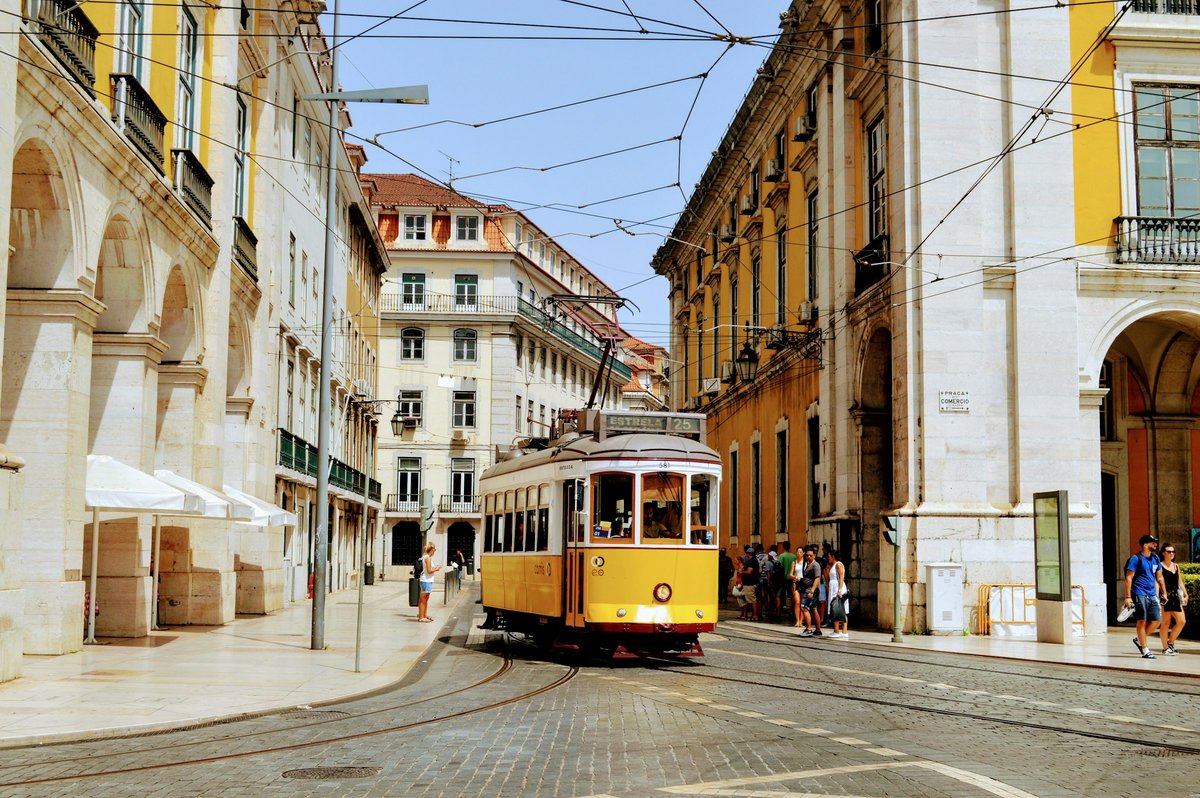
That shift is worth understanding before you book. Many of the small family-run tascas and neighborhood shops that give Lisbon its character will have handwritten 'Fechado para férias' signs taped to their doors. The restaurants that stay open tend to be the bigger, more tourist-oriented ones. Tram 28 will have queues stretching around the block. Belém and Sintra will be packed. That said, you also get reliable sunshine virtually every single day, ocean water warm enough for swimming, and sunsets that don't happen until nearly 9pm, which turns rooftop terraces and hilltop miradouros into a nightly ritual.
Is it a bad time to come? No. But it's likely not the best time either, and anyone selling you August in Lisbon as the peak experience is prioritizing the weather over the full picture. The city tends to feel most alive in late May and June, when Santo António transforms entire neighborhoods into open-air parties. September and October offer nearly the same warmth with a fraction of the crowds. August is the trade-off month: guaranteed sun, guaranteed crowds, guaranteed higher prices.
Why visit in August
- Virtually guaranteed sunshine: August averages zero rainy days across the entire month, so you can plan outdoor activities with near-total confidence
- Ocean temperatures along the coast reach their annual peak around 19-20°C, making Costa da Caparica and Cascais beaches swimmable without the usual Atlantic gasp
- Sunset doesn't happen until about 8:45pm, giving you extraordinarily long evenings for rooftop terraces, viewpoint visits, and outdoor dining that stretches well past dark
- Cultural sites like the Museu Nacional do Azulejo and Museu Nacional de Arte Antiga are quieter than the outdoor attractions and their air conditioning is a genuine relief during peak heat hours
Worth knowing
- Peak tourist season: Jerónimos Monastery, Belém Tower, and Sintra palaces will have substantial queues, particularly between 10am and 4pm, with waits sometimes exceeding an hour
- Many family-run restaurants and neighborhood shops close for the entire month as locals take their annual férias: the streets of Mouraria and parts of Graça can feel oddly quiet
- Hotel and Airbnb rates hit their annual maximum, often 50-80% above shoulder season prices in central neighborhoods like Baixa, Alfama, and Chiado
- Heat waves are a real possibility, while the average sits around 29°C, occasional hot spells push temperatures past 38°C (100°F) for several consecutive days, and wildfire smoke from inland Portugal can temporarily degrade air quality
Best for
Think twice if
August is Lisbon's joint-hottest month alongside July, and the driest month of the year by a wide margin. Expect relentless sunshine with an average high around 29.1°C (84°F) and lows settling near 18.5°C (65°F) after dark. Rain is essentially nonexistent: the five-year historical average records 0mm across the entire month. Humidity sits at a moderate 67%, noticeable but nowhere near tropical levels. The Nortada (a strong northerly wind) typically picks up in the afternoon and can make late-afternoon temperatures feel a few degrees cooler in the city, though it turns exposed beaches like Praia do Guincho into genuine wind tunnels. Mornings tend to start calm and warm, building to peak heat by early afternoon.
Seasonal caution
- Heat waves can push temperatures above 38°C (100°F) for several consecutive days, typically when hot air masses track north from the Sahara. These events seem to be growing more frequent and can make outdoor sightseeing between 11am and 5pm risky for vulnerable visitors: particularly on Lisbon's shadeless hilltop viewpoints and along the Belém waterfront.
- Wildfire smoke from inland and northern Portugal can occasionally affect Lisbon's air quality. Portugal's fire season peaks in July and August, and while the city itself is not at direct risk, smoke haze from fires in the Alentejo or central interior regions can reduce visibility and cause respiratory discomfort. Travelers with asthma or lung conditions should monitor air quality forecasts during their stay.
Year-round climate
Averages from the last 5 years.
| Month | Avg high (°C) | Avg low (°C) | Rainfall (mm) |
|---|---|---|---|
| Jan | 15 | 9 | 78 |
| Feb | 17 | 10 | 77 |
| Mar | 18 | 11 | 84 |
| Apr | 20 | 12 | 59 |
| May | 23 | 14 | 18 |
| Jun | 26 | 17 | 22 |
| Jul | 29 | 18 | 3 |
| Aug | 29 | 19 | 0 |
| Sep | 26 | 17 | 48 |
| Oct | 24 | 16 | 91 |
| Nov | 19 | 12 | 83 |
| Dec | 16 | 10 | 110 |
Holidays and festivals in August
Public holidays
- Assumption Day(Assunção de Nossa Senhora)15 August 2027
Best things to do in August
Beach day at Costa da Caparica
outdoorA 30-minute bus ride from central Lisbon drops you at a 15-kilometer stretch of Atlantic beach on the south bank of the Tagus. The first few beaches near the town are family-friendly with full facilities: showers, lifeguards, beach bars serving cold beer. Walk south along the coast and each successive beach gets progressively quieter. The water is still the Atlantic (expect around 19-20°C) but by August it's about as warm as it gets, and after climbing Lisbon's hills in the heat, that first plunge feels like a reset button.
August is the only month where ocean temperatures are reliably warm enough for sustained swimming without a wetsuit, and the rain probability is effectively zero: conditions that make committing to a full beach day a safe bet.Booking tipAim for a morning start on weekends to claim a good spot. The beaches closest to the bus stop fill up by mid-morning. A 15-minute walk south thins the crowd considerably.
Sunset drinks at Miradouro da Graça
culturalLisbon's hilltop viewpoints transform into social gathering spots on summer evenings. Graça is arguably the best of the major ones: a wide terrace facing west across the rooftops toward the Castelo de São Jorge and the Tagus estuary beyond. Bring a bottle of wine from the corner shop below, find a bench or a patch of wall, and watch the light shift from white to gold around 8pm. The kiosk bar sells snacks and drinks if you didn't plan ahead.
Sunset at roughly 8:30-8:45pm in August gives you the longest golden-hour window of the year, and warm evenings mean you can stay put without reaching for a jacket until well after dark.Booking tipArrive by 7:30pm to get a decent spot with a clear sightline. The kiosk bar develops a queue after 8pm. Bringing your own wine is not just tolerated: it's what most people do.
Day trip to Arrábida Natural Park
outdoorThe Serra da Arrábida, about 40 minutes south of Lisbon by car, hides some of the most striking beaches on the Portuguese coast. Praia de Galapinhos and Portinho da Arrábida have turquoise water sheltered by limestone cliffs: a different world from the exposed Atlantic beaches further north. The water here runs calmer and a degree or two warmer, the hillsides smell of Mediterranean scrub and pine, and the scale feels intimate rather than vast.
August's settled conditions make these sheltered cove beaches at their best: minimal swell, warm water, clear visibility. The park restricts vehicle access during peak summer to limit overcrowding.Booking tipVehicle access to beach parking is restricted in peak summer months. Either drive very early (before 8:30am) or plan to use the shuttle bus service that runs from Sesimbra and Setúbal.
Evening fado in Alfama
culturalSummer fado in Alfama has a quality the other seasons can't match: the doors and windows of the fado houses stay open, and the music drifts through the narrow stone streets. You'll hear it (that raw, aching Portuguese guitar) before you see the source. The professional fado restaurants are expensive and often full of tour groups, but some of the smaller houses on Alfama's backstreets still host vadio sessions where locals and amateurs take turns singing. The sound bouncing off those close stone walls in warm air is something you feel as much as hear.
Warm August evenings mean open doors and windows that let fado spill into the alleyways. The acoustic experience of hearing it echo through Alfama's narrow passages is something uniquely available during summer months.Booking tipSkip the Michelin-listed fado restaurants unless price is no object. Ask your accommodation host for a neighborhood recommendation: the good vadio spots tend to shift seasonally and aren't well-represented online.
Early morning at Pastéis de Belém
foodThe original custard tart bakery, producing pastéis de nata since 1837. In August, the midday queue wraps around the block and the wait can stretch past 30 minutes in direct sun. But at 8am when they open, you can walk straight to a table in the tiled interior, order a half-dozen tarts still warm from the oven (the shell shattering, the custard barely set, almost trembling) dust them with cinnamon and powdered sugar, and eat them with a strong bica coffee in near-silence. The difference between this experience and the midday crush is night and day.
August crowds make the midday Pastéis de Belém experience genuinely unpleasant: long waits in full sun with no shade. The early-morning strategy is specifically a peak-season adaptation; in October you could walk in at noon without a wait.Booking tipArrive within 15 minutes of the 8am opening. No reservations taken. Sit in the back rooms for the full azulejo-tiled experience: most visitors cluster near the entrance or on the patio and miss the best part of the interior.
Ferry ride to Cacilhas and Cristo Rei
sightseeingThe 10-minute ferry from Cais do Sodré to Cacilhas costs a couple of euros and delivers what might be the best view of Lisbon's waterfront at any price point. The city skyline spreads out across the water: Alfama climbing its hill, the 25 de Abril Bridge arching overhead, the light glinting off tile facades. From Cacilhas, a short bus ride reaches Cristo Rei (Lisbon's counterpart to Rio's Christ the Redeemer) where the terrace at the base offers a panorama that makes the heavily-marketed viewpoints on the Lisbon side feel cramped.
August's consistently clear skies mean the panoramic views from Cristo Rei extend for many kilometers in every direction. On hazy winter days you can barely see across the river.Booking tipFerries run frequently throughout the day. Avoid the last return service on Friday and Saturday nights: it gets crowded with people heading back from south-bank waterfront bars.
Surf lesson at Carcavelos
outdoorCarcavelos beach sits 20 minutes by train from Cais do Sodré station and is Lisbon's most accessible surf spot. Several schools set up on the sand through summer, offering beginner lessons in the morning when conditions are typically calmest. The beach is wide, well-equipped, and the water temperature is at its most tolerable. Even if you've never stood on a board, the forgiving summer swell gives you a fighting chance.
Summer swells tend to be smaller and more consistent than winter's powerful Atlantic waves, making August one of the better months for learning to surf near Lisbon. Water temperature is at its annual peak, so wipeouts sting less.Booking tipBook a morning session. The Nortada wind picks up after lunch and can make conditions choppy and less beginner-friendly by mid-afternoon.
Midday retreat to LX Factory
culturalWhen the sun hits its peak and Lisbon's hills become an endurance test, this converted industrial complex under the 25 de Abril Bridge offers shade, air circulation, and enough to browse for a couple of hours. The standout is Ler Devagar, a bookshop set inside a former printing press warehouse with floor-to-ceiling shelves and a suspended bicycle hanging from the rafters. Scattered restaurants and design shops fill the rest of the complex. The thick concrete walls keep the interior noticeably cooler than the streets outside.
August's midday heat makes open-air sightseeing between noon and 3pm inadvisable for all but the most determined. LX Factory's covered industrial architecture provides shelter while keeping you engaged: a better use of those hours than retreating to your hotel room.Booking tipSunday brunch draws a crowd: arrive before noon or expect a wait at the popular spots. Weekday afternoons are quieter.
What to eat in August
In season: fruit
Figos frescos (fresh figs)
August is peak fig season in Portugal. Market stalls pile high with dark-skinned figos pretos and green figos brancos, often displayed alongside wedges of São Jorge cheese or sliced presunto from the Alentejo. The scent of ripe figs (honeyed, almost jammy) hits you before you see the stall. Eat them as a dead-simple snack with salty cured ham, or watch for them on restaurant dessert menus drizzled with honey.
Pêssegos (peaches)
Portuguese peaches from the Ribatejo and Alentejo regions hit their peak in August. They tend to be smaller than the supermarket specimens you might be used to, but the flavor is dense: sweet, fragrant, the juice-running-down-your-arm kind. Buy them at any morning market or from the fruit vendors near Rossio and eat them immediately. They don't travel well because they're picked closer to ripe.
On menus now
Melão com presunto
A summer starter that appears on seemingly every Portuguese terrace menu once temperatures climb: cool, fragrant cantaloupe draped with paper-thin slices of Alentejo presunto. The contrast of sweet cold melon and salty, slightly chewy ham works unreasonably well when it's 30 degrees out and anything hot feels like too much effort.
Gaspacho à Portuguesa
The Portuguese take on cold soup uses more soaked bread than its Spanish cousin, producing a thicker, more filling bowl. Seasoned with garlic, ripe tomato, cucumber, and green pepper, it's the meal you reach for when the thermometer nudges past 30°C and the idea of anything hot feels like punishment. Served cold with a drizzle of olive oil and sometimes diced hard-boiled egg.
Percebes (goose barnacles)
These strange crustaceans, pulled from wave-battered rocks along the Portuguese coast, look like tiny dinosaur feet and taste like concentrated ocean: briny, intense, slightly chewy. They're a delicacy even locally, and the price reflects the risk barnacle harvesters take on exposed Atlantic rocks. August is when you'll find them freshest at cervejarias and seafood spots near Cais do Sodré. Worth trying once for the experience alone.
Street food peaks
Sardinhas assadas (grilled sardines)
Grilled sardines are a Lisbon summer ritual. Whole fish charred over hot coals, served on a thick slice of bread that soaks up the oil, eaten with your hands. The cultural peak was June's Santo António festival, but sardines remain a fixture on every outdoor terrace menu through August: the fat content is still high, and that smoky, salty, oily char is the taste of Lisbon summer. You'll smell them grilling from a street away.
Regular events in August
Jazz em Agosto
The Gulbenkian Foundation's annual jazz festival brings international and Portuguese artists to the open-air amphitheater in the Gulbenkian gardens. Running since 1984, it tends to program more experimental and avant-garde acts than mainstream smooth jazz: the kind of lineup that rewards curiosity. The garden setting, with its mature trees and evening breeze, adds to the appeal.
Late July through mid-August, typically running about 10 daysFestival ao LargoFree
Free outdoor performances (opera, classical music, dance, and theater) staged in the square outside the São Carlos National Theatre in Chiado. The setting is elegant: 18th-century architecture framing a temporary stage, audience seated in the open air. The production quality is high; these are professional companies performing, not student showcases.
Throughout July and August, typically Thursday through Saturday eveningsOpen-air cinema screenings
Several venues across Lisbon screen films outdoors during summer, including in castle gardens and neighborhood parks. Programs tend to mix Portuguese cinema, international art house selections, and the occasional crowd-pleaser. Screenings start after 9pm once it's properly dark, and watching a film under the stars with the city lights visible in the distance is a distinctly summer Lisbon experience.
Various dates throughout August, typically starting after 9pmFestas do Mar (Cascais)Free
While technically in Cascais rather than Lisbon proper, this seaside festival is easily reachable by train: about 40 minutes from Cais do Sodré. Live music stages, seafood stalls serving grilled fish and shellfish, and a fireworks display over the bay that draws crowds from across the greater Lisbon area. The atmosphere skews more local than most August events in central Lisbon.
Mid-to-late August, typically spanning 3-4 daysBest places this August
Costa da Caparica beaches
beachLisbon's summer beach strip on the south bank of the Tagus: a long chain of numbered beaches stretching for kilometers. The first few near town are lively and well-equipped with bars, showers, and lifeguards. Walk south and the density thins steadily. By beach 15 or 16, you might have a wide stretch of sand mostly to yourself. The bus from central Lisbon takes about 30 minutes.
Almada (south bank)Miradouro da Senhora do Monte
viewpointThe highest viewpoint in the city, and somehow the least crowded of the well-known miradouros. On a clear August day you can take in a sweep from the Castelo to the river to the 25 de Abril Bridge and the hills of Sintra beyond. There's less infrastructure here than at Graça (sometimes no kiosk, limited seating) which is precisely why the tour groups stay away. Bring your own supplies.
GraçaJardim da Estrela
parkA 19th-century garden across from the Basílica da Estrela, and one of Lisbon's genuine shade havens in August heat. Enormous old trees create dense canopy cover, there's a duck pond that kids gravitate toward, a wrought-iron bandstand, and a kiosk café selling cold drinks and pastries. The locals who stay in the city through August come here with books and blankets on weekend mornings. It feels lived-in rather than manicured.
EstrelaPraia do Guincho
beachA wild, wind-battered beach about 30 minutes past Cascais toward the westernmost point of mainland Europe. The Nortada hits hard here, which is exactly why surfers, windsurfers, and kite enthusiasts love it. Swimming is only for strong swimmers when conditions allow, but the setting is worth the trip regardless: open dunes, crashing Atlantic waves, the dark ridgeline of the Serra de Sintra rising behind you. The windswept restaurant terraces serve decent grilled fish.
Cascais municipalityAlfama after 9pm
neighborhoodAlfama in August daylight is a sweaty corridor of tour groups flowing between the castle and the waterfront. Alfama after 9pm is something else: cooler air moving through the narrow streets, fado drifting from open doorways, older residents sitting on steps with cold beer, cats appearing from shadows. The steep alleys that feel claustrophobic under midday sun become atmospheric when the temperature drops and the warm glow of streetlamps replaces direct sunlight. Worth a long, aimless wander.
AlfamaOceanário de Lisboa
museumEurope's largest indoor aquarium, located in the Parque das Nações district on the eastern waterfront. On a scorching August afternoon, the cool, dim interior feels like a rescue mission. The central tank (a single enormous structure you circle on multiple levels) holds sunfish, manta rays, sharks, and schools of tuna that wheel past the glass with eerie calm. The building is modern and well-designed. A solid two-hour visit regardless of whether you're partly using it as an air-conditioning excuse.
Parque das NaçõesPríncipe Real neighborhood
neighborhoodA quieter residential neighborhood above Bairro Alto, centered on a shady garden square with a massive cedar tree that locals claim is the best natural parasol in Lisbon. In August, while the tourist corridors below bake, the canopy here keeps temperatures noticeably cooler. The surrounding streets have independent shops, wine bars, and brunch spots that tend to stay open through férias season because the clientele is partly expat rather than tourist.
Príncipe Real
Your packing checklist
Tick items off as you pack. Your progress saves in this browser.
All packed — have a great trip.
Insider tips
The Nortada wind follows a roughly predictable daily pattern: calm mornings, building through the afternoon, strongest by 4-5pm. Plan beach trips to arrive early and leave mid-afternoon, or choose sheltered south-bank beaches at Arrábida instead of wind-blasted ones like Guincho. The same wind makes riverside terraces at Cais do Sodré pleasantly cool in the evening while inland Bairro Alto stays warmer.
Skip Tram 28 entirely unless you're genuinely committed to the queue. Tram 12E runs a similar route through Alfama and Graça with a fraction of the wait and the same rattling vintage experience. Tram 25E from Praça da Figueira to Campo de Ourique passes through interesting neighborhoods that most visitors never discover.
Portuguese wine at the entry level is remarkably good relative to what you'd pay elsewhere in Europe. A bottle of Alentejo red from Pingo Doce or Continente supermarket (four or five euros) will hold its own against bottles three times the price in other countries. Stock up for your miradouro evenings rather than paying bar markup.
The Cais do Sodré ferry to Cacilhas is one of Lisbon's most underappreciated experiences. For the cost of a metro ticket you get 10 minutes on the Tagus with the full city skyline spreading out in front of you. The seafood restaurants on the Cacilhas side serve fresh fish at noticeably lower prices than the tourist waterfront on the Lisbon side.
When a restaurant you've researched turns out to be closed for férias, ask your accommodation host where they personally eat. Locals who stay in Lisbon through August have their own network of places that remain open, and these tend to offer better value because they're not relying on tourist traffic to fill tables.
Avoid these mistakes
- Scheduling outdoor sightseeing (castle visits, miradouro walks, Belém monuments) for the middle of the day. The window from about 11am to 4pm in August is genuinely punishing, especially on Lisbon's hills where shade is scarce. Start at 8 or 9am, retreat to air-conditioned museums or a long lunch from noon to 3pm, then resume in the late afternoon when temperatures ease and the light turns golden for photographs.
- Planning a Sintra day trip without leaving extremely early. By mid-morning in August, Pena Palace and Quinta da Regaleira have queues measured in hours. Catching one of the first trains from Rossio station around 8am gets you there before the tour buses, and you can comfortably see two palaces before the crowds arrive. By 11am, you'll be glad you're finishing rather than starting.
- Assuming you can walk into any restaurant for dinner without checking first. August closures are real and widespread: entire blocks in Mouraria and parts of Graça go dark. Check online for current opening status before making a trip to a specific spot, or better yet, book ahead for any restaurant you particularly want to try. The places that stay open in August fill up faster because there are fewer of them.
- Wearing thin-soled shoes or loose sandals on Lisbon's cobblestone hills. The calçada stones look charming in photos but they're worn smooth by centuries of foot traffic, laid at steep angles, and sometimes loose underfoot. Clinics in tourist areas see sprained ankles from this throughout summer. Proper footwear with textured soles is not fussy advice: it's how you avoid spending a day of your trip hobbling.
Practical tips for August
August is vacation month for Portuguese families, so expect 'Fechado para férias' signs on many smaller shops and restaurants, particularly in residential neighborhoods. Book accommodation well in advance: central areas like Baixa, Alfama, and Chiado fill up weeks ahead at peak rates, and options with air conditioning or river views go first. Public transport runs on a slightly reduced summer schedule, especially on weekends. The Lisboa Card (available in 24, 48, or 72-hour versions) covers unlimited transit and includes free or discounted entry to most museums: in August heat, the ability to hop on and off trams and buses without fumbling for tickets is worth the cost alone. Restaurants in tourist areas accept credit cards, but smaller tascas and market stalls still tend to be cash-preferred, so carry some euros. Tipping is appreciated but not expected at North American levels: rounding up or leaving 5-10% is standard. Most major museums close on Mondays, which makes Monday a natural beach day. Start your most ambitious walking days early in the week when your legs are fresh, and save the coast for later when a break from cobblestones sounds appealing. Sun protection is non-negotiable: the UV index regularly hits 9-10, and the Nortada breeze can mask how quickly you're burning.
FAQ
Is August a good time to visit Lisbon?
It depends on your priorities. August delivers near-perfect beach weather (hot, dry, and sunny essentially every day) with the longest evenings of the year for outdoor dining and rooftop bars. But it's also the most crowded month for tourists while simultaneously being the month most locals leave the city on holiday. Accommodation prices are at their annual peak. If you're working around a school holiday schedule and want guaranteed sunshine, August works well. If you have flexibility, May, June, or September likely offer a more complete Lisbon experience: similar warmth with fewer crowds, lower prices, and more of the neighborhood life that gives the city its character.
What is the weather like in Lisbon in August?
Hot and dry with almost zero chance of rain. The average high sits around 29°C (84°F) with overnight lows near 18.5°C (65°F). The five-year rainfall average for August is 0mm: it's the driest month of the year. Humidity runs about 67%, which you'll notice but which doesn't approach tropical levels. A strong northerly wind called the Nortada typically picks up in the afternoon and cools things down, though it can make exposed coastal beaches quite breezy. Occasional heat waves push temperatures above 38°C (100°F) for several days: these are worth watching for and planning around if they coincide with your trip.
Is Lisbon crowded in August?
Yes, this is peak tourist season. The major sights: Jerónimos Monastery, Belém Tower, São Jorge Castle, and especially the Sintra palaces: will have significant queues, particularly between 10am and 4pm. Tram 28 is packed for most of the day. That said, Lisbon is a fairly large city with distinct neighborhoods, and you can always find less-congested areas. Estrela, Príncipe Real, Alcântara, and the south bank via ferry see far fewer visitors than the postcard spots. The trick is mixing the major sights with these quieter neighborhoods rather than trying to hit every landmark in sequence.
Do restaurants close in Lisbon during August?
Many do, yes. Férias (the annual summer holiday) is deeply rooted in Portuguese culture, and a significant number of family-run restaurants and small shops close for part or all of the month. The impact is most noticeable in residential neighborhoods like Mouraria, Graça, and parts of Campo de Ourique. Tourist-facing restaurants in Baixa, Chiado, and the Cais do Sodré area stay open, as does the Time Out Market at Mercado da Ribeira. It's worth checking current opening hours online before making a special trip to a specific restaurant, and asking local residents for alternatives if your first choice has a closed sign on the door.
Is August too hot to visit Lisbon?
For most visitors, no. The average high of 29°C (84°F) is warm but manageable by southern European summer standards: considerably milder than Athens, Rome, or Madrid in the same month. The Nortada wind provides natural cooling most afternoons, and the relatively moderate humidity means the heat rarely feels oppressive. The caveat is heat waves, which can temporarily push temperatures past 38°C (100°F) and make climbing Lisbon's hills genuinely exhausting. The key is timing your days wisely: outdoor sightseeing in the morning and evening, museums and markets or beach time during the midday peak. With that rhythm, August heat is a factor to manage rather than a reason to avoid the city.
Things to Do in Lisbon in August
 Free cancellation
 True 4Hour Private Tuk Tuk Tour: Discover Lisbon with a Local!
Day trip: 4 hours, free cancellation.
via Viator Free cancellation
 Sintra and Cascais Small-Group Day Trip from Lisbon
Day trip: 8 hours, free cancellation.
via Viator Free cancellation
 Best of Lisbon Small-Group Guided Walking Tour
City tour: free cancellation.
via Viator Free cancellation
 Private Lisbon Sightseeing Tuk-Tuk Tour: Alfama, Belém & More
Day trip: free cancellation.
via Viator Free cancellation
 Small Group Tour to Sintra, Pena Palace, Cabo Roca and Cascais
Day trip: 8 hours, free cancellation.
via Viator Free cancellation
 Three Cities in One Day: Porto, Nazare and Obidos from Lisbon
Day trip: 13 hours, free cancellation.
via ViatorFind a flight to Lisbon
Live fares to Lisbon appear here once cookies are accepted.
Last verified by automated review (v1.7.1) on . What is automated review?