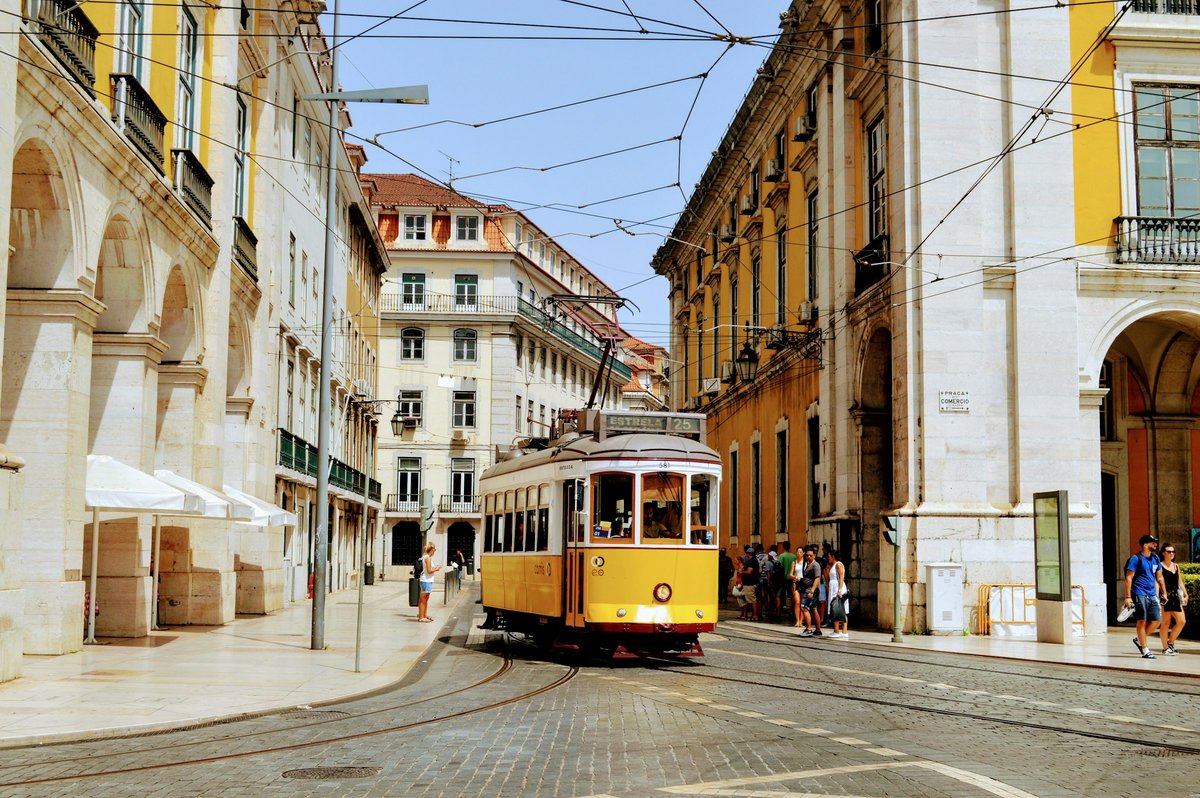
Stay in Lisbon in May
71 hotels in the Trip.com pool for Lisbon, from US$18 a night.
Opens Trip.com on Fri 7 May to Sun 9 May 2027; change the dates there.
May might be the best-kept timing secret for Lisbon, though, to be fair, the secret has been slipping for a few years now. The winter rains have finally backed off, with rainfall dropping from 59mm in April to just 18mm, and the summer heat hasn't arrived yet. Daytime temperatures sit around 23°C (74°F), cooling to a pleasant 14°C (58°F) at night, which means you can walk the city's seven hills without that particular brand of suffering that July and August deliver. The light this month has a quality that's difficult to put into words until you've experienced it firsthand: golden and soft, with sunsets pushing past 8:30 PM by month's end.
What makes May particularly appealing is where it falls on the calendar. You're catching Lisbon after the wet months and before the cruise ship crowds descend in earnest. The miradouros still have empty benches in the morning. Restaurants in Alfama haven't fully switched into tourist-season pricing yet. Locals are out on terraces in the evenings, seemingly shaking off five months of Atlantic grey, and there's an energy to the city that feels more genuine than the performative cheerfulness of high summer.
That said, May is no longer the bargain it was a decade ago. Lisbon's popularity has pushed shoulder-season prices noticeably higher, and you'll feel the difference compared to February or March. The city is also gearing up for Santos Populares in June: strings of lights going up in Alfama, paper sardine decorations appearing in shop windows, the smell of fresh paint on the neighbourhood arches. You get the buildup without the full chaos. Whether that's a pro or a con depends entirely on your temperament.
Why visit in May
- Rainfall drops to just 18mm across roughly 3 rainy days: the driest month outside July and August, but without the 29°C heat that those summer months bring
- Walking weather is close to ideal at 23°C (74°F), which makes tackling the steep calçada-paved hills of Alfama, Graça, and Bairro Alto genuinely enjoyable rather than a sweaty endurance test
- Pre-peak crowds mean noticeably shorter queues at Belém Tower, Jerónimos Monastery, and the Sintra palaces compared to what June through September delivers
- Evening temperatures around 14°C (58°F) are perfect for long outdoor dinners: terraces in Príncipe Real and along the Cais do Sodré waterfront stay comfortable until well after dark
- Santos Populares preparations are visibly underway in Alfama and Mouraria: the decorative arches and sardine art create a festive backdrop without the June crush
Worth knowing
- Atlantic water temperature still hovers around 16-17°C in May: genuinely cold, meaning beach swimming takes either real commitment or a wetsuit
- Accommodation prices have been creeping up as May increasingly functions as high season, particularly around the Labour Day weekend on May 1st and any ponte (bridge holiday) combinations
- Tram 28 is already packed with tourists by mid-morning and the congestion only intensifies through the month as visitor numbers build toward summer levels
Best for
Think twice if
May tends to be one of the most pleasant months in Lisbon. Expect warm days around 23.4°C (74°F) that feel genuinely comfortable rather than hot, with evenings cooling to around 14.3°C (58°F): enough that you'll want a light layer for after-dark walks along the waterfront. Rainfall drops to just 18mm across roughly 3 rainy days, a dramatic shift from April's 59mm. Humidity sits at 67%, which is barely perceptible at these temperatures. The occasional shower still rolls through, usually brief and clearing within the hour, but entire weeks can pass bone dry. An Atlantic breeze keeps things from ever feeling stuffy, particularly in the western neighbourhoods near Belém and along the Tagus riverfront. The sensation walking through Baixa on a May afternoon is warm stone, cool air currents between the buildings, and the particular dryness of a city that has finally stopped being rained on.
Year-round climate
Averages from the last 5 years.
| Month | Avg high (°C) | Avg low (°C) | Rainfall (mm) |
|---|---|---|---|
| Jan | 15 | 9 | 78 |
| Feb | 17 | 10 | 77 |
| Mar | 18 | 11 | 84 |
| Apr | 20 | 12 | 59 |
| May | 23 | 14 | 18 |
| Jun | 26 | 17 | 22 |
| Jul | 29 | 18 | 3 |
| Aug | 29 | 19 | 0 |
| Sep | 26 | 17 | 48 |
| Oct | 24 | 16 | 91 |
| Nov | 19 | 12 | 83 |
| Dec | 16 | 10 | 110 |
Holidays and festivals in May
Public holidays
- Labour Day(Dia do Trabalhador)1 May 2027
- Corpus Christi(Corpo de Deus)27 May 2027
Best things to do in May
Walk the seven-hills route through Alfama to Graça
walkingLisbon's historic core climbs steeply through narrow lanes paved in polished calçada portuguesa, connecting the riverside Baixa to the hilltop miradouros of Alfama, Castelo, and Graça. The route passes through centuries of layered architecture: Moorish walls giving way to tiled facades and laundry lines strung between wrought-iron balconies. The sound of fado drifting from an open window in Mouraria, the smell of grilled sardines starting to appear from a few early-season restaurants, the texture of worn limestone under your hands on a railing: this is the walk that defines Lisbon.
At 23°C the hills are enjoyable rather than punishing: try this same walk in July at 29°C and you'll understand the difference. The pre-summer light is softer and the lanes aren't yet clogged with tour groups.Booking tipNo booking needed. Start early morning for empty streets and the best light on east-facing facades.
Day trip to Sintra's palace circuit
day_tripThe forested hills of Sintra, 40 minutes west of Lisbon by train, hold a concentration of 19th-century Romantic palaces and Moorish ruins that feels almost hallucinatory: Pena Palace's painted turrets emerging from cloud forest, the moss-covered initiation well at Quinta da Regaleira descending into cool darkness, the ruined battlements of the Castelo dos Mouros looking out over the Atlantic. The microclimate here runs several degrees cooler than Lisbon, with frequent mist that adds to the atmosphere.
May sits in the sweet spot: warm enough for comfortable walking between palaces but before the summer queues that can mean 90-minute waits at Pena Palace. The gardens are in full spring bloom with wisteria and hydrangeas.Booking tipBuy timed-entry tickets for Pena Palace online at least a week ahead, especially for weekends. The 9:15 AM train from Rossio tends to be less crowded than the 9:45.
Sunset from Miradouro da Senhora do Monte
sightseeingLisbon's highest viewpoint sits above Graça, offering a panoramic sweep from the Castelo de São Jorge across the terracotta rooftops to the Tagus and the Cristo Rei statue on the far bank. It's less polished than the touristy Miradouro da Graça down the hill: a small garden with pine trees, a few benches, and usually a handful of locals rather than crowds. The air up here carries the scent of pine resin and, on clear evenings, you can see all the way to the Serra da Arrábida across the river.
May sunsets fall around 8:30 PM; late enough to have dinner first and walk up in warm evening air, but not so late that you're waiting until 9:30 as in July. The golden quality of the light this month is noticeably different from summer's harsher glare.Explore Belém's waterfront on foot
sightseeingThe western riverside district of Belém concentrates Lisbon's Age of Discovery monuments along a walkable stretch: the ornate Manueline stonework of Jerónimos Monastery, the compact Torre de Belém sitting in the Tagus shallows, the MAAT contemporary art museum with its undulating rooftop walkway, and the Padrão dos Descobrimentos monument marking the point where ships departed for the unknown. Between them, the waterfront promenade runs along gardens where jacaranda trees are just beginning to show their purple blooms.
May's dry 18mm rainfall and 23°C temperatures make this open-air walking circuit comfortable for 3-4 hours. In summer the exposed waterfront becomes uncomfortably hot with no shade between monuments. The monastery queue, while present, is still 15-20 minutes rather than the 60+ of July.Booking tipJerónimos Monastery opens at 10 AM: arrive by 9:45 for the shortest queue. The adjacent Pastéis de Belém bakery has a line out front but the interior rooms often have open tables.
Ferry to Cacilhas for riverside seafood
food_and_drinkThe 10-minute ferry from Cais do Sodré across the Tagus to Cacilhas is one of Lisbon's most underrated experiences: cheap public transit that doubles as a scenic cruise. On the south bank, the waterfront restaurants serve some of the best-value seafood in the metro area, with views back across to Lisbon's skyline. The nearby Almada market has fresh fish at prices that would cause cardiac arrest in central Lisbon. From Cacilhas you can also walk up to the base of the Cristo Rei statue for the reverse panorama.
The combination of warm but not hot weather, calm spring river conditions, and terrace dining on the Cacilhas waterfront peaks in May. The ferry crossing itself is at its most pleasant: enough breeze to feel the salt air without the winter chop that makes the ride rough in January.Booking tipUse your Viva Viagem transit card: the ferry costs the same as a metro ride. The last return ferry runs around midnight on weekends.
Wine tasting in the bars of Santos and Cais do Sodré
food_and_drinkLisbon's natural wine scene has quietly become one of southern Europe's most interesting over the past few years, concentrated in a handful of small bars in Santos and the streets behind Cais do Sodré station. Portuguese winemakers are producing distinctive bottles from indigenous grapes (Baga, Touriga Nacional, Encruzado) and these bars pour things you genuinely cannot find outside the country. The experience is casual: standing at a counter, tasting whatever the owner is excited about that week, eating tinned fish or petiscos alongside.
May evenings at 14°C are ideal for bar-hopping on foot between these clustered spots without overheating or freezing. The spring wine releases from Dão and Alentejo producers start hitting bar lists this month. Several bars move their seating outside for the season starting in May.Booking tipMost of these bars are walk-in only with 15-20 seats. Thursday and Friday evenings fill up by 8 PM: arrive by 7:30 or go on a quieter Tuesday or Wednesday.
Browse the Feira da Ladra flea market
shoppingLisbon's open-air flea market spreads across the Campo de Santa Clara square in Alfama every Tuesday and Saturday, a jumble of antique tiles, vintage Portuguese ceramics, old azulejo fragments, secondhand books, military surplus, and genuine junk mixed with the occasional find. The atmosphere is more local than curated: retirees selling decades of accumulated household items alongside professional dealers. The surrounding streets have a few good cafes for a post-browsing coffee.
May's dry weather and comfortable temperatures make browsing an outdoor market for 2-3 hours pleasant rather than the sodden experience it can be from November through March. The Saturday market is larger and livelier than Tuesday's.Booking tipArrive before 10 AM on Saturday for the best selection: serious buyers and dealers sweep through early. Bring cash; many vendors don't take cards.
Catch early jacaranda blooms in Lisbon's gardens
natureLisbon's jacaranda trees start blooming in late May, draping streets and gardens in clusters of pale purple flowers. The effect is most concentrated along certain avenues and in parks like Jardim da Estrela and the grounds around the Gulbenkian Museum. The blooms carpet the ground beneath in a soft purple layer that photographs particularly well against the warm limestone of the buildings. Not every tree blooms at the same time, so you'll see the city shifting colour gradually through the last two weeks of the month.
Late May catches the beginning of the jacaranda bloom, which typically peaks in the first two weeks of June. You'll see the first purple canopies appearing from around May 20th onward, with the advantage of photographing them before the peak-season tourist crowds arrive.What to eat in May
In season: fruit
Morangos
Portuguese strawberries reach peak sweetness in May. You'll find them piled high at Mercado da Ribeira and neighbourhood markets across the city: the Algarve-grown ones tend to be smaller and more intensely flavoured than their northern European counterparts. Eaten plain with maybe a dusting of sugar, folded into seasonal tarts, or served alongside fresh cheese at the end of a meal.
Cerejas
By mid-May, the first cherries from the Fundão region in central Portugal start appearing at Lisbon fruit stalls. They're small, dark, and have a concentrated tartness that balances the sweetness well. The full cherry season extends into June, but the early May crop carries a particular intensity. Worth buying a bag and eating them while walking through Jardim da Estrela.
On menus now
Favas com chouriço
Broad beans stewed with smoky chouriço sausage, garlic, and fresh coriander: this is a spring dish that peaks in May when the favas are young and tender enough to eat skin and all. It appears as a starter or side at tascas throughout the city, the kind of dish that arrives in a clay pot with crusty bread for mopping up the broth. The texture of fresh May favas versus the frozen ones used out of season is an entirely different experience.
Amêijoas à Bulhão Pato
Clams cooked with white wine, garlic, olive oil, and fresh coriander. Technically available year-round, but the spring harvest tends to produce plumper, more flavourful clams, and May's comfortable terrace weather makes this the ideal month to sit outside with a bowl of them and a cold vinho verde. Named after the 19th-century Portuguese poet, it's one of those dishes that tastes better when you can smell the Tagus nearby.
Street food peaks
Caracóis
Em maio, caracóis: the Portuguese saying translates to 'in May, snails,' and Lisbon takes it seriously. When warm weather arrives, tascas and cervejarias across the city start serving small butter-coloured snails cooked with garlic, oregano, and a hit of piri-piri, served in tall glasses of warm broth. The smell of garlic and herbs drifting from an open door with a hand-written 'Há Caracóis' sign is one of the defining sensory markers of May in Lisbon. Look for them in Mouraria, Intendente, and Graça rather than the tourist-facing restaurants downtown.
Regular events in May
Indie Lisboa: International Independent Film Festival
Lisbon's independent film festival screens international and Portuguese features, documentaries, and shorts across several cinemas in the city centre, with a focus on emerging directors and unconventional storytelling. Q&A sessions with filmmakers are common and the atmosphere is more intimate than the major European festival circuit.
Late April to mid-May (dates shift annually)Open House LisboaFree
Part of the global Open House network: for one weekend, dozens of architecturally significant buildings that are normally closed to the public open their doors for free guided visits. This includes private residences, government buildings, studios, and historic structures across the city. A rare chance to see inside places you'd otherwise only glimpse through windows.
Mid-to-late May weekendFeira do Livro de LisboaFree
Lisbon's annual book fair fills Parque Eduardo VII with hundreds of temporary pavilions run by publishers and booksellers, offering discounted books, author signings, and literary events. The fair has been running since 1930 and draws large local crowds in the evenings, with food stalls and a social atmosphere that goes well beyond browsing for books.
Late May through mid-JuneDia do Trabalhador: May DayFree
Labour Day on May 1st is a public holiday in Portugal with marches and rallies in central Lisbon, particularly around Alameda and Avenida da Liberdade. Many shops, museums, and restaurants close for the day or operate reduced hours. The political demonstrations are peaceful and draw significant crowds.
May 1stBest places this May
Jardim da Estrela
parkA leafy 19th-century garden in the Estrela neighbourhood with a wrought-iron bandstand, duck pond, mature trees providing deep shade, and a cafe with outdoor seating. In May the flowerbeds are at their peak, and the garden fills with locals reading, walking dogs, and having slow weekend lunches. The scent of jasmine and magnolia carries on the breeze. Across the street, the Basílica da Estrela's dome offers one of the quieter panoramic views of the city.
EstrelaMiradouro da Graça
viewpointA terraced viewpoint beneath the Graça convent offering one of the classic Lisbon panoramas: the Castelo de São Jorge filling the middle ground with terracotta rooftops cascading down to the Tagus beyond. A pine tree provides partial shade and there's a kiosk selling beer, coffee, and simple food. In May the late-afternoon light turns the castle walls golden, and the terrace is busy but not yet at the standing-room-only levels of July and August.
GraçaPríncipe Real neighbourhood
neighborhoodAn upscale residential neighbourhood centred on a garden square with a massive old cedar tree and several of Lisbon's best independent shops, restaurants, and wine bars. The Saturday organic market in the garden is worth planning around. The streets branching off the square are lined with concept stores, design shops, and specialty food shops in renovated townhouses. The pace here feels noticeably slower than Chiado or Bairro Alto: more residential, less performative.
Príncipe RealLX Factory
culturalA converted industrial compound under the 25 de Abril bridge in Alcântara housing restaurants, design studios, bookshops, and weekend markets in repurposed factory buildings. The Ler Devagar bookshop inside a former printing press is worth the visit alone: an enormous space with books stacked to the warehouse ceiling. Sunday afternoons bring a market with local designers and food vendors. The raw concrete-and-steel aesthetic contrasts with the surrounding residential streets.
AlcântaraAlfama neighbourhood: pre-Santos Populares
neighborhoodIn May, Alfama is visibly preparing for June's Santos Populares celebrations. Residents string lights across the narrow lanes, install decorative arches, and hand-paint sardine motifs on improvised materials. The neighbourhood has a particular energy this month: anticipatory and communal, with doors open and neighbours collaborating on decorations. You're seeing a genuine neighbourhood tradition being assembled rather than performing for tourists. The smell of paint and fresh sawdust mixes with the ever-present laundry detergent and cooking aromas.
AlfamaParque das Nações waterfront
waterfrontThe modern waterfront district built for Expo 98 along the eastern Tagus offers a contrast to the historic centre: wide promenades, the Oceanário aquarium (one of Europe's best), the Vasco da Gama bridge stretching into the distance, and the Santiago Calatrava-designed Gare do Oriente station. In May the riverside gardens are green and the cable car runs along the waterfront with views of the estuary. Less character than the old neighbourhoods but genuinely pleasant for a half-day with good waterfront restaurants.
Parque das NaçõesMercado de Campo de Ourique
marketA neighbourhood market hall that functions more as a local food court than a tourist attraction, though visitors are finding it in growing numbers. The stalls serve everything from sushi to traditional Portuguese petiscos, with a central communal seating area. The quality tends to be more consistent than the larger Mercado da Ribeira, and the prices are lower. The surrounding Campo de Ourique neighbourhood is residential and walkable, with good cafes and the Cemitério dos Prazeres for those interested in ornate 19th-century funerary architecture.
Campo de Ourique
Your packing checklist
Tick items off as you pack. Your progress saves in this browser.
All packed — have a great trip.
Insider tips
The caracoleiras (snail bars) that locals frequent are mostly in Mouraria, Intendente, and Graça: places with plastic tables, paper napkins, and hand-written menus in the window. If the sign just says 'Há Caracóis' and the clientele is entirely Portuguese retirees, you've found the right spot. The tourist-facing restaurants in Bairro Alto rarely serve them, or serve them badly.
Skip the queue at Pastéis de Belém and walk 15 minutes east to Manteigaria in Chiado: the custard tarts are at least as good, arguably better (this is a matter of serious local debate), and you can watch them being made through a glass window. The factory-warm ones dusted with cinnamon are the correct order.
Tram 28 is famous, packed, and a pickpocket magnet from May onward. The route itself is genuinely scenic but you'll see more of it and enjoy it more by walking it: the tram follows streets you can walk through in about 90 minutes, and you'll be able to stop and look at things rather than being pressed against strangers through a window.
The Viva Viagem transit card (available at any metro station) works on the metro, buses, trams, the elevator, and the Cacilhas ferry. Load it with a day pass rather than individual fares: the maths works out in your favour after about three rides, and it saves the fumbling-for-change routine every time you board.
If you're in Lisbon on a Saturday, the organic farmers' market at Príncipe Real garden runs from morning until early afternoon. It's small but the quality of the cheese, bread, and seasonal fruit is a step above what you'll find in the supermarkets or tourist markets. The queijo fresco with honey from the Azores stall is something you'll think about afterward.
Avoid these mistakes
- Packing only summer clothes and being caught shivering at an outdoor dinner. May evenings at 14°C feel properly cool, especially with wind off the Tagus, and the transition from a warm 23°C afternoon catches people off guard. A jacket you can stuff in a bag saves the evening.
- Not buying timed-entry tickets for Sintra's Pena Palace in advance. In May the queues aren't as extreme as July, but showing up without a reservation on a weekend can still mean a 45-60 minute wait or being turned away from a sold-out time slot. Book online at least a few days ahead.
- Eating exclusively in the Baixa-Chiado tourist corridor: particularly the restaurants along Rua Augusta and around Rossio that post multilingual picture menus outside. The food quality drops sharply compared to what you'll find two streets away in any direction. Walk ten minutes to Mouraria or Santos and the difference in both quality and price is stark.
- Assuming the city is flat because the metro stations and main squares sit in the valley. Lisbon's seven hills are steep, cobbled, and relentless. Visitors who plan a full day of walking without accounting for the vertical gain end up exhausted by 3 PM. Pace yourself, take the funiculars strategically, and save the hilliest routes for morning when your legs are fresh.
Practical tips for May
Book accommodation in central Lisbon at least 3-4 weeks ahead for May stays: the shoulder-season price advantage disappears rapidly for last-minute searches, especially around the May 1st holiday weekend. Restaurants in popular neighbourhoods like Príncipe Real and Bairro Alto fill up on Friday and Saturday evenings; reserving a day or two ahead is prudent for anywhere you specifically want to try. Most museums close on Mondays, and many churches close between 1-2 PM for lunch. The Lisboa Card (24/48/72 hour) bundles unlimited transit with museum entry and is genuinely good value if you plan to visit Belém and Sintra: do the maths against individual tickets before buying. Dress codes are relaxed almost everywhere, but shorts and tank tops may draw looks at churches and a few of the more formal restaurants. Tipping is appreciated but not expected at the North American level: rounding up or leaving 5-10% on restaurant bills is the local norm. The metro runs until 1 AM and is clean, safe, and efficient for getting back from dinner. Uber and Bolt are both widely available and typically cheaper than taxis for the same route.
FAQ
Is May a good time to visit Lisbon?
May is arguably the best overall month for visiting Lisbon, which is why it gets a ranking of 2 out of 12 (only behind June, which edges ahead because of the Santos Populares festival). The weather is warm without being hot (23°C (74°F) during the day, 14°C (58°F) at night) with only 18mm of rain across about 3 days. Crowds are present but manageable, still well below the July-August peak. Prices are moderate rather than peak-season. The main trade-off is that the Atlantic is still too cold for comfortable swimming, and you'll miss the Santos Populares celebrations by a month.
What is the weather like in Lisbon in May?
Expect warm, mostly dry days with an average high around 23°C (74°F) and lows around 14°C (58°F). Rainfall is just 18mm: a dramatic drop from the 59mm of April and the wettest months of winter (December averages 110mm). Humidity sits at a comfortable 67%. You'll likely get a few brief showers across the month, but long stretches of clear, sunny weather are the norm. Evenings are pleasant but cooler than most people expect, particularly near the river where the Atlantic breeze is noticeable.
Is Lisbon crowded in May?
Moderately. May sits in the transition zone between shoulder and high season. You'll encounter queues at major sites like Jerónimos Monastery and Belém Tower, and popular miradouros get busy in the late afternoon, but nothing approaches the density of July and August when cruise ships disgorge thousands of day-trippers into the Alfama lanes. Tram 28 is already uncomfortably full by mid-morning. Restaurants are busy on weekends but midweek dining is still easy. Overall, the crowd level is manageable with minimal advance planning.
Can you swim at Lisbon beaches in May?
Technically yes, practically it depends on your cold tolerance. The Atlantic water temperature in May hovers around 16-17°C (61-63°F), which most people find too cold for leisurely swimming. Surfers in wetsuits are fine, and you'll see a few hardy locals in the water, but beach swimming season doesn't properly start until late June when the water warms to around 19-20°C. The beaches at Costa da Caparica and Cascais are still lovely for sunbathing and walking in May, just manage your expectations about getting in the water.
What should I wear in Lisbon in May?
Light, breathable clothing during the day: cotton or linen works well at 23°C. Bring at least one jacket or warm layer for evenings, which cool to 14°C and feel cooler with wind off the river. Shoes with rubber grip soles are non-negotiable for the polished calçada cobblestones, which are slippery even when dry and treacherous when wet. A light scarf is useful for church visits and over-air-conditioned restaurants. The overall dress culture in Lisbon is smart-casual: you won't need formal wear for any but the most upscale restaurants, but very casual beachwear in the city centre looks out of place.
Things to Do in Lisbon in May
 Free cancellation
 True 4Hour Private Tuk Tuk Tour: Discover Lisbon with a Local!
Day trip: 4 hours, free cancellation.
via Viator Free cancellation
 Sintra and Cascais Small-Group Day Trip from Lisbon
Day trip: 8 hours, free cancellation.
via Viator Free cancellation
 Best of Lisbon Small-Group Guided Walking Tour
City tour: free cancellation.
via Viator Free cancellation
 Private Lisbon Sightseeing Tuk-Tuk Tour: Alfama, Belém & More
Day trip: free cancellation.
via Viator Free cancellation
 Small Group Tour to Sintra, Pena Palace, Cabo Roca and Cascais
Day trip: 8 hours, free cancellation.
via Viator Free cancellation
 Three Cities in One Day: Porto, Nazare and Obidos from Lisbon
Day trip: 13 hours, free cancellation.
via ViatorFind a flight to Lisbon
Live fares to Lisbon appear here once cookies are accepted.
Last verified by automated review (v1.7.1) on . What is automated review?