Stay in Lisbon in July
71 hotels in the Trip.com pool for Lisbon, from US$18 a night.
Opens Trip.com on Fri 2 Jul to Sun 4 Jul 2027; change the dates there.
July in Lisbon is dry, warm, and long-lit: the kind of month where the sun doesn't fully set until after 9pm and the city's rhythm shifts almost entirely outdoors. Expect daytime highs around 29°C (84°F) with practically zero rain, maybe 3mm for the entire month if you're unlucky. That sounds perfect on paper, and honestly, it mostly is. But here's the thing you need to know before booking: this is peak season, full stop. Lisbon has become one of Europe's most popular summer destinations, and July is when that popularity becomes physically tangible: long lines at Belém, shoulder-to-shoulder crowds in Alfama's narrow lanes, and restaurant wait times that would have been unthinkable a decade ago.
The trade-off is real, though. The city comes into its own during summer in ways that don't translate to other months. The Santos Populares festivities (particularly the tail end of Santo António celebrations) carry a loose, neighborhood-party energy through early July. Rooftop bars and esplanadas fill up by late afternoon. The Tagus catches golden light that photographers cross continents for. You'll smell sardines grilling on nearly every street corner in the older neighborhoods, hear fado drifting out of open windows in Mouraria, and feel cobblestones warm underfoot well into the evening. It's sensory overload in the best way.
That said, if you're sensitive to heat or hate crowds, July might test your patience. The late afternoon sun on Lisbon's limestone hills can feel relentless, and air conditioning is still not universal in older guesthouses and restaurants. Mind you, compared to inland Portugal (where temperatures regularly crack 40°C) Lisbon's Atlantic breeze keeps things manageable. You'll want to adopt the local pattern: do your sightseeing before noon, retreat for a long lunch, and re-emerge around 5pm when the shadows lengthen.
Why visit in July
- Virtually no rain: July averages just 3mm, so outdoor plans are about as safe a bet as European weather allows
- Extended daylight with sunset after 9pm gives you long, unhurried evenings for riverside dining and miradouro sunsets
- Santo António celebrations spill into early July with sardine festivals, street dancing, and neighborhood block parties in Alfama and Graça
- Ocean water temperature at nearby beaches like Carcavelos and Costa da Caparica finally becomes tolerable, hovering around 18-20°C
- The grilled sardine season is at its absolute peak: sardinhas assadas are fattiest and most flavorful in June and July
Worth knowing
- Peak tourist season means elevated prices across the board: expect to pay 50-70% more for accommodation than in January or February
- Afternoon heat in exposed areas like Praça do Comércio or the castle grounds can feel punishing, especially between 1pm and 4pm
- Popular sites like Jerónimos Monastery and the Belém Tower queue times can stretch past an hour without advance tickets
- The nortada wind, while cooling, can make beach days on the Atlantic coast surprisingly chilly once the sun drops: water temperatures still hover around 18-19°C, which shocks swimmers expecting Mediterranean warmth
Best for
Think twice if
July in Lisbon is reliably hot and dry. Rainfall is essentially negligible at 3mm for the entire month: you might see one brief shower if that. Humidity sits around 65%, which sounds high but the nortada, the northerly wind that picks up most afternoons, keeps things from feeling sticky. Mornings tend to start clear and mild around 18°C (65°F), warming steadily to an average high of 29°C (84°F) by mid-afternoon, though individual days can push past 33°C (91°F) during heat spikes. Evenings cool pleasantly once the sun drops. The sky is typically cloudless: a deep, saturated blue that seems to deepen the colors of the city's tile facades.
Seasonal caution
- Occasional heat waves can push temperatures above 35°C (95°F) for several consecutive days, particularly when hot air masses move up from North Africa: these episodes typically last 3-5 days and the city's older buildings without air conditioning become uncomfortable
- Wildfire risk in surrounding regions increases significantly in July; while Lisbon itself is not directly threatened, smoke haze from fires in central Portugal can occasionally reduce air quality and visibility for a day or two
Year-round climate
Averages from the last 5 years.
| Month | Avg high (°C) | Avg low (°C) | Rainfall (mm) |
|---|---|---|---|
| Jan | 15 | 9 | 78 |
| Feb | 17 | 10 | 77 |
| Mar | 18 | 11 | 84 |
| Apr | 20 | 12 | 59 |
| May | 23 | 14 | 18 |
| Jun | 26 | 17 | 22 |
| Jul | 29 | 18 | 3 |
| Aug | 29 | 19 | 0 |
| Sep | 26 | 17 | 48 |
| Oct | 24 | 16 | 91 |
| Nov | 19 | 12 | 83 |
| Dec | 16 | 10 | 110 |
Holidays and festivals in July
Public holidays
- Madeira Day(Dia da Madeira)1 July 2027
Headline events
Festas de Lisboa (Santos Populares)
Peaks June 12-13 but festivities continue through early July
The city's biggest annual street festival, honoring Lisbon's patron saints: most famously Santo António on June 13, but the celebrations run through June and into early July. Neighborhoods compete with decorated streets, sardine grills line every block in Alfama and Mouraria, and the marchas populares (choreographed street parades) draw massive local crowds. By July the intensity has wound down from the June peak, but early July still carries the festive energy with pop-up stages, neighborhood parties, and the lingering smell of charcoal and sardines.
Best things to do in July
Evening walks between the miradouros
sightseeingLisbon's hilltop viewpoints (Miradouro da Graça, Miradouro da Senhora do Monte, Miradouro de Santa Catarina) are transformed during July evenings. The light turns golden around 7pm and doesn't fade until well after 9pm. Local musicians set up at several spots. The temperature drops to something comfortable. You can string together three or four viewpoints in a slow walk through Alfama and Graça, stopping for a beer at each.
Sunset after 9pm means you get the golden-hour miradouro experience without rushing dinner, and the warm evening air makes lingering outdoors genuinely comfortableBooking tipNo booking needed, but arrive at Miradouro da Senhora do Monte by 8pm if you want a spot: it's the highest and fills up fast
Day trip to Arrábida Natural Park beaches
beachThe beaches along the Serra da Arrábida coast (Praia de Galapinhos, Praia dos Coelhos, Figueirinha) face south into the Sado estuary, which means the water is noticeably warmer than Lisbon's Atlantic-facing beaches. The drive from Lisbon takes about 45 minutes. The coves sit beneath dramatic limestone cliffs, and the water runs turquoise-to-emerald in the shallows. July is the only month where the parking restrictions fully kick in, so you'll likely need to take the shuttle bus from Setúbal.
Water temperature reaches its annual peak of 20-22°C on these south-facing coves, and the dry weather means near-guaranteed clear skies for the coastal sceneryBooking tipParking access to the park is restricted in July: a shuttle bus runs from Setúbal; arrive before 10am to beat the crowds at the smaller coves
Sardine grilling at a Santos Populares block party
culturalIf you're in Lisbon during the first week of July, you can still catch the tail end of the Santos Populares neighborhood celebrations. The format is simple: folding tables on the cobblestones, charcoal grills smoking away, cheap wine in plastic cups, and music; accordion-heavy folk or pop blaring from speakers. Alfama and Mouraria have the densest concentration. You eat standing up and nobody cares who you are.
The festival wraps up in early July: this is your last window to catch the street-level celebrations before the grills get packed away for another yearBooking tipNo booking possible or needed, just walk into Alfama or Mouraria after 8pm in the first week of July and follow the smoke
Sunset sailing on the Tagus
experienceSeveral operators run 2-hour sunset sailing trips from Doca de Santo Amaro near the 25 de Abril Bridge. You motor past the Padrão dos Descobrimentos, then cut the engine and sail. The bridge overhead, Cristo Rei catching the last light across the river, the city turning pink and orange along the hills: the visual payoff is hard to overstate. Most boats are small catamarans carrying 10-12 people.
The dry, calm conditions and late sunset mean near-perfect sailing weather with golden light lasting from roughly 7:30pm to 9:15pm; the longest photo window of the yearBooking tipBook at least 3-4 days ahead for weekend sunset slots; weekday departures are usually available with a day's notice
Live music at outdoor summer festivals
nightlifeJuly marks the start of Lisbon's outdoor concert season. The Super Bock Super Rock festival typically lands in mid-July at the Meco beach area south of the city, and NOS Alive (one of southern Europe's headline music festivals) runs in early-to-mid July at the Passeio Marítimo de Algés along the waterfront. The latter draws major international acts and tends to sell out months ahead.
NOS Alive and Super Bock Super Rock are both July fixtures: these are calendar-specific events that don't exist in other monthsBooking tipNOS Alive day passes sell out; buy at least 4-6 weeks in advance. Full festival passes occasionally reappear closer to the date as resales
Tram 28 at dawn
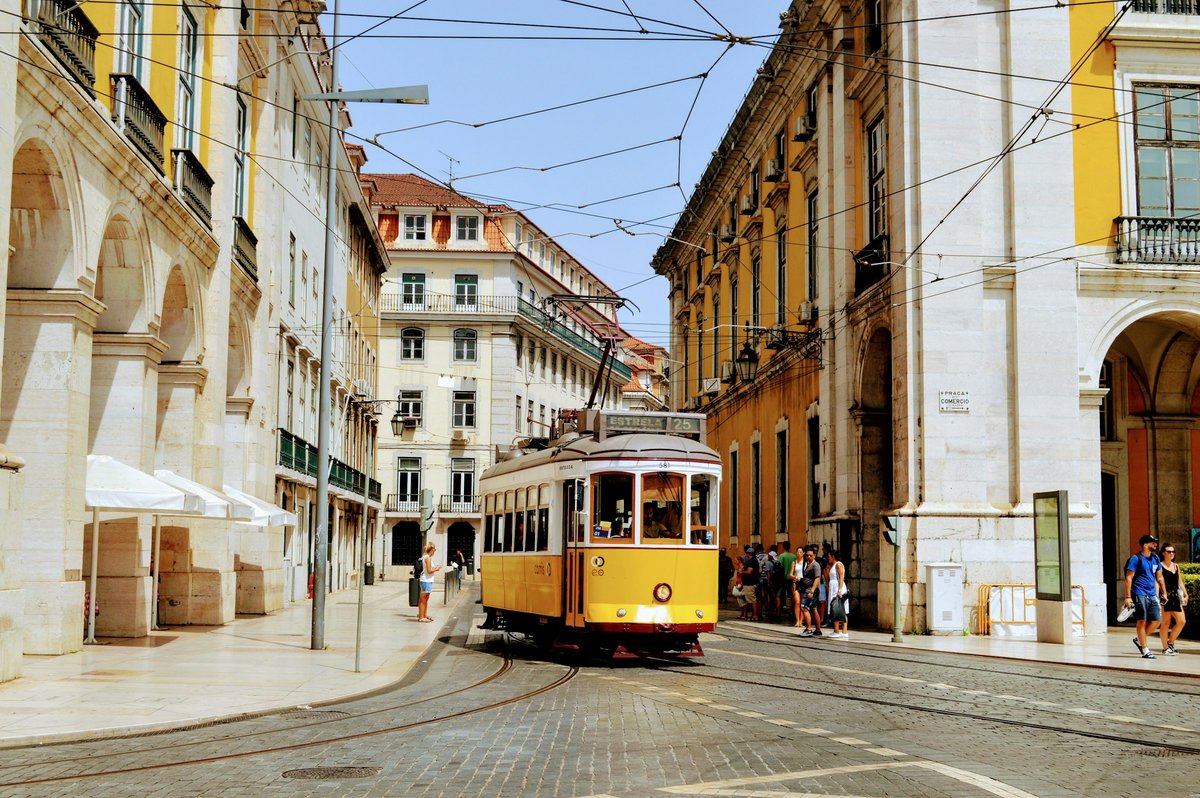
sightseeingThis sounds like a hack, and it sort of is. Tram 28 is Lisbon's most famous tram route, rattling through Alfama, Graça, and Baixa. In July, the line gets so crowded by 10am that waits can stretch past 45 minutes, with pickpockets working the packed carriages. But at 7am on a weekday, you can board at Martim Moniz with an empty car, rattle through the narrow streets in the early-morning light, and enjoy the ride the way it was meant to be experienced. The city is still waking up. The light is soft.
Peak-season crowds make midday Tram 28 miserable in July specifically: the dawn window is the only practical way to experience the route without being sardined in with 40 other touristsBooking tipUse a rechargeable Viva Viagem card loaded with zapping credit: it's cheaper than buying single tickets and works on all Carris trams and buses
Seafood at waterfront restaurants in Cacilhas
foodTake the 10-minute ferry across the Tagus from Cais do Sodré to Cacilhas on the south bank. The waterfront there has a row of seafood restaurants that locals favor over the tourist-heavy options in Belém or Alfama. The peixe grelhado (grilled fish, usually robalo or dourada, priced by weight) comes with a view back across the river to Lisbon's skyline. In July, you eat outside. The ferry ride itself is worth the trip.
Outdoor waterfront dining is at its best with warm evenings, no rain risk, and the ferry ride across the golden-lit Tagus becomes part of the experience rather than just transportBooking tipNo reservations at most Cacilhas spots, just queue. Arrive by 7:30pm on weekends to avoid a long wait
What to eat in July
In season: fruit
Pêssegos and Nectarinas from the Alentejo
Portuguese stone fruit hits its peak in July. Market stalls at Mercado da Ribeira and neighborhood feiras pile high with white peaches and nectarines from the Alentejo and Ribatejo regions: juicy, fragrant, and nothing like the hard imports you find in supermarkets elsewhere in Europe.
Melão and Melancia
Portuguese melons and watermelon are at peak sweetness through July. Street vendors sell sliced watermelon from coolers, and restaurants serve melon with presunto as a starter: the salt-sweet combination works better than it sounds when the fruit is this ripe.
On menus now
Caracóis
Snails. July is still prime caracóis season. Lisbon's tascas and beer halls serve them boiled in a garlicky, herb-heavy broth: you pick them out with a toothpick and slurp the shell. They pair with cold beer and loud conversation. It's a love-it-or-leave-it thing, but the texture is surprisingly tender if you catch them fresh.
Amêijoas à Bulhão Pato
Clams cooked in white wine, garlic, olive oil, and cilantro: a dish that peaks in summer when the shellfish are plump and the desire for something light overrides heavier Portuguese stews. You mop up the broth with crusty bread. The cilantro is polarizing, but it's the authentic version.
Street food peaks
Sardinhas Assadas
Charcoal-grilled sardines are at their fattest and most flavorful in July: you'll smell them on every other corner in Alfama and Graça. Locals eat them whole, head and all, on a slice of broa bread, with the juices soaking through. The tradition ties to the Santos Populares festivals, but the season extends well past the parties.
What to drink
Ginjinha
Sour-cherry liqueur served in tiny cups from hole-in-the-wall bars, most famously near Rossio. It's available year-round, but the cherries used for the maceration are harvested in the Óbidos region in June and July, and a few bars offer the fresh-batch vintage. Sweet, slightly medicinal, and gone in one sip.
Regular events in July
NOS Alive
One of southern Europe's premier music festivals, held at the Passeio Marítimo de Algés waterfront. Three days of international headliners, Portuguese acts, and a festival village right on the Tagus. The lineup tends toward rock, indie, and electronic, but the range has widened in recent years.
Early to mid-July (usually Thursday through Saturday)Super Bock Super Rock
A long-running Portuguese rock and alternative music festival, typically held at a beach venue south of Lisbon near Meco. Tends to draw a younger, more local crowd than NOS Alive, with a mix of Portuguese and international artists.
Mid-JulyFestival ao LargoFree
Free outdoor performances (opera, classical music, ballet, and theater) held in the square in front of the São Carlos National Theatre in Chiado. Performances run most evenings through July and August. Seating is limited and first-come, but you can watch from the surrounding café terraces.
Throughout July, most eveningsOut JazzFree
Free outdoor jazz and world music concerts held in different Lisbon parks each Sunday afternoon through the summer. The rotation includes Jardim da Estrela, Jardim do Príncipe Real, and others. Locals bring picnic blankets and wine. The vibe is relaxed and family-friendly.
Every Sunday afternoon, rotating parksMercado de Verão at LX FactoryFree
The LX Factory complex in Alcântara runs expanded summer markets on weekends through July, with local designers, vintage clothing, street food stalls, and live music. The industrial warehouse setting keeps things shaded even on hot afternoons.
Weekends throughout JulyBest places this July
Jardim da Estrela
parkOne of Lisbon's most pleasant parks for escaping the July heat. Mature trees create genuine shade, there's a duck pond, a bandstand that hosts occasional concerts, and a café with outdoor seating. The Basilica da Estrela across the street is worth a look: its rooftop offers one of the less-crowded panoramic views of the city. In July, this park becomes an evening gathering spot for locals with wine bottles and guitar cases.
EstrelaPraia de Carcavelos
beachThe closest proper beach to central Lisbon, reachable in about 25 minutes by train from Cais do Sodré. It's a wide, sandy beach that handles the July crowds better than smaller coves. The water is cold (expect 18-19°C) but on a 30°C day, that's more refreshing than punishing. There are surf schools, beach bars, and enough space that you won't be towel-to-towel if you walk past the first 200 meters.
Carcavelos (Cascais line)Miradouro da Graça
viewpointLess mobbed than the more famous Miradouro de Santa Luzia, with arguably a better view: the castle sits right beside you, and the panorama stretches across the river to the south bank. In July evenings, the terrace fills with locals drinking Super Bock from the adjacent kiosk. The light between 7:30pm and 9pm here is the reason photographers come to Lisbon in summer.
GraçaMercado da Ribeira (Time Out Market)
marketYes, it's touristy. But the food hall side of the Mercado da Ribeira (the Time Out Market) functions as a crash course in Portuguese cuisine under one roof, and the original market section (the less-visited morning market on the other side of the building) sells seasonal produce, fish, and flowers. In July, the stone fruit and tomato stalls are at their best. Go to the market side before 11am, before the food-hall crowd arrives.
Cais do SodréAlfama at night
neighborhoodAlfama during the day in July is a hot, crowded maze of tour groups following GPS-guided walks. Alfama after 9pm is a different neighborhood entirely. The lanes empty, the fado houses open their windows, you can hear guitar from three directions, and the air finally cools. The older residents sit in doorways. The cats reappear. This is when the neighborhood feels like itself.
AlfamaParque das Nações
districtThe expo district along the eastern waterfront feels like a different city: wide promenades, the Oceanário (one of Europe's best aquariums), the cable car along the river, and a string of waterfront restaurants. In July, the breeze off the Tagus here is stronger than in the old town, and the modern architecture provides more shade than the historic center's exposed plazas. Good for a morning when you need a break from cobblestones and hills.
Parque das NaçõesCosta da Caparica
beachA long stretch of Atlantic beach on the south bank, reachable by bus from Lisbon in about 30-40 minutes. The beach runs for kilometers: the closer you stay to the town, the more facilities and crowds; walk south and the beaches get progressively emptier. A miniature train runs along the coast in summer connecting the different beach sections. The surf is better here than at Carcavelos.
South bank (Almada municipality)
Your packing checklist
Tick items off as you pack. Your progress saves in this browser.
All packed — have a great trip.
Insider tips
Skip Pastéis de Belém's indoor queue and buy from the takeaway window instead: the pastéis de nata are identical, the line moves faster, and you can eat them warm on the waterfront benches nearby. Or better yet, try Manteigaria in Chiado, where you can watch the pastéis being made through a glass window and the queue is usually shorter in July.
The ferry from Cais do Sodré to Cacilhas costs the same as a metro ride on a Viva Viagem card. Most tourists never cross the river, which means the seafood restaurants in Cacilhas are half the price of equivalent quality in Alfama, and you get a 10-minute boat ride with a view of the skyline that people pay for on sunset cruises.
Lisbon's municipal pools (notably the Piscina do Areeiro) are open to the public for a few euros and rarely appear in any guidebook. In a city without universal air conditioning, locals treat them as communal cooling stations on the hottest July afternoons. They tend to be busiest after 4pm.
The Feira da Ladra flea market in Campo de Santa Clara runs Tuesday and Saturday mornings, and in July the early morning is the only bearable time to browse it: by noon the sun on the open plaza is punishing. The best finds (vintage tiles, old azulejos, brass hardware) get picked over by 10am, so arrive with the vendors around 8.
Restaurant hours shift in July. Many traditional tascas close between roughly 3pm and 7pm: the kitchen shuts after lunch service and doesn't reopen until dinner. Don't mistake a closed door for a permanent closure. Dinner reservations before 8pm will get you an empty room; the local dinner rush starts around 9pm and peaks at 10pm.
Avoid these mistakes
- Scheduling major outdoor sightseeing between 1pm and 4pm: this is the window when the sun is directly overhead, shade disappears from Lisbon's hilltop neighborhoods, and the cobblestones radiate stored heat back at you. The castle grounds, Belém Tower, and the Alfama lanes are particularly exposed. Mornings and late afternoons are cooler by 5-8 degrees and far more pleasant for walking.
- Assuming the beach water will be warm because the air temperature is 30°C: the Atlantic coast near Lisbon stays cold even at the height of summer, typically 18-19°C (64-66°F). Swimmers expecting Mediterranean conditions get a shock. The south-facing beaches at Arrábida or Tróia are slightly warmer but still not tropical.
- Taking Tram 28 at midday without a plan: in July, the wait can exceed 45 minutes, the carriages are packed beyond comfort, and pickpockets specifically work this route during peak hours. Either ride it at dawn (before 8am), take it just one or two stops through Alfama rather than the full route, or skip it entirely and walk the same streets at your own pace.
- Booking accommodation without air conditioning to save money: July nights in Lisbon's older buildings retain the day's heat, and the thick stone walls that keep interiors cool in winter work against you in summer. A room in a historic building without AC can stay above 26°C (79°F) all night. Check the listing carefully; the price difference is worth it.
Practical tips for July
Book accommodation and popular restaurant reservations 6-8 weeks ahead for July: this is Lisbon's busiest month, and well-reviewed properties in Alfama, Chiado, and Príncipe Real fill up fast. Buy tickets for the Jerónimos Monastery and Belém Tower online in advance to skip the physical queue, which can stretch past an hour by 11am. Tram and metro rides are cheapest on a rechargeable Viva Viagem card loaded with zapping credit rather than buying single tickets. Many shops and smaller restaurants still close on Sunday, and some traditional tascas take a week or two of holiday in late July or August: check before making a special trip. The nortada wind typically picks up after 2pm, which is welcome in the city but can make beach umbrellas a liability at exposed beaches like Guincho. For day trips to Sintra, take the train from Rossio station as early as possible: by 10am the palaces are overwhelmed with tour buses, and the narrow roads through the serra create traffic jams that can double your return time.
FAQ
Is July a good time to visit Lisbon?
July is a strong month for Lisbon if you can handle the heat and the crowds. The weather is reliably dry with highs around 29°C (84°F), evenings are long and warm, and the tail end of the Santos Populares street festivals still carries energy into early July. The main drawback is that this is peak tourist season: prices are at their annual high, popular sites get genuinely crowded, and you'll need to book accommodation and restaurants further in advance than you might expect. If you're flexible on dates, late May or September offer similar weather with noticeably fewer tourists and lower prices. But if July is your only option, you'll still have a great time, just plan around the midday heat and book ahead.
What is the weather like in Lisbon in July?
Hot and dry. Average highs sit around 29°C (84°F) with lows near 18°C (65°F). Rain is essentially nonexistent: the monthly average is just 3mm, often delivered in a single brief afternoon shower if it comes at all. Humidity averages around 65%, but the nortada (a northerly wind that picks up most afternoons) keeps things from feeling oppressive. Heat waves do happen, occasionally pushing temperatures above 35°C (95°F) for a few days when hot air masses drift up from North Africa. The UV index reaches 9-10, so sun protection is not optional even on days that feel breezy.
Is Lisbon crowded in July?
Yes, noticeably so. July is peak tourist season, and the major attractions (Jerónimos Monastery, Belém Tower, São Jorge Castle, Tram 28) all see their highest visitor numbers. Alfama's narrow streets can feel congested by mid-morning with walking tour groups. Restaurant wait times at popular spots in Chiado and Bairro Alto stretch longer than other months. That said, Lisbon is a city that disperses crowds well because of its geography: step one street away from the main tourist routes and you'll often find quiet lanes and half-empty tascas even in July. Arriving at major sites before 10am or after 5pm helps significantly.
Can you swim at Lisbon's beaches in July?
You can, but manage your expectations about water temperature. The Atlantic coast beaches nearest to Lisbon (Carcavelos, São Pedro do Estoril, Costa da Caparica) have water temperatures around 18-19°C (64-66°F) even in July. That's refreshing on a hot day, but it's a genuine shock if you're expecting warm water. For slightly warmer swimming, head to the south-facing coves at Arrábida Natural Park (about 45 minutes south), where the sheltered orientation pushes water temperatures up to 20-22°C. The air temperature and sun make beach days comfortable regardless: it's really just the initial plunge that tests your resolve.
How far in advance should I book hotels in Lisbon for July?
Six to eight weeks ahead is the practical minimum for decent options in central neighborhoods like Alfama, Chiado, Bairro Alto, and Príncipe Real. If you're looking for a specific well-reviewed property or need air conditioning (which you should strongly prioritize in July), booking 2-3 months ahead gives you meaningfully better selection and prices. Budget accommodation and hostels in particular fill up early because price-conscious travelers plan further ahead for peak season. Last-minute bookings in July are possible but you'll likely pay more and compromise on location or amenities.
Things to Do in Lisbon in July
 Free cancellation
 True 4Hour Private Tuk Tuk Tour: Discover Lisbon with a Local!
Day trip: 4 hours, free cancellation.
via Viator Free cancellation
 Sintra and Cascais Small-Group Day Trip from Lisbon
Day trip: 8 hours, free cancellation.
via Viator Free cancellation
 Best of Lisbon Small-Group Guided Walking Tour
City tour: free cancellation.
via Viator Free cancellation
 Private Lisbon Sightseeing Tuk-Tuk Tour: Alfama, Belém & More
Day trip: free cancellation.
via Viator Free cancellation
 Small Group Tour to Sintra, Pena Palace, Cabo Roca and Cascais
Day trip: 8 hours, free cancellation.
via Viator Free cancellation
 Three Cities in One Day: Porto, Nazare and Obidos from Lisbon
Day trip: 13 hours, free cancellation.
via ViatorFind a flight to Lisbon
Live fares to Lisbon appear here once cookies are accepted.
Last verified by automated review (v1.7.1) on . What is automated review?