Stay in Lisbon in January
71 hotels in the Trip.com pool for Lisbon, from US$18 a night.
Opens Trip.com on Fri 1 Jan to Sun 3 Jan 2027; change the dates there.
January in Lisbon is mild. That's the single most important thing to know, and it catches a lot of people off guard. While Berlin sits at -1°C and London hovers around 7°C, Lisbon's daytime temperatures reach about 15°C (59°F), occasionally touching 18°C on those clear afternoons when the sun bounces off the white limestone and you find yourself unzipping your jacket on a miradouro. It's not summer (nights drop to around 9°C (48°F) and you'll want layers) but it's the kind of winter where outdoor cafe seats still get used.
The trade-off is rain. January brings roughly 78mm across about eight rainy days, typically arriving as Atlantic fronts that roll in, dump for a morning or sometimes a full day, then clear to reveal that particular Lisbon light: low-angled, golden, washing over the azulejo tile facades in a way you simply don't get in July. The rain is real but intermittent. It's not a Southeast Asian monsoon. You'll get stretches of three or four dry days, then a wet one. Pack accordingly and you won't lose much.
The real argument for January, though, is what disappears: the crowds. Alfama's narrow lanes are yours. The line at Pastéis de Belém (the one that snakes around the block in August) barely exists. You can board Tram 28 without being sardined against fifteen other tourists. Hotel prices hit their annual floor. Lisbon in January is the working city, not the postcard, and there's something genuinely appealing about that. The fado coming from a doorway in the Mouraria on a damp Tuesday night, the smell of caldo verde and charcoal-grilled fish drifting from a tasca, the particular quiet of the Graça neighborhood at ten in the morning: this is a Lisbon that the summer months simply can't show you.
Why visit in January
- Hotel rates drop to their annual low: expect 40-50% below peak summer prices, with well-located three-star hotels in Baixa going for a fraction of their summer rates
- Major sites and landmarks are genuinely uncrowded: Mosteiro dos Jerónimos, the Castelo de São Jorge viewpoint, and the Belém Tower area are all walkable without queuing
- Daytime temperatures around 15°C (59°F) are comfortable for walking the city's steep hills without the exhausting summer heat that makes the same walks punishing in July and August
- Restaurant culture shifts: winter menus appear with hearty stews and soups, and you're far more likely to be eating alongside Portuguese regulars rather than tourist-facing crowds
- January sales (saldos) run throughout the month along Rua Augusta and Avenida da Liberdade, with genuine markdowns of 30-70% at both local and international retailers
Worth knowing
- Roughly eight days of rain through the month, sometimes arriving as persistent Atlantic fronts that can park over the city for a full day: outdoor plans need flexibility
- Daylight is short, with sunset around 5:30pm, which cuts into afternoon sightseeing and means golden-hour photography windows are narrow
- Some restaurants in tourist-heavy zones close for a post-holiday break in the first week of January, and winter hours tend to be shorter across the board
- The Tagus waterfront and rooftop bars (two of Lisbon's signature experiences) lose their appeal when a cold wind is blowing off the river at 10°C
Best for
Think twice if
Lisbon's January weather is mild but changeable. The Atlantic influence keeps temperatures moderate: you won't freeze, but you won't sunbathe either. Mornings often start overcast around 10-11°C, warming to the mid-teens by early afternoon if the sun appears. Rain arrives in frontal systems rather than daily showers; you might get three dry days followed by a full wet day, then another clear stretch. The humidity sits around 80%, which makes the cooler temperatures feel a touch damper than the numbers suggest. Wind off the Tagus estuary adds a chill factor, particularly along the waterfront and at exposed viewpoints like the Castelo. That said, compared to nearly every other Western European capital, this is remarkably gentle winter weather.
Year-round climate
Averages from the last 5 years.
| Month | Avg high (°C) | Avg low (°C) | Rainfall (mm) |
|---|---|---|---|
| Jan | 15 | 9 | 78 |
| Feb | 17 | 10 | 77 |
| Mar | 18 | 11 | 84 |
| Apr | 20 | 12 | 59 |
| May | 23 | 14 | 18 |
| Jun | 26 | 17 | 22 |
| Jul | 29 | 18 | 3 |
| Aug | 29 | 19 | 0 |
| Sep | 26 | 17 | 48 |
| Oct | 24 | 16 | 91 |
| Nov | 19 | 12 | 83 |
| Dec | 16 | 10 | 110 |
Holidays and festivals in January
Public holidays
- New Year's Day(Ano Novo)1 January 2027
Best things to do in January
Explore the Alfama without the crowds
sightseeingAlfama's tangled medieval streets are Lisbon's oldest neighborhood, a maze of stairways, dead ends, and sudden viewpoints over terracotta rooftops and the Tagus. In summer the lanes are shoulder-to-shoulder with tour groups following guides holding umbrellas. In January, you might walk for ten minutes and see only a cat and someone hanging laundry. The fado bars are still open, the smell of grilled sardines still drifts from somewhere, and the neighborhood feels like it belongs to the people who live there.
Summer crowds vanish entirely, restoring the residential character that makes Alfama worth visiting in the first placeBooking tipNo booking needed, just wander. Start from the Castelo and work your way downhill toward the river.
Ride Tram 28 end-to-end
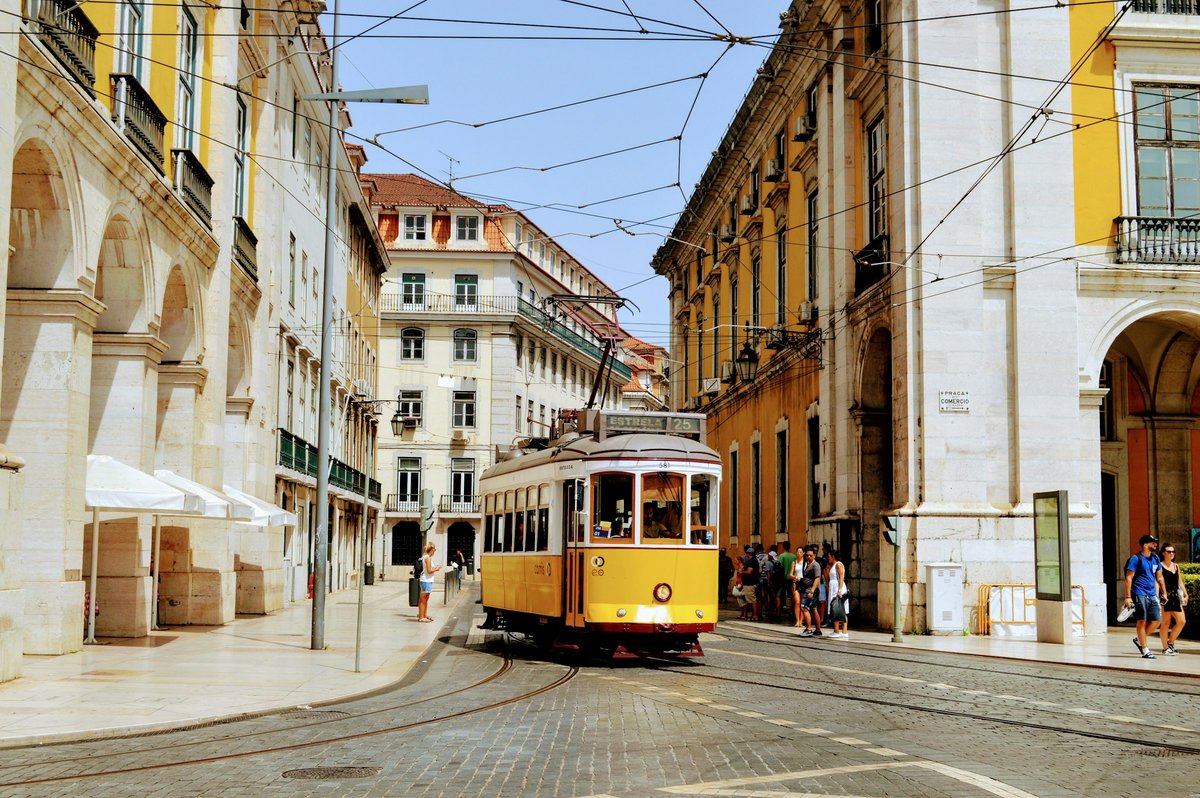
sightseeingThe iconic yellow tram threads through Graça, Alfama, Baixa, and Estrela, climbing grades that seem impossible for a vehicle built this century, let alone one from the early 1900s. The wooden interior creaks and sways. You'll scrape past buildings so close you could reach out and touch the azulejos. In summer, the wait to board can stretch past forty minutes, and pickpockets work the packed carriages. January changes the math entirely.
Wait times drop to minutes rather than the forty-plus-minute summer queues, and carriages are sparse enough to enjoy the rideBooking tipBoard at Martim Moniz (the start of the line) for the best chance at a window seat. A reloadable Viva Viagem card avoids the onboard cash surcharge.
Pastéis de Belém without the queue
foodThe bakery that's been making the original pastéis de nata since 1837 draws a line around the block from April through October. In January, you can often walk straight to the counter. The pastries come warm, the custard slightly caramelized on top, and the flaky pastry shatters when you bite into it. The cinnamon and powdered sugar shakers on the table are not optional. Sit in the tiled back rooms: most summer visitors never make it past the takeaway counter.
The famous queue largely disappears, and you can sit in the tiled dining rooms rather than eating standing up on the sidewalkBooking tipNo reservation needed. Go mid-morning on a weekday for the quietest experience.
Day trip to Sintra
day_tripThe forested hills of Sintra, scattered with 19th-century palaces and Moorish ruins, sit just 40 minutes from Lisbon by train. Pena Palace looks like something a fever dream designed: bright yellow and red turrets emerging from clouds that cling to the hilltop. The gardens around Quinta da Regaleira have grottoes, tunnels, and an initiation well that spirals down into darkness. In summer the heat and the crowds make the steep walks between palaces genuinely unpleasant.
The cool temperatures make the steep uphill walks between palaces comfortable rather than grueling, and palace queues are minimalBooking tipTake the train from Rossio station: it runs frequently and the ride passes through the countryside. Start early to fit in two or three palaces.
Visit the Museu Nacional do Azulejo
cultureHoused in a former convent in the Madre de Deus neighborhood, this museum traces the history of Portugal's distinctive painted tiles from the 15th century to the present. A panoramic tile panel of pre-earthquake Lisbon stretches across an entire wall: 23 metres of blue-and-white cityscape that predates the 1755 destruction. The convent's baroque chapel alone is worth the trip. The museum is small enough to see properly in two hours, detailed enough to reward three.
A perfect rainy-day activity: unhurried in January, with no summer queues, and you'll start noticing the tile patterns everywhere you walk afterwardBooking tipSlightly off the usual tourist loop: take the 728 bus from Praça do Comércio or walk along the waterfront.
Fado in the Mouraria
nightlifeFado (the soul music of Portugal, built on saudade, that untranslatable longing) originated in these Mouraria streets. The sound is a single voice over Portuguese guitar, raw and close. In January the tourist-oriented fado houses in Alfama and Bairro Alto are quieter, and the more authentic spots in Mouraria come into their own. You might stumble on an impromptu session in a neighbourhood tasca: someone just starts singing, and the conversation stops. The acoustics of a small, stone-walled room on a damp January night do something to the music that a summer terrace can't replicate.
The intimate winter atmosphere suits fado's emotional register, and the tourist-heavy venues are less crowded so performers play to a more engaged roomBooking tipSome of the best Mouraria spots are informal: ask locally rather than booking online. For a sure thing, check listings for scheduled vadio (amateur) sessions.
Walk the Tagus waterfront from Cais do Sodré to Belém
outdoorsThe riverside promenade stretches roughly five kilometres from the buzzy Cais do Sodré market hall area, past the MAAT museum's undulating rooftop, to the Belém tower and the Jerónimos monastery. On a clear January day (and there are plenty of them) the low sun hits the water and the light is genuinely spectacular. The walk is flat, which is a relief after Lisbon's relentless hills. The wind off the estuary can bite, though. Mind you, that's what the waterproof jacket is for.
Clear winter days produce the best light on the water, and the promenade is practically empty compared to summerBooking tipStart at Cais do Sodré (metro accessible) and walk west. Time it for mid-morning to catch the best light angle on the tower and monastery.
Browse the LX Factory on a rainy afternoon
shoppingA converted industrial complex under the 25 de Abril bridge, LX Factory houses independent bookshops, design studios, restaurants, and a weekend market. The Ler Devagar bookshop (built inside a former printing warehouse with books stacked floor to ceiling) is the anchor. It's not undiscovered, but in January the vibe shifts from tourist attraction to working creative space. The restaurants inside are solid, and the covered layout means rain doesn't matter.
The indoor-outdoor layout works well in wet weather, and January's thinner crowds let you browse properly rather than shuffling through packed aislesBooking tipOpen daily, but the weekend market (Saturday and Sunday) adds extra vendors. Weekday afternoons are quietest.
What to eat in January
In season: fruit
Clementines and Oranges
Portuguese citrus peaks in January, and you'll see oranges and clementines piled high at every market stall and corner fruit shop. The Algarve-grown varieties are particularly sweet this time of year. Fresh-squeezed orange juice appears on nearly every breakfast table and café counter: the colour alone is a mood lift on an overcast morning.
On menus now
Caldo Verde
This kale-and-potato soup with a round of chouriço floating on top is eaten year-round, but January is when it really earns its place: it's the first thing you want after walking through a cold rain in Alfama. The texture should be slightly thick, the kale in thin ribbons, the sausage giving the broth a faint smokiness. Nearly every tasca in the city serves it, and a bowl rarely costs more than a few euros.
Cozido à Portuguesa
Portugal's definitive winter stew: a slow-cooked pot of various meats (pork ear, chouriço, morcela, beef, chicken), vegetables (cabbage, turnip, carrot, potato), and sometimes rice. It's a communal dish, served in the middle of the table, and January is peak season for it at traditional restaurants. The portions are typically enormous. Worth noting that many tascas only serve it on specific days of the week, so ask ahead or check the chalkboard menu outside.
Açorda Alentejana
A bread-based soup thickened with garlic, olive oil, and coriander, topped with a poached egg. It's comfort food from the Alentejo region that Lisbon restaurants adopt heavily in the colder months. The texture is somewhere between a thick soup and a porridge: unusual if you've never had it, but deeply satisfying on a grey January afternoon. The coriander flavour is assertive. You'll either love it or find it overwhelming.
Festival food
Bolo Rei
Portugal's traditional King Cake, a ring-shaped sweet bread studded with candied fruits and nuts, eaten through January and peaking around Dia de Reis on January 6th. You'll find it in every pastelaria in the city, and the quality varies enormously: the versions at older bakeries in Chiado and Campo de Ourique tend to be denser and less cloyingly sweet than the mass-produced supermarket versions. Some places still hide a fava bean inside; whoever finds it buys next year's cake.
Regular events in January
Dia de Reis (Three Kings' Day)Free
January 6th marks the end of the Christmas season in Portugal. Families gather for Bolo Rei, and some neighborhoods still stage small processions or Janeiras (caroling groups going door to door). It's low-key compared to Christmas Eve, but pastelarias sell their last wave of holiday cakes and the decorations start coming down.
January 6January sales (Saldos)Free
Portuguese law regulates the official sales period, which kicks off in early January. Rua Augusta, Chiado, and Avenida da Liberdade are the main shopping corridors. The discounts are genuine: Portuguese consumer law requires the original price to be displayed alongside the sale price. The first week tends to have the best selection, while deeper markdowns appear toward month's end.
Throughout JanuaryModalisboa (Lisboa Fashion Week)
Lisbon's fashion week typically falls in late January or early February, showcasing Portuguese designers at various venues around the city. It brings a creative energy to neighborhoods like Santos and Príncipe Real, and some associated events and pop-up exhibitions are open to the public.
Late JanuaryBest places this January
Mosteiro dos Jerónimos
landmarkThe Manueline masterpiece in Belém, all carved limestone lacework and soaring cloisters. In January, you can stand in the church nave and look up without someone's selfie stick in your peripheral vision. The cloisters (where the ornamental detail rewards slow looking) are particularly peaceful with fewer visitors.
BelémCastelo de São Jorge
landmarkThe hilltop castle offers the widest panorama in the city: red rooftops cascading down to the Tagus, the 25 de Abril bridge in the distance. On a clear January morning the visibility can stretch for miles. The ramparts catch wind, so bring the warm layer, but the light at this angle makes the whole city look like a painting.
AlfamaMuseu Calouste Gulbenkian
museumTwo buildings, two collections: the founder's personal trove (Egyptian artifacts through to Lalique jewelry) and a modern Portuguese collection. The gardens between the buildings are green even in January, with ducks on the lake and walking paths through the trees. This is one of Europe's genuinely underrated museums, and in January you'll have entire galleries to yourself.
Avenidas NovasMAAT (Museum of Art, Architecture and Technology)
museumThe undulating white building along the Belém waterfront is worth seeing for the architecture alone: you can walk on the roof. The exhibitions rotate and lean contemporary. Even if the current show doesn't grab you, the rooftop view of the bridge and the river at sunset is one of January's quiet rewards.
BelémMercado da Ribeira (Time Out Market)
food_marketThe ground floor of this renovated market hall houses a food court curated around well-known Lisbon chefs and restaurants. It gets crowded at peak lunch even in January, but mornings and late afternoons are manageable. The traditional market section on the opposite side (with fish vendors, butchers, and produce stalls) is the part that feels like Lisbon rather than a food court.
Cais do SodréMiradouro da Graça
viewpointOf Lisbon's many viewpoints, Graça offers arguably the best combination of panorama and atmosphere. The terrace looks out over the Castelo, the river, and the rooftops of Mouraria below. In January, the outdoor cafe chairs are often empty enough to sit for an hour. The light at the end of a clear afternoon, when the sun drops low and turns the city gold, is the view that sells the month.
GraçaFeira da Ladra flea market
marketLisbon's twice-weekly flea market (Tuesday and Saturday) sprawls across the Campo de Santa Clara, near the São Vicente de Fora church. The inventory ranges from genuine antiques and vintage azulejo tiles to complete junk. January thins out both sellers and browsers, which makes the browsing more conversational: vendors have time to talk, and you can dig through boxes without competing for space.
AlfamaLivraria Bertrand (Chiado)
shoppingThe world's oldest operating bookshop, open since 1732, sits on Rua Garrett in the Chiado district. The rooms are small and connected by archways, the shelves are wooden, and the atmosphere is the kind of quiet that makes you want to stay. January is a good month for Lisbon bookshops generally: the rainy days and the quiet streets push you indoors, and this is one of the best indoors the city has.
Chiado
Your packing checklist
Tick items off as you pack. Your progress saves in this browser.
All packed — have a great trip.
Insider tips
The ementa do dia (daily set menu) at neighbourhood tascas is one of Portugal's best-kept dining secrets: a full lunch with soup, main, dessert, and a drink for remarkably little. These deals are aimed at local workers and rarely appear on English-language review sites. Look for handwritten signs in windows, especially in Mouraria, Graça, and Arroios.
Lisbon's elevadores and funiculars (Glória, Bica, Lavra) are covered by the Viva Viagem transit card. In January, the Elevador da Bica in particular (the one you see in every Lisbon photograph) has no queue. Ride it up, then walk down through Bairro Alto's quiet daytime streets.
The Jerónimos monastery church is free to enter. The cloisters (which are the highlight) require a ticket, but the church itself (with the same extraordinary Manueline stonework) costs nothing. Many visitors don't realise this and skip the whole complex because they see the queue for the cloisters.
If a rainy day pins you indoors, the Estufa Fria (Cold Greenhouse) in Parque Eduardo VII is one of Lisbon's hidden treasures: a sunken garden under a slatted wooden canopy, full of tropical plants, waterfalls, and koi ponds. It feels like stepping into another climate entirely. Barely anyone visits in January.
Portuguese coffee culture has its own vocabulary and ordering without it marks you as a tourist immediately. An espresso is a bica in Lisbon. A longer coffee is a cimbalino. Milk-based coffees are a galão (like a latte, served in a glass) or a meia de leite (half coffee, half milk, served in a cup). Ordering a 'latte' will get you a glass of milk.
The 15E tram runs the Belém route and is significantly less crowded than the 28: same vintage carriages, same rattling ride, and it passes through some of the city's best waterfront scenery without the pickpocket risk that the 28 has earned.
Avoid these mistakes
- Packing only for rain and being caught without sun protection: January has plenty of clear, bright days where the low-angle sun reflecting off water and white limestone is surprisingly strong. Sunglasses and a light sunscreen layer aren't overkill.
- Assuming 'low season' means things are closed: Lisbon doesn't shut down in winter the way some Mediterranean cities do. Nearly everything operates year-round; hours might be slightly shorter, but closures are rare outside the first week of January.
- Wearing smooth-soled shoes on the calcada cobblestones: this is the single most common physical mishap for visitors any time of year, and rain makes it worse. The polished limestone mosaics get genuinely slippery. Grip matters more than style here.
- Skipping the neighborhoods east of Alfama: Graça, Mouraria, and Arroios have some of the city's best food and most authentic atmosphere, but most tourist itineraries stop at the Castelo. In January especially, these residential neighborhoods are where you'll feel the real pace of the city.
- Only eating pastéis de nata at Belém: the original is worth trying, absolutely, but Lisbon has excellent pastelarias in every neighborhood. Manteigaria in Chiado bakes them in a glass-fronted kitchen so you can watch. The versions at local bakeries in Arroios or Campo de Ourique are often just as good and far less hectic.
Practical tips for January
January days are short (sunrise is around 7:50am and sunset around 5:30pm) so front-load outdoor sightseeing into the midday hours when light is best and temperatures peak. Keep rainy-day options (museums, the Oceanário, bookshops, covered markets) in your back pocket for when Atlantic fronts move in. The metro system is clean and efficient for crossing the city, but the real Lisbon is in the hills between stations: wear comfortable shoes and expect to climb. Most restaurants serve lunch from 12:00 to 15:00 and dinner from 19:30 to 22:30; arriving outside those windows, especially in smaller tascas, means the kitchen may be closed. Tipping in Portugal is modest: rounding up or leaving small change is normal, and a 10% tip is considered generous. Carry a transit card (Viva Viagem or the newer Lisboa Card if you're hitting several museums) rather than paying cash fares, which cost significantly more per ride.
FAQ
Is January a good time to visit Lisbon?
It's a genuinely good time if your priorities are culture, food, and atmosphere rather than beaches and outdoor dining. You'll deal with some rain (roughly eight days of it) and shorter daylight hours, but the trade-off is dramatically fewer crowds, the lowest prices of the year, and a version of the city that feels more like a living place than a tourist destination. The temperatures are mild enough for comfortable walking, which is how Lisbon is best experienced.
How cold does Lisbon get in January?
Not very, by European standards. Daytime highs sit around 15°C (59°F), occasionally reaching 17-18°C on clear afternoons. Nights drop to about 9°C (48°F). You won't need a heavy winter coat, but layers are essential: a fleece or warm pullover under a waterproof jacket covers the range. The wind chill near the river and at viewpoints can make it feel cooler than the thermometer reads.
Does it rain a lot in Lisbon in January?
It rains meaningfully on roughly eight days out of the month, with about 78mm total. The pattern tends to be frontal: a system rolls in from the Atlantic, rains for a morning or sometimes a full day, then clears. You'll likely get runs of three or four dry days between wet ones. It's not constant drizzle, and it's nothing like the persistent rain of London or Amsterdam. A waterproof jacket and flexible planning handle it.
What should I wear in Lisbon in January?
Layer for a range of about 9-16°C. A medium-weight fleece or pullover for mornings and evenings, lighter layers for sunny midday periods, and a waterproof shell jacket for rain. Waterproof shoes with proper grip are important: the traditional limestone cobblestones become slippery when wet, and Lisbon's hills make traction matter. A scarf helps with wind chill at viewpoints and along the waterfront.
Are Lisbon's tourist attractions open in January?
Nearly everything operates year-round. The Jerónimos monastery, Castelo de São Jorge, Belém Tower, Gulbenkian, MAAT, and the Oceanário all keep regular hours. Some smaller restaurants in tourist-heavy areas close for a brief post-holiday break in the first week of January, and winter hours at certain sites might end 30-60 minutes earlier than summer schedules. But broadly, you won't find anything meaningful closed.
Is January the cheapest month to visit Lisbon?
It's typically either the cheapest or very close to it, alongside February. Hotel rates run 40-50% below their July-August peaks. Flights from European hubs drop to their lowest levels. Restaurant prices stay fairly stable year-round, but the prevalence of set-lunch menus (ementa do dia) at neighbourhood restaurants means your daily food spend can be noticeably lower than in summer, when you're more likely to end up at tourist-priced terraces.
Things to Do in Lisbon in January
 Free cancellation
 True 4Hour Private Tuk Tuk Tour: Discover Lisbon with a Local!
Day trip: 4 hours, free cancellation.
via Viator Free cancellation
 Sintra and Cascais Small-Group Day Trip from Lisbon
Day trip: 8 hours, free cancellation.
via Viator Free cancellation
 Best of Lisbon Small-Group Guided Walking Tour
City tour: free cancellation.
via Viator Free cancellation
 Private Lisbon Sightseeing Tuk-Tuk Tour: Alfama, Belém & More
Day trip: free cancellation.
via Viator Free cancellation
 Small Group Tour to Sintra, Pena Palace, Cabo Roca and Cascais
Day trip: 8 hours, free cancellation.
via Viator Free cancellation
 Three Cities in One Day: Porto, Nazare and Obidos from Lisbon
Day trip: 13 hours, free cancellation.
via ViatorFind a flight to Lisbon
Live fares to Lisbon appear here once cookies are accepted.
Last verified by automated review (v1.7.1) on . What is automated review?