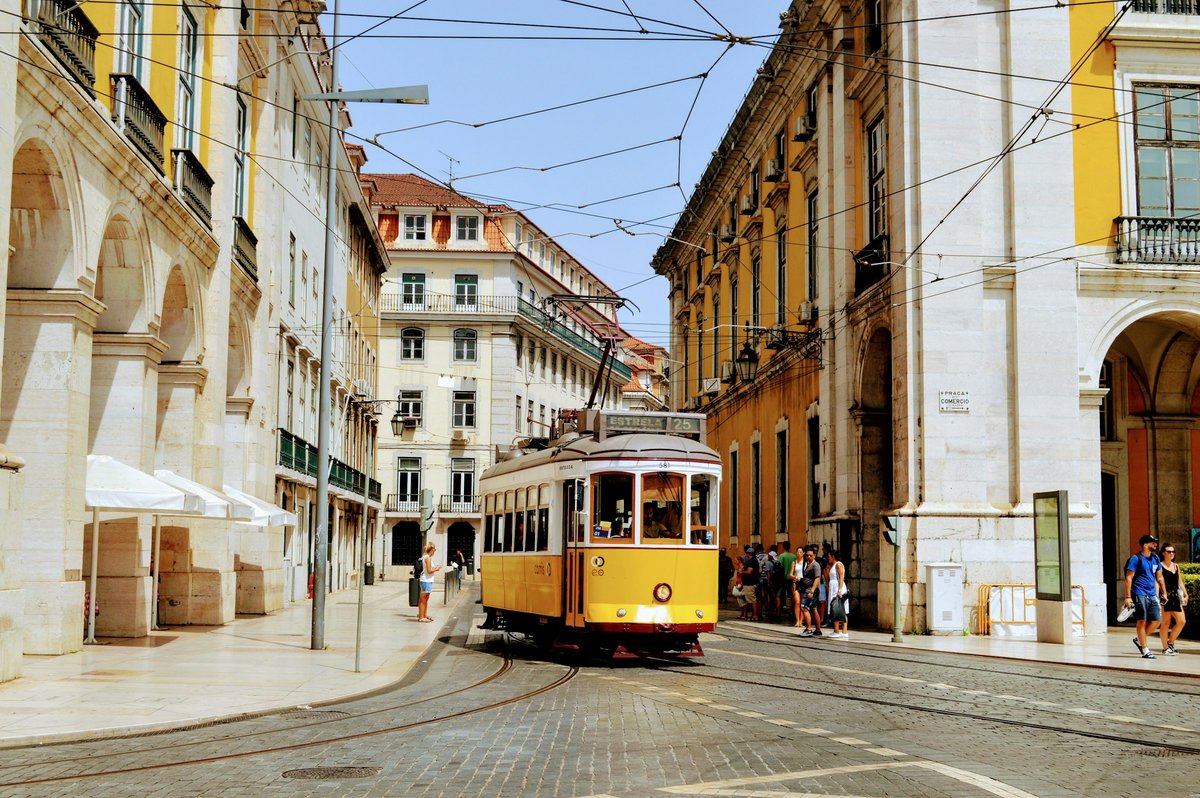
Stay in Lisbon in October
71 hotels in the Trip.com pool for Lisbon, from US$18 a night.
Opens Trip.com on Fri 2 Oct to Sun 4 Oct 2026; change the dates there.
October in Lisbon is the month the rain comes back. After months of bone-dry summer skies, the Atlantic reasserts itself: expect around 10 rainy days and 91mm of precipitation, which makes October the second wettest month of the year here. That catches people off guard. They see the average high of 23.9°C (75°F) and assume it's still summer. It's not. The light shifts, the afternoons darken earlier, and you'll smell wet limestone on the calçada cobblestones after a downpour that seemed to appear from nowhere.
That said, this isn't a reason to avoid Lisbon. Far from it. The warmth is still genuine: 16.4°C (62°F) lows mean you're eating dinner outside in Alfama without a second thought most evenings. Summer crowds have thinned out considerably, flight prices have settled, and the city feels like it belongs to the people who live there again. The Tejo takes on this silvery quality in the lower October light that you simply don't get in July. Roasted chestnut vendors start appearing on corners around Rossio and Baixa, filling entire blocks with that sweet, smoky smell. Grape harvest season is winding down in the surrounding regions, and new wine starts trickling into local tascas.
The honest trade-off is straightforward: you get a city that's still warm enough to enjoy on foot, noticeably cheaper and less crowded than summer, but you will get rained on. Probably more than once. If that exchange works for you, October is quietly one of the better times to experience Lisbon as something closer to a real city rather than a tourist stage set.
Why visit in October
- Summer crowds drop sharply: popular miradouros like Santa Luzia and Graça are enjoyable again without the elbow-to-elbow photo queues that define June through September
- Hotel and flight prices sit 25-35% below July/August peak rates, with last-minute deals common as properties adjust to lower occupancy
- Temperatures in the low-to-mid 20s°C make walking the steep hills of Alfama, Mouraria, and Bairro Alto far more comfortable than the 29°C+ of high summer
- Chestnut season and new wine arrivals bring a distinct autumn food scene you won't find any other time of year: the smell of castanhas assadas on street corners is genuinely seasonal
- Day trips to Sintra are transformed without the summer queues: Pena Palace and Quinta da Regaleira feel like private gardens on a weekday in October
Worth knowing
- The 91mm average rainfall makes October the second wettest month after December: rain can arrive in sudden, heavy bursts that catch you mid-walk with no cover in sight
- Ocean swimming at Costa da Caparica is effectively over for casual visitors: water temperatures drop to around 17-18°C (63-64°F), and the Atlantic current gets noticeably rougher
- Daylight hours shorten meaningfully compared to summer, with sunset around 18:30 versus 21:00 in June; you lose roughly two and a half hours of evening light for outdoor exploring
- Some seasonal tourist operations begin winding down: fewer river cruise departures, reduced hours at some palace grounds, and a handful of seasonal rooftop bars start closing for winter
Best for
Think twice if
October marks Lisbon's transition from the dry Mediterranean summer into the wet season, and the shift is abrupt. You might get three gorgeous days in a row: warm sun, light breeze off the Tejo, the kind of afternoon where you sit at a café terrace in Chiado and forget what month it is. Then a front rolls in off the Atlantic and dumps rain for a day and a half. The average high of 23.9°C (75°F) is genuinely pleasant, warm enough for a t-shirt at midday but with a crispness in the morning air that summer never has. Lows of 16.4°C (62°F) mean evenings are comfortable but you'll want a layer. Humidity sits around 75%, which you'll notice more on rainy days when everything feels slightly damp. The 91mm of rainfall across roughly 10 days tends to come in concentrated bursts rather than all-day drizzle: a pattern that works in your favour if you're willing to duck into a tasca or museum for an hour and wait it out.
Seasonal caution
- Heavy downpours can cause brief flash flooding in lower Baixa and along Avenida da Liberdade: the 19th-century drainage struggles with concentrated rainfall, and you'll occasionally see ankle-deep water pooling at intersections near Rossio during intense storms
- The calçada portuguesa limestone cobblestones become dangerously slick when wet: take the hills slowly, especially the steep descents from the Castelo de São Jorge and the Graça miradouro
Year-round climate
Averages from the last 5 years.
| Month | Avg high (°C) | Avg low (°C) | Rainfall (mm) |
|---|---|---|---|
| Jan | 15 | 9 | 78 |
| Feb | 17 | 10 | 77 |
| Mar | 18 | 11 | 84 |
| Apr | 20 | 12 | 59 |
| May | 23 | 14 | 18 |
| Jun | 26 | 17 | 22 |
| Jul | 29 | 18 | 3 |
| Aug | 29 | 19 | 0 |
| Sep | 26 | 17 | 48 |
| Oct | 24 | 16 | 91 |
| Nov | 19 | 12 | 83 |
| Dec | 16 | 10 | 110 |
Holidays and festivals in October
Public holidays
- Republic Day(Implantação da República)5 October 2026
Is Halloween celebrated in Lisbon?
31 October 2026
Halloween is an imported celebration in Lisbon rather than a local tradition, and the city marks it visibly. Our catalog lists 1 bookable Halloween activity around the date.

Best things to do in October
Wine harvest tours in the Setúbal Peninsula
food_and_drinkThe vineyards south of Lisbon across the Tejo (particularly around Azeitão and the Arrábida hills) are finishing their harvest in early October. Several quintas open for tours and tastings of the new vintage Moscatel de Setúbal, a fortified wine unique to this region. The landscape is golden and green, the vines heavy, and you'll likely see the actual pressing underway. It's a 40-minute drive or a quick Fertagus train to Setúbal.
Grape harvest wraps up in early-to-mid October; this is the last window to see active production and taste wine straight from the pressBooking tipBook quinta visits at least a week ahead: the popular estates like José Maria da Fonseca fill weekend slots quickly during harvest season
Walking the Alfama without the crowds
sightseeingThe oldest neighbourhood in Lisbon: narrow alleys, tiled facades, laundry hanging between buildings, the sound of fado drifting from open doorways in the evening. In summer you share these streets with dense tour groups. In October the foot traffic drops enough that you can stop, look up, and notice the details. The lower sun angle sends light down the alleys in ways that make photographers lose track of time.
Summer tourist density drops sharply; temperatures in the low 20s make climbing the steep calçada comfortable rather than exhaustingDay trip to Sintra
sightseeingThe palaces and gardens of Sintra (Pena Palace, Quinta da Regaleira, Monserrate) sit in a microclimate that traps moisture from the Atlantic, which means the forests stay lush and green even as the rest of the region dries. In October, the cooler temperatures and thinner crowds transform what's often a stressful summer day trip into something genuinely leisurely. You might have entire garden paths to yourself on a weekday morning.
Queue times at Pena Palace drop from 60-90 minutes in summer to 15-20 in October; the cooler forest air makes the hillside walks pleasant rather than sweat-soakedBooking tipBuy palace tickets online in advance even in October: same-day walk-up still works but the timed-entry slots give you certainty
Surfing at Ericeira and Costa da Caparica
outdoorOctober brings the first serious Atlantic autumn swells to the coast near Lisbon. Ericeira, about 45 minutes north, is a World Surfing Reserve and the wave quality improves dramatically as summer's flat spells give way to consistent overhead surf. Costa da Caparica, just across the bridge, gets the same swell in a more accessible package. Water temperature around 17-18°C means a wetsuit is mandatory, but the waves are worth it.
Autumn swells start delivering consistent, powerful waves after months of relatively flat summer conditions: this is when serious surfers come to Lisbon's coastBooking tipWetsuit rental shops in Ericeira and Caparica stay open through October; book surf lessons midweek for smaller group sizes
Miradouro sunset crawl
sightseeingLisbon's hilltop viewpoints (Graça, Senhora do Monte, Santa Luzia, São Pedro de Alcântara) are the city's free outdoor theatres. In October, sunset drops to around 18:30, which means you can catch golden hour without staying out until 21:00. The lower sun angle paints the terracotta rooftops and the Tejo in tones you don't see in summer. Start at Graça, work your way down. Bring a bottle of wine from a nearby shop.
Earlier sunsets at a sociable hour mean golden hour over the Tejo without the late-night commitment of summer; fewer tourists at each viewpointFado in Mouraria and Alfama
cultureFado (Lisbon's soul music, melancholic and raw) is performed year-round, but October is when it feels most right. The cooler evenings, the rain outside, the small dark rooms where a single voice fills every corner. The tourist-oriented fado houses in Bairro Alto charge premium prices for a dinner-show format. For the real thing, head to the smaller spots in Mouraria and Alfama where locals go: the cover charge is a drink, the performers might be the waiter's aunt, and the emotion is unscripted.
Cooler, darker October evenings create the atmosphere fado was written for: the music resonates differently when rain is tapping the windows than when tourists are sunburned from the beachBooking tipArrive by 20:30 on weeknights to get a seat at the smaller Mouraria venues; no reservation system exists at most of them; it's first come, first served
Exploring the LX Factory
cultureThis converted industrial complex under the 25 de Abril bridge in Alcântara houses independent shops, studios, bookshops, and food spots. In summer it gets uncomfortably packed on weekends. October brings it back to a manageable scale where you can browse the Ler Devagar bookshop without being jostled, sit at a terrace, and spend an unhurried afternoon. The Sunday market is still running but with breathing room.
Weekend crowds thin enough to enjoy the space; the covered industrial architecture provides shelter on rainy days, making it a natural October retreatCoastal walk from Azenhas do Mar to Praia das Maçãs
outdoorThis clifftop trail north of Sintra follows the Atlantic coastline past white-washed villages perched above the ocean. In summer the heat and crowds make it a slog. In October the trail is yours: the Atlantic is dramatic with autumn swells crashing below, the air is clean and cool, and the village of Azenhas do Mar clinging to the cliff looks like a painting in the soft October light.
Temperatures in the low 20s are ideal for coastal walking; summer haze clears and you get sharp visibility across the Atlantic; dramatically fewer hikers on the trailWhat to eat in October
In season: fruit
Pêra rocha
Portugal's signature pear variety hits peak season in October. The texture is dense and buttery with a honey-like sweetness that's distinct from the pears you'll find elsewhere in Europe. Market stalls at Mercado da Ribeira and neighbourhood markets will have them piled high. Eat them raw or look for them in autumn desserts at pastelarias.
On menus now
Caldo verde
As evenings cool, this kale and potato soup with slices of chouriço reappears on menus across Lisbon. It's comfort food in a bowl: the kind of thing locals eat standing at a counter in a neighbourhood tasca. The warmth and simplicity of it feels right in October in a way it wouldn't in July. Look for it at lunch spots in Mouraria and Graça.
Bolo de castanha
Chestnut cake appears in pastelarias and confeitarias through October and November. Dense, moist, with a nutty sweetness that pairs well with a bica: Lisbon's strong espresso. It's not on every corner, but traditional bakeries in Mouraria and Alfama tend to carry it once chestnut season starts.
Street food peaks
Castanhas assadas
Roasted chestnuts sold from street carts that start appearing around Rossio, Praça da Figueira, and the Baixa in early October. The smell is the defining scent of Lisbon autumn: sweet, woody smoke drifting down narrow streets. Vendors char them in perforated metal drums and hand you a warm paper cone. The texture is soft, slightly crumbly, and faintly sweet. A Lisbon autumn ritual.
What to drink
Água-pé
A light, slightly fizzy young wine made from the second pressing of grape must during the harvest. It appears in tascas and wine bars for a brief window in October and November: low alcohol, tart, refreshing, and completely unlike anything you'll find the rest of the year. Ask for it at old-school spots in Alfama or Mouraria. Not every place carries it, which is part of the charm.
In markets
Cogumelos silvestres
Wild mushrooms from the forests north of Lisbon start arriving at markets and restaurant kitchens in October after the first autumn rains. Chanterelles and boletus are the ones to look for. Restaurants in Chiado and Príncipe Real feature them in risottos, scrambled eggs, and as side dishes for grilled meats. The earthy, forest-floor flavour is distinctly autumnal.
Regular events in October
DocLisboa: International Documentary Film Festival
Lisbon's major documentary film festival screens around 200 films over 10 days at venues across the city, primarily at the Cinema São Jorge on Avenida da Liberdade and the Culturgest in Campo Pequeno. The programming tends toward art-house and political documentaries with a strong Portuguese and Lusophone focus. Passes and individual tickets available.
Mid-to-late October (typically runs about 10 days starting around October 17-20)Festival Todos: Walk of CulturesFree
A free multicultural festival centred in the Mouraria neighbourhood, celebrating Lisbon's immigrant communities through music, dance, food stalls, and walking tours. Mouraria has historically been one of the most diverse neighbourhoods in the city, and this festival leans into that identity. Performances happen in small squares and converted spaces throughout the neighbourhood.
Mid-October (typically 3-4 days around the second or third week)MOTELx: Lisbon International Horror Film Festival
A genre film festival screening horror, thriller, and dark fantasy films at Cinema São Jorge. Smaller than DocLisboa but with a devoted following. Late-night screenings with a bar atmosphere. Tends to attract a younger crowd. Individual screening tickets are affordable.
Early-to-mid October (typically runs 5-7 days in the first half of the month)Feira da LadraFree
Lisbon's long-running flea market in Campo de Santa Clara, near the National Pantheon in Alfama. Happens every Tuesday and Saturday year-round, but the October editions have a different energy with fewer tourist shoppers and more genuine hunting. Antiques, tiles, vinyl records, military surplus, old Portuguese ceramics. Arrive early for the good finds.
Every Tuesday and Saturday, morning to early afternoonBest places this October
Jardim Botânico de Lisboa
parkThe university botanical garden tucked behind Príncipe Real takes on a different character in October. The subtropical species stay green while some of the European plantings begin to turn. After a rain, the garden smells like wet earth and eucalyptus: a pocket of quiet in the middle of the city. Far fewer visitors than the Belém gardens.
Príncipe RealMiradouro da Graça
viewpointThe highest of the easily accessible viewpoints, looking out over Alfama, the Castelo, and the Tejo. October sunsets here, around 18:30, turn the entire river copper and pink. The pine trees framing the terrace add an evergreen contrast to the autumn light. There's a kiosk selling wine and beer. Bring a jacket for after sundown.
GraçaMouraria neighbourhood
neighborhoodThe neighbourhood where fado was born, still one of the most authentically multicultural corners of Lisbon. Chinese grocers next to Cape Verdean restaurants next to old Portuguese tascas. In October without the summer crowds, you can hear the neighbourhood: the conversations spilling from windows, the fado rehearsals, the sound of cooking from open doors. The steep streets climbing toward the Castelo are atmospheric in the rain.
MourariaMercado da Ribeira (Time Out Market)
marketWorth noting: the upstairs Time Out Market section is packed year-round, but the ground-floor municipal market where actual Lisboetas buy their groceries is where October's seasonal produce shows up first. Pêra rocha pears, chestnuts, wild mushrooms, autumn squash. Go early on a weekday morning. The tourist-facing food hall above has its uses for a quick lunch, but the real market is the point in October.
Cais do SodréBelém waterfront
sightseeingThe stretch from the Jerónimos Monastery to the Torre de Belém and the MAAT museum is one of Lisbon's great walks. In October, the broad promenade along the Tejo feels expansive rather than crowded. The light on the water in the afternoon is soft and diffused. The Jerónimos queue, which can hit 90 minutes in July, tends to be 20-30 minutes. The pastéis de Belém at the famous bakery still has a line, but it moves.
BelémParque das Nações
sightseeingThe modern riverside district built for Expo 98, east of the centre. The long waterfront promenade, the Oceanário (one of Europe's best aquariums), and the Vasco da Gama bridge stretching across the Tejo. It's a useful rainy-day option: the Oceanário is entirely indoors and genuinely impressive, and the Centro Comercial Vasco da Gama connects to the park under cover. Quieter in October than summer.
Parque das NaçõesPríncipe Real neighbourhood
neighborhoodLisbon's design and food-forward neighbourhood. The garden at Praça do Príncipe Real, with its massive cedar tree, is a calm place to sit after a rain. The surrounding streets have some of the city's best independent restaurants, wine bars, and concept stores. In October the summer terrace scene winds down slightly, but the indoor spaces come alive. This is where younger Lisboetas go on weeknights.
Príncipe RealCosta da Caparica beaches
beachAcross the 25 de Abril bridge, a long stretch of Atlantic beach. Swimming season is effectively over, but the autumn beach has its own appeal: dramatic waves, wide empty sand, surfers in wetsuits, and a handful of chiringuitos still open serving grilled fish and wine. The light in October makes the sand glow. Take the Transpraia mini-train if it's still running, though service reduces after September.
Almada
Your packing checklist
Tick items off as you pack. Your progress saves in this browser.
All packed — have a great trip.
Insider tips
The municipal market floor at Mercado da Ribeira opens around 6:00 on weekdays and is where Lisbon's chefs buy fish. Go between 7:00 and 8:00 before the tourist floor opens above. The seasonal produce stalls in October are stacked with chestnuts, wild mushrooms, and pêra rocha pears at a fraction of what you'd pay at a grocery shop in Chiado. Nobody tells tourists about the ground floor.
Fado in Mouraria costs a fraction of Bairro Alto. The tourist-circuit fado houses charge for a full dinner with set menus and minimum spend: the neighbourhood spots in Mouraria and Alfama charge only for what you drink. The quality of the singing is often better because the performers aren't doing their third show of the night for a dining room that's half-listening.
The Eléctrico 28 tram is a pickpocket gauntlet in summer and still fairly bad in October. If you want to see Alfama and Graça by tram without the theft risk, take the 12E instead: a shorter route, far fewer tourists, and the same rattling vintage carriages climbing through the old city. Or just walk. The streets the 28 passes through are more enjoyable on foot.
October's rain makes the Elevador da Bica and Elevador da Glória funiculars genuinely useful rather than just scenic: they save you climbing wet cobblestones on a steep grade. Locals use a Viva Viagem card loaded with zapping credit, which costs a fraction of buying individual tickets. Load one at any metro station and use it on trams, funiculars, buses, and trains.
For chestnut season at its best, skip the tourist-area vendors near Rossio who charge more for smaller portions. The castanheiras around Largo do Intendente and up in Graça near the miradouro tend to offer bigger cones for less and roast them fresher since turnover is quicker with local foot traffic.
Avoid these mistakes
- Packing only for warm weather because the average high is 24°C. That number hides the reality: mornings are 16°C, rain arrives without warning, and the Atlantic wind adds a chill factor. People show up with sandals and a single t-shirt, then spend their first afternoon buying an overpriced jacket in Baixa.
- Planning a full outdoor itinerary with no indoor alternatives. With 10 rainy days in the average October, you need a backup plan for at least every other day. The Museu Nacional do Azulejo, the Gulbenkian, and the MAAT are all worth visiting on their own merit (not just as rain shelters) but having them in your back pocket saves a soggy wasted day.
- Taking the Eléctrico 28 from Martim Moniz to Belém as your primary sightseeing route. Even in October it's overcrowded, the pickpocket risk is real, and it takes over an hour for what's a 15-minute taxi ride. Use it for a short two or three-stop stretch through Alfama if you want the experience, then get off.
- Assuming you can swim at the beaches. The Atlantic off Lisbon in October averages 17-18°C: cold enough that most people can't stay in longer than a few minutes. The surf conditions are rougher than summer, and some beaches lose lifeguard coverage after September. Going to Costa da Caparica expecting a beach day like August leads to disappointment. Go for the walk, the light, and a grilled fish lunch instead.
Practical tips for October
Book accommodation in Baixa, Chiado, or Príncipe Real for the most walkable experience: the central location means you can duck back to your hotel when rain hits rather than being stranded across the city. Most museums close on Mondays, so plan your indoor-heavy day for a different rainy day. Restaurant reservations are rarely necessary in October except at a handful of places in Chiado and Príncipe Real on Friday and Saturday nights. The metro runs until 01:00 and is the fastest way to move between Baixa, Parque das Nações, and the airport. Uber and Bolt are widely available and cheaper than taxis for cross-city trips. If you're planning a Sintra day trip, go on a weekday and take the Scotturb 434 bus from Sintra station rather than walking the steep road to Pena Palace in the rain. Check the forecast the night before and be willing to swap your itinerary around: an outdoor Belém day should go on the clear day, museum day on the wet one. October daylight runs roughly 07:30 to 18:30, so plan your miradouro visits for late afternoon to catch the sunset. Many of the Belém-area sites close at 17:00 or 17:30, so start your Belém walk after lunch rather than leaving it for end-of-day.
FAQ
Is October a good time to visit Lisbon?
October is a solid shoulder-season choice. The weather is still warm (highs around 24°C (75°F)) and the summer crowds have thinned considerably. The main trade-off is rain: October averages 91mm across about 10 rainy days, making it the second wettest month after December. If you're comfortable with the possibility of rain disrupting outdoor plans and you pack accordingly, it's genuinely one of the more pleasant times to visit. You get warm-weather Lisbon at moderate prices without the July-August crush. It's not the single best month (that's likely May or June) but it's good.
What is the weather like in Lisbon in October?
Expect average highs of 23.9°C (75°F) and lows of 16.4°C (62°F) with humidity around 75%. The key thing to know is the rain: 91mm on average, spread across about 10 days. It tends to arrive in concentrated bursts rather than all-day drizzle, so you might get a hard 45-minute downpour followed by sunshine. Mornings can feel cool, midday is warm in the sun, and evenings need a light layer. The wind off the Tejo adds a chill factor the temperature alone doesn't capture.
Is Lisbon crowded in October?
Noticeably less than summer. The peak tourist season runs roughly June through September, and October sees a real drop-off in visitor numbers. You'll still encounter tourists at the major sites (Jerónimos Monastery, the Castelo, Belém Tower) but queue times shrink from an hour or more to 15-30 minutes on most days. Restaurants that need reservations weeks ahead in August have open tables for walk-ins. The Eléctrico 28 tram is still busy, mind you, but everything else feels manageable.
Does it rain a lot in Lisbon in October?
More than most people expect. October averages 91mm of rainfall across about 10 days: it's the second rainiest month of the year after December. The rain pattern tends toward short, heavy downpours rather than persistent grey drizzle, which means you might get soaked in 20 minutes and then have clear skies for the rest of the afternoon. A waterproof jacket and shoes with grip are the practical answer. Don't let it put you off entirely, but don't plan an all-outdoor itinerary without backup options either.
Can you swim at the beaches near Lisbon in October?
Technically, yes. Practically, most visitors find it too cold. Atlantic water temperatures drop to around 17-18°C (63-64°F) by October, and the autumn swells make the water rougher than summer. Some lifeguard stations close after September. That said, surfers love October: the waves improve dramatically. For non-surfers, the beaches are still worth visiting for the scenery: wide empty sand, dramatic Atlantic light, and seafood restaurants at Costa da Caparica that stay open into autumn. Just adjust your expectations from beach holiday to coastal walk with a good lunch.
Things to Do in Lisbon in October
 Free cancellation
 True 4Hour Private Tuk Tuk Tour: Discover Lisbon with a Local!
Day trip: 4 hours, free cancellation.
via Viator Free cancellation
 Sintra and Cascais Small-Group Day Trip from Lisbon
Day trip: 8 hours, free cancellation.
via Viator Free cancellation
 Best of Lisbon Small-Group Guided Walking Tour
City tour: free cancellation.
via Viator Free cancellation
 Private Lisbon Sightseeing Tuk-Tuk Tour: Alfama, Belém & More
Day trip: free cancellation.
via Viator Free cancellation
 Small Group Tour to Sintra, Pena Palace, Cabo Roca and Cascais
Day trip: 8 hours, free cancellation.
via Viator Free cancellation
 Three Cities in One Day: Porto, Nazare and Obidos from Lisbon
Day trip: 13 hours, free cancellation.
via ViatorFind a flight to Lisbon
Live fares to Lisbon appear here once cookies are accepted.
Last verified by automated review (v1.7.1) on . What is automated review?