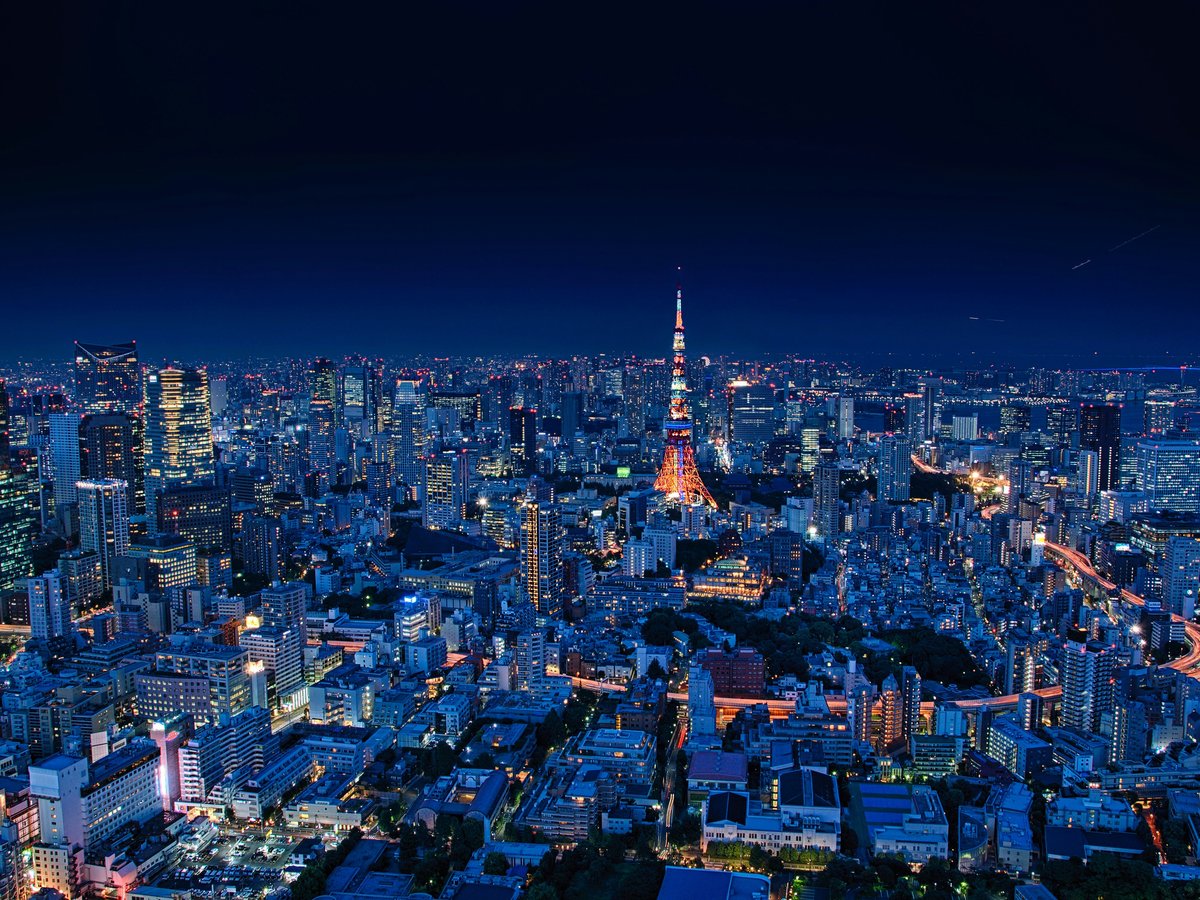
Tokyo tends to catch people off guard. You step out of Shinjuku Station into a wall of neon and concrete, and it is hard to imagine that the western edge of this same prefecture is genuine mountain wilderness: the kind where bears still wander and rivers cut through gorges you would not believe sit inside the Tokyo metro boundary. The city sprawls across the Kanto Plain with Tokyo Bay to the east and the Okutama Mountains climbing to over 2,000 meters in the west. The Tama River runs through the suburbs. The Sumida and Arakawa cut through the old downtown. And tucked between all those train lines and apartment blocks, you will find parks that feel wild: old-growth camphor trees, ponds full of turtles, hawks circling overhead in Yoyogi. The climate runs from bone-cold dry winters through a soggy rainy season in June, then a brutal summer humidity that will soak your shirt just walking to the train. Autumn is the sweet spot for most outdoor activities: clear skies, cool air, the maples turning. Spring brings cherry blossoms and comfortable temps but also unpredictable rain. Mind you, there is something to be said for a winter hike to Mt. Takao when the air is so clear you can see Fuji from the summit, sharp against a blue sky, no haze at all.
Outdoor activities
-
Road cycling along the Tama River cycling path
The Tama River cycling path runs roughly 50 kilometers from Haneda near the bay up through the western suburbs toward Hamura. It is flat, paved, and mostly separated from car traffic, which makes it one of the more pleasant long rides you can do without leaving the city. The stretch from Futako-Tamagawa upstream gets increasingly rural: rice paddies, herons standing in the shallows, the smell of river mud on warm days. Weekend mornings bring out serious road cyclists in full kit, but the path is wide enough that you will not feel out of place on a rental. You might notice the path gets crowded near popular parks, around Chofu and Fuchu.
- Difficulty
- Easy to moderate depending on distance
- Duration
- 2 to 5 hours depending on how far you ride
- Best season
- Autumn (October–November) or spring (March–April)
-
Bouldering and sport climbing in Okutama
Okutama has several outdoor bouldering areas along the river gorge, and the rock quality tends to be decent: mostly weathered limestone and some granite. The area around Kawanori and along the Nippara River valley has established problems ranging from beginner-friendly slabs to overhanging test pieces. Worth noting that access information for some crags is not always well-documented in English, so connecting with the local climbing community or checking Japanese topo sites beforehand saves headaches. If outdoor rock is too much commitment, Tokyo has dozens of indoor climbing gyms: B-Pump in Ogikubo and Rocky in Shinagawa are both well-regarded and easy to reach by train.
- Difficulty
- Varies widely: V0 to V10+ outdoors, all levels indoors
- Duration
- Full day for outdoor areas including travel time
- Best season
- Autumn through spring (October–April): summer humidity makes friction miserable
-
Trail running around Mt. Takao and the Jinba-Takao ridge
The ridge trail connecting Mt. Takao to Mt. Jinba is probably the most popular trail running route accessible from central Tokyo. It is about 18 kilometers one way with rolling ups and downs through mixed forest. The footing is generally good (packed dirt with some root sections) and there are tea houses along the way selling udon and mochi that feel slightly surreal mid-run. You can start from Takaosanguchi Station on the Keio Line, run the ridge to Jinba, then descend to Fujino Station on the JR Chuo Line. The whole thing is doable in 3 to 5 hours at a moderate pace. The smell of hinoki cypress is strong through the quieter stretches.
- Difficulty
- Moderate: sustained climbing, nothing technical
- Duration
- 3 to 5 hours one way for the full ridge
- Best season
- Late autumn (November) or early spring (March) for comfortable temperatures
-
Cycling the Imperial Palace loop
The 5-kilometer loop around the Imperial Palace moat is Tokyo's most well-known cycling circuit. Early mornings (Sundays before 8 AM) you will find a steady stream of cyclists doing laps on the wide, smooth road that traces the old castle walls. The moat reflects the palace watchtowers and weeping willows, and in April the cherry blossoms along the northwest stretch are thick enough to create a pink tunnel overhead. It is flat and fast, with clean pavement and minimal traffic at off-peak hours. Several bike rental shops operate near Tokyo Station if you do not have your own.
- Difficulty
- Easy: flat loop on paved roads
- Duration
- 20 to 40 minutes per lap
- Best season
- Year-round, though spring mornings are good
-
Sea kayaking in Tokyo Bay
There are a handful of outfitters operating guided kayak tours in Tokyo Bay, typically launching from the Odaiba or Shinagawa waterfront areas. Paddling out among the container ships and under the Rainbow Bridge gives you a completely different perspective on the city: the skyline from water level, the smell of salt and diesel, the surprising chop that the bay produces on windy days. Some tours run evening paddles timed for sunset, which can be striking when the light catches all that glass and steel. To be fair, this is urban kayaking (you are not paddling through pristine wilderness) but there is something compelling about being at sea level looking up at a megacity.
- Difficulty
- Easy to moderate: guides handle logistics
- Duration
- 2 to 3 hours for a guided tour
- Best season
- Late spring through early autumn (May–October) for warmth
-
Standup paddleboarding on the Sumida River
SUP on the Sumida has picked up in the last several years, with a few rental and lesson outfits operating near Asakusa and around the canal areas of Koto ward. Paddling under the old bridges with Skytree looming overhead is a strange and enjoyable experience. The water is calmer in the canal sections than the main river channel, and morning sessions tend to have less boat traffic. The water quality has improved over the decades: it is not pristine, but it does not smell bad either. You might spot cormorants diving near the bridges.
- Difficulty
- Easy: suitable for beginners
- Duration
- 1 to 2 hours
- Best season
- Spring through autumn (April–October)
Day hikes
-
Mt. Takao (Takaosan): multiple trail options
Mt. Takao is the default day hike from Tokyo, and for good reason: it is roughly an hour from Shinjuku on the Keio Line, the trails are well-maintained, and you get legitimate forest and mountain views without serious commitment. Trail 1 is paved and passes the Yakuoin temple complex: popular but interesting. Trail 6 follows a stream through a shaded ravine and feels considerably wilder. The Inariyama ridge trail is steeper and quieter. Summit elevation is 599 meters. On clear days, in winter, you get a direct view of Mt. Fuji from the top. That said, weekends in autumn bring massive crowds: going midweek changes the experience entirely. There is a beer garden near the cable car station that operates in summer, which feels like a reward you did not quite earn.
- Difficulty
- Easy (Trail 1) to moderate (Inariyama ridge)
- Duration
- 1.5 to 3 hours up, depending on trail choice
- Best season
- Late autumn (November–December) for clear Fuji views, or early spring
-
Mt. Takao to Mt. Jinba ridge traverse
If Takao alone feels too short, continuing along the ridge to Mt. Jinba extends the walk substantially. The trail rolls through mixed deciduous and conifer forest with several small peaks along the way: Kobotoke-Shiroyama has a nice lunch spot. Mt. Jinba at 857 meters has a summit tea house selling hot udon and amazake, which hits differently after 3 hours of walking. The trail is well-marked and the footing is good throughout. You descend from Jinba to either Jinba Kogen Shita bus stop or continue down to Fujino Station. This is a satisfying full-day outing that still gets you home for dinner.
- Difficulty
- Moderate: sustained but not technical
- Duration
- 5 to 7 hours for the full traverse
- Best season
- Autumn (October–November) or spring (April–May)
-
Mt. Mitake (Mitakesan) and the rock garden trail
Mitakesan sits in the Okutama area and is accessible by JR Chuo Line to Mitake Station, then a bus and cable car. The summit area has an atmospheric mountaintop shrine village (Musashi-Mitake Shrine) with lodges where you can stay overnight. The Rock Garden trail descends through a moss-covered ravine with waterfalls that feels almost subtropical in summer, the air thick and humid, water dripping off fern fronds. You can loop the rock garden and return via a different path, or continue deeper into the Okutama mountains. The whole area is substantially quieter than Takao.
- Difficulty
- Easy to moderate: cable car shortens the climb
- Duration
- 3 to 5 hours for the shrine and rock garden loop
- Best season
- Late spring (May–June) for the lush green, or autumn for color
-
Mt. Kumotori (Kumotorisan)
At 2,017 meters, Kumotori is the highest peak in Tokyo Prefecture. Getting there requires a legitimate effort: most people start from Kamosawa trailhead near Okutama Station, and it is a long day or an overnight with a mountain hut stay at Kumotori-sanso. The trail climbs through beech forest and eventually into subalpine terrain with views across the Chichibu mountains. This is a different caliber of hike from Takao: proper mountain conditions, possible snow from November through April, and enough elevation gain to feel it in your legs the next day. Mind you, the satisfaction of standing on Tokyo's highest point is considerable.
- Difficulty
- Difficult: long approach, significant elevation gain
- Duration
- 10 to 12 hours round trip as a very long day, or overnight
- Best season
- June through October: snow closes the route in winter
-
Mt. Oyama (Ooyama) in Tanzawa
Technically in Kanagawa Prefecture but easily reached from Shinjuku in about 90 minutes. Oyama has been a pilgrimage mountain since the Edo period, and the approach through the tofu restaurant street in the village below is part of the experience: the tofu here is famous and good. A cable car covers the lower section if you want to save your legs for the steeper upper trail to the 1,252-meter summit. The views from the top stretch to Sagami Bay and, on clear days, out to Oshima island. The forest is dense cryptomeria that blocks out most sound. Autumn foliage on Oyama is dramatic: the lower slopes light up in late November.
- Difficulty
- Moderate: steep upper section with stone steps
- Duration
- 4 to 6 hours round trip depending on cable car use
- Best season
- Late November for autumn foliage, or spring for clear weather
Water activities
-
River swimming and wading in Okutama
The upper Tama River around Okutama and the Nippara River valley have spots where locals swim in summer: natural pools carved into the rock, water cold enough to make you gasp. The Hikawa area near Okutama Station has accessible riverside spots. The water runs clear and green over smooth stones. This is not a lifeguarded beach situation: you are swimming in a mountain river at your own discretion, and current strength varies with recent rainfall. On hot August weekends the popular spots get busy with families barbecuing on the gravel bars, the smell of charcoal and yakitori mixing with river air.
- Difficulty
- Easy to moderate: depends on water conditions and location
- Duration
- Half day to full day
- Best season
- July through August: water is too cold outside summer
-
Surfing at Shonan coast
The Shonan coast (Kugenuma, Chigasaki, Fujisawa) sits about an hour south of Tokyo by train and is the closest legitimate surf to the city. The waves are generally small and forgiving, which makes it a decent place to learn. In typhoon season, swells pick up and the experienced surfers come out. Enoshima island sits just offshore and makes for a scenic backdrop. The beach towns have a California-meets-Japan vibe with surf shops, taco stands, and weathered wood cafes lining the shore road. Rentals and lessons are widely available, around Kugenuma Beach. To be fair, if you are coming from serious surf destinations, Shonan will feel mellow, but as a day trip from Tokyo, it works.
- Difficulty
- Easy to moderate: depends on conditions
- Duration
- Full day trip from Tokyo
- Best season
- Late summer through early autumn (August–October) for best swells
-
Kayaking on Lake Okutama (Ogouchi Reservoir)
Ogouchi Reservoir in western Tokyo is a dammed section of the Tama River surrounded by forested mountains. A couple of outfitters rent kayaks and canoes on the lake, and paddling across the still green water with mountains rising on both sides, it is hard to believe you are still technically in Tokyo. The lake is quiet (no motorized boats) and you might see deer on the shore in early morning. Autumn is striking when the surrounding hillsides turn orange and red. Access is about two hours from Shinjuku by train and bus.
- Difficulty
- Easy: calm flatwater
- Duration
- 2 to 4 hours on the water
- Best season
- Autumn (October–November) for foliage, or spring for fresh green
-
Rowing and pedal boating at Inokashira Pond
This is firmly on the casual end of water activities: renting a rowboat or swan-shaped pedal boat on Inokashira Pond in Kichijoji. But on a warm spring afternoon with cherry petals drifting down onto the water and the light coming through the trees, it is surprisingly pleasant. The pond is small enough that you can cover it easily, and there is something meditative about rowing slowly past the shrine island in the middle. A Tokyo urban classic rather than a serious water sport, but worth doing once.
- Difficulty
- Easy, no experience needed
- Duration
- 30 minutes to 1 hour
- Best season
- Spring (late March–early April) for cherry blossoms on the water
Parks & gardens
-
Shinjuku Gyoen
Shinjuku Gyoen is probably Tokyo's most complete park: it has a formal French garden section, an English landscape garden, and a traditional Japanese garden all within the same grounds. The greenhouse is full of tropical plants. In spring, the cherry blossom viewing here draws enormous crowds, but on a random Tuesday in October, you can find genuine quiet in the Japanese garden section, sitting on a bench watching koi drift through the pond. The grass in the English garden is thick enough to nap on. No alcohol allowed, which keeps it calmer than Yoyogi during hanami season.
Highlights: Cherry blossoms in spring, chrysanthemum show in autumn, massive greenhouse with tropical plants, three distinct garden styles
-
Yoyogi Park
FreeYoyogi is where Tokyo goes to be outdoors. Weekend afternoons bring out rockabilly dancers near the entrance, drum circles, dog walkers, joggers, and families spreading out picnic blankets under the zelkova trees. The park is big enough (about 54 hectares) that you can find a quiet corner even when the popular areas are packed. The wooded sections feel forested, with tall keyaki and camphor trees filtering the light. In spring, the cherry blossom area gets rowdy in the best way. The running path that loops the perimeter is roughly 3 kilometers and stays mostly shaded.
Highlights: People-watching on weekends, cherry blossom area, forested walking paths, adjacent to Meiji Jingu shrine forest
-
Meiji Jingu and its forest
FreeThe forest surrounding Meiji Jingu shrine was planted in the 1920s (roughly 100,000 trees donated from across Japan) and has grown into something that feels like genuine old-growth woodland in the middle of Shibuya. Walking under the towering torii gate and into the gravel paths, the city noise drops away fast. The air smells different in here: damp earth, leaf litter, cypress. The inner garden has an iris garden that peaks in June and a serene pond ringed by trees. The forest is home to hawks, woodpeckers, and an unexpected variety of insects. This might be the most impressive urban reforestation project anywhere.
Highlights: Century-old planted forest, iris garden in June, birdwatching, gravel paths through towering trees
-
Inokashira Park
FreeOut in Kichijoji on the west side of the city, Inokashira feels like a neighborhood park that happens to be gorgeous. The central pond is ringed by cherry trees that create an absurd pink canopy in early April: petals floating on the water surface like confetti. You can rent swan boats, which is slightly cheesy and entirely worth it. The park connects to the Ghibli Museum area and has a small zoo. On weekends, street musicians and craft vendors set up along the paths. The surrounding Kichijoji neighborhood has some of the best casual eating in Tokyo, which makes a park visit easy to extend into a full afternoon.
Highlights: Cherry blossoms reflected in the pond, swan boat rentals, proximity to Ghibli Museum, weekend street performers
-
Koishikawa Korakuen
One of Tokyo's oldest gardens, dating to the early Edo period. Koishikawa Korakuen was designed as a strolling garden: you walk a circuit path around a central pond and through miniature landscapes that reference famous scenic spots in China and Japan. It is smaller and quieter than Shinjuku Gyoen, and there is a stillness to the place that larger parks rarely achieve. The plum blossoms in February are lovely, arriving before the cherry blossom crowds. In autumn, the maple trees around the Tsutenkyo bridge turn a deep red that reflects in the pond below.
Highlights: Edo-period strolling garden, February plum blossoms, autumn maples at Tsutenkyo bridge, relative quiet compared to larger parks
-
Rikugien
Rikugien is a Yanagisawa-era garden in Bunkyo ward that feels tucked away from the city despite being a short walk from Komagome Station. The design references scenes from classical Japanese poetry, which gives the garden a literary character even if you do not catch all the allusions. The weeping cherry tree near the entrance is famous: during peak bloom they light it up at night, and the crowds reflect that. Outside cherry season, though, this is a quiet place to walk slowly. The tea house overlooking the pond serves matcha and wagashi, and sitting there on a cool autumn afternoon with the maples turning is about as peaceful as Tokyo gets.
Highlights: Famous weeping cherry tree with evening illumination, poetry-inspired landscape design, lakeside tea house with matcha service
Practical tips
- Staying hydrated
- Tokyo's summers are seriously humid: you will sweat through everything. The good news is that vending machines selling water and sports drinks appear roughly every 200 meters in the city, and convenience stores like 7-Eleven and Lawson carry excellent hydration options including Pocari Sweat and Aquarius. On mountain trails, carry more water than you think you need: vending machines disappear once you leave the trailhead, though some summit tea houses sell drinks at marked-up prices.
- Sun protection
- The UV index in Tokyo from June through September is no joke, and the humidity makes you forget you are burning because your skin already feels damp. Wear sunscreen rated SPF 50 or PA++++: Japanese sunscreens from Anessa and Biore are excellent and available at any drugstore. A hat with a brim helps. On exposed ridgeline hikes like the Takao-Jinba traverse, reapply every couple of hours. Early morning starts help you avoid the worst midday exposure.
- Gear and equipment
- Tokyo has excellent outdoor gear shopping. Kanda-Jimbocho has a cluster of outdoor and climbing shops along Yasukuni-dori. Mont-bell stores are everywhere and carry reliable mid-range gear sized for Japanese frames: useful if you forgot a rain layer or need trekking poles. For higher-end gear, L-Breath in Shinjuku and the Patagonia store in Marunouchi are solid. Trail running shoes from Japanese brands like Montrail and La Sportiva are widely stocked. You can gear up for almost any outdoor activity without advance planning.
- Trail conditions and etiquette
- Trails around Tokyo are generally well-maintained: the Kanto region gets heavy use and the local hiking clubs keep paths clear. That said, the rainy season in June and July makes everything slippery and muddy, and typhoon season in September can close trails due to washouts or fallen trees. Always check current conditions before heading to Okutama or Tanzawa after heavy rain. On the trails, greet other hikers with a quick 'konnichiwa,' stay left on shared paths, and carry out all your trash: there are rarely bins on the trail.
- Transport to trailheads
- Almost every worthwhile hike near Tokyo is accessible by public transit, which is unusual globally and extremely convenient. Get a Suica or Pasmo IC card and you can tap on and off trains and buses seamlessly. The JR Chuo Line and Keio Line are your main arteries to western mountain areas. Check train schedules the night before: some rural bus connections from train stations to trailheads run infrequently, on weekdays. Hyperdia or the Navitime app gives accurate transit routing including bus transfers.
- Best seasons for outdoor activities
- Autumn (roughly October through early December) is the consensus best season for outdoor activities around Tokyo. The air is dry, temperatures are comfortable, skies are often clear, and the foliage is exceptional. Spring from mid-March through May is also excellent but wetter. Summer is hot and humid enough to be dangerous for strenuous activity: heat stroke is a real risk, not just discomfort. Winter is cold and dry with short days, but clear visibility makes it the best time for mountain views. The rainy season, called tsuyu, typically runs from early June to mid-July and is best avoided for hiking.
FAQ
Do I need hiking boots for day hikes near Tokyo?
For well-maintained trails like Mt. Takao's main routes, sturdy trail runners or even decent sneakers are fine. For the rock garden trail on Mitake, the Takao-Jinba traverse, or anything in Okutama, proper hiking shoes with ankle support and good grip make a real difference: those trails can get muddy and rocky. You do not need heavy mountaineering boots for any standard day hike in the Tokyo area.
Is it safe to hike alone around Tokyo?
The trails around Tokyo are generally very safe for solo hikers. They are well-marked, well-trafficked ( Takao and Mitake), and Japan has essentially no dangerous wildlife encounters on these routes: bears exist in the Okutama backcountry but encounters are rare. That said, tell someone your plans, carry a charged phone, and be cautious in the more remote Okutama areas. Cell coverage can be spotty on the deeper trails.
Can I swim in Tokyo Bay or the rivers within the city?
Tokyo Bay at Odaiba has a beach, but swimming has historically been restricted due to water quality concerns: check current conditions before planning on it. The rivers within central Tokyo like the Sumida are not suitable for swimming. For proper river swimming, head to the Okutama area where the upper Tama River and Nippara River have clean, swimmable sections, in the summer months.
What should I do if I encounter a snake on the trail?
The mamushi pit viper is found in wooded areas around Tokyo, though encounters are uncommon. If you see one (typically a short, thick-bodied snake with a diamond pattern) give it space and walk around it. They are not aggressive but will bite if stepped on or cornered. Watch where you put your feet and hands, on rocky trails or near stream crossings. If bitten, get to a hospital: do not try folk remedies.
Are there English trail signs on hiking routes near Tokyo?
Mt. Takao has excellent English signage throughout. Mt. Mitake and Mt. Oyama have partial English signs, mostly at major junctions. Deeper into Okutama, signage tends to be Japanese only, though trail maps from the Okutama Visitor Center are sometimes available in English. The AllTrails and Yamap apps can help with navigation if you cannot read Japanese trail markers.
How crowded do the popular hiking trails get on weekends?
Mt. Takao on an autumn weekend can feel like walking in a slow-moving queue, Trail 1: you might share the summit with several hundred people. Going midweek, starting early, or choosing Trail 6 or the Inariyama ridge makes a huge difference. The Takao-Jinba traverse thins out considerably past the first peak. Mitake and Okutama trails see a fraction of the traffic. If solitude matters to you, avoid Takao on Saturdays and holidays in October and November.
Outdoor experiences in Tokyo
 Free cancellation
 Tokyo: 3-Hour Bike/E-Bike Tour of the City's Highlights
Outdoor experience: 3 hours, free cancellation.
via Viator Free cancellation
 Mt. Fuji Tours with Kawaguchi Lake Ropeway View English Speaking
Outdoor experience: 10 hours, free cancellation.
via Viator Free cancellation
 Fast and Furious Tokyo Drift Experience Ride JDM
Outdoor experience: 4 hours, free cancellation.
via Viator Free cancellation
 Best Go Kart Experience in Shibuya Crossing with Iconic Photos
Outdoor experience: 1.3 hours, free cancellation.
via Viator Free cancellation
 Tokyo: Mt. Fuji Cruise & Hakone Ropeway Day Trip by Bus
Outdoor experience: 10 hours, free cancellation.
via Viator Free cancellation
 Shinjuku Golden Gai Food Tour
Outdoor experience: 3 hours, free cancellation.
via Viator Free cancellation
 Small Group Cycling Tour in Tokyo
Outdoor experience: free cancellation.
via Viator Free cancellation
 Tokyo:DaikokuPA JDM trip to famous car meet up in Manga GT-R
Outdoor experience: free cancellation.
via Viator Free cancellation
 Tokyo JDM Night Tour: Daikoku Car Meet & Japanese Sports Cars
Outdoor experience: 3 hours, free cancellation.
via Viator Free cancellation
 Classic Tsukiji Food Tour
Outdoor experience: 3 hours, free cancellation.
via Viator Free cancellation
 Tokyo.DaikokuPA JDM nights in Luxury van. 6 seats easy access
Outdoor experience: free cancellation.
via Viator Free cancellation
 Tokyo: Fast & Furious Daikoku JDM Night Tour - EVO , WRX & More
Outdoor experience: 4 hours, free cancellation.
via ViatorLast verified by automated review (v1.7.1) on . What is automated review?