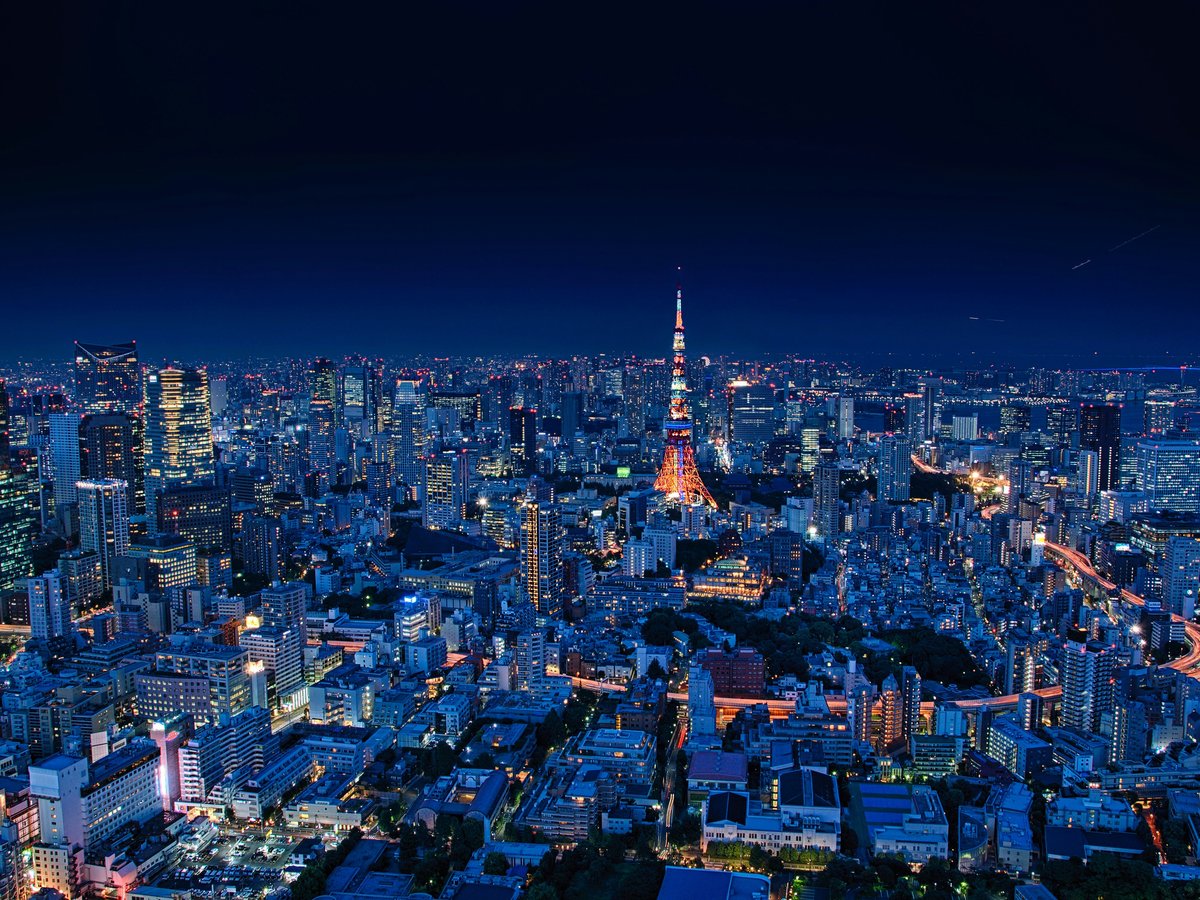
Tokyo after dark is a different city entirely. The neon haze settles in around dusk, salary workers loosen their ties, and the side streets fill with the warm smell of yakitori smoke drifting from under red lanterns. There's no single nightlife district here: the city fractures into dozens of distinct pockets, each with its own rhythm and crowd. Roppongi caters to a more international scene. Shibuya skews young and loud. Golden Gai in Shinjuku feels like stepping into someone's living room, if that living room seated six people and served whisky until 5 AM.
What strikes most first-timers is the sheer variety packed into tight spaces. You might find a standing bar that seats four people wedged between a ramen shop and a karaoke box, and that bar has been there for thirty years. Tokyo rewards the curious: the best spots tend to be the ones you almost walked past. The city doesn't really sleep, either. Trains stop around midnight, but that's when a second wave kicks in. People settle into izakayas, drift toward clubs, or camp out in all-night coffee shops until the first train at 5 AM. That gap between last train and first train is honestly when Tokyo feels most like itself: a little bleary, a little conspiratorial, full of strangers sharing plates of edamame at 3 AM.
Locals tend to drink beer first (a cold nama biiru to start) then shift to highballs, shochu, or sake depending on mood and venue. Wine bars have been gaining ground in neighborhoods like Ebisu and Jiyugaoka, though the markup can sting. The drinking culture here leans communal. Rounds aren't really a thing the way they are in London or Sydney. You order what you want, and the bill gets split evenly at the end. That custom, called warikan, is so ingrained that questioning it feels almost rude.
The Bar Scene: From Tiny Counters to High-Rise Panoramas
Tokyo's bar culture is arguably the deepest in Asia, and it runs on a spectrum that most cities can't match. At one end, you have the meticulously crafted cocktail bars: dimly lit rooms where a bartender in a vest hand-carves a sphere of ice for your Old Fashioned, and nobody rushes you. Ginza is still the spiritual home of this tradition, with bars that have operated for decades in the same hushed, wood-paneled rooms. The Ginza style tends toward formality: you sit, you're served, conversation stays low. Drinks might run 1,500 to 2,500 yen each, sometimes more. Worth noting: many of these places charge a seating fee, called otoshi or a table charge, which usually comes with a small appetizer you didn't order. It's not a scam; it's just how it works. Shinjuku and Shibuya offer a looser take on cocktail culture. Bars here skew younger, the music is louder, and you'll find more experimentation: Japanese whisky flights, shochu-based cocktails with yuzu or shiso, that sort of thing. The Golden Gai area in Shinjuku deserves special mention. It's a labyrinth of roughly 200 tiny bars crammed into six narrow alleys. Each bar seats maybe five to ten people. Some welcome foreigners warmly; others have signs indicating they're regulars-only spots. Don't take it personally. The ones that welcome you tend to be run by characters: a retired jazz musician, an ex-punk rocker, someone who just wants to talk about baseball. Cover charges in Golden Gai typically range from 500 to 1,500 yen and usually include a drink or a snack. Dive bars (or what passes for them here) cluster in areas like Sangenjaya, Shimokitazawa, and the backstreets of Nakano. These are the standing bars (tachinomi) and tiny izakayas where a beer costs 300 to 500 yen and the vibe is cheerfully no-frills. Cigarette smoke, sticky counters, a TV playing baseball in the corner. These spots fill up fast after 7 PM on weekdays with office workers blowing off steam. Rooftop bars exist but they're a different beast compared to, say, Bangkok's skyline scene. Tokyo's rooftop culture tends toward hotel bars: places on the upper floors of Park Hyatt, Andaz, or Cerulean Tower. The views can be staggering on a clear night. Expect to pay accordingly; cocktails often start around 2,000 yen and climb from there. The dress code is smart casual at minimum. Wine bars have been quietly multiplying, around Ebisu, Daikanyama, and parts of Koenji. Natural wine has a real following here. Expect small plates (think Japanese-inflected charcuterie, good cheese, maybe some seasonal pickles) and bottles that lean French and Italian, with a growing Japanese selection. Prices vary wildly, but a glass of something decent starts around 800 to 1,200 yen.
Clubbing in Tokyo: Late Starts, Long Nights, and Door Policies
Tokyo's club scene has gone through waves. The relaxation of the fueiho dancing law in 2016 was a turning point: before that, dancing after midnight was technically restricted, which had a chilling effect on club culture for years. Things have loosened considerably since then, and the scene currently feels healthy, if not quite at its late-90s peak. The big genres are techno, house, and various strains of electronic music. Shibuya and Roppongi remain the main clubbing hubs, though the scene has been spreading. Shibuya clubs tend to draw a younger, more fashion-conscious crowd. Roppongi still has a reputation as the foreigner-heavy party district, and to be fair, some of the larger venues there lean toward mainstream EDM and hip-hop. That said, Roppongi also hosts some good underground nights if you know where to look. Peak hours run late. Most clubs don't really fill up until 1 or 2 AM, and things keep going until 5 or 6 in the morning: conveniently timed with the first trains. Friday and Saturday are the obvious big nights, but Tokyo has a surprisingly strong weeknight scene, Thursdays. Some of the better events happen on random weeknights when a touring DJ passes through. Dress codes vary by venue. The larger commercial clubs in Roppongi might turn you away for sandals or overly casual clothes. Underground spots in Shibuya or Ebisu tend to be more relaxed: clean sneakers and a decent shirt will get you in almost anywhere. One thing that catches people off guard: ID checks. Many clubs require photo ID, and some specifically ask for a passport if you're foreign. Carry it or at least a clear photo on your phone, though a physical passport is safer. Cover charges at clubs typically run between 2,000 and 4,000 yen on weekends, often including one or two drinks. Weeknight events might be 1,500 yen or even free before a certain hour. Drinks inside clubs tend toward simple (highballs, beer, basic mixed drinks) and usually cost 700 to 1,000 yen each. The crowd tends to be polite. The aggressive, pushy energy you might encounter in clubs in some Western cities is mostly absent. People dance, people keep to themselves unless invited. It's refreshing, honestly. Mind you, the flip side is that it can take a while for the energy to build: early hours at a Tokyo club can feel oddly subdued until a critical mass arrives and the floor finally locks in.
Live Music: Tiny Stages, Big Sound
Tokyo's live music scene operates on a scale that might surprise you. The city has hundreds of small live houses (venues that seat anywhere from 30 to 300 people) scattered across nearly every neighborhood. The quality of sound in these rooms is often notable for their size. Japanese sound engineers tend to take the work seriously, and even a basement venue might have a rig that punches well above its weight. Shimokitazawa is still the heartland of Tokyo's indie and rock scene. The neighborhood has a dense cluster of live houses within walking distance of each other, and on any given weekend night, you can bar-hop between three or four shows. The local scene leans toward indie rock, shoegaze, math rock, and noise: genres that have deep roots in Japan's underground. Tickets for live house shows usually run 2,000 to 3,500 yen, often with a separate drink charge of 500 to 600 yen at the door. Jazz has a long and serious history in Tokyo. Shinjuku, Kichijoji, and parts of Omotesando have jazz clubs and jazz kissaten: listening bars where the point is to sit quietly and absorb the music through high-end speakers. Some jazz clubs feature live acts nightly; others are strictly recorded music played on vintage equipment. The listening bar experience is something uniquely Japanese: you'll hear the crackle of a vinyl, the warm hiss of tube amplifiers, and the bartender might shush you if your conversation gets too loud. It's almost meditative. For bigger international acts, venues like Zepp DiverCity, the Budokan, and Liquidroom handle larger crowds. These follow more conventional concert norms: advance tickets through Japanese platforms, doors open an hour or two before showtime, and the crowd is famously well-behaved. Standing shows in Japan have an unspoken etiquette: minimal pushing, lots of coordinated clapping, and an enthusiasm that's intense but contained. Weekends are obviously busiest, but Thursday and Friday nights tend to have the strongest lineups at smaller venues. Worth checking local listings: Tokyo Gig Guide and various venue Twitter accounts are still the best way to find out who's playing where. One more thing: many live houses post their monthly schedule on physical flyers outside the venue, so walking around Shimokitazawa or Koenji with your eyes open can turn up surprises.
Nightlife neighborhoods
-
Shinjuku (Kabukicho & Golden Gai)
Split personality. Kabukicho is the neon-drenched entertainment district: loud, chaotic, a little seedy at the edges, packed with izakayas, karaoke parlors, and host/hostess clubs. Golden Gai, tucked just behind, is the opposite: intimate, quiet (relatively), and personal. The smell of cigarette smoke and grilled food hangs in the narrow alleys. Both sides are at their peak between 9 PM and 2 AM.
- Best for
- Bar-hopping, late-night eating, karaoke, people-watching in one of the densest entertainment zones in the world
- Standouts
- Golden Gai's 200+ micro-bars, the surrounding izakaya alleys of Omoide Yokocho (Memory Lane)
-
Shibuya
Young, loud, fashion-forward. The streets around Center-gai and Dogenzaka pulse with energy on weekend nights: groups of twenty-somethings spilling out of izakayas, club promoters handing out flyers, the constant wash of J-pop and hip-hop from open doorways. The club scene here leans electronic and hip-hop. Things peak late, around midnight to 4 AM on weekends.
- Best for
- Clubbing, late-night street energy, younger crowd, fashion-conscious nightlife
- Standouts
- Clusters of clubs along Dogenzaka and in the streets behind 109
-
Roppongi
The most international nightlife district. Roppongi has a complicated reputation: parts of it feel like a tourist trap, with touts on the main drag trying to pull you into overpriced clubs. But move past the surface and there are legitimate spots, for late-night dancing and cocktails. The crowd is mixed: expats, tourists, locals who work in the area's many embassies and offices. It gets going around 11 PM and runs until dawn.
- Best for
- International crowd, late-night clubbing, hotel bars with skyline views
- Standouts
- High-rise hotel bars in the Roppongi Hills and Tokyo Midtown complexes
-
Shimokitazawa
Bohemian, creative, a little scruffy. Shimokita (as locals call it) feels like a village that happens to be inside Tokyo. The streets are narrow, the vintage shops stay open late, and the live houses draw crowds of music fans who care about the bands. The drinking here is casual: standing bars, cheap izakayas, the occasional craft beer spot. The crowd skews artsy and mid-twenties to thirties.
- Best for
- Live music, indie culture, relaxed drinking with a creative crowd
- Standouts
- Multiple live houses within a ten-minute walk of the station, plus a growing number of craft beer and natural wine spots
-
Ebisu & Daikanyama
Polished but not pretentious. Ebisu has a grown-up energy: the people going out here tend to be in their late twenties and up, and the bars lean toward wine, craft cocktails, and well-curated Japanese whisky. Daikanyama, just one stop away, adds a more design-conscious layer. Quieter than Shibuya, warmer than Ginza. The sidewalk terraces around Ebisu station fill up on mild evenings with after-work drinkers nursing highballs.
- Best for
- Wine bars, date nights, cocktail bars, a more refined evening out without stiffness
- Standouts
- Concentrated along the streets between Ebisu station and Ebisu Garden Place
-
Nakano & Koenji
A bit rougher, a bit weirder, and all the better for it. These neighboring stations on the Chuo line are where Tokyo's counterculture goes drinking. Koenji in particular has a punk and folk-music history that still echoes in its live houses and dive bars. Nakano has its own late-night drinking alleys that feel like a less tourist-aware version of Golden Gai. Cheap beer, interesting people, the occasional surprise.
- Best for
- Dive bars, live music, punk and underground culture, budget drinking
- Standouts
- Koenji's cluster of live houses and bars along the south exit, Nakano's drinking alleys near the Broadway complex
-
Ginza
Old-money elegance. Ginza's nightlife is quiet, expensive, and deliberate. This is where Tokyo's cocktail tradition runs deepest: bars that have been operating for fifty or sixty years, where the bartender remembers your order from last month. The pace is slow. The ice is hand-cut. The whisky selection might be the best you've ever seen. It's not a party district; it's where you go for one or two perfect drinks.
- Best for
- Excellent cocktail bars, Japanese whisky, a quiet and refined evening
- Standouts
- Scattered through the upper floors of Ginza's buildings: look for small signs and elevator directories
Safety after dark
Tokyo is, by most measures, one of the safest major cities in the world after dark. Violent crime against tourists is exceptionally rare, and you can walk through most neighborhoods at 3 AM without much concern. That said, a few things are worth keeping in mind.
The biggest risk for foreign visitors in nightlife districts (Roppongi) is drink-spiking and overcharging scams. The pattern is familiar: someone friendly approaches you on the street, suggests a bar, and you end up in a place where drinks cost ten times what they should, with large men suggesting you pay the bill. This has been a known issue in Roppongi for years. The rule is simple: don't follow strangers to bars you didn't choose yourself. If a tout is aggressively friendly, that's your cue to keep walking.
Drink awareness matters everywhere, but in Roppongi and Kabukicho. Stick to drinks you watched being made. If you're at a table and step away, get a fresh drink when you return.
Getting home after trains stop (roughly midnight to 12:30 AM) means either staying out until the first train around 5 AM, or taking a taxi. Taxis are safe but expensive: a ride from Shibuya to, say, western Tokyo can easily run 3,000 to 5,000 yen or more depending on distance and traffic. Ride-hailing apps work, though the supply of cars can thin out during peak hours on weekend nights. Some people opt for manga cafes or capsule hotels to wait out the gap: both are legitimate, safe options.
One more thing: public drunkenness is technically frowned upon but widely tolerated. You will see salary workers asleep on benches and in train stations. That said, being loud and disruptive as a foreigner draws more attention and less patience. Keep it together, and Tokyo will take care of you.
Practical tips
- Cover Charges and Table Fees
- Many bars and almost all small izakayas charge an otoshi: a small cover fee (typically 300 to 800 yen) that comes with a snack you didn't ask for. It's standard practice, not a scam. Clubs charge separately, usually 2,000 to 4,000 yen on weekends with a drink or two included. Some Golden Gai bars have their own cover; check the sign on the door or ask before sitting.
- Tipping
- Don't tip. Anywhere. Ever. Tipping is not part of Japanese service culture, and attempting it can cause genuine confusion or even offense. The price on the menu is the price you pay. Service charges, if any, are built into the bill at higher-end establishments.
- Last Train Timing
- Trains stop running between roughly midnight and 12:30 AM, depending on the line and direction. The last train is called shuuden, and you'll hear announcements and see a visible rush toward stations around 11:30 PM. If you plan to stay out past midnight, commit to it: you're out until roughly 5 AM when trains resume. Check your specific line's schedule, as timing varies.
- Ordering and Payment
- Many izakayas and bars still operate on a cash-preferred basis, though card acceptance has improved significantly in recent years. Carry at least 5,000 to 10,000 yen in cash for a night out. At izakayas, you'll often order via tablet or by flagging down staff with a polite sumimasen. Bills are typically settled at the register near the exit, not at your table.
- Smoking
- Japan revised its indoor smoking laws in 2020, and many restaurants and bars now have designated smoking areas or are fully non-smoking. However, smaller bars (in Golden Gai and older neighborhoods) still allow smoking throughout. If smoke bothers you, check before settling in. Some places post it on the door; others you'll just have to gauge by the haze when you walk in.
- Language
- English proficiency in Tokyo's nightlife varies enormously. Hotel bars and international areas like Roppongi tend to have English-speaking staff. Smaller bars in local neighborhoods might have zero English, which is part of the charm but can make ordering interesting. A few phrases in Japanese go a long way, even a fumbled sumimasen and kudasai earn goodwill. Translation apps work in a pinch, and picture menus are common at izakayas.
FAQ
What time does nightlife in Tokyo typically start and end?
The after-work drinking crowd fills izakayas and bars from around 6 to 7 PM. Clubs and late-night spots don't pick up until midnight or 1 AM and keep going until 5 or 6 in the morning. There's a distinct two-phase pattern: the early evening session for food and drinks, then a second wave that begins after the last train and runs through to dawn.
Is it safe to go out alone in Tokyo at night?
Generally, yes. Tokyo is one of the safest large cities for solo nightlife, and many locals (salary workers) go out drinking alone regularly. Solo bar-hopping is culturally normal, at counter-seat bars and tachinomi standing bars. The main precaution is avoiding touts in Roppongi and Kabukicho who try to steer you into overpriced venues.
Do Tokyo clubs and bars check ID at the door?
Clubs almost always check ID, and many specifically request a passport from foreign visitors. Some bars in entertainment districts also check, if you look young. Carry your passport or at minimum a clear photo of it on your phone, though having the physical document is more reliable. The legal drinking age in Japan is 20.
How much money should I bring for a night out in Tokyo?
Budget around 5,000 to 10,000 yen for a moderate night of bar-hopping: that covers several drinks, cover charges, and a late-night snack. A club night might run 4,000 to 8,000 yen including entry and drinks. High-end cocktail bars in Ginza or hotel bars can push costs higher. Cash is still important; many smaller bars don't take cards, though this has been improving.
What should I wear to go out in Tokyo?
Tokyo nightlife tends to be fashion-conscious but not formally dressy. Clean, considered outfits work almost everywhere: think smart sneakers, decent jeans or trousers, a good shirt or jacket. High-end hotel bars expect smart casual at minimum. Underground clubs and live houses are more relaxed. The main thing to avoid is looking like you just rolled off a long-haul flight: wrinkled cargo shorts and flip-flops will limit your options.
Can I still have a good time if I don't speak Japanese?
Absolutely, though the experience shifts depending on where you go. International districts like Roppongi and parts of Shibuya have plenty of English-speaking staff. In more local neighborhoods, you might be navigating by gesture, translation app, and goodwill, which honestly can be half the fun. Japanese bar culture is welcoming to curious foreigners who make even a small effort with the language. Learning a handful of phrases before you go out helps more than you'd expect.
Last verified by automated review (v1.7.1) on . What is automated review?