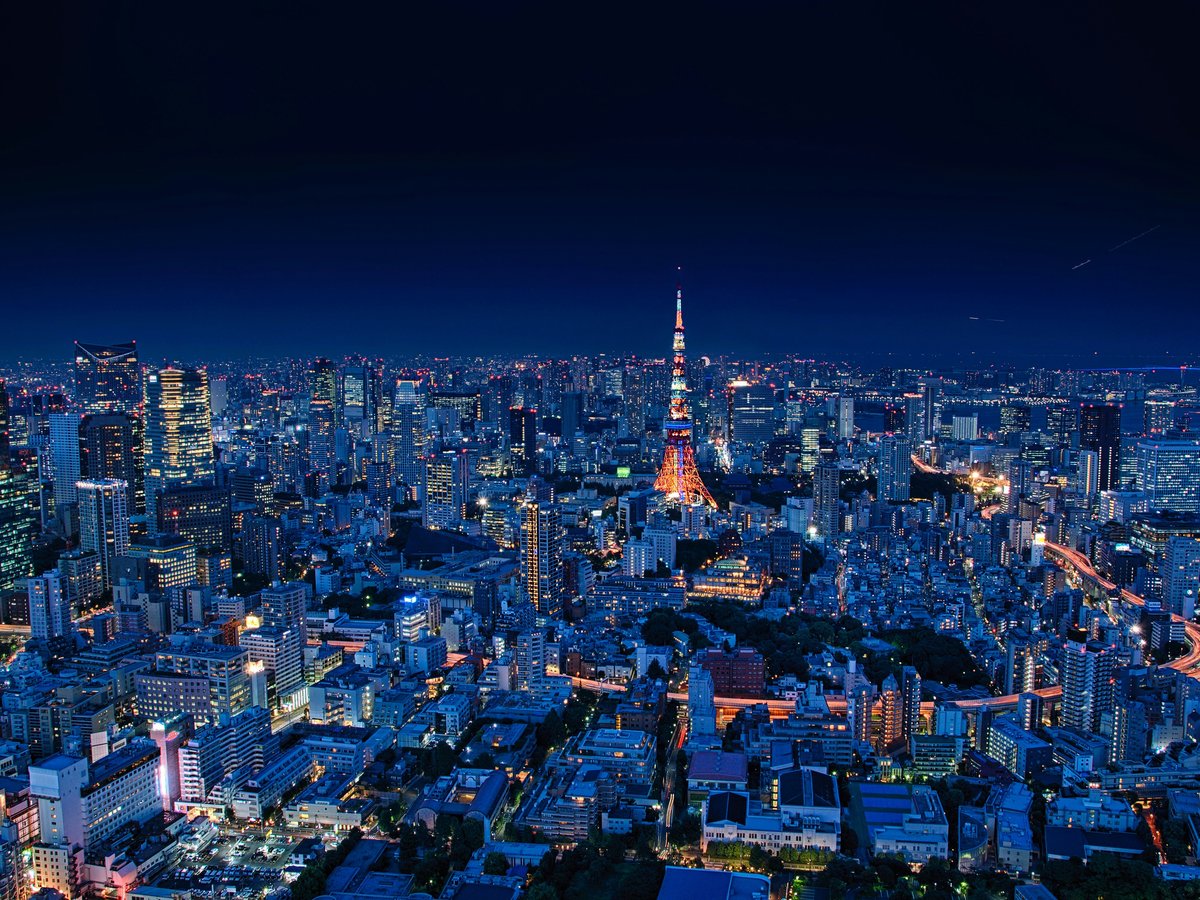
Is Tokyo LGBTQ-friendly?
Tokyo is physically one of the safest cities on earth for queer couples, but Japan still lacks national marriage equality. Shinjuku Ni-chōme packs roughly 300 queer bars into a few blocks. Outside that district, the city runs on polite discretion rather than open celebration. Couples who know where to go will have no issues.
Warm light leaks from a doorway no wider than your shoulders, ice rattles in a highball glass somewhere above you, and the sweet charcoal smell of yakitori drifts across the alley: that's your first thirty seconds in Ni-chōme, and it tells you most of what you need to know about queer Tokyo. The city is one of the safest on earth for queer travelers (the risk of confrontation is close to zero) but the experience runs on discretion rather than celebration. Japan still has no national marriage equality, though Tokyo has offered same-sex partnership certificates since 2015 and multiple courts have ruled the marriage ban unconstitutional. The Diet hasn't acted on those rulings. What this means in practice: you and your partner will be treated with impeccable politeness everywhere, and nobody will give you trouble. But you won't see pride flags on storefronts outside one very specific neighborhood. The city rewards couples who know exactly which doors to walk through.
That neighborhood is Shinjuku Ni-chōme: roughly 300 bars packed into a few narrow alleys between Shinjuku-sanchōme Station's C7 exit and Hanazono Shrine. Most of these bars seat six to twelve people. The bartender knows your name by drink two. Start at AiiRO Cafe, the only spot with a street-level terrace; on warm nights the crowd spills outside with cold Asahi tallboys, and the whole block smells like yakitori smoke from the stalls around the corner. Dragon Men does serious craft cocktails in a room barely bigger than a wardrobe. Arty Farty has the closest thing to a proper dance floor. For women and non-binary visitors, Goldfinger runs women-only nights on Saturdays. Skip the guided 'Ni-chōme bar tour' packages some operators hawk near the station: they shuffle you through three pre-arranged stops at a markup, and half the magic here is just picking a door yourself. Mind you, these are tiny rooms: the intimacy is the point, not a limitation.
Here's what couples need to understand about Tokyo: public affection is muted for everyone. Japanese couples rarely kiss in public regardless of orientation. Hand-holding is comfortable in Ni-chōme and in touristy Shibuya or Harajuku, but it reads as a statement in quieter residential areas. That said, the restaurant scene more than compensates. Kaiseki service in Ginza treats every table with the same precise attention: nobody's watching who you're sharing the eight-course meal with. Narisawa in Minami-Aoyama sits you at a counter facing the open kitchen, two Michelin stars of ingredients you've never heard of, and the focus is entirely on the food. For something less formal, the counter at Afuri in Ebisu (yuzu-scented steam rising off ramen, the satisfying crack of a soft-boiled egg) is a surprisingly intimate dinner for two if you arrive before 6pm.
Accommodation comes with one asterisk. Love hotels in Kabukichō are a Tokyo experience worth having, but some still post male-female-only policies at the automated check-in kiosk. Don't risk the awkward moment: book through an app that flags LGBTQ-welcoming properties, or stick with known-good options. Trunk Hotel in Shibuya and Mustard Hotel in Shimokitazawa are both reliably welcoming without making a performance of it. If a ryokan experience matters to you, Hoshinoya Tokyo in Ōtemachi has private onsen rooms booked by the hour: warm cedar-scented water, just the two of you, no shared bathing to navigate. Tokyo Rainbow Pride fills Yoyogi Park each April with around 240,000 people; the parade winds through Jingūmae and the after-parties pour back into Ni-chōme. Worth timing a trip around.
Composite of legal status, social acceptance, and visible scene.
Legal status
Same-sex relations are legal
Same-sex relations have been legal in Japan since 1881. Marriage is not recognized nationally, though over 200 municipalities offer partnership certificates and courts have increasingly ruled the ban unconstitutional. Tokyo's Shinjuku Ni-chome is one of Asia's largest queer districts.
Verified against equaldex.com and en.wikipedia.org .
The scene
Shinjuku Ni-chōme packs roughly 300 bars into a few alleys around Shinjuku-sanchōme Station. Key spots: AiiRO Cafe (street-level terrace, good first stop), Dragon Men (craft cocktails, foreign-friendly), Arty Farty (dance floor), Goldfinger (women-focused, Saturday women-only nights). Tokyo Rainbow Pride runs each April in Yoyogi Park, drawing around 240,000 attendees. Outside Ni-chōme, Nakameguro and Shimokitazawa have smaller queer-friendly cafe scenes.
Safety notes
Physical safety is a non-issue: hate crimes against queer people are statistically near zero in Tokyo. The friction is social invisibility, not hostility. Hand-holding draws no confrontation in tourist areas and Ni-chōme but quiet stares in residential neighborhoods. Some love hotels enforce male-female-only policies at the check-in kiosk; book LGBTQ-friendly accommodation ahead.
Last verified by automated review (v1.5.J.2) on . What is automated review?