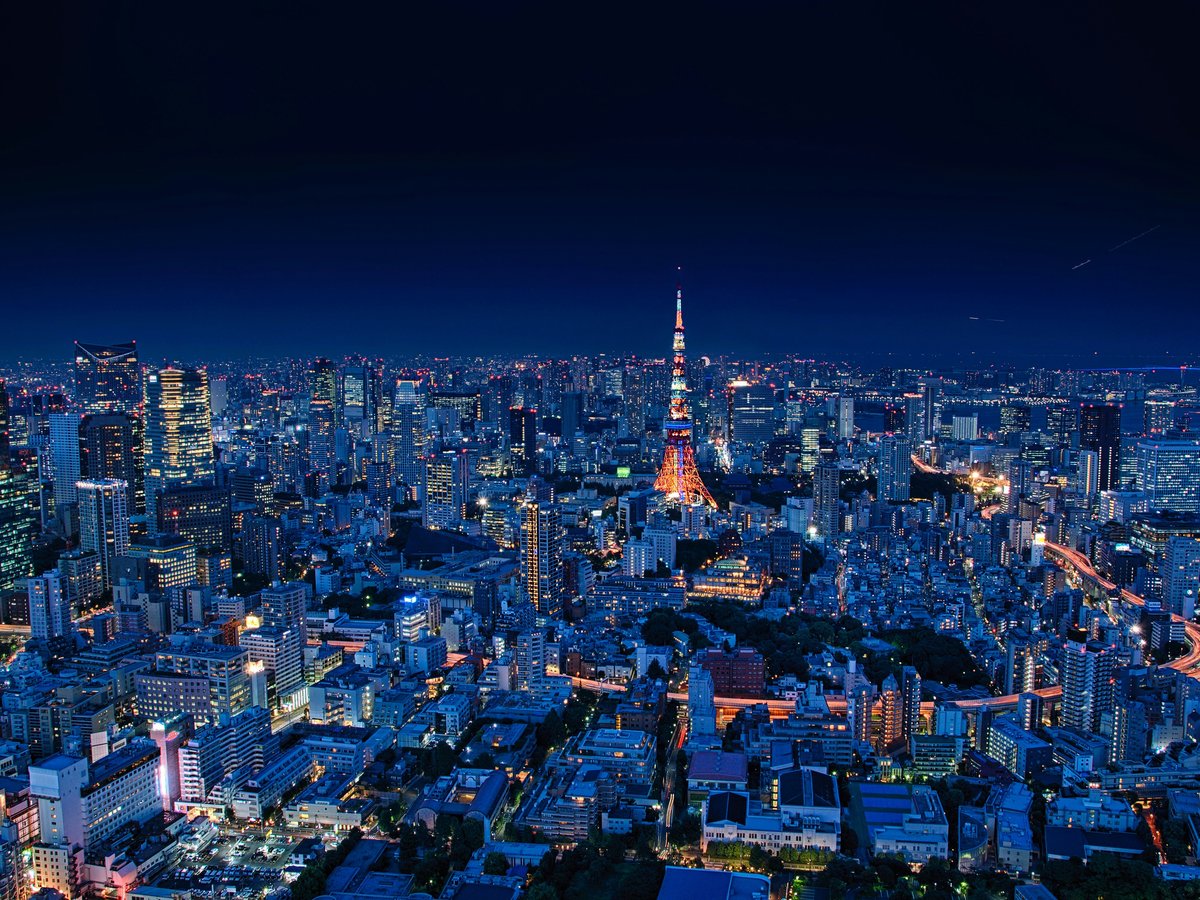
How do I get around Tokyo?
Load a Suica IC card at any JR station machine (500-yen deposit, 3,000 yen covers three days) and tap through every subway, JR line, and city bus without thinking about tickets. The Yamanote loop connects major hubs. After midnight when trains stop, the GO taxi app replaces Uber entirely.
Book the connection
One search across trains, buses & flights: live times and prices for Tokyo.
Tokyo runs on trains the way other cities run on roads. The system looks terrifying on a map: thirteen Metro lines, four Toei lines, JR East's network including the Yamanote loop, but your Suica card doesn't care which operator runs which line. Tap in, tap out, the fare sorts itself. A ride across central Tokyo runs 170 to 250 yen, roughly a dollar to a dollar-sixty. The Yamanote: that fat green loop connecting Shinjuku, Shibuya, Ikebukuro, Ueno, and Tokyo Station: handles maybe 70% of where you'll go. Trains run from roughly 5 a.m. to just past midnight. The platforms smell like warm brake dust and vending-machine coffee. Rush hour between 7:30 and 9 a.m. is brutal on the Chuo and Tozai lines: bodies pressed against glass, no room to lift your phone. Avoid those two lines at those hours or ride the opposite direction of the commuter flow.
The single most expensive mistake is buying a Tokyo Metro 24/48/72-hour pass at Narita or Haneda. Sounds smart: 1,500 yen for 72 hours of unlimited metro rides. The problem: it covers Tokyo Metro lines only. Not the Toei Subway. Not JR. Not the Yamanote. You'll hit a wrong gate at Shinjuku, which has JR, Metro, Toei, Odakyu, and Keio platforms all tangled into one station complex, get rejected, buy a separate ticket, and wonder why you bothered. The Suica or Pasmo IC card avoids all of this. If you're on iPhone, set up Mobile Suica through the Wallet app before you land, no physical card needed, no deposit, reloads from a credit card. Android users can do the same with Mobile Pasmo. Skip the station machines entirely. One card. Every gate. Done.
Taxis are a midnight tool. Flagfall sits at 500 yen for the first kilometer, then roughly 100 yen every 250 meters: a ride from Roppongi to Shinjuku at 2 a.m. lands around 3,000 to 4,000 yen ($19-25) with the 20% late-night surcharge that kicks in after 10 p.m. Download the GO app before you arrive. It works the way Uber does elsewhere: fare estimate upfront, card payment through the app, no fumbling with cash or attempting Japanese with a tired driver at 1 a.m. Uber technically operates here but GO has the fleet. One thing nobody warns you about: Japanese taxi doors open and close automatically. Don't grab the rear passenger handle: it swings on its own, and pulling it startles the driver. The seats have crisp white covers that smell faintly of fabric softener. Yes, the drivers wear white gloves. Even a 500-yen flagfall ride feels like being chauffeured.
Walking works street by street but not city-wide. Individual neighborhoods: Shimokitazawa's vintage clothing racks spilling onto the sidewalk, Yanaka's temple cats sunning on cemetery walls, Kagurazaka's stone-paved alleys where you can hear shamisen practice leaking from upstairs windows: are best covered on foot, and the sidewalks are clean, flat, and safe at any hour. But the city is deceivingly spread out: Shibuya to Asakusa looks close on Google Maps until you realize it's 45 minutes by train and close to two hours walking through stretches with no particular reason to be on foot. Google Maps handles Tokyo's train routing well. Trust it, and trust its exit numbers at stations like Shinjuku, which has over 200 exits. Station signs are in English on every line. You'll hear the platform departure jingles before you see your train: each station has its own melody, and after three days they'll be lodged in your head whether you want them there or not.
On-the-ground: metro available · ride-hail apps work.
Primary modes of transit
- Metro/subway (Tokyo Metro + Toei)
- JR trains (Yamanote line)
- Walking
- Taxi (GO app)
- City bus
Ready to book the connection?
Compare trains, buses & flights to and around Tokyo on Omio: live times & prices in one search.
Compare on Omio →More transport questions
How do I get from the airport to Tokyo?
From Narita, take the Narita Express (N'EX) to Tokyo Station or Shinjuku: 3,250 JPY ($20), about 55 minutes, reserved seats, luggage racks, zero confusion. Runs 7am to 9:45pm. From Haneda, the Keikyu Line to Shinagawa costs 300 JPY ($2) and takes 11 minutes. Both airports have clear English signage throughout.
Full answerHow do I get to Tokyo?
Tokyo has two international airports: Haneda (HND), 15 km south and the better arrival point, and Narita (NRT), 65 km east. Direct flights run from most major cities: 11 hours from LA, 12 from London, 7 from Seoul. Round-trip fares from the US typically land between $800 and $1,400.
Full answerWhat are the best day trips from Tokyo?
Kamakura is the best single-day trip from Tokyo for two: 50 km south, under an hour by JR, with bamboo temples, coastal hiking, and beach-terrace dinners. Hakone adds private outdoor onsen baths, 85 minutes by Romance Car from Shinjuku. Nikko's gold-leaf shrines are worth it but honestly need an overnight.
Full answerLast verified by automated review (v1.5.J.2) on . What is automated review?