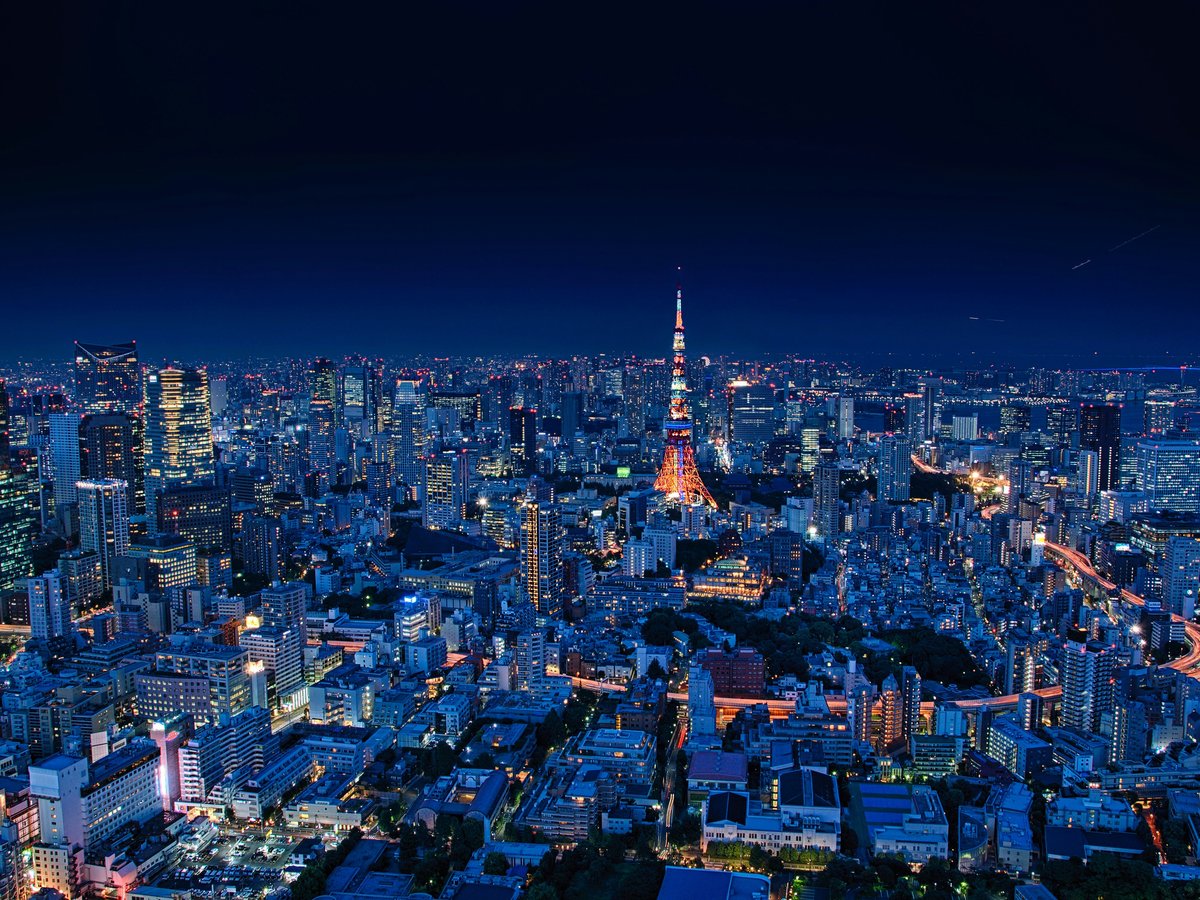
Tokyo doesn't really have a center. That's the first thing that trips people up. Unlike Paris with its arrondissements spiraling out from a core, or London with the Thames splitting everything neatly, Tokyo is a collection of distinct city-nodes strung along the Yamanote Line: the elevated loop railway that circles the heart of the metropolis. Each station on that loop is, functionally, its own downtown. Shinjuku has the busiest station on earth and a skyline to match. Shibuya is where youth culture ferments. Tokyo Station anchors the business districts of Marunouchi and Nihonbashi. Ueno sits at the cultural north. You get the idea. The mental model that works best: think of the Yamanote Line as a necklace, and each major station as a bead with its own gravity, pulling in restaurants, shops, and residential streets for a kilometer or two in every direction. Between these nodes, quieter neighborhoods breathe: places like Yanaka, Shimokitazawa, and Koenji, where the pace drops and the rents follow. Getting around is shockingly easy. The subway and JR lines interlock so thoroughly that you're rarely more than a ten-minute walk from a station. So where you stay matters less for logistics and more for what you want to wake up to: the neon canyon of Kabukicho or the temple bells of Asakusa. Both are valid. They're just very different mornings.
Neighborhoods
-
Shinjuku
Shinjuku is sensory overload done well. The west side is all glass-tower corporate Tokyo: Sompo Japan Building, the Metropolitan Government Building with its free observation decks, wide boulevards where salarymen move in silent rivers during rush hour. Cross to the east side and it's a different city. Kabukicho hits you with a wall of light and noise: pachinko parlors clattering, touts calling out, the smell of yakitori smoke drifting from Golden Gai's impossibly narrow alleyways. The thing about Shinjuku is it never fully sleeps. At 3 AM you'll still find izakayas open, people eating ramen at counters, taxis idling. It can feel like too much. For some people that's the point.
- Best for
- First-time visitors who want to be at the center of the action, solo travelers, nightlife seekers, and anyone who wants maximum rail connectivity: nearly every major line passes through Shinjuku Station
- Key streets
- Golden Gai (six tiny alleys packed with roughly 200 bars, most seating four to eight people), Omoide Yokocho (Memory Lane, the smoky yakitori alley by the west exit), Kabukicho's Ichibangai main drag, and the quieter residential streets south toward Shinjuku Gyoen park
-
Shibuya
Shibuya has changed. The old Tokyu department store is gone, replaced by Shibuya Scramble Square and a cluster of gleaming redevelopment towers that have shifted the area's center of gravity upward: , with rooftop observation decks and sky-high restaurant floors. But at street level, it still feels young and a little chaotic. The famous scramble crossing is disorienting the first time, a controlled flood of people moving in every direction at once. Head uphill toward Shinsen or down the backstreets of Dogenzaka and things get grittier: love hotels, tiny standing bars, vintage clothing shops stuffed into buildings that probably should have been condemned a decade ago. The area around Miyashita Park has been cleaned up considerably, with a long elevated park space sitting atop a retail complex. Center-gai still smells like crepes and fast fashion. Shibuya currently feels like it's caught between its scrappy past and its glass-and-steel future.
- Best for
- Younger travelers, fashion-obsessed visitors, anyone who feeds on crowd energy and doesn't mind navigating a station that seems designed to confuse
- Key streets
- Center-gai for the full Shibuya chaos, Spain-zaka (Spain Slope) for a slightly calmer wander into Dogenzaka, the backstreets behind 109 building, and Nonbei Yokocho: a tiny alley of old-school drinking spots that feels like it fell through a time crack from 1965
-
Asakusa
Asakusa is where Tokyo's Edo-period past still has a pulse. Senso-ji temple dominates: the big red Kaminarimon gate, the Nakamise-dori shopping street lined with rice crackers and tourist trinkets, the incense smoke drifting across the main hall. It's touristy, sure. But walk ten minutes in any direction and the crowds thin. The backstreets west of the temple have old kissaten (traditional coffee shops) with velvet seats and hand-dripped coffee, tiny tempura counters where the oil has been seasoned for decades, and residential lanes where you can hear temple bells in the morning. The area around Kappabashi-dori (kitchen supply street) is worth a full afternoon if you cook at all. Professional-grade knives, ceramic bowls, those realistic plastic food samples restaurants use. The whole neighborhood smells different from the rest of Tokyo: more traditional, something like roasted rice and incense and old wood.
- Best for
- Culture-focused visitors, families, older travelers, anyone who wants a slower pace without leaving the city, and people who care about traditional Japanese food
- Key streets
- Nakamise-dori and the temple complex, Kappabashi-dori (Kitchen Town, running between Asakusa and Ueno), Demboin-dori for the Edo-period streetscape, and the quiet lanes west of Senso-ji toward Rokku Broadway: once the theater district, now faded but still interesting
-
Shimokitazawa
Shimokita (everyone drops the last two syllables) is what happens when a neighborhood refuses to grow up, in the best way. For years it resisted redevelopment, and while a recent station renovation and the Bonus Track retail strip have brought some polish, the core character holds. Narrow streets too tight for cars, vintage shops where you dig through bins of old band tees, tiny live music venues, curry restaurants in basements. The pace here is slow. People sit on stoops. Cats appear. There's a strong theater scene: small black-box theaters where experimental productions run for weekend-only engagements. The food skews cheap and good: standing soba counters, old-school kissaten, and some of the better curry in Tokyo. It feels like a college town that got absorbed by a megacity and somehow kept its personality.
- Best for
- Independent travelers, vintage shoppers, music fans, anyone who wants to feel like they live in Tokyo rather than visit it, couples looking for a low-key base
- Key streets
- The south exit streets around Suzunari theater, the Bonus Track development off the old Odakyu Line tracks, the narrow lanes between the north and south exits where most of the vintage shops cluster, and Ichibangai-dori for evening drinks
-
Yanaka
Yanaka survived the 1923 earthquake and the 1945 firebombs, so what you're walking through is old Tokyo: wooden houses, narrow lanes, temple cemeteries with moss-covered stones, the occasional cat napping on a wall. It's the kind of neighborhood where elderly residents still water the potted plants on their doorsteps every morning and the local sento (public bath) is used by locals, not tourists. Yanesen (the area covering Yanaka, Nezu, and Sendagi) is where you go when the neon starts to feel like too much. The main drag, Yanaka Ginza, is a short shopping street that dips down a hill, lined with croquette shops, craft stores, and a famous cat tail donut place. It's popular on weekends but never overwhelming. The Yanaka Cemetery is surprisingly peaceful for a stroll, when the cherry trees bloom.
- Best for
- Travelers seeking old Tokyo atmosphere, photographers, walkers, anyone who values quiet over spectacle, and people who want to stay near Ueno's museums without staying in Ueno itself
- Key streets
- Yanaka Ginza shopping street, the Yanaka Cemetery walking paths, the lanes connecting to Nezu Shrine (one of Tokyo's oldest, with a tunnel of red torii gates), and Shinobazu-dori running toward Ueno
-
Roppongi
Roppongi has a reputation problem, and some of it is deserved. The area around Roppongi Crossing still has that late-night, slightly seedy energy: foreign-friendly bars, persistent touts, the kind of clubs where the bill arrives and you question your life choices. But that's maybe a third of the story now. Roppongi Hills and Tokyo Midtown have transformed big swaths of the neighborhood into a corporate-art-museum district. The Mori Art Museum on the 53rd floor of Roppongi Hills Tower hosts consistently strong contemporary exhibitions. The 21_21 Design Sight, tucked into the Midtown garden, focuses on design in ways that feel fresh. The National Art Center, a short walk away on Nogizaka's edge, is a Kisho Kurokawa building with undulating glass walls and one of the largest exhibition spaces in the country. During the day Roppongi is calm, almost boring. After dark it splits in two: the sleek restaurant-and-gallery crowd in the towers, and the hedonistic sprawl below.
- Best for
- Art lovers, nightlife seekers who know what they're getting into, business travelers staying at the high-end hotels in the area, and anyone who wants walkable access to three major art institutions
- Key streets
- Roppongi-dori (the main artery), Gaien-Higashi-dori running toward Nogizaka and the National Art Center, the Keyakizaka-dori street within Roppongi Hills, and the backstreets between Roppongi Crossing and Nishi-Azabu for late-night dining
-
Koenji
Koenji is punk rock and thrift stores and a neighborhood that still feels resistant to the smoothing-out that's hit so much of central Tokyo. The north side of the station has the Pal shopping arcade: covered, long, full of secondhand clothing shops, record stores with deep crates of Japanese jazz and city pop vinyl, and tiny bars that open when they feel like it. Walk south and you hit the Look shopping street, more of the same energy but with better restaurants tucked between the vintage shops. The Awa Odori festival in August turns the whole area into a dancing, drumming spectacle: it's Tokyo's biggest dance festival and locals rehearse for months. Day to day, though, Koenji is quiet. It's where musicians, artists, and people who work in the creative industries live because rents are still semi-reasonable by Tokyo standards. The coffee is good. The pace is human.
- Best for
- Music and vinyl enthusiasts, vintage clothing hunters, budget-conscious travelers who don't mind being 15 minutes from Shinjuku on the Chuo Line, and anyone allergic to polished tourist districts
- Key streets
- Pal arcade and Look arcade (both starting from the station), Koenji Junjo arcade on the south side, and the backstreets radiating from the station where most of the live music venues and standing bars cluster
-
Ginza
Ginza is Tokyo's answer to Fifth Avenue or the Champs-Élysées, but with a restraint that feels distinctly Japanese. The main drag (Chuo-dori) is lined with flagship stores from every luxury brand you can name, department stores like Mitsukoshi and Wako with their well-known clock tower, and architecture that ranges from sleek modernism to Renzo Piano's Hermès building with its glass-brick facade. On weekends, Chuo-dori closes to traffic and becomes a wide pedestrian promenade, which changes the feel entirely: suddenly it's families and older couples strolling where taxis usually inch along. The side streets are where Ginza gets interesting, though. Tiny basement bars, traditional sushi counters that have been open since the Showa era, art galleries in upper floors you'd never find without looking up. The prices here tend toward the higher end, but not uniformly: standing sushi bars and tonkatsu counters in the backstreets offer lunch sets that are surprisingly fair.
- Best for
- Luxury shoppers, food lovers with budget flexibility, architecture enthusiasts, and visitors who appreciate a more composed, adult-oriented Tokyo experience
- Key streets
- Chuo-dori (the main boulevard, pedestrianized on weekend afternoons), Namiki-dori (lined with zelkova trees, feels calmer), Suzuran-dori for smaller independent shops, and the maze of streets between Ginza and Shinbashi stations where the izakaya prices drop sharply
-
Nakameguro
Nakameguro runs along the Meguro River, and for most of the year it's a quiet residential neighborhood where young creative professionals live and eat well. Narrow streets, low-rise apartments, independent coffee roasters, natural wine bars, and the kind of small-batch craft shops that never need to advertise. Then cherry blossom season hits in late March and the trees lining the river explode into pink, and suddenly a million people show up. It's gorgeous and completely overwhelming. Outside of that two-week window, though, Naka-Meg (as locals call it) is calm and walkable. The food scene punches well above its weight: there's Afuri for yuzu shio ramen, Yakitori Imai for skewers that rival places charging twice the price in Ginza, and a rotating cast of small bistros and bakeries along the river. The Tsutaya bookstore here was designed as a lifestyle space before that concept got overused, and it's still a pleasant place to sit with a coffee.
- Best for
- Design-conscious travelers, couples, food-focused visitors who want to eat well without tourist-area markup, and anyone who appreciates a walkable neighborhood with a river running through it
- Key streets
- The Meguro River promenade ( the stretch between Nakameguro Station and Ikejiri-Ohashi), the backstreets south of the station toward Yutenji, and the lane running behind Tsutaya Books toward Daikanyama, which bleeds into another excellent neighborhood worth exploring
-
Akihabara
Akihabara (Akiba to everyone who goes regularly) is the electronics and otaku district, but calling it just that undersells how strange and specific the experience is. The main strip from the station toward Chuo-dori is stacked with multi-story buildings selling anime figures, manga, retro video games, electronic components, and hobby kits. Some floors are organized, others are chaotic bins where you dig through circuit boards or vintage Famicom cartridges. The maid cafes get the attention, but the real heart of Akiba is the hobbyist culture: people who build custom keyboards, collect specific vintages of synthesizers, or hunt for out-of-print doujinshi. It's loud. Announcements blare from storefronts. The visual density (posters, banners, screens on every surface) is almost architectural. It smells like electronics and curry rice from the fast-food joints wedged between shops.
- Best for
- Electronics hobbyists, retro gaming fans, anime and manga collectors, and anyone curious about a subculture district that has no real equivalent elsewhere in the world
- Key streets
- Chuo-dori from the station heading south (main strip), the narrow streets west of the station where the component shops and smaller specialty stores concentrate, and Kanda Myojin-dori heading toward the historic Kanda Myojin Shrine: a surprisingly serene detour
FAQ
What's the best neighborhood to stay in for a first visit to Tokyo?
Shinjuku is the practical answer: it sits on the Yamanote Line and connects to nearly every major train and subway line, so you can reach any part of the city in 30 minutes or less. The east side of Shinjuku Station has hotels at every price point, from capsule hotels to five-star properties. Shibuya is a close second for similar reasons but with a slightly younger energy. If you want something calmer for your first visit, Asakusa gives you a more traditional Tokyo atmosphere while still being well-connected via the Ginza Line and Asakusa Line. The honest truth is that Tokyo's rail network is so thorough that a 'bad' location barely exists, even neighborhoods 20 minutes from the center feel convenient.
Is it worth staying outside the Yamanote Line loop to save money?
Absolutely, and many locals would argue you'll have a better experience. Neighborhoods like Shimokitazawa, Koenji, and Nakameguro sit just outside the loop but are only 5 to 15 minutes by train from major hubs. Hotel and Airbnb prices drop noticeably, the restaurants cater to locals rather than tourists, and you get a more residential feel. The Chuo Line running west from Shinjuku through Koenji and onward, or the Keio and Odakyu lines through Shimokitazawa, run frequently until midnight. Just check your last train time: that's the real constraint, not distance.
How do Tokyo's neighborhoods change between day and night?
Dramatically, in some cases. Shinjuku's west side goes from suited office workers to near-empty streets after 8 PM, while the east side around Kabukicho is just waking up. Shibuya's crossing is intense at rush hour, chaotic on Friday nights, and oddly peaceful at 7 AM on Sunday. Ginza flips entirely: a composed shopping district by day that transforms into a network of tiny bars and hostess clubs after dark, in the blocks toward Shinbashi. Roppongi is quiet enough during daytime that you'd wonder what all the fuss is about. Asakusa, by contrast, barely changes: it goes to sleep early and wakes up early, which is part of its appeal.
Which neighborhoods are best for food-focused visitors?
That depends on what kind of eating you want to do. For high-end sushi and traditional Japanese cuisine, Ginza and Tsukiji Outer Market (a short walk from Ginza) are the anchors. For ramen, you'll find strong options everywhere, but Shinjuku's backstreets and the Nakameguro area have good concentration. Koenji and Shimokitazawa are where you go for cheap, excellent everyday food (curry, soba, tonkatsu) at prices that feel almost too low. Asakusa is the place for traditional tempura and unagi. Honestly, Tokyo rewards wandering more than planning for food. The tiny place with four seats and a line of three people is usually the right call.
How walkable are Tokyo's neighborhoods, and do I need the train for everything?
Most Tokyo neighborhoods are highly walkable within themselves: you can spend a full day in Yanaka or Shimokitazawa without touching a train. The issue is getting between neighborhoods, where distances stretch. Shinjuku to Asakusa is about 12 kilometers, so you'll want the subway for that. But adjacent areas connect well on foot: Harajuku to Shibuya is a 15-minute walk down Meiji-dori, Nakameguro to Daikanyama is ten minutes along the river, and Ueno to Yanaka is a gentle 20-minute stroll. A good strategy is to pick two or three adjacent neighborhoods per day and walk between them, using trains only for bigger jumps. Comfortable shoes matter more in Tokyo than almost any other city.
Are there neighborhoods to avoid in Tokyo?
Tokyo is remarkably safe by global standards, and there are no neighborhoods that are dangerous. The usual advice about Kabukicho in Shinjuku (don't follow touts into unfamiliar bars, watch your bill) still applies, but that's more about overcharging than physical safety. Some areas around the big stations (Ikebukuro's east side, parts of Ueno at night) can feel rougher than, say, Ginza, but 'rough' in Tokyo is still safer than most cities' nice areas. The neighborhoods to avoid are more about disappointment than danger: Odaiba, for instance, is a manufactured island that feels like an outdoor shopping mall with a view, and Roppongi's nightclub strip has diminishing returns after your first visit.
Last verified by automated review (v1.7.1) on . What is automated review?