Stay in Ubud in August
9 hotels in the Trip.com pool for Ubud, from US$18 a night.
Opens Trip.com on Fri 6 Aug to Sun 8 Aug 2027; change the dates there.
August is one of Ubud's driest months. June sees slightly less rain, but both sit well below the 300mm-plus downpours of January and February. Most showers arrive in the afternoon and clear within half an hour. Mornings tend to open with clear equatorial light across the rice fields. Daytime temperatures stay in the high 20s Celsius (low 80s Fahrenheit) and dip below 21°C (70°F) after dark, which makes the highland valleys around Sayan and Kedewatan feel noticeably cooler than the coast down in Seminyak.
The weather is genuinely pleasant. The problem is that the whole world seems to know it. August is peak tourist season. European summer holidays and Australian school breaks converge on a town of roughly 30,000 permanent residents, and the pressure shows. Jalan Raya Ubud slows to a crawl by 10 a.m., and the Tegallalang Rice Terraces start queuing before noon. Villa rates in Penestanan or Nyuh Kuning tend to run 40-60% above their wet-season prices, and booking accommodation at least 6 weeks out is the practical minimum.
The month's fixed cultural moment is Hari Kemerdekaan, Indonesian Independence Day. Ubud celebrates with community parades, panjat pinang competitions where teams scramble up greased poles for prizes, and ceremonies at Puri Saren Agung. That evening, incense from family compound doorways mixes with gamelan practice echoing through the banjar halls of Sanggingan.
Why visit in August
- Rainfall near the annual low, behind only June. Most August days open with several hours of clear sunshine before the afternoon shower window, making morning excursions to temples and terraces reliably dry.
- Ubud's highland elevation creates a wider day-to-night temperature spread than at the coast. Mornings and evenings feel genuinely pleasant, with only the mid-afternoon hours carrying real tropical heat.
- Peak season draws the year's largest selection of yoga workshops, multi-day wellness retreats, and visiting international teachers to the studios and shalas around Penestanan and Campuhan.
- Clear mornings with minimal cloud cover produce the strongest natural photography light of the year across the Ayung River valley and the rice terraces. The haze and clouds that build through the afternoon are largely absent before 10 a.m.
Worth knowing
- Peak-season crowds at the major sites. The Sacred Monkey Forest and Tirta Empul can feel congested by mid-morning as tour buses arrive from southern Bali in waves.
- The steepest accommodation prices of the year squeeze out budget options. Rooms and villas at lower price points book out first, leaving mid-range and premium properties as the available tier.
- Central Ubud traffic makes scooter and car travel slow between 9 a.m. and 5 p.m. Walking is often faster for distances under 2 km.
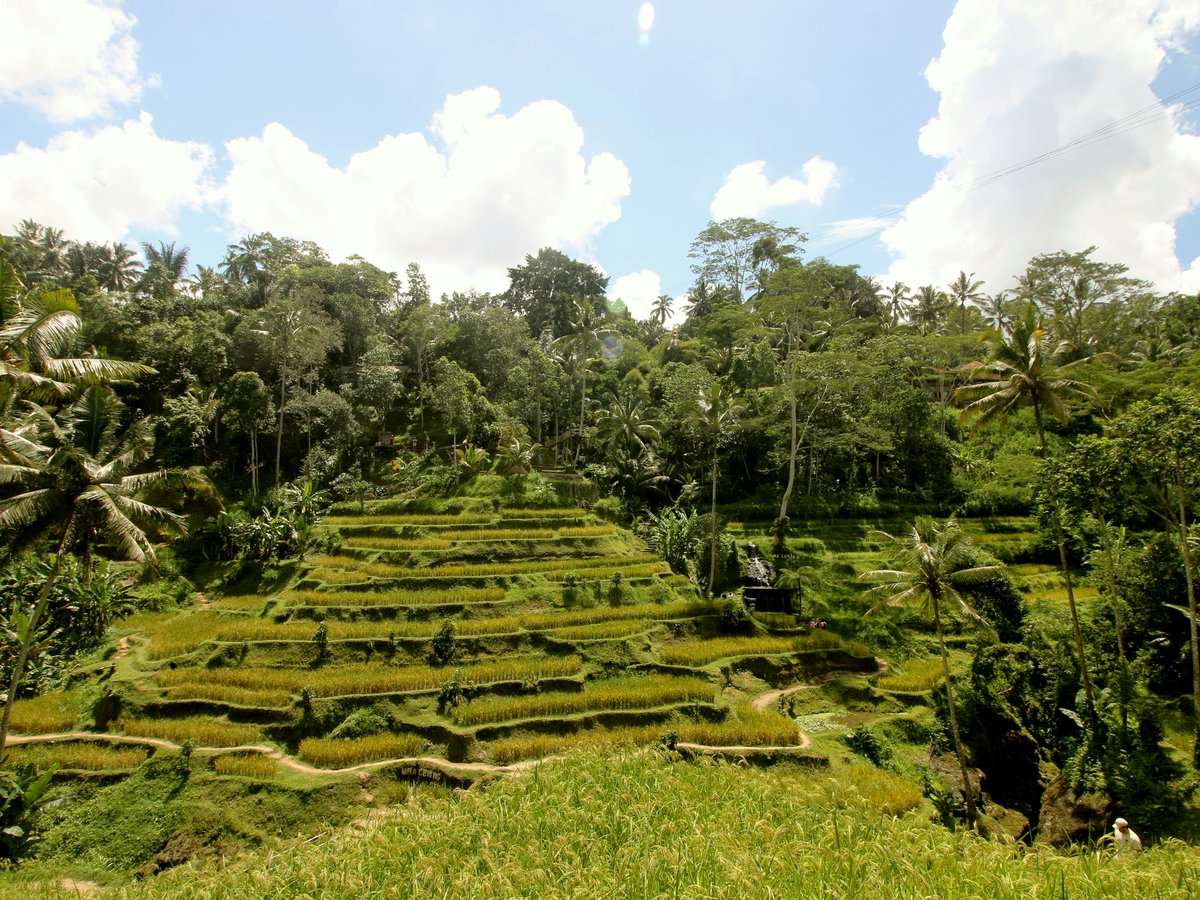
- Some Tegallalang rice terrace sections may be brown or freshly harvested rather than the uniform green of travel photos. Bali's subak irrigation system staggers planting across different paddies, so what you see depends on the cycle.
Best for
Think twice if
Ubud's dry season at its practical peak. Mornings open with clear skies and strong equatorial light, ideal for early walks before the cloud buildup begins around 2-3 p.m. The afternoon showers are predictable and brief, making it straightforward to plan outdoor activities for the first half of the day. Ubud sits roughly 200 meters above sea level, which moderates the heat compared to the beach towns to the south. Nights feel cool enough for open-window sleeping in traditional guesthouses with ceiling fans rather than air conditioning.
Seasonal caution
- The equatorial UV index in Bali can reach 10-11 (extreme) during August's dry-season sunshine, particularly between 10 a.m. and 3 p.m. Sunburn happens within 20 minutes of unprotected exposure on clear days. SPF 50+ sunscreen, a hat, and sunglasses are not optional.
Year-round climate
Averages from the last 5 years.
| Month | Avg high (°C) | Avg low (°C) | Rainfall (mm) |
|---|---|---|---|
| Jan | 29 | 23 | 348 |
| Feb | 29 | 23 | 304 |
| Mar | 30 | 22 | 246 |
| Apr | 29 | 22 | 151 |
| May | 29 | 22 | 136 |
| Jun | 28 | 22 | 90 |
| Jul | 27 | 21 | 135 |
| Aug | 27 | 21 | 114 |
| Sep | 28 | 21 | 130 |
| Oct | 29 | 22 | 135 |
| Nov | 29 | 22 | 286 |
| Dec | 29 | 23 | 283 |
Holidays and festivals in August
Public holidays
- Independence Day(Hari Ulang Tahun Kemerdekaan Republik Indonesia)17 August 2027
Best things to do in August
Campuhan Ridge Walk at sunrise
natureA paved path along a narrow ridge between two river valleys, starting near the western edge of central Ubud. The walk runs about 2 km and takes 30-45 minutes at a relaxed pace, with views over coconut palms and tall elephant grass catching the morning breeze.
August mornings are reliably clear, with golden light hitting the valley from the east. In the wet months, cloud cover and rain frequently cut the walk short or obscure the views entirely.Booking tipNo booking needed. Arrive by 6:15 a.m. to beat the heat and the mid-morning tour groups.
Mount Batur sunrise trek
adventureA 2-3 hour guided hike up an active volcano (1,717 meters) about 90 minutes north of Ubud by car. Groups depart around 3:30 a.m. and reach the summit for sunrise over Lake Batur and the silhouette of Mount Agung.
August has the clearest summit visibility of any month. Minimal cloud cover at dawn means unobstructed views toward the east coast and, on clear mornings, across the strait to Lombok.Booking tipBook at least a week ahead in August. Reputable operators limit group sizes, and the popular ones fill quickly.
White-water rafting on the Ayung River
adventureA 10-12 km stretch of Class II-III rapids through a steep jungle gorge, passing carved rock faces and small waterfalls along the banks. Trips last about 2 hours on the water, with the sound of the rapids mixing with birdcalls from the canopy above.
The river sits at a moderate, manageable level in August. The wet-season torrents of January and February make rapids rougher and the water muddier. August conditions suit first-timers and families.Booking tipMorning departures starting around 8 a.m. finish before the afternoon heat and showers. Book 3-5 days ahead for weekend slots.
Purification ceremony at Tirta Empul
culturalThe temple's spring-fed pools have been a site of ritual purification since the 10th century. Visitors can participate by moving through a sequence of carved stone water spouts while offering prayers. The cool spring water and the smell of incense and frangipani create a sensory contrast to the warm air outside. A sarong and sash are required for entry.
Dry season means no rain interruptions during the outdoor ritual, and the spring water temperature feels comfortable against the warm August air rather than chilling.Booking tipArrive before 9 a.m. to avoid tour-bus crowds. No advance booking needed, but a local guide can help with the ritual sequence and etiquette.
Cycling through the rice terrace backroads
natureSelf-guided or operator-led rides from the Tegallalang area downhill through smaller villages like Cekingan and Keliki, past rice paddies, coconut groves, and family compounds. Routes typically cover 15-25 km with gradual descents.
Dry paths and no mud make August the most reliable month for cycling. The dirt-road sections through the villages stay passable even on basic rental bikes, unlike the wet months when ankle-deep puddles form.Booking tipGuided tours handle logistics and provide bikes. For self-guided rides, rent from a shop in central Ubud and test the brakes before heading out.
Legong or Barong dance at Puri Saren Agung
culturalNightly traditional Balinese dance performances in the courtyard of Ubud Palace. The gamelan orchestra plays live while dancers perform in full ceremonial costume, with firelight reflecting off gold-thread fabric. Performances typically start around 7:30 p.m. and last 60-90 minutes.
The open-air courtyard performances go ahead without rain disruption in August. During the wet months, shows occasionally move indoors or get shortened. The full outdoor setting under the evening sky is the way these dances are meant to be experienced.Booking tipTickets are sold at the door, but arrive 30-45 minutes early in August to get a seat with a clear sightline. The front rows fill first.
Descend to Gunung Kawi temple
culturalA set of 11th-century rock-cut candi (shrines) carved into the cliff face of the Pakerisan River valley in Tampaksiring. Reaching them requires descending over 300 stone steps through a terraced landscape of rice paddies and coconut palms, with the sound of the river growing louder as you go.
Dry stone steps are significantly safer and less slippery than during the wet months. The river valley below the carvings is calmer and more accessible in August, and morning light reaches the canyon floor with a clarity the cloudy wet season rarely allows.Booking tipGo before 9 a.m., when the sun has not yet climbed above the canyon walls. Morning shade makes the descent and the climb back far more comfortable.
What to eat in August
In season: fruit
Mangosteen (manggis)
August falls in the peak of Bali's mangosteen season, which runs roughly June through September. The thick purple rind cracks open to reveal white segments with a sweet-tart flavor that tastes nothing like the imported versions. Sold at Ubud Morning Market and by roadside vendors throughout the Tegallalang area.
Rambutan
The hairy red fruit hits peak ripeness around August. The flesh inside is translucent and lychee-sweet, best eaten the same day you buy it. Sold in bundles at the morning market and along the main roads leading north from Ubud.
Salak Bali (snake fruit)
Grown in orchards near the village of Sibetan, about an hour east of Ubud. The dry-season crop tends to taste sweeter and less astringent than wet-season fruit. The scaly brown skin peels back to reveal firm, slightly tangy segments with a crunch.
On menus now
Lawar
A ceremonial Balinese preparation of minced meat (often pork or chicken), grated coconut, vegetables, and fresh spices mixed together. Prepared for temple ceremonies and community events, both of which happen frequently through August. The texture sits somewhere between a warm salad and a spiced mince.
What to drink
Jamu kunyit asam
A traditional herbal tonic of turmeric, tamarind, and palm sugar. Sold by jamu gendong vendors who walk the streets carrying glass bottles in woven baskets slung across their shoulders. The warm dry-season days make the chilled version particularly welcome after a morning walk through the rice fields.
Regular events in August
Hari Kemerdekaan (Indonesian Independence Day)Free
Indonesia's national independence day. Schools and government offices close across the country. In Ubud, local banjar organize flag-raising ceremonies, traditional competitive games, and communal gatherings in the town's public spaces. The celebrations feel more intimate and community-oriented than in the larger coastal resort areas.
August 17Purnama (Full Moon) temple ceremonyFree
Monthly full-moon ceremony at Hindu temples across Bali. Temples near Ubud, including Tirta Empul and local village pura, see increased offerings, prayers, and processions. Visitors are welcome to observe from designated areas while wearing temple-appropriate clothing (sarong and sash).
Varies by lunar calendar, once per monthBali Kite Festival (Festival Layang-Layang)Free
Traditional and competitive kite-flying festival at Padang Galak beach near Sanur, about 45 minutes south of Ubud. Village teams fly giant traditional kites, including the bebean (fish-shaped), janggan (dragon-tailed), and pecukan (leaf-shaped), competing for distance and duration. The festival draws participants from across the island.
Late July through August (exact dates announced annually)Best places this August
Campuhan Ridge Walk
nature walkA 2 km paved path along a narrow ridge at the western edge of central Ubud. August mornings here open with clear golden light over elephant grass and coconut palms. The walk is flat and easy, with the Wos River valley dropping away on both sides.
CampuhanTegallalang Rice Terraces
landscapeThe most photographed rice terraces near Ubud, carved into steep hillsides about 20 minutes north of town. In August, some sections will be green and growing while others may be harvested or freshly planted, creating a patchwork of browns and greens. Arrive before 8 a.m. to see them without the crowds that fill the viewing platforms by mid-morning.
TegallalangTirta Empul Temple
templeA 10th-century water temple in Tampaksiring, about 15 minutes north of central Ubud. The spring-fed purification pools are at their most comfortable in dry-season conditions, when rain doesn't interrupt the ritual and the warm air contrasts with the cool spring water flowing through the carved spouts.
TampaksiringGunung Kawi
templeEleven rock-cut 11th-century candi carved into cliff faces along the Pakerisan River valley. The descent is steep but rewarding, and August's dry conditions make the stone steps safer than in the wet months. The moss-covered carvings in the canyon feel worlds apart from the tourist bustle up top.
TampaksiringSacred Monkey Forest Sanctuary (Mandala Suci Wenara Wana)
natureA 12.5-hectare forest sanctuary in the southern part of central Ubud, home to around 1,260 long-tailed macaques. The ancient banyan trees and moss-covered stone temples create a dense, shaded canopy that provides relief from August's midday sun. Bring nothing that dangles or glitters.
Nyuh KuningPenglipuran Village
cultural villageA traditional Bali Aga village about 45 minutes north of Ubud in Bangli regency, known for its uniform bamboo-gate architecture and immaculate stone pathways. The dry August air keeps the village's photogenic lanes free of puddles and mud. Quieter than the main Ubud attractions, even during peak season.
Bangli regencyNeka Art Museum
museumA museum in Sanggingan with a strong collection of Balinese and Indonesian art, including traditional Kamasan-style paintings and contemporary works by both local and foreign artists who worked in Bali. A useful indoor retreat when the afternoon clouds arrive, and consistently less crowded than the outdoor headline attractions.
Sanggingan
Your packing checklist
Tick items off as you pack. Your progress saves in this browser.
All packed — have a great trip.
Insider tips
If lush green rice terraces matter for your photos, ask at your guesthouse which sections near Tegallalang were planted most recently. Alternatively, the terraces around Jatiluwih, about 90 minutes west and a UNESCO World Heritage Site, often show different planting stages and draw far fewer visitors.
Exchange currency at bank ATMs (BCA or BNI branches in central Ubud) rather than the independent money changers on the main road. The exchange-counter rate looks competitive at roughly 17,700 IDR per USD, but often comes with hidden fees, short-counting, or bills that 'stick together' during counting. Bank ATMs give you the clean rate.
For Independence Day celebrations, ask your host which banjar (neighborhood council) is organizing events. The tourist-facing areas put on the expected shows, but the smaller communities in Keliki or Mas hold their own games and communal meals that feel less staged.
The Monkey Forest opens at 8:30 a.m. In August, the main paths fill by 10 and the macaques grow bolder about grabbing loose items from visitors. Go early, tuck sunglasses into a zipped bag, and skip the bananas sold at the entrance, which attract the most aggressive troops.
Avoid these mistakes
- Scheduling the Tegallalang Rice Terraces for midday. By noon in August, the exposed platforms are hot, shadeless, and packed with tour groups. The equatorial sun at that hour is punishing. Visit before 8 a.m. or after 4 p.m. instead.
- Booking a rice-field villa 4-5 km from the center and underestimating August traffic. What looks like a 10-minute scooter ride on the map can take 30-45 minutes during peak-season congestion on the narrow roads. Staying within walking distance of central Ubud or in Peliatan saves daily frustration.
- Packing for an entirely dry trip because it is 'dry season.' August still averages roughly 20 rainy days out of 31. The showers are brief but real, and getting caught without a rain layer on the 300-step descent at a river-valley temple is miserable.
Practical tips for August
August is Ubud's tightest booking window. Secure accommodation, Mount Batur sunrise treks, and Ayung River rafting at least 3-4 weeks ahead. Popular yoga shalas in Penestanan run intensive workshops with visiting international teachers, and the sought-after 5-day programs tend to fill by early July. For temple visits, arrive before 9 a.m. to beat the tour-bus waves that peak between 10 and 2. Carry cash for temple donations, sarong purchases, and small food vendors who do not take cards. Ride-hailing apps function in Ubud but drivers sometimes decline short trips during peak traffic hours, so walking or a rented scooter is more reliable for getting around the center. If you rent a scooter, an International Driving Permit is technically required by Indonesian law, and police checkpoints on the road to Tegallalang do occasionally stop foreign riders. Dress modestly with shoulders and knees covered for any temple visit. Ubud's tap water is not safe to drink; refill stations and filtered water at cafes are the standard approach.
FAQ
Is August a good time to visit Ubud?
August offers some of Ubud's most reliable dry-season weather, with clear mornings and only brief afternoon showers. The tradeoff is significant peak-season crowding and the highest accommodation prices of the year. If you can tolerate the tourist volume and book well in advance, the weather conditions and the cultural calendar make it a solid month. If solitude and value matter more to you than guaranteed sunshine, May or September deliver similar conditions with fewer visitors and noticeably lower rates.
What is the weather like in Ubud in August?
Warm but moderate by tropical standards. Ubud's position in the central highlands keeps conditions more manageable than at sea level. The dry season means predominantly sunny mornings with brief afternoon showers on most days. Evenings cool enough for open-air dining without discomfort. Pack layers, a rain jacket, and strong sunscreen for the equatorial UV. The humidity stays tropical but lacks the oppressive weight of the wet season.
Is Ubud crowded in August?
Yes, August is the busiest month of the year. International school holidays from across the Northern Hemisphere and Australia overlap, filling accommodation and headline attractions. The Monkey Forest, the rice terraces at Tegallalang, and the popular water temples can feel congested by mid-morning on most days. That said, the crowds concentrate on those few marquee spots. The surrounding villages and back roads of Nyuh Kuning still have breathing room, even in the busiest week.
How far in advance should I book accommodation in Ubud for August?
Start looking 2-3 months out for the best selection in central Ubud or quieter neighborhoods like Campuhan. Mid-range villas and guesthouses with strong reviews go first. The closer to August you search, the more you will be choosing from what remains on the outskirts, where walkability to restaurants and cafes drops off. Last-minute arrivals can still find rooms, but rarely at the quality or location they would prefer.
Is Ubud safe for solo travelers in August?
Ubud is one of the more comfortable places in Bali for solo visitors. The town center is walkable, the cafe and co-working scene provides natural social contact, and petty crime rates are lower than in Bali's beach-party districts. Keep valuables secured on scooters, use known transport operators for night trips, and stay cautious on unlit roads after dark. The peak-season crowds in August mean streets stay busy well into the evening, which tends to feel safer than the quieter months.
Things to Do in Ubud in August
 Free cancellation
 Best of Ubud Full-Day Tour with Jungle Swing
Day trip: 10 hours, free cancellation.
via Viator Free cancellation
 Ubud: Monkey Forest, Jungle Swing, Rice Terrace and Water Temple
Day trip: free cancellation.
via Viator Free cancellation
 Private Uluwatu Sunset Tour with Kecak Dance and Dinner
Day trip: 7 hours, free cancellation.
via Viator Free cancellation
 Tanah Lot and North Bali Tour: Scenic Journey
Day trip: free cancellation.
via Viator Free cancellation
 Nusa Penida All-Inclusive Day Trip
Day trip: 12 hours, free cancellation.
via Viator Free cancellation
 Bali Snorkeling Tour at Blue Lagoon Beach - All-Inclusive
Day trip: 6 hours, free cancellation.
via ViatorFind a flight to Ubud
Live fares to Ubud appear here once cookies are accepted.
Last verified by automated review (v1.7.2) on . What is automated review?