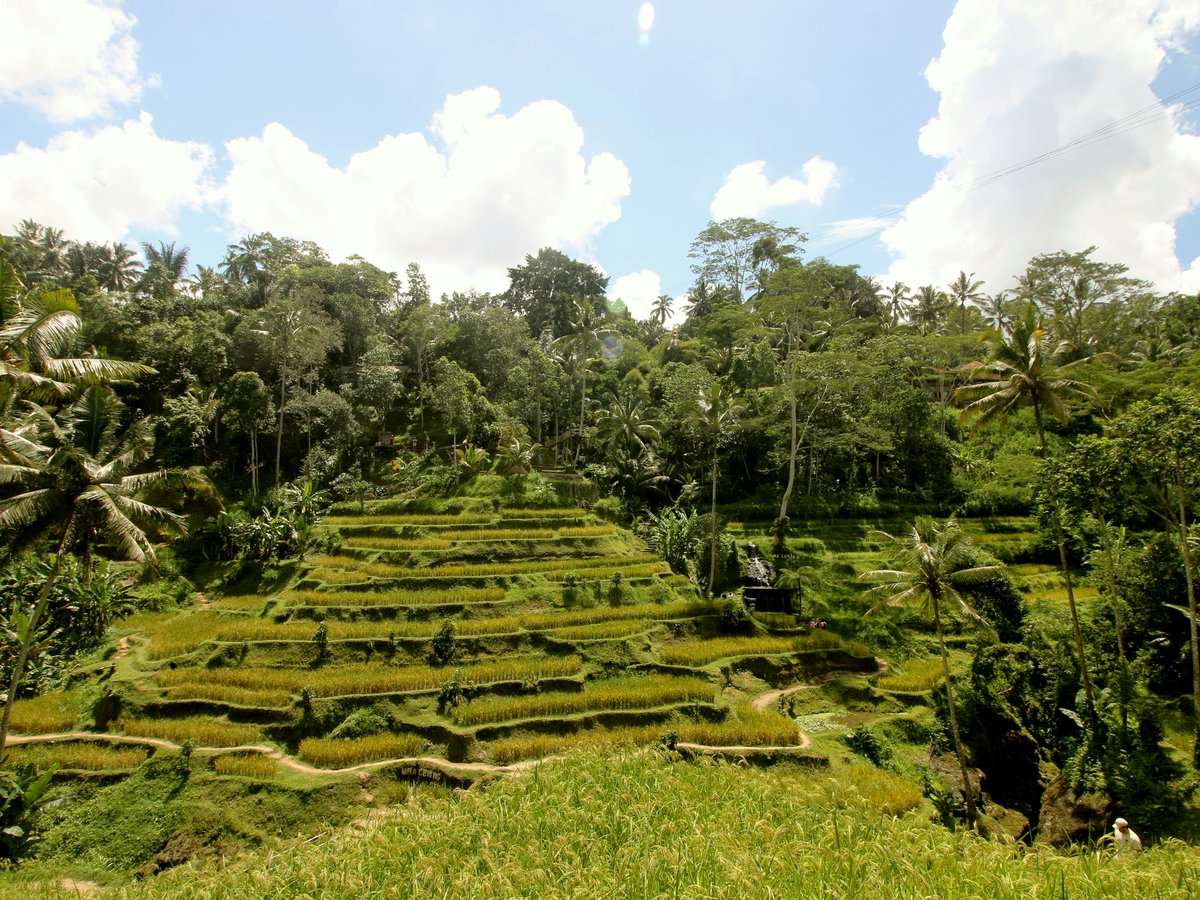
Ubud sits in the Gianyar regency of central Bali, about 35 km north of the airport, and it has been the island's creative capital for the better part of a century. The shopping here reflects that lineage. You'll find woodcarving workshops in Mas village that have operated for three or four generations, silver studios in Celuk where artisans still work with hand-powered bellows, and painters along Jalan Raya Ubud selling canvases rooted in the Kamasan and Young Artists traditions that took hold in the 1930s. What makes Ubud's shopping distinct from Seminyak or Kuta is the proportion of goods made within a 10 km radius. The town scores 7.8/10 for digital-nomad suitability (sourced from TTDI's editorial rubric), and that population has layered in contemporary design shops and specialty coffee roasters alongside the older craft economy. Mind you, the tourist markup is real, particularly along the main roads. But the raw materials, the artisan traditions, and the village workshops feeding these shops are genuinely local in a way that's harder to find elsewhere on the island.
Shopping districts
-
Jalan Raya Ubud
mixed, trending higher near the palaceThe main east-west road through town, running roughly from the Campuhan ridge in the west past the royal palace and the art market toward Peliatan in the east. This is Ubud's commercial spine. Galleries selling Balinese paintings sit between cafes and small boutiques stocking sarongs, incense, and carved wooden figures. Quality varies enormously over a stretch of about 2 km. The western end near the Campuhan bridge tends to carry higher-end galleries and antique dealers. Closer to the palace, the shops lean more tourist-oriented with mass-produced items mixed among genuine craft pieces. You might notice the same carved cat figurine in 6 different shops along this stretch, each with a different asking price.
Best for: Balinese paintings, antique furniture, gallery browsing
-
Jalan Monkey Forest (Jalan Wenara Wana)
mid-rangeThe road running south from the center of town down to the Sacred Monkey Forest Sanctuary. It tends to attract younger visitors and has shifted noticeably toward yoga-wear boutiques, jewelry shops using semi-precious stones, and stores selling coconut-shell homewares over the past decade. The density of shops is high, with narrow storefronts packed side by side for about 1.5 km. Foot traffic stays heavy until around 21:00 most nights. Bargaining is expected in the smaller stalls but the branded boutiques hold firm on prices.
Best for: Contemporary jewelry, yoga clothing, casual accessories
-
Jalan Hanoman
mid-range to moderateRunning roughly parallel to Monkey Forest Road but one block east, Hanoman has become the preferred street for residents and longer-stay visitors. The shops here tend to be slightly less aggressive, the foot traffic a bit calmer. You'll find organic skincare brands using Balinese botanicals, independent bookshops, and a few textile stores selling hand-dyed fabrics from across the Indonesian archipelago. Several vegetarian restaurants line this road too, which keeps the browsing crowd around through lunch and dinner hours.
Best for: Natural skincare, textiles, bookshops, slow browsing
-
Jalan Dewi Sita
mid-range to higherA short connecting road between Monkey Forest Road and Hanoman, maybe 300 meters in total. It punches above its weight for shopping because several of Ubud's better independent boutiques cluster here. The stores tend to carry curated selections of Indonesian-designed clothing, hand-woven baskets, and ceramics rather than the mass-produced souvenirs found elsewhere. Foot traffic is lower than the two roads it connects, which makes for a more relaxed experience.
Best for: Curated Indonesian design, ceramics, woven goods
-
Mas Village
budget to high depending on complexityAbout 5 km south of Ubud's center on the road toward Denpasar, Mas has been a woodcarving village for centuries. Workshops line both sides of the main road for roughly 2 km, with artisans producing everything from small Garuda figures to full-size doors and furniture. The work ranges from quick tourist pieces to genuinely intricate sculptural carving that can take weeks per piece. Worth noting, many of the carvers here supply galleries in Seminyak and even export internationally, so buying at the workshop can cut out 2 or 3 layers of markup.
Best for: Woodcarving, sculptural pieces, carved furniture
-
Celuk Village
budget to mid-range for silver, higher for goldLocated about 8 km south of Ubud on the road toward Batubulan, Celuk has been the center of Balinese silver and gold smithing for generations. The workshops here produce filigree jewelry, ceremonial objects, and decorative pieces. You can watch artisans working with tiny tweezers and blowtorches in the back rooms of most shops. Silver items sold by weight start around 400,000 IDR for simple rings, scaling up significantly for intricate filigree work. The village cooperative helps maintain quality standards, though tourist-facing shops near the main road still carry some machine-stamped imports alongside the handmade pieces.
Best for: Silver jewelry, filigree work, custom commissions
Markets
-
Pasar Seni Ubud (Ubud Art Market)
artisan and souvenirUbud's central market sits directly across from the Puri Saren royal palace on Jalan Raya Ubud. The two-story structure is packed with stalls selling sarongs, woven bags, paintings, carved wooden items, batik fabric, and incense. The upper floor tends to have more textile vendors. Quality is uneven. Some stalls carry genuine handmade items from nearby villages while others stock factory-produced goods from Java. The trick locals mention is arriving before 09:00, when vendors are more willing to negotiate and the tour-bus crowds haven't arrived yet. The building itself was renovated around 2016 and is cleaner and more organized than the older iteration.
Daily, roughly 06:00 to 18:00. Early morning is best for bargaining and cooler temperatures.
-
Ubud Morning Market (Pasar Pagi)
food and produceThis is the same physical location as the art market but operates in the pre-dawn hours as a traditional Balinese produce market. Local vendors sell temple offerings (canang sari), fresh fruit, spices, rice, and vegetables. The atmosphere before sunrise is completely different from the daytime tourist market. Balinese women in temple dress buying offerings for the day's ceremonies fill the narrow aisles. By about 07:00 or 08:00, the produce vendors begin packing up and the souvenir stalls take over. It's worth the early alarm for the cultural experience alone.
Daily, approximately 04:00 to 08:00
-
Sukawati Art Market
artisan wholesaleAbout 18 km south of Ubud on the road toward Denpasar, Sukawati is the wholesale source that many Ubud shops quietly restock from. The prices here tend to run 30 to 50 percent lower than what you'd pay at Pasar Seni Ubud for similar items. The market specializes in paintings, kites, ceremonial umbrellas, carved wooden panels, and batik. The building is older and more chaotic than Ubud's renovated market, with narrow corridors and dim lighting on the upper floors. To be fair, the lower prices come with less air circulation and more persistent sellers, but if you're buying multiple gifts it's likely worth the trip.
Daily, roughly 06:00 to 18:00
-
Tegallalang Handicraft Stalls
handicraft and souvenirStrung along the road near the famous rice terraces about 9 km north of Ubud center, these open-air stalls sell carved wooden signs, painted coconut shells, rattan items, and the sort of decorative pieces that photograph well against a rice-paddy background. The quality is generally mid-tier, aimed at day-trippers visiting the terraces. Prices are negotiable but vendors here deal with a constant stream of tour groups, so the opening ask tends to be high. The wind chimes made from bamboo are a genuinely local product and hold up well for travel.
Daily, approximately 08:00 to 17:00
-
Ubud Night Market (Pasar Malam)
night and foodSmaller and more informal than the daytime market, the night market sets up near Jalan Raya Ubud and the surrounding streets after dark. Food stalls selling nasi campur, satay, bakso, and grilled corn dominate, but a few vendors also set up with handmade jewelry and leather goods. The crowd skews more local in the evening, particularly around the warung-style food stalls where a plate of nasi campur might run 25,000 to 35,000 IDR. It's not a large-scale night market like you'd find in Bangkok or Taipei, but the food is solid and the atmosphere is relaxed.
Nightly, roughly 17:00 to 22:00
Souvenirs worth bringing home
The items genuinely worth bringing home from Ubud are the ones still made within the surrounding villages. Celuk silver filigree jewelry, particularly the traditional Balinese designs with tiny granulated silver beads, is difficult to find at comparable quality outside of Bali. Woodcarvings from Mas village range from palm-sized Garuda figures to larger mythological panels. Hand-painted Kamasan-style cloth, based on the shadow puppet tradition from Klungkung regency, makes a distinctive wall hanging. Balinese coffee, including beans from the Kintamani highlands about 40 km north, travels well and costs a fraction of what specialty shops charge abroad. Hand-rolled incense from the sticks-and-resin vendors at the morning market is light enough to pack easily. Rattan bags woven in the Ata style from the Tenganan village area in east Bali appear throughout Ubud's shops. The genuine Tenganan versions use a smoked rattan that darkens to a rich brown over time. Mass-produced copies exist, so checking the weave tightness and smelling for the characteristic smoky scent helps distinguish them. Batik sarongs are everywhere, but the hand-stamped (cap) and hand-drawn (tulis) versions from Java hold their colors far longer than the screen-printed ones. At the current exchange rate of roughly 17,862 IDR to 1 USD, a hand-stamped batik sarong tends to run between 150,000 and 400,000 IDR depending on complexity.
Practical tips
- Bargaining
- Bargaining is standard at markets and most non-branded shops. A reasonable opening counter is around 40 to 50 percent of the first asking price, with both sides typically settling near 60 to 70 percent. Vendors at the Ubud Art Market deal with hundreds of tourists daily and are skilled negotiators. Buying multiple items from one stall gives you more leverage. That said, pushing too hard on a piece that's clearly handmade and took real skill doesn't sit well. If you're buying at a village workshop where you've watched the artisan work, the dynamic shifts. Negotiate gently but recognize the labor.
- Opening hours
- Most shops along Jalan Raya Ubud, Monkey Forest Road, and Hanoman open between 09:00 and 10:00 and close around 20:00 or 21:00. The morning produce market starts as early as 04:00 and winds down by 08:00. Village workshops in Mas and Celuk tend to keep shorter hours, roughly 08:00 to 17:00, and some close for Balinese ceremonial days (which follow the Pawukon 210-day calendar, so checking locally is the only way to know). Nyepi, the Balinese Day of Silence, shuts everything on the island for 24 hours, typically falling in March.
- Payment methods
- Cash in Indonesian rupiah remains the most reliable payment method, especially at markets and smaller shops. ATMs are plentiful along Jalan Raya Ubud and Monkey Forest Road, though some charge withdrawal fees of 25,000 to 50,000 IDR per transaction. Many boutiques and larger galleries now accept Visa and Mastercard, sometimes with a 2 to 3 percent surcharge. QRIS, Indonesia's national QR payment system, has been spreading through Ubud's shops and even some market stalls. GoPay and OVO mobile wallets work at participating stores. Keep smaller denominations for market purchases since vendors sometimes struggle with 100,000 IDR notes for small transactions.
- Tax refunds
- Indonesia operates a VAT refund scheme for foreign tourists on purchases over 5,000,000 IDR (roughly 280 USD) from shops displaying the 'Tax Free' logo. You'll need to collect a tax refund form (faktur pajak) from the retailer at the time of purchase. Refunds are processed at the airport before departure, at counters in both the international terminals. In practice, very few Ubud shops participate in the scheme. The boutiques along Jalan Dewi Sita and some larger galleries are your best bet. Market stalls and village workshops do not issue tax forms.
- Shipping large purchases
- If you buy a large woodcarving or piece of furniture in Mas or from a gallery, most established sellers can arrange international shipping. They typically work with freight forwarders in Denpasar. Get a written quote that specifies whether it includes customs duties on your end, because the carving itself might cost less than getting it home. Several packing and shipping services operate near the Ubud post office on Jalan Jembawan. For smaller items, Indonesia's national postal service (Pos Indonesia) and JNE courier have offices in town.
- Avoiding fakes
- The most commonly faked items in Ubud's shops are Tenganan-woven rattan bags, hand-drawn batik (claimed tulis but stamped), and luwak coffee (often regular beans repackaged). For rattan, check the weave density and smell for the smoked finish. For batik tulis, look at the reverse side of the fabric. Genuine hand-drawn batik shows the pattern on both sides with slight irregularities, while screen-printed versions have a noticeably paler reverse. For luwak coffee, be skeptical of any product below about 300,000 IDR per 100 grams, as the genuine article is labor-intensive to produce.
FAQ
Is Ubud safe for solo travelers who want to shop the markets and walk between villages?
Ubud scores 6.8/10 for solo-traveler safety (see the TTDI Solo-Safety Index). The central shopping streets are well-lit and busy until around 21:00. Walking between the main market and shops along Monkey Forest Road or Hanoman feels comfortable at most hours. Getting to village workshops in Mas or Celuk typically requires renting a scooter or hiring a driver, since sidewalks disappear on the connecting roads and traffic moves fast. Petty theft is uncommon compared to beach resort areas, though you should keep bags zipped in crowded market aisles.
What are the best shopping areas for handmade Balinese crafts rather than mass-produced souvenirs?
The village workshops south of Ubud center produce the most authentic handmade goods. Mas village for woodcarving and Celuk for silver jewelry both sit within a 15-minute drive. In town, Jalan Dewi Sita's boutiques tend to stock curated handmade items rather than factory goods. At the Ubud Art Market, the upper-floor textile stalls and the vendors who arrive earliest in the morning (before 09:00) are more likely to be selling their own or their family's work. Asking where an item was made, and whether you can visit the workshop, quickly separates the genuine artisan sellers from the resellers.
Can I visit Tirta Empul Temple and shop in Ubud on the same day?
Tirta Empul Temple sits about 15 km northeast of Ubud center and a visit typically takes 1 to 2 hours including the purification ritual. The drive takes roughly 30 minutes each way. Combining it with shopping works well if you visit the temple in the morning, when it's less crowded, and return to Ubud's shops and markets by midday. The Tegallalang rice terraces and their handicraft stalls fall along the route between the temple and Ubud, so you can stop there without much of a detour.
Do Ubud's shops and markets accept US dollars or do I need Indonesian rupiah?
Rupiah is the standard currency and strongly preferred. Some larger galleries and boutiques will accept US dollars but typically at an unfavorable exchange rate compared to withdrawing rupiah from an ATM. Market vendors and village workshops deal exclusively in rupiah. Money changers exist along the main roads, though ATMs from major Indonesian banks (BCA, Mandiri, BNI) are more reliable for getting a fair rate. Always count your bills carefully when using a street money changer.
What day trips from Ubud combine well with shopping?
Gunung Kawi, the ancient rock-cut temple about 17 km north, pairs well with stopping at the Tegallalang handicraft stalls on the return drive. A trip south to Sukawati Art Market for wholesale-priced crafts can be combined with browsing the Celuk silver workshops, since they sit along the same road. Penglipuran Village, roughly 45 km northeast, offers a look at traditional Balinese village architecture but limited shopping. The drive back passes through areas with small roadside pottery and basket-weaving operations that don't appear in guidebooks.
Last verified by automated review (v1.7.2) on . What is automated review?