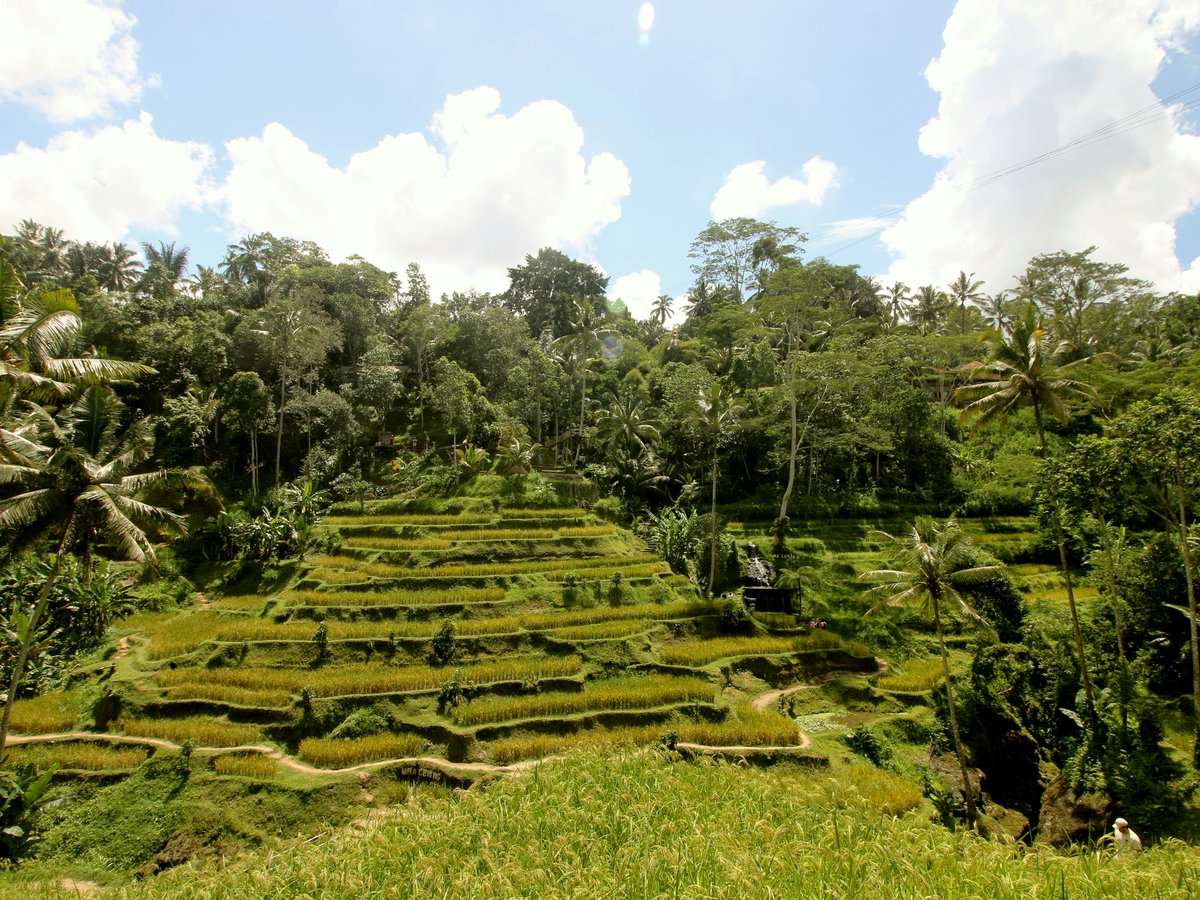
Ubud doesn't do nightlife the way south Bali does. Visitors come to this part of the island for the spring-fed purification pools at Tirta Empul, the rock-cut shrines of Gunung Kawi, and 5 AM yoga on the rice terraces. The after-dark hours follow that rhythm. Along Jalan Monkey Forest, bar staff start stacking chairs while Seminyak's dance floors are still filling. The people still out tend to be digital nomads on their second Negroni, Balinese hospitality workers at the end of a shift, or visitors who followed the sound of live music from a garden courtyard. Ubud scores 7.8/10 for digital-nomad suitability (sourced from TTDI's editorial rubric), and that population defines the drinking culture more than any other group. You won't find foam parties or bottle service. The evening soundtrack is tree frogs competing with cicadas, cut by the occasional strum of an acoustic guitar. The air holds the warmth of the day and the lingering sweetness of incense from canang sari offerings on the sidewalk. On a good night, the best seat is a bamboo stool at a garden terrace overlooking flooded paddies catching moonlight.
The Bar Scene
The cocktail bar wave reached Ubud a few years after it hit Seminyak, but it has settled in. Along Jalan Dewi Sita and the upper stretch of Jalan Monkey Forest, open-air spots mix drinks with local arak, turmeric, galangal, and pandan. Cocktails in this area tend to run 80,000 to 130,000 IDR. The arak-based ones are worth trying. Arak is Bali's traditional spirit, and when it comes from a licensed producer rather than backyard distillation, it's clean, slightly sweet, with a faint coconut finish on the palate. Bintang, Indonesia's default lager, runs 40,000 to 60,000 IDR depending on the venue. It's light, cold, and in Ubud's humidity it disappears fast. Craft beer has started to appear at a handful of spots, but the selection is thin compared to what Canggu offers. Wine bars are scarce. A few restaurants carry imported bottles, but the markup tends to be steep and the storage conditions sometimes suspect. If wine matters to you, the beach towns to the south are a safer bet. Rooftop bars are mostly absent. Ubud's appeal is ground-level. The best seats look out over jungle canopy from garden terraces, not down from a high floor. A few venues along the Campuhan ridge or overlooking the Wos River valley have elevated decks that catch the evening breeze and the last golden light over the palm canopy. The dive bar category doesn't translate well here. The closest equivalent is the warung-style spots where Balinese locals drink Bintang and arak at plastic tables. These tend to cluster along the roads heading north toward Tegallalang and Payangan. Prices drop to around 30,000 IDR for a large Bintang, and the conversation is in Balinese, not English.
The Club Scene
Ubud doesn't have nightclubs. That's not a gap in the scene. It is the scene. The town's noise regulations and traditional community agreements, known locally as awig-awig, keep things quiet near temples and residential banjar. If you came to Bali for bottle service and DJs spinning until 4 AM, Seminyak and Canggu sit roughly 90 minutes south by car. What Ubud does have, on occasion, are evening events with DJs playing ambient, downtempo, or organic house in open-air settings. The bass stays low enough to feel in your chest without drowning out the crickets in the surrounding rice paddies. Warm air moves through open bamboo structures. These events tend to start around 7 PM and wrap by 11 PM. Dress codes don't exist. Shorts, sandals, and a linen shirt will get you into every venue in town. Cover charges are uncommon outside of special events or full-moon gatherings. Some of the larger restaurants and bars bring in guest DJs on weekends, particularly during Bali's peak tourist months from July through September. These events might draw 100 to 200 people, which for Ubud feels like a crowd. The music tends to stay at a volume where conversation is still possible. Ecstatic dance and conscious movement sessions happen regularly in and around Ubud. These run in the late afternoon or early evening, are typically alcohol-free, and draw the yoga and wellness crowd. They're a recurring feature of Ubud's social life, often advertised through local notice boards, cafe bulletin boards, and WhatsApp groups.
Live Music
Live music in Ubud leans acoustic, jazz, and traditional Balinese. On any given evening along Jalan Monkey Forest or Jalan Raya Ubud, 2 or 3 venues will have something going. Quality varies. Some nights you'll catch a genuinely good jazz trio working through standards over dinner service. Other nights it's a solo guitarist cycling through the same 15 covers. Traditional gamelan performances happen regularly at Puri Saren Agung, the Ubud Royal Palace on Jalan Raya Ubud. The sound of bronze metallophones ringing across the stone courtyard at dusk is one of the defining sounds of this town after dark. Performances typically start around 7:30 PM and draw both tourists and local families. The Kecak fire dance is another evening tradition, staged at temples around the Ubud area. Groups of 50 or more men chant in interlocking rhythms while dancers perform scenes from the Ramayana. The chanting builds in waves and fills the open-air courtyard with a sound that seems to come from everywhere at once. Several troupes perform Kecak on different nights of the week. For contemporary music, the pickings are thin. A handful of bars host open-mic nights, and the occasional touring act from Jakarta passes through. Ubud's live music identity sits squarely in the traditional arts. Friday and Saturday tend to have the most options, though the gamelan and dance performances follow their own set weekly schedules.
Nightlife neighborhoods
-
Jalan Monkey Forest
The main bar corridor in Ubud, running south from the town center toward the Sacred Monkey Forest Sanctuary. Open-air cocktail spots line both sides, and live acoustic music drifts between venues after dark. The smell of clove cigarettes and frangipani mixes in the warm night air. Most of Ubud's after-dark activity concentrates on this single strip.
- Best for
- First-time visitors, couples, and anyone who wants options within walking distance of each other
-
Jalan Dewi Sita
A quieter side street along the northern edge of the football field, lined with restaurants that transition into bar mode once the dinner plates are cleared. More intimate than the main strip, with smaller crowds and a settled expat atmosphere. The pace is slower, conversations run longer, and the music stays in the background.
- Best for
- Dinner that turns into drinks, the digital nomad social circuit, and people who prefer hearing each other talk
-
Campuhan and Penestanan
West of the center, past the Campuhan ridge walk. Scattered venues perch above jungle ravines, with cooler air rising from the river valley below. Things close earlier here, often by 10 PM. Even by Ubud standards, this side of town favors stillness after dark.
- Best for
- Sunset drinks with a valley view, couples who want to skip the tourist corridor
-
Sanggingan
The road heading north from Ubud toward Tegallalang passes through Sanggingan, where a handful of restaurants keep their bars open late by local standards. Popular with long-stay residents and artists from near the Neka Art Museum. Darker roads, fewer streetlights, more of a neighborhood feel once the sun drops.
- Best for
- Repeat visitors, long-term expats, and anyone comfortable on Ubud's unlit roads after dark
-
Peliatan
East of central Ubud, Peliatan is known for its traditional dance troupes rather than its bars. The community has performed Legong dance for generations. After an evening performance, the surrounding warungs serve simple food and cold beer to a mixed local-and-tourist crowd. Unhurried and distinctly Balinese.
- Best for
- Cultural performances followed by local food and drinks at warung prices
Safety after dark
Ubud scores 6.8/10 for solo-traveler safety (see the TTDI Solo-Safety Index), and the town is generally calm after dark. A few things are still worth knowing.
Transport is the biggest nighttime concern. Ubud's roads are narrow, poorly lit in stretches, and the surface shifts between asphalt, gravel, and loose stone without warning. A scooter after dark, without experience on local roads, is a reliable path to a clinic visit. Pre-arrange a driver for late returns, or walk if your accommodation sits within the central area. Ride-hailing apps like Grab and Gojek have faced resistance from local transport cooperatives in Ubud, so availability tends to be unreliable. Most guesthouses and hotels will call a driver for you at a fixed rate.
Drink spiking has not been widely reported in Ubud, but standard awareness applies. Keep your drink with you and watch it being prepared.
Methanol poisoning from poorly distilled arak is a documented risk across Bali. Stick to arak served at established bars rather than from unlabeled bottles at informal stalls. Backyard distillation has caused hospitalizations and fatalities among tourists in Bali over the years.
For LGBTQ+ travelers, Ubud scores 4.5/10 for LGBTQ+ friendliness (sourced from TTDI's editorial rubric). Indonesia has no legal protections for LGBTQ+ individuals, and public displays of affection between same-sex couples may draw unwanted attention outside the most tourist-facing venues. The wellness community tends to be more accepting, but discretion is the practical approach.
Petty theft is uncommon in central Ubud compared to south Bali's tourist strips, but don't leave phones or bags unattended at bar tables. Bag snatching from passing motorbikes has been reported on quieter roads outside the center.
Practical tips
- Currency and prices
- Indonesia uses the rupiah (IDR). Bring cash in smaller denominations, as many bars in Ubud still prefer cash and some add a surcharge of around 3% for card payments. ATMs are available along Jalan Raya Ubud and Jalan Monkey Forest, though fees vary by bank.
- Tipping
- Tipping is not expected at most Ubud bars, but rounding up or leaving 10,000 to 20,000 IDR is appreciated by staff. Some venues include a service charge of 5% to 10% on the bill. Check before you double up.
- Closing times
- Most bars close between 11 PM and midnight. A handful stretch to 1 AM on weekends. Local community agreements and noise rules support those hours. Plan to eat dinner on the early side and shift to drinks afterward, because the window is short.
- Dress
- Ubud runs informal after dark. Sandals, shorts, and a T-shirt get you into every venue. Daytime temperatures sit around 27°C with humidity near 60%, and evenings stay warm, so a light layer is needed only at open-air hilltop spots where cool air rises from the valleys.
- Temple proximity
- Several bars and restaurants sit near active temples. Keep noise respectful on ceremony nights, which you'll recognize by the sound of gamelan and the scent of incense from sidewalk offerings. Balinese ceremonies follow the 210-day Pawukon calendar, so they don't fall on fixed Western dates.
- Tax
- Indonesian law requires a 10% regional food and entertainment tax called PB1 at restaurants and bars. Some venues include it in their listed prices, others add it at the bill. Ask beforehand if menu prices look unusually low.
FAQ
Is Ubud good for nightlife compared to other parts of Bali?
Ubud is not a party destination. South Bali's beach towns handle that. Ubud's after-dark appeal is quieter cocktail bars, traditional Balinese dance and music performances, and a low-key social scene shaped by the wellness and nomad communities. If you want to dance past midnight, head south.
What is arak and is it safe to drink?
Arak has been produced in Bali for centuries and comes in two main types. Arak beras is distilled from rice, and arak aren from coconut palm sap. Both are clear spirits with alcohol content that varies between roughly 20% and 50% depending on the distiller. The licensed commercial versions served at Ubud's bars are safe and increasingly featured in craft cocktails.
Can I use ride-hailing apps to get home late at night?
Availability is inconsistent, for the reasons noted in the safety section. Your best backup is a hotel-arranged driver or the number of a local driver you trust. Many long-stay visitors in Ubud keep a regular driver's contact on hand. Typical rates from central Ubud to outlying areas like Tegallalang or Mas run between 80,000 and 150,000 IDR depending on distance and time of night.
What time should I head out for a night in Ubud?
Start with dinner on the early side and transition to drinks by 9 PM. The traditional evening performances happen before the bar crowd fills in, making them a natural opening act. Most cocktail spots are at their best between 9 and 10:30 PM, after which options thin out noticeably.
Is Ubud welcoming for solo travelers going out at night?
The town's solo-safety score, noted in the safety section, reflects a generally calm picture. Ubud's bar culture is friendly to people out on their own. The nomad population means other solo visitors are common, and the smaller, more intimate venues make conversation easier than a packed club ever could. Stick to central streets and arrange transport home in advance.
Last verified by automated review (v1.7.2) on . What is automated review?