12 packing essentials every Ubud visitor brings in 2026
A breathable cotton sarong tops the list for Ubud, where Bali's densest temple circuit, including Tirta Empul and Gunung Kawi, enforces a strict dress code at every gate. The tie-breaker over DEET repellent is frequency of need. You'll likely visit 2-3 temples daily, but mosquito exposure peaks only at dusk in the lowland river corridors below Penestanan and Kedewatan.
Each item's score reflects three factors weighted for Ubud's conditions. Destination-specific necessity comes first, then quality per dollar at the mid-2026 rate of roughly 17,786 IDR to 1 USD, then how often travellers report wishing they had packed it. A breathable sarong leads because Bali's temple dress code is non-negotiable. Goa Gajah, Pura Taman Saraswati, and dozens of smaller shrines between Peliatan and Mas all turn visitors away at the gate without covered legs and shoulders. Polyester sarongs sold outside temples for 30,000-50,000 IDR (under 3 USD) trap moisture in humidity that regularly tops 90%. A cotton or rayon one you bring from home holds up across 3-4 temple visits per day without feeling damp by afternoon. DEET repellent sits close behind because Ubud's river valleys are year-round mosquito habitat. The Ayung corridor below Campuhan Ridge is particularly dense with standing water after rain. Pharmacies along Jalan Raya carry repellent, but concentrations above 30% DEET are harder to source locally.
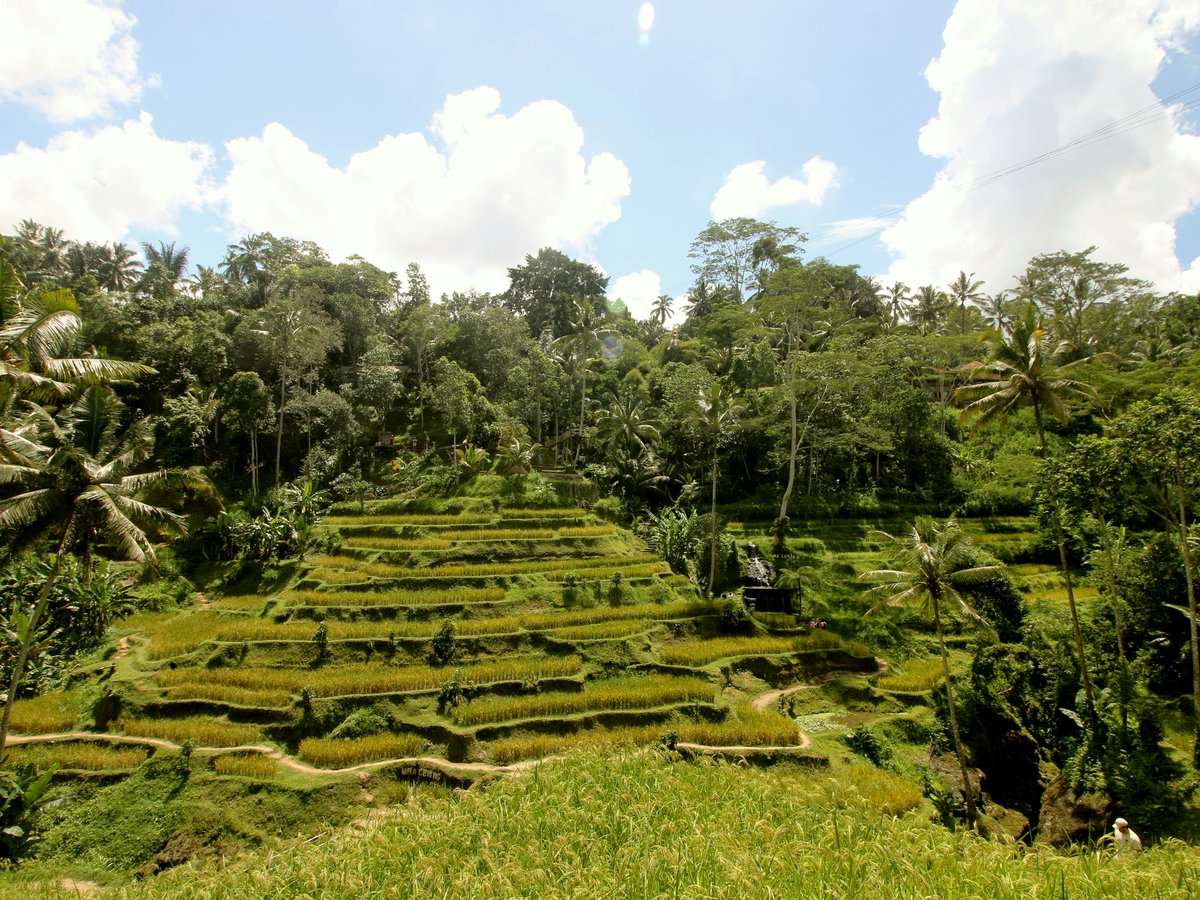
The most common packing mistake is arriving at Ngurah Rai Airport (DPS) with beach gear and skipping highland layers. Ubud sits roughly 200 meters above sea level in Bali's interior. Visitors who take the Perama shuttle north through Sanur expect coastal heat but find afternoon showers and temperatures between 22°C and 27°C instead. The Tegallalang rice terraces reach 600 meters elevation, where dawn visits feel cool on bare arms. A packable rain jacket matters more here than in Kuta or Seminyak. Footwear is the second mistake Ubud first-timers make. The 300-plus carved stone steps descending to Gunung Kawi turn slippery within minutes of a shower, and the forest trails through Nyuh Kuning south of the Sacred Monkey Forest Sanctuary are uneven laterite over exposed tree roots. Standard rubber flip-flops from Ubud Market stalls won't grip either surface. Trail sandals with 4-5mm lug tread handle both.
A sarong is the clear top pick for temple-focused itineraries, but if your Ubud stay is entirely wellness-oriented, you might never enter a temple compound. Yoga retreats cluster in Penestanan on the hillside west of central Ubud. Spa resorts line the Ayung River gorge through Kedewatan. In that scenario, DEET repellent becomes more critical, because the river-valley setting means higher mosquito exposure at dusk than on Jalan Monkey Forest in the town center. Mind you, Ubud scores 7.8/10 for digital-nomad suitability (sourced from TTDI's editorial rubric). Nomads staying 4-8 weeks in co-working spaces around Peliatan tend to prioritize a filtered water bottle and a Type C power adapter over ceremonial wear. Your trip profile, not product specs, determines which of these 14 items truly ranks first for you.
The full list
-
Breathable cotton or rayon sarong
Bali's temple dress code requires covered legs and shoulders at every site on Ubud's circuit, from Pura Taman Saraswati in the center to shrines in Peliatan. Gate-sold polyester traps warm air against your skin in tropical humidity. A breathable cotton or rayon sarong stays comfortable through 3-4 temple visits per day.
Shop Breathable cotton or rayon sarong -
DEET mosquito repellent (30-50% concentration)
Ubud's river valleys around Campuhan Ridge and the Sayan gorge breed mosquitoes year-round. Dengue remains a real risk across Bali's interior highlands. Local pharmacies on Jalan Raya Ubud carry repellent, but concentrations above 30% DEET are harder to find than at home.
Shop DEET mosquito repellent (30-50% concentration) -
Lightweight packable rain jacket
Afternoon showers hit Ubud almost daily, even in the May-September dry season. The exposed walk between Tegallalang's rice terraces and the open valleys around Tampaksiring leaves you nowhere to shelter quickly. Umbrellas are awkward on narrow terrace paths and stone temple stairways.
Shop Lightweight packable rain jacket -
Trail sandals with grip soles
The stepped temple paths around Ubud's gorge-side shrines near Campuhan and Kedewatan get dangerously slick after rain. The forest trails through Nyuh Kuning south of the Sacred Monkey Forest are uneven laterite over exposed roots. Standard flip-flops fail on both surfaces.
Shop Trail sandals with grip soles -
Reef-safe mineral sunscreen SPF 50
Even at Ubud's 200-meter elevation, equatorial UV is intense on the open Campuhan Ridge walk and Tegallalang's shadeless rice terrace platforms. Reef-safe mineral formulas matter for day trips to Sanur Beach, under 90 minutes south by car.
Shop Reef-safe mineral sunscreen SPF 50 -
Small daypack (20-25L)
A day visiting Goa Gajah in the morning and the Tegallalang terraces in the afternoon means carrying water, sarong, rain jacket, and camera for 6-8 hours with no breaks at your hotel. Ubud lacks public lockers outside accommodations, so a compact daypack becomes your mobile base between sites.
Shop Small daypack (20-25L) -
Universal power adapter (Type C/F, 230V)
Indonesia uses European-style Type C and F outlets at 230V. Older guesthouses in Penestanan and Nyuh Kuning sometimes have only 2-prong recessed sockets that reject flat-blade plugs. A universal adapter with USB ports also works at cafes along Jalan Dewi Sita.
Shop Universal power adapter (Type C/F, 230V) -
Reusable water bottle with filter
Ubud's tap water is not potable, and single-use plastic is an environmental strain Bali is working to reduce. A filtered bottle pays for itself within 2 days versus buying 10,000 IDR bottled water at every temple entrance and rice terrace parking lot.
Shop Reusable water bottle with filter -
Light long-sleeve linen or cotton shirt
Temples across Ubud require shoulder coverage. A light long-sleeve shirt meets the dress code without overheating in midday heat around Peliatan and Mas. It doubles as mosquito protection during dusk walks along the Campuhan Ridge path without needing extra repellent applications.
Shop Light long-sleeve linen or cotton shirt -
Waterproof dry bag (10L roll-top)
Sudden downpours on the Tegallalang terraces or during Ayung River rafting near Kedewatan will soak an unprotected phone in seconds. A roll-top dry bag also keeps electronics safe during the Perama shuttle from Ngurah Rai Airport, where luggage sometimes rides in open truck beds.
Shop Waterproof dry bag (10L roll-top) -
Basic first-aid kit with anti-diarrheal
Ubud's nearest hospital with full emergency capacity is BIMC in Kuta, roughly 90 minutes south by car. Minor cuts from wet temple stone steps or stomach trouble from adjusting to warung food near Ubud Market are better handled immediately with your own supplies.
Shop Basic first-aid kit with anti-diarrheal -
Headlamp or small flashlight
Predawn visits to Ubud's major temples before tour buses arrive mean navigating unlit grounds and parking areas around 5:30 AM. Side streets in Nyuh Kuning and Penestanan lack streetlights after dark, and the path from evening dance performances at Ubud Royal Palace gets surprisingly dim.
Shop Headlamp or small flashlight
Last verified by automated review (v1.7.2) on . What is automated review?