What's happening in Ubud this week?
Ubud's week revolves around nightly traditional dance at Puri Saren Agung, with different troupes performing most evenings from 7:30pm. Mornings belong to Pasar Ubud market before 8am, when it's still local produce rather than tourist goods. Dry-season days sit around 22-27°C with high humidity and brief afternoon showers.
Ubud's week is structured around the traditional dance performances at Puri Saren Agung, the palace compound on Jalan Raya Ubud. Most nights at 7:30pm, a different troupe performs on the open-air stage. The gamelan orchestra starts tuning around 7pm, and the metallic shimmer of bronze keys carries across the lotus pond. Tickets cost 100,000 IDR (about $5.60) at the door. Arrive by 7pm for a front-row seat on the stone steps. The Kecak fire dance, performed without instruments by a circle of 50-plus chanting men, typically runs at Padang Tegal stage south of the Monkey Forest. That version starts earlier, around 6pm, to catch the last daylight. Mind you, the quality varies between the palace stage and the smaller roadside venues. The Puri Saren shows tend to be more polished than performances further down Jalan Hanoman.
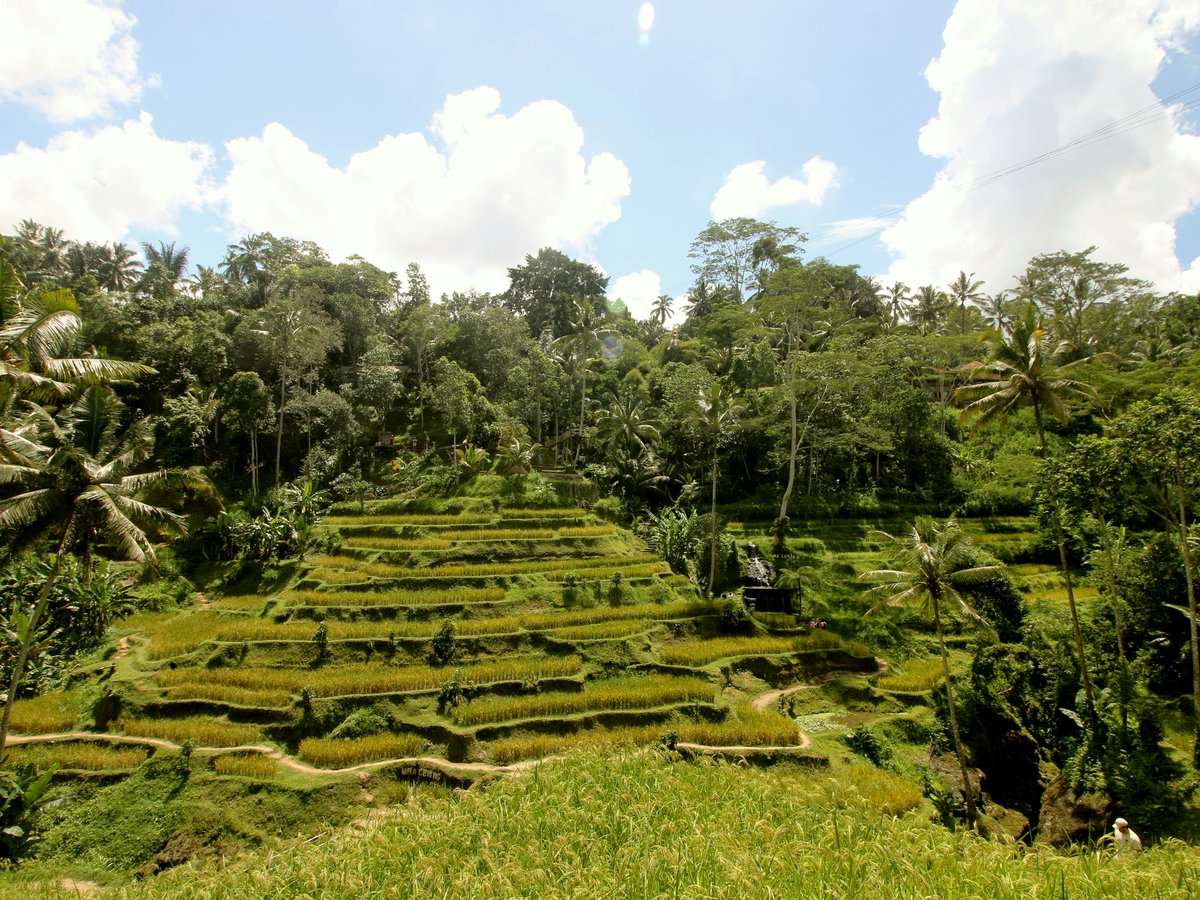
Pasar Ubud, the two-story market at the corner of Jalan Raya Ubud and Jalan Karna, runs on a daily split schedule. Before 7am it's local produce. Vendors pile mangosteen at around 10,000 IDR per kilo, salak with its papery brown scales, and bundles of morning glory on woven mats. The air smells of clove cigarettes and frangipani petal offerings on damp stone. By 9am the ground floor flips to tourist stalls selling silk scarves, wooden carvings, and woven bags. Prices start at 3-4x what locals pay, so negotiate to about 40% of the opening ask. Mornings are also the window for Tegallalang Rice Terrace, 20 minutes north by scooter. The terraces face east, so the light is best between 7 and 9am, and entrance runs 50,000 IDR per person. By 10:30am the tour buses from southern Bali start arriving and the narrow paths get single-file.
Ubud sits at 600 meters elevation, so even in dry season that still means overcast mornings that burn off by 10am and brief showers near 3pm. Current conditions sit at 22.6°C with 92% humidity. The humidity is the real factor. Cotton sticks to skin within 15 minutes of walking Monkey Forest Road. Pack light synthetics. Mondays and Tuesdays tend to be quieter in town, with some galleries along Jalan Raya Ubud closed. Wednesday through Sunday the foot traffic on Jalan Dewi Sita picks up. For Tirta Empul, the purification spring about 15 kilometers northeast, go on a weekday morning before 9am. Weekend mornings draw Balinese worshippers and tour groups from Nusa Dua, and the wait for the spring pools can reach 45 minutes.
Ubud's food scene splits between the Jalan Dewi Sita cafe strip and the warungs along Jalan Goutama. At the warungs, a plate of nasi campur with lawar, satay, tempeh, and sambal runs 25,000-35,000 IDR. The sambal at Warung Biah Biah tends to be hotter than most, a thick red-brown paste that builds heat slowly. For first-timers who eat pork, babi guling (spit-roasted suckling pig) is the Ubud dish. Ibu Oka near the palace serves the best-known version at about 65,000 IDR per portion. Seniman Coffee Studio on Jalan Sriwedari roasts single-origin beans from Kintamani, 40 kilometers north. A pour-over runs 35,000-45,000 IDR. The afternoon crowd of remote workers and yoga-retreat visitors fills these cafes between 2 and 5pm, and the WiFi at Seniman holds steady around 15-20 Mbps.
No verified events are listed for this week. We publish only events we can confirm against an official source, never guesses.
Last verified by automated review (v1.7.2) on . What is automated review?