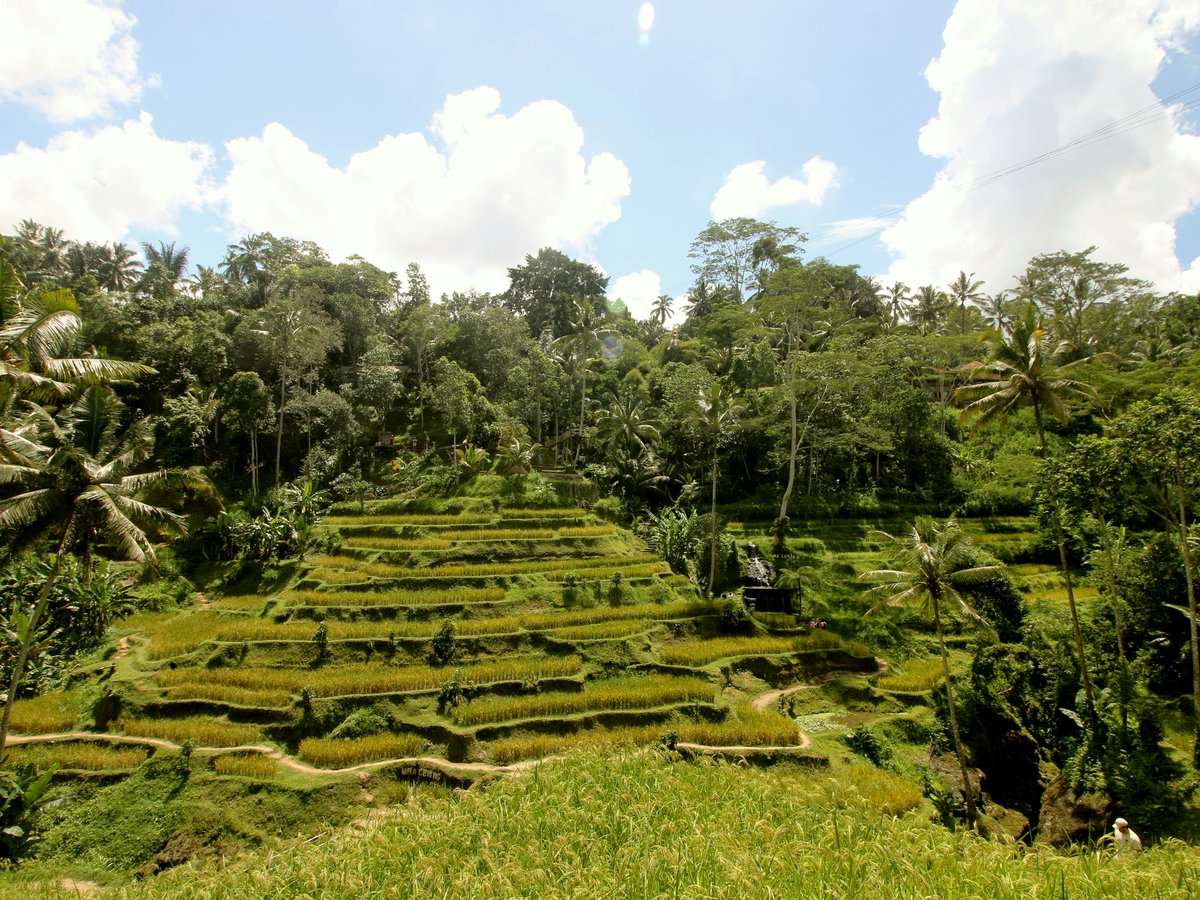
What should I avoid in Ubud?
Skip Tegallalang Rice Terraces between 10am and 3pm when tour buses choke the paths. Avoid money changers on Jalan Raya Ubud, where short-counting is routine. The Bali Swing near Bongkasa charges about $20 for a 10-second photo and a 30-minute wait. Transport drivers quote 2 to 3 times the fair rate from Ngurah Rai airport.
Jalan Raya Ubud has no proper sidewalk for most of its 2-kilometer stretch between Ubud Palace and the Campuhan Ridge junction. You walk single-file against motorbikes that pass close enough to clip your elbow, breathing diesel fumes at 30°C. Transport within Ubud is harder still. Local operators have kept ride-hailing apps like Grab pushed out of the town center since around 2017. Drivers at Ngurah Rai airport quote 300,000 to 400,000 IDR (roughly $17 to $23) for the 35-kilometer ride north, but the official airport taxi counter sells the same trip for about 150,000 IDR. Within town, a 3-kilometer hop to Tegallalang tends to cost 100,000 IDR when bargained down, though drivers open at double. Worth noting, you can still use Grab if you walk about 500 meters south past Jalan Pengosekan, where drivers pick up without trouble.
Tegallalang Rice Terraces look like every Bali Instagram post you've seen, and the crowds during peak hours prove it. Tour groups from Denpasar fill the paths from late morning onward, and you'll spend more time dodging selfie sticks than looking at paddies. Tegallalang also runs a layered fee system. You pay 25,000 IDR at the top entrance, then hit 2 or 3 more donation checkpoints on the descent, each staffed by someone who implies payment is mandatory. Total cost tends to reach 75,000 to 100,000 IDR per person. For terraces without the crowds, Jatiluwih (about 40 kilometers west near Tabanan) has UNESCO-listed paddies 10 times the size at a fraction of the foot traffic. The Bali Swing complex near Bongkasa amounts to a 10-second push on a rope swing above the Ayung gorge, with queues of 30 to 45 minutes on most mornings. You can see the same valley view for free from the Campuhan Ridge Walk, a 2-kilometer path starting behind the Ibah hotel.
Money changers on Jalan Raya and Jalan Monkey Forest advertise rates 500 to 1,000 IDR above the bank rate, which is how they pull you in. They short-change through fast counting, fanning the bills, skipping one or two 100,000 notes, and handing you the stack before you can verify. By the time you recount on the sidewalk, they'll insist you're 200,000 IDR short. Change money at Bank BCA on Jalan Raya or the Central Kuta exchange that keeps a small Ubud office; both give printed receipts. Drivers around Ubud also run the ceremony redirect. They'll tell you Tirta Empul or whichever temple you're heading to is closed for a ceremony, then offer to reroute you to a silver workshop in Celuk or an art gallery near Mas instead. Tirta Empul, the spring temple about 15 kilometers north, is the usual target, and it rarely closes without advance notice posted through local community boards.
Restaurants lining Jalan Dewi Sita and upper Jalan Hanoman charge 80,000 to 120,000 IDR for nasi goreng that costs 25,000 to 35,000 IDR at warungs on Jalan Gautama, one block east. Warung Biah Biah on Jalan Suweta still serves babi guling (Ubud's signature spit-roasted suckling pig) for about 45,000 IDR. The pork skin crackles when you bite through it, and the sambal matah on the side has enough raw shallot to clear your sinuses. Mind you, some of the pricier Dewi Sita spots earn their markup for the terrace setting above the valley. Locavore (reservations typically needed 2 weeks ahead) runs about 1,500,000 IDR per person for the tasting menu, an intentional $85 splurge rather than a tourist-trap markup. For under 50,000 IDR a plate, eat where the motorbikes park out front and the rice steams in metal trays.
Ubud sits about 200 meters above sea level in a river valley, and between November and March, afternoon storms can flood the stone paths around the Sacred Monkey Forest within 20 minutes. The Ayung River rises fast during heavy rain; brown water means upstream runoff has made the Class II rapids unpredictable, so skip any operator who launches in those conditions. Temple steps at Gunung Kawi, the rock-cut shrine about 25 minutes northeast, get slick after any rainfall, and the 300-step descent has no railing for the lower half. LGBTQ+ travelers should know that Ubud scores 4.5/10 on the TTDI friendliness rubric (sourced from TTDI's editorial rubric). Bali is more relaxed than Java on this front, but public affection between same-sex couples still draws stares in the Ubud market area, and the local banjar (village council) system means social pressure tends to be hyperlocal.
Tourist traps to skip
- Tegallalang Rice Terraces during peak hours, with layered donation checkpoints that push per-person cost to 75,000-100,000 IDR
- Bali Swing near Bongkasa, about $20 for a 10-second rope-swing photo op with 30-45 minute queues
- Silver workshops in Celuk village, where drivers earn commission and prices run 3 to 5 times retail
- Tourist restaurants on Jalan Dewi Sita and upper Jalan Hanoman, charging 3 to 4 times warung prices for identical dishes
- Art galleries near Mas village used as driver-commission destinations during the ceremony-closure redirect
- Sacred Monkey Forest at midday, when aggressive long-tailed macaques grab bags, sunglasses, and water bottles
- Overpriced guided tours to Penglipuran Village when self-guided entry costs about 30,000 IDR
Common scams
- Money changer short-counting on Jalan Raya and Jalan Monkey Forest, using fast bill-fanning to skip 100,000 IDR notes
- The ceremony-closure redirect, where drivers tell you your temple is closed and reroute you to commission shops in Celuk or Mas
- Ngurah Rai airport flat-fare quotes at 2 to 3 times the official taxi counter price
- Motorbike rental damage claims for pre-existing scratches on return; photograph the bike before riding off
- Free sarong offers at temple entrances that become 50,000 IDR donation requests after you put one on
Seasonal hazards
- November through March wet season brings afternoon storms that can flood valley paths within 20 minutes
- Ayung River rises fast during heavy rain; brown water signals dangerous upstream runoff for rafting
- Temple steps at Tirta Empul become slick and hazardous after any rainfall
- Mosquito activity rises during wet season; dengue risk is higher in river-valley areas like central Ubud
Last verified by automated review (v1.7.2) on . What is automated review?