Stay in Ubud in April
9 hotels in the Trip.com pool for Ubud, from US$18 a night.
Opens Trip.com on Fri 2 Apr to Sun 4 Apr 2027; change the dates there.
April in Ubud sits at the tail end of the wet season, when the rice terraces hold their deepest green and the rivers run at full volume through the ravines that frame the town. Afternoon thunderstorms arrive most days between 2pm and 5pm, dumping rain in concentrated bursts that clear within an hour, leaving the air washed and the stone paths steaming. Morning hours are reliably dry and the temperature sits in the low thirties, making the pre-noon window the practical time for temple visits, terrace walks, and market browsing. Tourist numbers thin noticeably compared to the July-August and December-January peaks, which means shorter queues at Tirta Empul, available tables at Locavore without a month-ahead reservation, and villa rates that drop thirty to forty percent below high-season prices. The transition from wet to dry is gradual rather than abrupt. Expect roughly fifteen rainy days across the month, concentrated in shorter, harder downpours rather than the all-day grey of January.
Why visit in April
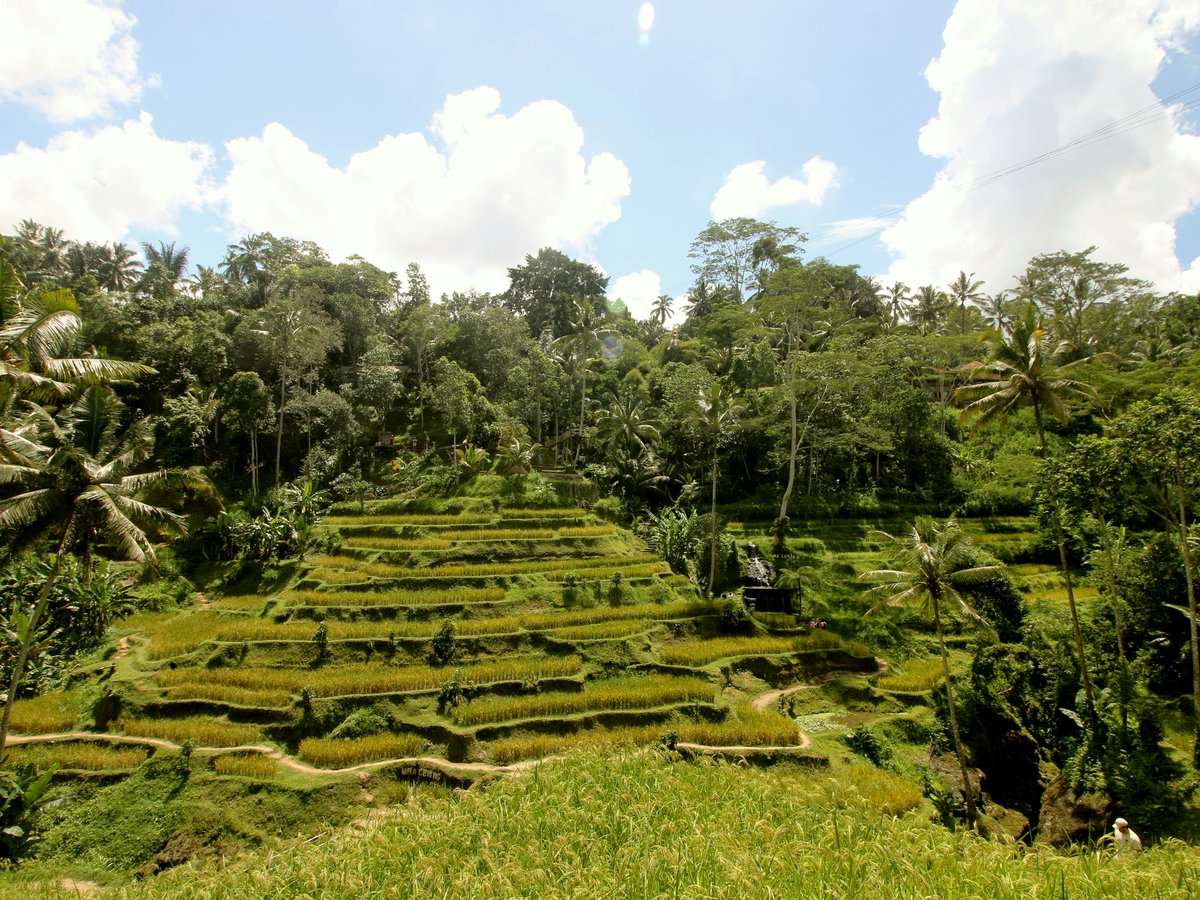
- Rice terraces at peak green. The paddies are flooded and fully planted, producing the iconic layered-emerald landscape that dries to gold by August
- Accommodation rates drop 30-40% from peak season, and last-minute availability opens up at properties that book out months ahead in July
- Waterfalls run at full force. Tegenungan, Tibumana, and Kanto Lampo are at their most dramatic with high water volume from the wet season
- Fewer tourists at major temples and the Monkey Forest mean a noticeably calmer experience, especially in the morning hours
Worth knowing
- Afternoon rain is near-daily, typically arriving between 2pm and 5pm and disrupting outdoor plans for one to two hours
- Humidity sits above 80% most of the day, making physical activity uncomfortable and drying laundry an exercise in patience
- Some unpaved roads to remote temples and lesser-known rice terraces become muddy and difficult on a scooter after heavy rain
Best for
Hot and humid with daily afternoon thunderstorms that typically last one to two hours. Mornings are warm and partly cloudy, with sunshine breaking through before the convective buildup begins around midday. Nights stay warm and muggy.
Year-round climate
Averages from the last 5 years.
| Month | Avg high (°C) | Avg low (°C) | Rainfall (mm) |
|---|---|---|---|
| Jan | 29 | 23 | 348 |
| Feb | 29 | 23 | 304 |
| Mar | 30 | 22 | 246 |
| Apr | 29 | 22 | 151 |
| May | 29 | 22 | 136 |
| Jun | 28 | 22 | 90 |
| Jul | 27 | 21 | 135 |
| Aug | 27 | 21 | 114 |
| Sep | 28 | 21 | 130 |
| Oct | 29 | 22 | 135 |
| Nov | 29 | 22 | 286 |
| Dec | 29 | 23 | 283 |
Best things to do in April
Tegallalang Rice Terrace walk at sunrise
natureWalking the terraced paddies north of Ubud before the tour buses arrive, when the morning light catches the flooded fields and the air is still cool. The terraces are at peak green in April, with young rice plants standing in shallow water that mirrors the sky.
The paddies are flooded and freshly planted in April, producing the most vivid green of the annual cycle. By July the rice yellows toward harvest.Booking tipArrive before 7:30am to avoid the tour-bus crowd that fills the parking area by 9am. The entrance fee is 15,000 IDR.
Tirta Empul purification ceremony
cultureParticipating in the ritual bathing at the holy spring temple in Tampaksiring, where visitors move through a sequence of fountain spouts in the main purification pool. The spring-fed water is cold and the stone carvings above the spouts date to the 10th century.
Lower visitor numbers in April mean shorter waits at the purification fountains. During peak season, queues at each spout stretch to thirty minutes.Booking tipBring your own sarong to avoid the rental queue. The temple opens at 8am; arriving by 8:30am gives you the pool nearly empty.
Cooking class with morning market visit
foodJoining a Balinese cooking class that starts with a guided walk through the Ubud morning market to buy ingredients, followed by hands-on preparation of six to eight dishes in an open-air kitchen surrounded by rice paddies.
April's fruit season brings rambutan, salak, and mangosteen to the market stalls, adding seasonal variety to the class menu that dry-season classes miss.Booking tipBook a class that includes the market visit component. Not all do. Paon Bali and Bumbu Bali are long-established operations.
Mount Batur sunrise trek
adventureA guided climb starting around 2am from the trailhead near Kintamani, reaching the crater rim of the active volcano before dawn. The sunrise view extends across Lake Batur and, on clear mornings, to Lombok's Mount Rinjani.
April mornings have better odds of clear skies at altitude than the wetter months of January-March, while the post-rain air clarity often exceeds the hazy dry season.Booking tipBook through a local guide association rather than a Ubud tour desk to avoid the markup. The trek is moderate but the 2am start is the real challenge.
Ubud Monkey Forest late afternoon visit
natureWalking the moss-covered stone paths through the Sacred Monkey Forest Sanctuary, home to over 1,200 long-tailed macaques and three Hindu temples dating to the 14th century. The forest canopy keeps the temperature several degrees cooler than the town.
The post-rain hour around 4-5pm, after April's typical afternoon shower, is when the forest floor steams and the monkeys are most active. The light through wet canopy is exceptional for photography.Campuhan Ridge Walk at dawn
natureA paved path along a narrow ridge between two river valleys, starting near the Ibah luxury hotel and running north for about two kilometers through tall grass that sways in the morning breeze. The walk is flat and easy.
The grass is at its tallest and greenest in April after months of rain, creating the lush corridor that defines the iconic photographs of this walk. By June it begins to brown.Silver jewelry workshop in Celuk
craftTaking a half-day silversmithing class in the village of Celuk, south of Ubud, where families have worked silver for generations. You learn basic techniques and leave with a ring or pendant you made yourself.
Workshop availability is better in April's shoulder season. During peak months, popular studios book out a week ahead. The cooler morning hours before the afternoon rain are ideal for working near a forge.Best places this April
Campuhan Ridge Walk
historic neighborhoodA paved path along a narrow ridge between two river valleys, starting near the Ibah luxury hotel and running north for about two kilometers. The morning air in the river valley carries a cooler, damper quality than the town center.
CampuhanPasar Seni Ubud (Ubud Art Market)
marketA two-story market across from the Royal Palace selling textiles, carvings, paintings, and silver jewelry. The ground floor operates as a local produce market from roughly 4am to 8am, serving Balinese families buying daily ingredients. The smell of fresh frangipani offerings, lemongrass, and chilies fills the ground level at that hour. By mid-morning it transitions to tourist-focused craft stalls.
Ubud centerTegallalang Rice Terraces
natureThe most photographed rice terraces in Bali, carved into the hillside north of Ubud in a dramatic cascade of narrow paddies. In April the fields are flooded and planted with young rice, producing layered reflections.
TegallalangTirta Empul Temple
templeA water temple built around a natural spring in the 10th century, where Balinese Hindus perform purification rituals. The main pool has a row of carved stone spouts fed by the spring, each believed to carry specific blessings.
TampaksiringTegenungan Waterfall
natureA broad waterfall about twenty minutes south of Ubud center, accessible via a steep staircase cut into the ravine wall. In April the water volume is high and the spray reaches the viewing platforms.
KemenuhGoa Gajah (Elephant Cave)
templeA 9th-century cave temple carved into a rock face, with a demon-mouth entrance and interior shrines. The surrounding gardens hold bathing pools fed by fountain statues of Hindu nymphs.
Bedulu
Your packing checklist
Tick items off as you pack. Your progress saves in this browser.
All packed — have a great trip.
Insider tips
The Ubud morning market (before 8am) is a completely different experience from the tourist market it becomes by mid-morning. Prices are local, the produce is for cooking not souvenirs, and the flower-offering vendors arranging canang sari are worth the early alarm alone.
Restaurants in Ubud that require reservations in August, like Locavore, Room4Dessert, and Mozaic, often have same-day availability in April. Call the morning of rather than booking weeks ahead.
The afternoon rain creates a reliable daily pattern you can plan around. Schedule outdoor activities before noon, use the 2-5pm window for indoor experiences like cooking classes, spa treatments, or museum visits, then head out again for golden-hour walks and dinner.
Scooter rental shops near the Monkey Forest charge 20-30% more than those on the Andong road north of town. The bikes are identical. The price difference is pure location markup.
Water from the holy springs at Tirta Empul is considered sacred. Filling a water bottle from the spring fountains is seen as disrespectful. The temple has a separate tap for drinking water near the exit.
Avoid these mistakes
- Planning a full outdoor itinerary past 1pm without a rain backup. The afternoon storms are not occasional in April, they are the default, and being caught on a scooter thirty minutes from town in a tropical downpour is genuinely dangerous on wet roads.
- Wearing shorts and a tank top to temple visits. Every Hindu temple in Bali requires covered knees and shoulders regardless of the heat, and the sarong-and-sash requirement is enforced, not decorative.
- Booking the Mount Batur sunrise trek for the first morning after arrival. Jet lag and a 1:30am pickup create a miserable combination. Schedule it for day three or four when your sleep cycle has adjusted.
- Assuming the dry season has started. April is still wet season in Bali despite what some travel blogs claim, and packing as if rain is unlikely leads to wet electronics and ruined plans.
Practical tips for April
Book accommodation with covered outdoor space. A roofed terrace or balcony lets you enjoy the post-rain atmosphere without getting wet and makes the daily downpour part of the experience rather than a confinement. Confirm that your villa or hotel has a working air conditioning unit and not fans alone, as the nighttime humidity in April rarely drops below 75% and sleep quality suffers without climate control. Carry a dry bag or ziplock bags for your phone and wallet when on a scooter. Download offline maps before arriving. Mobile data works well in central Ubud but drops out on the roads to remote temples and waterfalls where you need navigation most.
FAQ
Does it rain every day in Ubud in April?
Rain falls on roughly 15 of April's 30 days, but the pattern is predictable. Mornings are usually dry and partly sunny, with convective thunderstorms building in the early afternoon and delivering heavy rain between about 2pm and 5pm. The showers rarely last more than two hours, and evenings are typically clear. Planning outdoor activities for the morning and indoor ones for the afternoon makes the rain a non-issue for most visitors.
Is April a good time to visit the rice terraces in Ubud?
April is one of the best months for rice terrace photography and walking. The paddies at Tegallalang and Jatiluwih are flooded and planted with young rice, producing the vivid green, water-mirrored landscape that defines Bali's iconic terrace images. By July and August the rice yellows toward harvest, and after harvest the terraces are brown stubble until replanting. The trade-off is muddy paths after rain. Wear shoes with grip, not flip-flops.
How much cheaper is Ubud in April compared to peak season?
Accommodation rates in April typically run 30-40% below the July-August and Christmas-New Year peaks. Shoulder-season discounts apply across most property types, from guesthouses to private villas, and last-minute walk-in rates tend to drop lower still. Restaurant and activity prices stay relatively constant year-round since they are not as seasonally dynamic as accommodation, but you gain the indirect savings of not needing to book premium-priced peak-season transfers or tours well in advance.
What should I wear to temples in Ubud in April?
Every Hindu temple on Bali requires covered knees and covered shoulders for entry, regardless of temperature or season. A sarong wrapped around the waist and a sash tied at the waist are the standard. Temples provide rentals at the entrance, but bringing your own lightweight cotton sarong saves the repeated cost and the queue. Beneath the sarong, wear whatever is comfortable in the heat, but ensure your shoulders are covered by at least a t-shirt. Remove hats before entering the inner temple compound.
Things to Do in Ubud in April
 Free cancellation
 Best of Ubud Full-Day Tour with Jungle Swing
Day trip: 10 hours, free cancellation.
via Viator Free cancellation
 Ubud: Monkey Forest, Jungle Swing, Rice Terrace and Water Temple
Day trip: free cancellation.
via Viator Free cancellation
 Private Uluwatu Sunset Tour with Kecak Dance and Dinner
Day trip: 7 hours, free cancellation.
via Viator Free cancellation
 Tanah Lot and North Bali Tour: Scenic Journey
Day trip: free cancellation.
via Viator Free cancellation
 Nusa Penida All-Inclusive Day Trip
Day trip: 12 hours, free cancellation.
via Viator Free cancellation
 Bali Snorkeling Tour at Blue Lagoon Beach - All-Inclusive
Day trip: 6 hours, free cancellation.
via ViatorFind a flight to Ubud
Live fares to Ubud appear here once cookies are accepted.
Last verified by automated review (v1.7.2) on . What is automated review?