Stay in Ubud in November
9 hotels in the Trip.com pool for Ubud, from US$18 a night.
Opens Trip.com on Fri 6 Nov to Sun 8 Nov 2026; change the dates there.
November in Ubud means one thing above all else. The wet season has arrived. After October's manageable showers, rainfall more than doubles, and it rains on 27 of the month's 30 days. Temperatures hold at 29.4°C (85°F) during the day and 22.3°C (72°F) at night. That sounds comfortable on paper. Pair it with the thick humidity, though, and the air becomes the kind that clings to your skin the moment you step out of your guesthouse.
That said, the rain follows a rhythm you can work with. Mornings in the Gianyar hills typically stay clear until noon or early afternoon, when clouds pile up and release heavy downpours lasting 1 to 3 hours. By late afternoon the sky often opens again. This pattern gives you a reliable window for temple visits and rice terrace walks before lunch, with afternoons better spent in Ubud's galleries, cooking schools, or the cafes lining Jalan Dewi Sita.
The trade-off is genuine. If you need guaranteed dry weather, November is the wrong month. But if you can tolerate the daily rain cycle, this is when Ubud earns those emerald-green photographs. Guesthouse rates in Nyuh Kuning and Penestanan drop to their annual low. The Sacred Monkey Forest, which can feel uncomfortably packed in August, has breathing room. Restaurants along Jalan Monkey Forest have empty tables at dinner. The air smells of wet frangipani and damp earth. For the right traveler, November's Ubud has a quality the peak months don't.
Why visit in November
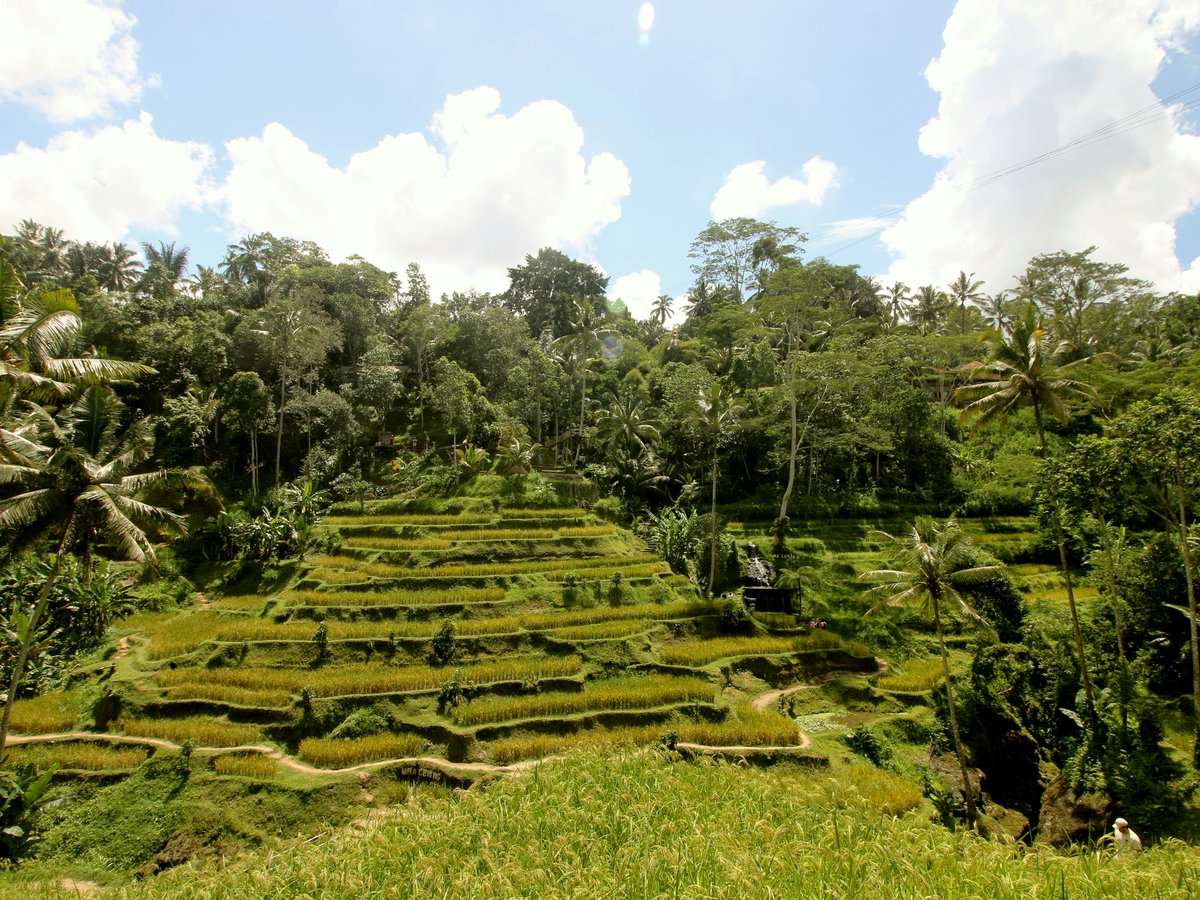
- Rice terraces around Tegallalang turn their deepest green as wet-season rains fill the subak irrigation channels, producing the most photogenic conditions of the year
- Tourist numbers drop roughly 40-50% from the July-September peak, which means shorter queues at Tirta Empul, calmer mornings at Gunung Kawi, and less jostling at the Ubud Art Market
- Accommodation rates hit their annual floor, with guesthouses in Penestanan and Nyuh Kuning typically listing 40-50% below their August prices
- Waterfalls at Tegenungan and Tibumana reach their fullest volume, with heavier cascades and deeper swimming pools than the dry months offer
- The Ayung River runs higher, making November's Class II-III rapids more engaging than the gentler dry-season flow for white water rafting
Worth knowing
- Rain falls on nearly every day of the month, often in heavy afternoon downpours that can strand you indoors for 1 to 3 hours
- Humidity averages 87%, making even moderate outdoor activity feel sticky and draining by mid-morning
- Unpaved paths to temples like Gunung Kawi and some rice terrace trails become slippery, muddy, and potentially dangerous in sandals
- Dengue-carrying Aedes mosquitoes breed more actively in the standing water left by daily rain, raising health risk compared to dry months
Best for
Think twice if
November delivers daily rain in heavy afternoon bursts, typically clearing by evening. Mornings tend to start partly cloudy with enough sun to make outdoor activity comfortable before noon. The humidity sits at a level where you'll feel damp before you've walked 200 meters. After each downpour, the hillsides around Gianyar smell of wet volcanic soil and frangipani petals knocked loose by the rain. Birdsong picks up sharply once the showers stop. The light through post-rain mist along the river valleys has a soft, diffused quality that flatters everything it touches. Temperatures barely shift from day to day, keeping a narrow, tropical band that never feels cool but rarely feels punishing.
Seasonal caution
- Flash flooding on low-lying roads between Ubud and Tegallalang can block routes for 1-2 hours after heavy afternoon downpours. Keep flexible scheduling and don't commit to tight transport connections on rainy days
- Temple stone stairways, particularly the 371 steps at Gunung Kawi, become extremely slick when wet. Rubber-soled shoes are safer than flip-flops on carved volcanic rock
- Dengue risk rises across Bali during the wet season. Standing water from daily rain increases mosquito breeding. Use DEET or picaridin-based repellent, especially at dawn and dusk
Year-round climate
Averages from the last 5 years.
| Month | Avg high (°C) | Avg low (°C) | Rainfall (mm) |
|---|---|---|---|
| Jan | 29 | 23 | 348 |
| Feb | 29 | 23 | 304 |
| Mar | 30 | 22 | 246 |
| Apr | 29 | 22 | 151 |
| May | 29 | 22 | 136 |
| Jun | 28 | 22 | 90 |
| Jul | 27 | 21 | 135 |
| Aug | 27 | 21 | 114 |
| Sep | 28 | 21 | 130 |
| Oct | 29 | 22 | 135 |
| Nov | 29 | 22 | 286 |
| Dec | 29 | 23 | 283 |
Best things to do in November
Campuhan Ridge Walk at dawn
natureA paved 2km trail along a narrow ridge between the Wos River's two branches, flanked by tall elephant grass on both slopes. The trailhead sits beside the Ibah luxury hotel, west of central Ubud. In November the grass reaches its maximum height and turns a near-fluorescent green after the rains.
Morning light through post-rain mist creates soft, diffused conditions that photographers specifically seek out. The trail is also noticeably emptier than during dry-season months.Booking tipStart before 7am to finish before clouds build. No booking needed, the trail is open access.
Balinese cooking class in Peliatan
foodSeveral family-run cooking schools in the Peliatan neighborhood, east of central Ubud, begin the day with a guided walk through a morning market before a 4-5 hour hands-on session covering base gede spice paste, sate lilit, and lawar.
Heavy afternoon showers make indoor activities more practical than outdoor ones after noon. Wet season also brings peak-freshness market ingredients, especially herbs and young vegetables.Booking tipBook 3 days ahead. Classes run smaller in low season and some operators cancel below 4 participants.
Melukat purification at Tirta Empul
culturalThis 10th-century Hindu temple in Tampaksiring, 15km northeast of Ubud, hosts melukat purification rituals where visitors stand beneath a sequence of 13 stone water spouts. The spring water is cold enough to make you gasp, and the mineral smell is distinct.
Dry-season queues at the springs can stretch past 30 minutes. In November you might wait 5 to 10 minutes, with more space and quiet between each spout.Booking tipArrive before 9am. A sarong is mandatory and available to borrow at the entrance for a small donation.
White water rafting on the Ayung River
adventureThe Ayung runs through a deep jungle gorge north of central Ubud, covering a 10-12km route past carved rock faces, small waterfalls, and overhanging vegetation. The water is warm, the splash constant.
November rain raises the Ayung's water level, producing faster Class II-III rapids and more exciting runs than the calmer dry-season flow.Booking tipOperators cancel during very heavy rain. Morning departures before 9am have the best chance of completing before afternoon downpours arrive.
Gallery circuit through central Ubud
cultureMuseum Puri Lukisan on Jalan Raya Ubud holds traditional Balinese paintings from the Kamasan style through the Walter Spies and Rudolf Bonnet era. The Neka Art Museum in Kedewatan and ARMA in Peliatan complete the triangle. Each takes 60-90 minutes.
Gallery hopping is one of the best rainy-afternoon activities in Ubud. November's lower visitor numbers often mean you have entire rooms to yourself, with no tour groups blocking the Anak Agung Gde Sobrat collection.Booking tipPuri Lukisan and ARMA are within walking distance of each other. Neka requires a short drive or a 40-minute walk.
Yoga retreat in Penestanan
wellnessThe hillside village of Penestanan, west of the Campuhan Ridge, hosts several yoga studios and multi-day retreat spaces. The sound of rain on a thatched roof during savasana is one of November's quiet pleasures.
Studios often discount week-long retreats 20-30% from peak-season rates, and smaller class sizes mean more direct instruction.Booking tipBook 2-3 weeks ahead for popular studios. Many offer a drop-in single-class option if you want to test before committing.
Gunung Kawi temple descent
culturalAn 11th-century complex of rock-cut candi (shrines) carved into the cliff face of a river valley near Tampaksiring. Reaching them requires descending 371 stone steps through rice paddies clinging to the gorge walls.
The rice terraces flanking the stairway are brilliant green, and the carved rock shrines are framed by cascading water that barely trickles during dry months. Fewer visitors in November lets you hear the river echo off the cliff.Booking tipWear rubber-soled shoes. The carved volcanic stone steps become treacherous in rain. Go in the morning when both the light and the weather are on your side.
Tegenungan Waterfall swim
natureA 15-meter waterfall about 30 minutes south of central Ubud, near Kemenuh village. A stairway leads down to a wide pool at the base where the mist from the cascade keeps the air cool.
November rainfall feeds the falls to dramatic volume. The spray thrown up by the impact fills the swimming area with a fine mist you can feel from 20 meters away.Booking tipMornings before 10am have fewer visitors and better light. Check locally if recent heavy rain has made the pool unsafe for swimming.
What to eat in November
In season: fruit
Manggis (mangosteen)
The purple-skinned queen of tropical fruits comes into season across Bali around November. Crack the thick rind open to find white, segmented flesh with a sweet-tart flavor unlike anything else. Look for them at the early-morning produce section of Pasar Seni Ubud, where a kilo typically costs a fraction of the tourist-facing afternoon stalls.
Salak Bali (snake fruit)
Grown on the slopes of Mount Agung in the village of Sibetan, Karangasem regency, this prickly-skinned fruit has a dry, crunchy bite with a lightly astringent finish. The wet season brings heavier harvests and lower prices at Ubud's markets.
On menus now
Bubur Injin (black rice pudding)
A warm, slow-cooked porridge of black glutinous rice sweetened with palm sugar and topped with thick coconut cream. The texture is somewhere between risotto and oatmeal. Rainy November afternoons make this traditional Balinese sweet feel like a necessity, not a treat.
Lawar
A traditional Balinese dish of finely chopped meat, grated coconut, and vegetables mixed with spice paste and sometimes fresh blood. The wet season brings peak-freshness long beans and young jackfruit to the preparation. You'll find it at warung across Peliatan and Mas.
What to drink
Jamu kunyit (fresh turmeric tonic)
A traditional herbal drink made from freshly ground turmeric root, tamarind, and palm sugar. The wet season brings abundant fresh roots to market stalls along Jalan Raya Ubud. Served warm, it tastes earthy and sharp, with a ginger-like heat at the back of the throat.
Regular events in November
Hari Pahlawan (National Heroes' Day)Free
Indonesia's national remembrance day marking the Battle of Surabaya on November 10, 1945. Flag ceremonies take place at government buildings throughout Ubud, and some cultural centers host special programs with traditional music.
November 10Purnama (Full Moon Ceremony)Free
Balinese Hindu families hold purnama prayers and offerings at temples across Ubud on the full moon. Pura Dalem Ubud and smaller banjar (neighborhood) temples see processions of families in white ceremonial dress carrying elaborate canang sari offerings. Visitors can observe respectfully from the temple grounds.
Date follows the lunar calendar, varies each yearOdalan (Temple Anniversary Ceremonies)Free
Each of Ubud's hundreds of temples celebrates its own anniversary on the 210-day Pawukon calendar. November typically sees several odalan around the Ubud area, marked by gamelan music, barong and legong dance performances, and multi-tiered offering towers. The sounds of gamelan rehearsal drift across the rice paddies in the days before each ceremony.
Dates follow the 210-day Pawukon calendar, vary by temple and yearBest places this November
Tegallalang Rice Terraces
natureThe stepped paddies 9km north of central Ubud reach their most saturated green in November as wet-season water fills the subak irrigation channels. The terraces are carved into a steep valley, and in the rain the water cascading between levels catches the light. Morning visits before 10am avoid both the afternoon rain and the tour-bus crowds that thin but never fully disappear.
TegallalangMandala Suci Wenara Wana (Sacred Monkey Forest Sanctuary)
natureThis 12.5-hectare forest at the south end of Jalan Monkey Forest houses around 1,260 long-tailed macaques and three Hindu temples beneath a canopy of banyan and nutmeg trees. November's lower visitor count means the monkeys are marginally calmer, and the moss-draped atmosphere intensifies after the rains. The air inside the forest is noticeably cooler than on the road above.
PadangtegalPasar Seni Ubud (Ubud Art Market)
marketThe two-story market across from Puri Saren Agung (Ubud Royal Palace) opens around 4am for local produce, transitioning to crafts and textiles by 8am. November rain drives more vendors under the covered sections, concentrating the selection and making browsing easier than the sprawling dry-season layout.
Central UbudPenglipuran Village
culturalA traditional Bali Aga village about 45 minutes north of Ubud in Bangli regency, known for its uniform bamboo-gated compounds along a single stone-paved main street. Rain makes the bamboo fences glisten and keeps the village's flower gardens in full bloom. November's reduced tour traffic means you might walk the street with only a handful of other visitors.
BangliMuseum Puri Lukisan
museumUbud's oldest art museum, opened in 1956 on Jalan Raya Ubud, holds Balinese painting from the classical Kamasan style through the Ubud School influenced by European artists in the 1930s. Its garden courtyards are especially atmospheric under light rain, with frangipani petals scattered across the stone paths.
Central UbudGoa Gajah (Elephant Cave)
culturalA 9th-century archaeological site about 6km southeast of central Ubud, featuring a carved cave entrance, bathing pools, and Buddhist rock-cut reliefs. The fountains fed by underground springs run stronger in wet season. The carved demon face at the cave mouth gathers a film of green moss that adds to its character.
Bedulu
Your packing checklist
Tick items off as you pack. Your progress saves in this browser.
All packed — have a great trip.
Insider tips
The morning produce section of the Ubud Art Market opens before 6am and sells fruit at roughly a third of the tourist-facing afternoon price. Mangosteens, rambutan, and salak are all significantly cheaper if you shop at dawn alongside locals.
November rain creates a reliable daily rhythm that experienced visitors exploit. Schedule outdoor activities for 6-11am, shift to indoor options from noon, and expect the rain to stop by 5pm most days. Planning against this pattern wastes half your daylight.
Grab works in Ubud but drivers are scarcer than in Denpasar. During peak downpour hours, roughly 2-4pm, available drivers can vanish for 20-30 minutes. Ask your guesthouse for a local driver's phone number as backup.
Co-working spaces along Jalan Dewi Sita and in Penestanan are noticeably emptier in November. The nomad crowd thins during wet season, which means faster wifi speeds and easier walk-in access without a monthly membership.
Evening kecak and legong performances at Puri Saren Agung (Ubud Royal Palace) draw smaller November audiences. If rain forces the show under cover, the compressed seating creates a more intimate atmosphere. Arrive 20-30 minutes early rather than the 60 minutes the dry-season crowds require.
Avoid these mistakes
- Planning a full day at the Tegallalang terraces without watching the morning forecast. The terraces have minimal shelter, and a sudden afternoon downpour with no cover leaves you soaked on a narrow, slippery path. Go early, return by noon.
- Booking an open-air villa without confirming it has screened windows or mosquito nets. Romantic open-pavilion rooms become a genuine dengue risk in the wet season when standing water multiplies breeding sites.
- Riding a rented scooter through a heavy downpour. Roads between Ubud Palace and Tegallalang flood in low spots within minutes. Locals pull over and wait under shelter. First-time visitors who push through risk hydroplaning on unfamiliar roads.
- Skipping the sarong and wearing shorts to temple sites, then having to rent a damp, overpriced wrap at the gate. Buy your own at the market the day you arrive. It weighs nothing and saves money at every stop.
Practical tips for November
Book accommodation in central Ubud, within walking distance of Jalan Raya Ubud or Jalan Monkey Forest, rather than in outlying areas like Tegallalang. Daily rain makes scooter commutes riskier, and central Ubud lets you reach restaurants, galleries, and the market on foot. Most guesthouses do not require advance booking in November, though the last week of the month sees prices start to climb as early December travelers arrive. Indonesia uses Type C and Type F electrical sockets at 230V. ATMs along Jalan Raya Ubud dispense rupiah with a typical maximum withdrawal of 2,500,000 IDR per transaction. Temple dress codes across the Gianyar regency require covered knees and shoulders at every site. Pharmacies (apotek) along the main road stock mosquito repellent and antihistamines. For anything more serious, BIMC Ubud on Jalan Raya Sanggingan is the nearest international-standard clinic. Water from the tap is not potable anywhere in Bali. Refill stations selling filtered water by the liter are cheaper and more environmentally sound than single-use plastic bottles.
FAQ
Is November a good time to visit Ubud?
Honestly, November is workable but far from ideal. It ranks 10th out of 12 months, primarily because of the heavy daily rainfall. The rain follows a pattern, though, with clear mornings and heavy afternoon showers, which gives you a usable half-day window for outdoor activities. The real advantages are pricing and crowd levels, both near their annual lows. If you can tolerate the daily rain cycle and plan mornings outdoors and afternoons indoors, you'll have a quieter, greener, and cheaper Ubud than the dry-season visitors see.
What is the weather like in Ubud in November?
Warm, humid, and wet. Expect partly cloudy mornings that stay comfortable for walking and sightseeing, followed by heavy afternoon downpours that typically last 1 to 3 hours before clearing by evening. The humidity is the kind you feel the moment you step outside, thick and clinging. Temperatures stay in a narrow tropical band, never cool enough for a jacket, rarely hot enough to feel dangerous. Pack for rain, not for cold.
Is Ubud crowded in November?
No. November is one of the quietest months in Ubud. The wet season keeps most tourists away, particularly the July-September European holiday crowd and the December-January year-end travelers. You'll find shorter queues at the major temples, easier restaurant reservations along Jalan Dewi Sita, more personal attention at cooking schools, and actual solitude on the Campuhan Ridge before 8am.
Is it safe to visit Ubud as a solo traveler in November?
Ubud scores 6.8/10 for solo-traveler safety (see the TTDI Solo-Safety Index). The primary November-specific risks are slippery temple stairs during rain, increased mosquito activity from accumulated standing water, and occasional flash flooding on roads north of town. None are serious threats with basic precautions. Waterproof footwear, repellent applied at dawn and dusk, and flexible scheduling handle the seasonal risks. The general safety considerations for Ubud, such as petty theft and aggressive monkeys at the Monkey Forest, remain the same year-round.
How much does a trip to Ubud cost in November?
November is Ubud's low season and the prices reflect it. A comfortable guesthouse room in Nyuh Kuning or Penestanan might run 350,000-600,000 IDR per night, roughly 20-34 USD at the current rate of about 17,737 IDR to 1 USD. A meal at a warung (local eatery) costs 25,000-45,000 IDR. A cooking class runs 300,000-500,000 IDR. A reasonable daily budget for a mid-range solo traveler is around 700,000-1,000,000 IDR (40-56 USD), not including the private car transfer from Ngurah Rai airport in Denpasar, which typically costs around 350,000 IDR.
Things to Do in Ubud in November
 Free cancellation
 Best of Ubud Full-Day Tour with Jungle Swing
Day trip: 10 hours, free cancellation.
via Viator Free cancellation
 Ubud: Monkey Forest, Jungle Swing, Rice Terrace and Water Temple
Day trip: free cancellation.
via Viator Free cancellation
 Private Uluwatu Sunset Tour with Kecak Dance and Dinner
Day trip: 7 hours, free cancellation.
via Viator Free cancellation
 Tanah Lot and North Bali Tour: Scenic Journey
Day trip: free cancellation.
via Viator Free cancellation
 Nusa Penida All-Inclusive Day Trip
Day trip: 12 hours, free cancellation.
via Viator Free cancellation
 Bali Snorkeling Tour at Blue Lagoon Beach - All-Inclusive
Day trip: 6 hours, free cancellation.
via ViatorFind a flight to Ubud
Live fares to Ubud appear here once cookies are accepted.
Last verified by automated review (v1.7.2) on . What is automated review?