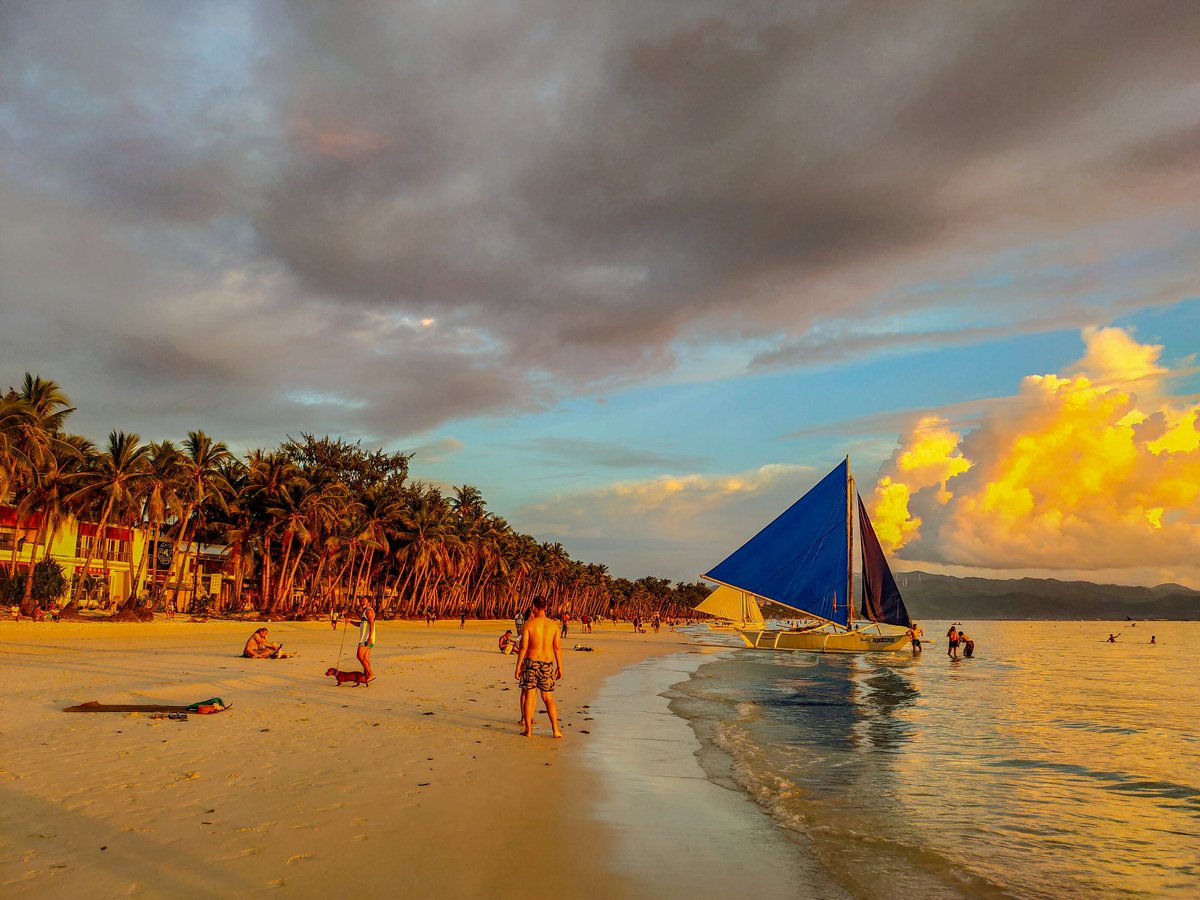
Stay in Boracay in July
67 hotels in the Trip.com pool for Boracay, from US$10 a night.
Opens Trip.com on Fri 2 Jul to Sun 4 Jul 2027; change the dates there.
July in Boracay means the Habagat. The southwest monsoon is fully established by the first week, and it won't let up until October. Rain falls on 28 out of 31 days, with the monthly total exceeding 300mm. Daytime temperatures average 29°C (84°F), dropping to about 25°C (78°F) overnight. The heat itself is manageable. The humidity, hovering around 86% through the month, is not. White Beach, the island's 4-kilometer western shoreline, takes the Habagat wind head-on. The water turns choppy and grey-green, and seaweed collects along the sand faster than morning cleanup crews can gather it.
Those same southwest winds have a flip side. Bulabog Beach, on the island's eastern shore, becomes one of Southeast Asia's top kiteboarding spots from June through October. July sits at the heart of the wind season, with consistent 15 to 25 knot cross-shore conditions and 28°C water warm enough for boardshorts. If you came to ride, this is when Boracay delivers.
For everyone else, honesty serves better than salesmanship here. Half the smaller resorts in Yapak and along Diniwid Beach close for the season. Station 2's D'Mall corridor keeps running, restaurants still serve, and morning island-hopping trips go out on calmer days. But you'll spend real time indoors waiting out downpours. Budget travelers and wind-sport enthusiasts will find genuine value here. If you need guaranteed beach weather, visit between March and May.
Why visit in July
- The Habagat transforms Bulabog Beach into one of Southeast Asia's top kiteboarding destinations, with reliable cross-shore winds and warm water that few spots in the region can match for consistency and comfort.
- Accommodation rates drop 40 to 60% below the December-through-April peak season average. Resorts in Station 1 that require months of advance booking in February will have open rooms in July.
- The island's tourist population thins out to its annual low. You can walk White Beach from Station 1 to Station 3 in the early morning without dodging tour groups, parasail vendors, or selfie sticks.
- Rain greens the interior. Balabag Wetland Park and the trail to Mount Luho are lush and cool, a version of Boracay that dry-season visitors never see.
Worth knowing
- Rain arrives on nearly every day of the month. Some showers pass in 20 minutes, but multi-hour downpours that cancel boat trips happen at least twice a week.
- White Beach loses its postcard look. Southwest winds push waves onto the shore, water clarity drops, and seaweed accumulates along the sand between Station 1 and Station 3.
- Many restaurants, dive shops, and smaller resorts along Diniwid Beach and in Yapak close entirely from June through September. Dining and activity options shrink compared to high season.
- July falls within the Philippine typhoon season. Boracay itself rarely takes a direct hit, but a typhoon passing through the Visayas can ground all ferry and flight connections for 2 to 3 days.
Best for
Think twice if
The Habagat monsoon defines July on Boracay. Rain tends to arrive between 10 AM and 2 PM, sometimes as a light drizzle that locals barely notice, sometimes as a hammering downpour that turns the main road through Balabag into ankle-deep streams. On corrugated rooftops in Station 3, the heavy rain sounds like gravel poured from a bucket. Post-storm clearings around 4 PM sometimes produce deep orange and purple sunsets over the Sulu Sea, the kind worth sitting through a wet afternoon for. The air carries a weight you feel the moment you step off the Caticlan ferry. Pavement through the D'Mall corridor radiates stored heat after each downpour. The steam mixes with the scent of wet concrete and frangipani. Evenings along White Beach cool only 3 to 4°C from the afternoon peak. Compared to the March through May dry season, when the water off Station 1 runs gin-clear under deep blue sky, July's greener Boracay reveals the lush mangrove canopy of the Balabag wetlands in full leaf.
Seasonal caution
- July marks the start of the Western Visayas typhoon exposure window, which runs through November. Boracay sits at about 11.9°N latitude, south of the most common typhoon tracks, but storms passing through the central Philippines can shut down Godofredo P. Ramos Airport (MPH) and the Caticlan-to-Cagban jetty route for 48 to 72 hours with little warning.
- Habagat-driven waves and undertow make swimming on White Beach inadvisable on rough days, particularly near Station 1 where the shore drops off steeply. Local lifeguards post red flags when conditions are dangerous. Respect them.
- Mold and fungal skin irritation are common complaints for visitors staying longer than a week. The persistent moisture makes it hard to dry clothes or shoes fully. Antifungal powder and periodic sun-exposure for luggage help.
Year-round climate
Averages from the last 5 years.
| Month | Avg high (°C) | Avg low (°C) | Rainfall (mm) |
|---|---|---|---|
| Jan | 27 | 24 | 279 |
| Feb | 27 | 24 | 194 |
| Mar | 28 | 25 | 133 |
| Apr | 29 | 26 | 109 |
| May | 30 | 26 | 129 |
| Jun | 30 | 26 | 177 |
| Jul | 29 | 25 | 310 |
| Aug | 29 | 25 | 225 |
| Sep | 29 | 25 | 347 |
| Oct | 29 | 25 | 362 |
| Nov | 29 | 25 | 264 |
| Dec | 28 | 25 | 293 |
Best things to do in July
Kiteboarding at Bulabog Beach
water_sportsThe Habagat's consistent southwest winds make Bulabog Beach a reliable kiteboarding ground from June through October. Multiple schools along the 2.5-kilometer shoreline offer beginner lessons, while experienced riders find cross-shore conditions that allow long parallel runs. The sandy bottom makes wipeouts forgiving, and the water stays warm enough to ride without a wetsuit.
July sits at the heart of the wind season. Daily patterns are the most consistent of the year, typically building from late morning through late afternoon.Booking tipBook lessons 3 to 5 days ahead. Schools run fewer instructors in low season, and morning slots fill fastest because winds are calmer for beginners.
Morning island hopping to Crocodile Island
water_sportsCrocodile Island, a rocky outcrop about 15 minutes by boat from the southern tip of Boracay, remains accessible on calmer mornings even during monsoon season. The sheltered side of the rock formation offers decent snorkeling with coral cover and schools of sergeant majors and damselfish. Boats depart from the Station 3 area near Angol Point.
The eastern side of Crocodile Island is sheltered from the Habagat winds, making it one of the few reliable snorkeling spots in July. Go early, before afternoon chop builds.Booking tipNegotiate boat hire the evening before and confirm a morning departure by 8 AM. Afternoon trips get cancelled most days.
Wetland walk at Balabag Wetland Park
natureA raised boardwalk loops through Balabag Wetland Park, a protected mangrove and freshwater wetland in the island's interior. Herons, kingfishers, and monitor lizards are common sightings along the water edges. The park opened as part of Boracay's environmental rehabilitation and shows a side of the island most peak-season visitors miss.
Monsoon rains fill the wetland to its fullest, bringing the greatest bird and wildlife activity of the year. The canopy provides shade and relative cool on steamy days.Hike to Mount Luho
outdoorBoracay's highest point at about 100 meters above sea level. The trail from the main road takes roughly 20 minutes uphill on a concrete path. On clear mornings after overnight rain, the view from the observation platform spans both coasts and the surrounding sea. Cloudy days still reward you with the green interior spread below.
Post-rain mornings occasionally deliver the clearest air of the year when dust and haze are washed clean. The trail is also cooler and less punishing than during the April dry-season heat.Booking tipGo before 8 AM for the best chance of clear skies. The platform charges a small entry fee.
Rainy-day spa sessions
wellnessBoracay has a high concentration of massage and spa businesses per square kilometer. Full-body hilot, traditional Filipino massage using banana leaves and warm coconut oil, is widely available in Station 1 and Station 2. The low season means walk-in appointments are easy and therapists have more time per client.
On days when rain sets in for hours, an indoor plan matters. Spa availability peaks when tourist numbers hit their annual low, and some operators discount their standard menu.Sunset watching from Diniwid Beach
scenicA small cove north of Station 1, accessible by a 10-minute rocky path or a short boat ride. Diniwid Beach faces northwest, which means sunset views remain possible even when White Beach is too rough to sit on comfortably. A few remaining open restaurants line the sand, and the cove feels sheltered enough that the wind reads as atmospheric rather than punishing.
When afternoon rain clears by late afternoon, the post-storm sunsets can be remarkable. Habagat cloud formations scatter light in ways that the dry season's clear skies rarely produce. You'll likely have the cove to yourself.Helmet diving at Balinghai Beach
water_sportsBalinghai Beach sits on the island's northern tip near Yapak, a small cove sheltered by rocky headlands. Helmet diving lets you walk along the sea floor wearing a weighted diving helmet with a surface air supply. The experience requires no certification and stays operational through most of July because the cove's orientation blocks the worst of the Habagat chop.
The northern coves stay calmer than the exposed western beaches during the monsoon. Visibility is lower than in March or April but still acceptable at 5 to 8 meters on most mornings.Booking tipCall ahead to confirm the operator is running that day. Some close on the roughest weather days without notice.
What to eat in July
In season: fruit
Mangosteen
Philippine mangosteen season runs from June through September, and July catches supply at its peak. The thick purple rind hides translucent segments that taste like a cross between lychee and peach. Fruit vendors near D'Mall stock them daily through the season.
Rambutan
Rambutan reaches peak ripeness across the Philippines in July and August. The hairy red fruit appears at fruit stalls throughout Station 2. Look for bright red spines, not browning ones, which signal the batch sat too long in the heat.
Jackfruit
Jackfruit peaks from June through August in the Philippines. July catches the fruit at its sweetest and most aromatic. Vendors along the Balabag main road sell it pre-cut. The unripe version, called langka, appears in ginataang langka, a savory coconut-milk stew common at local eateries in Manoc-Manoc.
On menus now
Sinigang na hipon
Sour tamarind-broth shrimp soup. A year-round Filipino staple that becomes especially comforting on rainy July afternoons. The tartness cuts through the heaviness of humid days. Most restaurants along the White Beach path between Station 1 and Station 3 serve their own version.
Street food peaks
Grilled pusit
Squid grilled over charcoal and served with a vinegar-calamansi dipping sauce. The D'Talipapa wet market lets you choose your catch from the stalls, then walk it to one of the adjacent cook-to-order grills. July's rougher seas push fishermen toward squid and shellfish harvests, so the supply tends to peak during the monsoon months.
What to drink
Tuba
Fermented coconut palm sap, mildly alcoholic and slightly sweet, served fresh from local tappers in Manoc-Manoc. The Habagat months correspond with a productive tapping period for coconut palms across the Visayas. Fresh tuba tastes noticeably different from the commercially bottled versions available year-round, with a tangy, yeasty bite that pairs well with grilled seafood.
Regular events in July
Philippine-American Friendship DayFree
A public observance on July 4 marking the historical relationship between the Philippines and the United States. Some Boracay restaurants and bars run themed nights. Worth noting that July 4 was the Philippines' original independence day before the date moved to June 12 in 1962.
July 4Habagat Kiteboarding SeasonFree
Not a single event but a recognized seasonal window that the Philippine wind-sport community treats as their primary riding period. Informal competitions, group sessions, and meetups happen on Bulabog Beach throughout July, organized largely through social media.
Throughout July, season runs June through OctoberFeast of Our Lady of Mount CarmelFree
A Catholic feast day observed on July 16 at parish churches across the Philippines. On Boracay, the chapel communities in Manoc-Manoc and Balabag hold a procession and outdoor Mass. Attendance is local and genuine, not a tourist event.
July 16Boracay Beach Cleanup Volunteer DaysFree
Organized by DENR and the Boracay Inter-Agency Rehabilitation Management Group as part of the island's environmental rehabilitation since the 2018 closure. Tourists can join sessions along different beach sections. The wet season brings more debris ashore, making volunteer help particularly useful.
Saturday mornings, schedule varies weeklyBest places this July
Bulabog Beach
beachThe 2.5-kilometer eastern shore transforms into Boracay's most active stretch during the Habagat. Kiteboarding schools and rental shops line the sand, and the shallow water extends far enough for safe beginner riding. The atmosphere in July is sporty and laid-back, a sharp contrast to White Beach's party reputation in high season.
BalabagBalabag Wetland Park
natureA boardwalk loop through mangroves and freshwater marsh in the island's interior. Kingfishers, herons, and monitor lizards frequent the water edges, particularly before 9 AM. The monsoon rains bring the wetland to full capacity, and the green canopy overhead provides welcome shade on steamy days.
BalabagDiniwid Beach
beachA sheltered cove north of Station 1 with a handful of open-air restaurants still operating in July. The rocky headlands block some of the Habagat chop, making this the closest thing to calm water on the western side during monsoon months. The 10-minute footpath from Station 1 is slippery after rain, so wear grip sandals.
D'Talipapa Market
marketBoracay's main wet market, near Station 2. Fish, squid, prawns, and shellfish fill the stalls each morning. Choose your seafood and have it cooked at the adjacent grill restaurants. In July, the market is less hectic than high season, and vendors have time to explain their catch.
Station 2Puka Shell Beach
beachOn the island's northern tip in the Yapak area. Coarser sand and fewer vendors than White Beach. The northern orientation means it sometimes catches less Habagat wind, though conditions vary day to day. Worth the tricycle ride on a dry morning for its raw, undeveloped feel.
YapakBoracay Wetland Conservation Park
natureA separate conservation area from the Balabag wetlands, with interpretive signage about the island's freshwater ecosystem. The paths are muddier in July but passable. Bird and insect activity increases after rain, and you might spot Philippine water monitors sunning on logs between showers.
BalabagBat Cave
natureA rock formation on the island's eastern side. The cave entrance is not generally accessible for entry, but the surrounding area offers views of the rocky coastline. Fruit bats roost in the rocks and become visible at dusk, circling out to feed. A short detour on the way to or from Mount Luho.
YapakAviary Park
attractionA compact bird park in the island's interior with local and tropical species in enclosed aviaries. The covered walkways make it one of the few outdoor attractions that works reasonably well during heavy rain. A 20-minute visit between stations.
Balabag
Your packing checklist
Tick items off as you pack. Your progress saves in this browser.
All packed — have a great trip.
Insider tips
Worth noting, the east-side restaurants near Bulabog Beach stay open through the monsoon and tend to be less expensive than the White Beach strip. The kiteboarding crowd eats there, and portions run larger because the clientele is active and hungry after hours on the water.
If a typhoon warning reaches Signal No. 1, book your outbound ferry or flight immediately rather than waiting for conditions to worsen. Once signals escalate to No. 2, all transport shuts down and you could be stranded for 3 days. The Caticlan-to-Cagban jetty route closes first and reopens last.
D'Talipapa's seafood prices are negotiable, especially in July when fewer tourists means vendors compete harder for each sale. Point at the fish rather than asking for recommendations. If you let the vendor pick, you'll pay a tourist premium regardless of the season.
Boracay's digital-nomad suitability sits at 5.2 out of 10 (sourced from TTDI's editorial rubric), and July is when that score feels most accurate. WiFi at the better Station 1 hotels handles video calls on clear days, but monsoon storms knock out power across parts of the island for 2 to 6 hours at a time. Budget guesthouses in Station 3 rarely have backup generators.
To be fair, the Habagat season has its own beauty. The interior trails between the wetland parks turn almost jungle-green, the tourist noise disappears, and the island feels closer to the fishing village it was 30 years ago. If you can tolerate getting rained on, you'll see a Boracay that the February crowd never encounters.
Avoid these mistakes
- Booking a resort on White Beach expecting the calm turquoise water and powdery sand of the marketing photos. Those photos are from February or March. In July, the western shore is the rough side of the island. If beach time matters, stay near Bulabog or in Yapak near the sheltered northern coves.
- Planning a tight itinerary with daily outdoor activities and no rain contingency. At least 2 out of every 3 days will have some form of rain disruption in July. Build buffer days into your schedule, or accept that plans will shift on short notice.
- Arriving without confirming that your chosen hotel is open for the season. A significant number of smaller resorts and guesthouses close from June through September or operate with skeleton staff. Booking platforms sometimes show availability for properties that are not fully staffed.
- Skipping travel insurance that covers weather-related trip disruption. Typhoon-grounded flights and cancelled ferries are not compensated by the airlines or ferry operators. A policy covering accommodation and rebooking costs for weather delays is worth carrying during the monsoon months.
Practical tips for July
Confirm your hotel is operating before booking. Call or email directly, because third-party booking platforms sometimes list rooms at properties running on skeleton staff or closed entirely for the monsoon season. Ferry schedules between Caticlan and the Cagban jetty port are weather-dependent in July, with cancellations possible on short notice. Fly into Godofredo P. Ramos Airport in Caticlan (code MPH) rather than Kalibo (KLO) when possible, since the hour-long Kalibo-to-Caticlan van ride becomes miserable in heavy rain and the road surface deteriorates in the wet months. Bring Philippine pesos in cash. ATMs exist in D'Mall and near Station 2, but they run out of cash faster in low season because banks refill them less frequently. The dress code on Boracay is casual everywhere. Lightweight, quick-drying clothes work for both the beach and any restaurant. Mosquito activity increases during the wet season around the interior wetlands and Boracay Wetland Conservation Park. Apply repellent at dusk, especially if staying in accommodation away from the beachfront. Boracay's LGBTQ+ friendliness scores 4.5 out of 10 (sourced from TTDI's editorial rubric). The Philippines lacks comprehensive legal protections for LGBTQ+ travelers, though Boracay's tourism-dependent economy tends toward a more accepting atmosphere in practice, and July's thinner crowds make the island feel more private overall.
FAQ
Is July a good time to visit Boracay?
For most travelers, no. July sits deep in the Habagat monsoon season, with rain on nearly every day of the month and rough conditions along White Beach. The island looks and feels very different from the sunny images that draw most visitors. To be fair, kiteboarding enthusiasts and budget travelers who accept the weather will find specific advantages, including the lowest accommodation rates of the year and strong, reliable winds on the eastern shore.
What is the weather like in Boracay in July?
Warm and wet. Daytime highs hover near 29°C (84°F) with overnight lows around 25°C (78°F). Rain arrives on all but 2 or 3 days of the month, mostly in afternoon bursts, though some storms last well into the evening. The Habagat wind makes White Beach choppy and unsuitable for swimming on many days, while Bulabog Beach on the east side stays calmer. Bring rain gear, quick-dry clothes, and accept that outdoor plans will shift.
Is Boracay crowded in July?
Not at all. July is the island's low season, and the difference from the December-through-April peak is dramatic. White Beach has stretches of sand with no one on them, particularly north of Station 1. Restaurants seat you immediately, and popular activities have no queue. The trade-off is that the crowd-dependent scene, including nightlife and beach-party energy, largely disappears from June through September.
Can you still swim in Boracay in July?
It depends on the day and the beach. White Beach, the main swimming spot, is often too rough due to Habagat waves. The smaller northern coves near Balinghai Beach and Diniwid tend to be calmer than either main beach on most days. Mind you, always check with locals or lifeguards before entering the water, and never swim when red flags are posted. Calm mornings offer the best window before the afternoon wind builds.
What should I pack for Boracay in July?
Rain gear is the priority. A packable rain jacket, waterproof sport sandals, and a dry bag for electronics cover the basics. Bring quick-dry synthetic fabrics instead of cotton, which won't dry in the monsoon humidity and develops a mildew smell within a day. Sunscreen is still necessary because UV radiation penetrates overcast skies at this tropical latitude. An antifungal powder helps prevent skin irritation from the persistent moisture, and a power bank is smart because monsoon storms occasionally knock out electricity for several hours.
Last verified by automated review (v1.7.2) on . What is automated review?