Stay in Boracay in January
67 hotels in the Trip.com pool for Boracay, from US$10 a night.
Opens Trip.com on Fri 1 Jan to Sun 3 Jan 2027; change the dates there.
January in Boracay means Amihan season, when northeast trade winds flatten the western sea into an almost lake-like calm along White Beach. It draws peak-season crowds to Station 1 and Station 2, and rooms fill weeks before arrival. The island sees roughly 75mm of rainfall across about 12 days in January, placing it firmly in the dry season. Showers tend to arrive as brief afternoon bursts lasting 20 to 40 minutes, and most mornings open to clear or partly cloudy skies over the Sulu Sea. Worth noting, though, this is still a tropical island near 12°N latitude, and a completely rain-free week is possible but not guaranteed.
Temperatures range from 24.5°C (76°F) at night to 30.0°C (86°F) during the day, warm enough for comfortable swimming at any hour without the more intense heat that builds through March and April. Humidity hovers near 81%, the sort that fogs your sunglasses the moment you step off the boat at Cagban Jetty. The biggest calendar event is the Ati-Atihan Festival in Kalibo, about 70 km away on the Panay mainland. It is one of the oldest street parades in the Philippines and falls during the third week of January. Kalibo Airport serves as the primary long-haul gateway for visitors who fly to the island, so passing through during peak festival days means longer ground transfers to Caticlan port.
To be fair, the Habagat months from June through October deliver notably lower accommodation rates and thinner crowds, though the western beaches lose their Amihan shelter during those months. If your dates are set for January, the water stays warm at this latitude year-round, western beaches like Diniwid and Balinghai remain sheltered through February, and a side trip to Kalibo during Ati-Atihan week offers one of the Philippines' oldest Santo Niño street celebrations, which takes place only in the third week of January.
Why visit in January
- White Beach and the western coves sit in the lee of the Amihan winds during January, which keeps the surf below ankle height at Station 1 and makes the shoreline safe for families and weak swimmers
- The Ati-Atihan Festival in Kalibo, reachable by a 1.5-hour van ride from Caticlan, is one of the Philippines' biggest annual street parades and draws hundreds of thousands of participants during the third week of January
- Water temperatures remain warm enough for extended snorkeling and diving without a wetsuit, and reef visibility on the sheltered western side tends to be better than during the Habagat months from June through October
- Evening temperatures dip low enough that sleeping without air conditioning is feasible in well-ventilated rooms near Station 3 or Diniwid, which keeps utility costs down for longer stays
Worth knowing
- Peak-season crowds fill White Beach between Station 1 and Station 2 to capacity during midday and sunset hours, and the beachfront path becomes congested enough that a walk from Station 1 to Station 3 can take 35 minutes instead of the usual 25
- Accommodation costs sit well above the annual average, with beachfront rooms at Station 1 running 30 to 50% more than the same properties charge during the Habagat months from June through October, when the island is quieter and rates drop to their annual lows
- Bulabog Beach on the eastern shore is effectively unswimmable for casual bathers in January, as Amihan winds create choppy, rough conditions that only experienced kiteboarders and windsurfers can handle safely
Best for
Think twice if
Boracay in January is warm and humid, with occasional brief tropical showers that pass quickly. The Amihan trade winds keep the White Beach coast calm and push moisture away from the western shore. Mornings typically start with partial cloud cover over Mount Luho and the interior hills, clearing by midday. When showers do arrive, they tend to fall between 1 PM and 4 PM, then clear by sunset. Evenings along Station 1 and Station 2 are reliably dry enough for outdoor dining.
Seasonal caution
- Occasional afternoon downpours can be intense enough to briefly flood low-lying footpaths between Station 2 and Station 3 for 15 to 30 minutes, even though January averages only about 12 rain days for the month.
- Strong northeast Amihan winds make Bulabog Beach's eastern shore hazardous for casual swimmers throughout January. Local lifeguards post red-flag warnings regularly on that side of the island.
Year-round climate
Averages from the last 5 years.
| Month | Avg high (°C) | Avg low (°C) | Rainfall (mm) |
|---|---|---|---|
| Jan | 27 | 24 | 279 |
| Feb | 27 | 24 | 194 |
| Mar | 28 | 25 | 133 |
| Apr | 29 | 26 | 109 |
| May | 30 | 26 | 129 |
| Jun | 30 | 26 | 177 |
| Jul | 29 | 25 | 310 |
| Aug | 29 | 25 | 225 |
| Sep | 29 | 25 | 347 |
| Oct | 29 | 25 | 362 |
| Nov | 29 | 25 | 264 |
| Dec | 28 | 25 | 293 |
Holidays and festivals in January
Public holidays
- New Year's Day(Bagong Taon)1 January 2027
Headline events
Ati-Atihan Festival
Third week of January, culminating on the third Sunday
One of the Philippines' oldest street festivals, held in Kalibo, the capital of Aklan province. Participants in soot-darkened face paint and indigenous costumes parade through the town's central streets for a week of drumming, processions, and religious devotion to the Santo Niño. Kalibo is also the primary long-haul airport gateway to Boracay, and visitors can combine a beach holiday with a day trip to the festival via a 1.5-hour van ride from Caticlan port. The energy is loud, percussive, and intense, with competing tribes of dancers filling entire boulevards.
Best things to do in January
Kiteboarding at Bulabog Beach
water sportsBulabog Beach on the eastern shore is one of Southeast Asia's premier kiteboarding spots. The flat, shallow water extends several hundred meters offshore, and multiple schools rent gear and offer instruction from November through April.
January's Amihan winds produce consistent 15 to 25 knot conditions, and this is competition season on Bulabog. The skill level on the water is high, and conditions favor intermediate to advanced riders.Booking tipBook lessons at least 3 days in advance during Ati-Atihan week. Most schools close bookings when gusts exceed 25 knots.
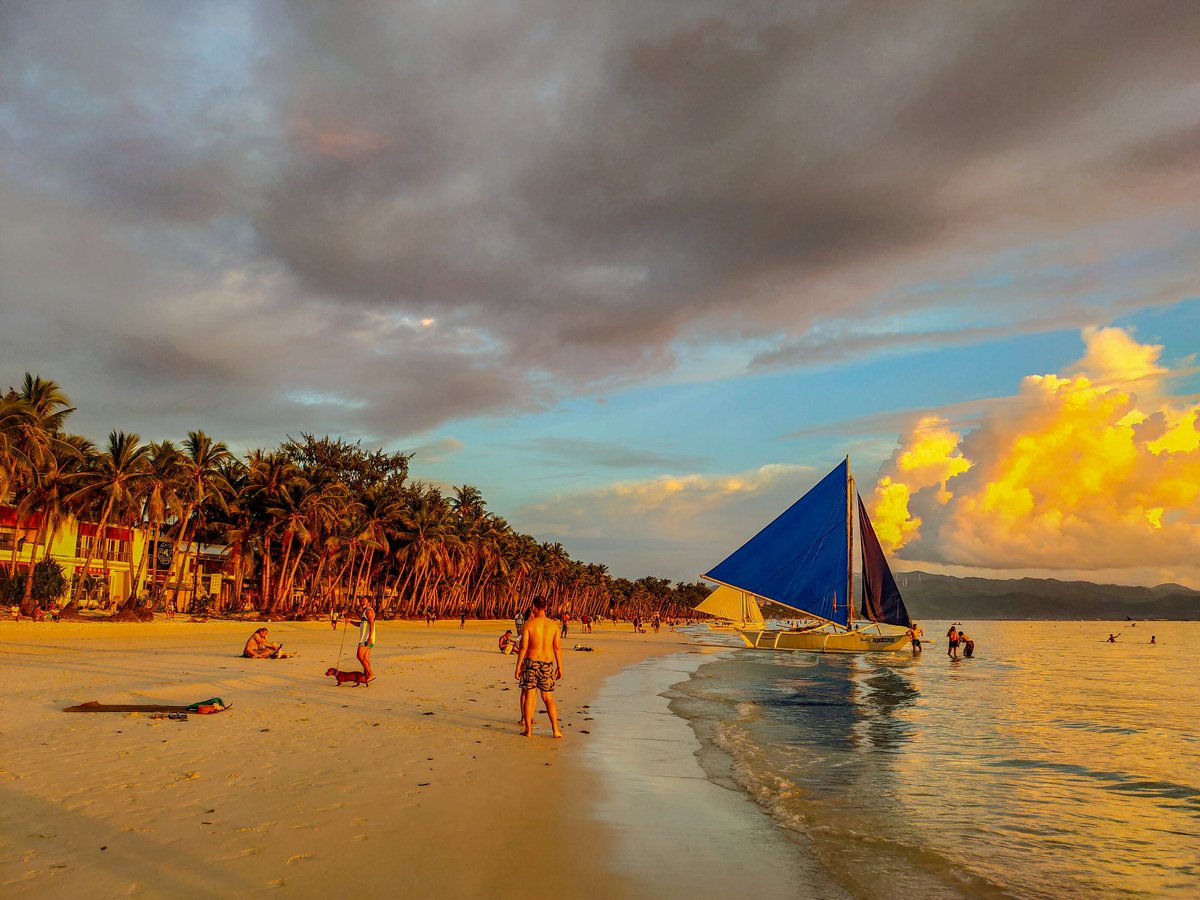
Paraw sunset sailing off White Beach
sailingThe paraw is a traditional Filipino double-outrigger sailboat. Evening sails depart from the Station 1 beachfront and cruise south along the coast as the sun drops toward the Sulu Sea. The boats hold 2 to 6 passengers and the trip takes about 45 minutes.
The steady, predictable Amihan winds make January one of the best months for reliable sailing. Habagat months bring unpredictable gusts from the southwest that cancel trips more often.Booking tipWalk the Station 1 beachfront in the morning to arrange an evening departure with a boatman.
Island hopping to Crystal Cove
island hoppingCrystal Cove is a small island southeast of Boracay with two caves, tidal pools, and snorkel-worthy reefs. Tour boats depart from the White Beach shoreline and make multiple stops over a half-day trip that typically runs 4 to 5 hours.
The calmed western waters during Amihan season make the boat ride smoother and more comfortable than during the Habagat months when southwest swells can make the crossing rough and nauseating.Booking tipBook through your hotel or a Station 2 tour desk the day before. Morning departures before 9 AM tend to have clearer water for snorkeling.
Snorkeling at Balinghai Beach
snorkelingA small, sheltered cove north of Diniwid Beach, accessed by a short trail from the main road or by boat from Station 1. The rocky shoreline supports a healthy reef with soft corals and reef fish within meters of the shore. The cove holds maybe 30 people comfortably.
January's Amihan winds push floating debris away from the western coves, and underwater visibility at Balinghai often exceeds 10 meters during calm Amihan conditions. Fewer boats pass through in the early morning hours, which keeps the water undisturbed.Sunrise hike to Mount Luho
hikingAt roughly 100 meters above sea level, Mount Luho is Boracay's highest point. A paved path and staircase lead to a viewing platform with 360-degree views over the island, Panay's mainland mountains, and the Sulu Sea.
January mornings before 6:30 AM are cooler and less humid than midday, and the short climb is comfortable before the heat builds. Early risers occasionally catch breaks in the cloud cover for clear sightlines to Panay's interior.Booking tipArrive before 6 AM to catch sunrise. The path is paved and lit.
Day trip to the Ati-Atihan Festival in Kalibo
culturalKalibo, the provincial capital of Aklan, transforms during the third week of January with street dancing, live drumming, and religious processions honoring the Santo Niño. The parade route winds through the town center, and food stalls line the side streets selling local Aklanon dishes.
Ati-Atihan happens once a year in the third week of January. No other month offers this cultural experience from Boracay's doorstep.Booking tipArrange return transport before you leave the island. Vans from Caticlan to Kalibo take about 1.5 hours each way, and return vehicles fill up after the afternoon procession ends.
Diving at Yapak
divingYapak is a steep drop-off on Boracay's northern tip, descending from 30 to over 60 meters. The site is known for encounters with reef sharks, tuna, and occasional manta rays. Strong currents make this an advanced dive.
Amihan-season currents at Yapak tend to be more predictable than during Habagat, and dive operators run trips more frequently through January's calmer surface conditions.Booking tipThis site requires Advanced Open Water certification or equivalent. Book with a PADI-accredited operator at least 2 days ahead.
What to eat in January
In season: fruit
Calamansi
Philippine citrus at peak harvest from December through February. January batches turn up as fresh juice at beachfront stalls along Station 2, as a tart dipping sauce for grilled seafood, and as the base for the island's popular calamansi shake blended with ice. The fruit is smaller than a lime, about the size of a large marble, with a sharper, more floral acidity.
On menus now
Talaba
Raw oysters from Aklan's coastal farms near the town of New Washington, about 50 km from Boracay. The Amihan season calms the waters enough for consistent harvest runs. D'Talipapa market in Balabag carries fresh stock daily through January. They arrive shucked and served with a splash of calamansi and spiced vinegar, briny and clean-tasting.
Inubaran
An Aklanon comfort dish of taro root simmered in rich coconut milk with dried salted fish, served over rice. Heavier than typical island fare, it appears more frequently on menus at small eateries in Manoc-Manoc barangay during January's cooler evenings. The coconut broth is thick and slightly sweet, and the dried fish adds a savory, smoky edge.
What to drink
Buko shake
Young coconut meat blended with ice and condensed milk, served in the shell or a tall glass. Available year-round, but January falls near the tail end of the peak coconut harvest season in the Western Visayas, and the water tends to be noticeably sweeter. Stalls along the White Beach path in Station 2 sell them throughout the day.
Festival food
Kalamay
Aklan province's signature confection of glutinous rice, coconut milk, and muscovado sugar, slow-cooked in halved coconut shells until dense and caramel-dark. Production ramps up for Ati-Atihan week across Kalibo's street vendors. On Boracay, stalls near Cagban Jetty sell batches wrapped in banana leaves. The texture falls somewhere between soft caramel and mochi, and it keeps for several days unrefrigerated.
Regular events in January
New Year's Day celebrations on White BeachFree
White Beach between Station 1 and Station 3 hosts large outdoor gatherings and fireworks on the night of December 31. The celebrations carry well into January 1, with most beachfront bars and restaurants running extended hours through the early morning.
January 1Feast of the Epiphany (Three Kings Day)Free
Filipino Catholic parishes across Boracay mark the Feast of the Epiphany with morning masses and small processions. On the island, observances center on the churches in Balabag and Manoc-Manoc barangays, with community gatherings after the services.
January 6Dinagyang Festival in Iloilo CityFree
A rival celebration to Ati-Atihan held in Iloilo City, the largest city on Panay island. Competing tribes perform elaborate choreographed dances through the streets. Accessible from Boracay as a longer day trip or overnight, with vans and buses running from Caticlan to Iloilo in about 5 hours.
Fourth Sunday of JanuaryBest places this January
Diniwid Beach
beachA 200-meter pocket beach north of Station 1, reachable by a rocky coastal path or a short boat ride. Quieter than White Beach even in peak season, with a handful of small resorts built into the hillside. The cove stays sheltered during Amihan, and the smaller footprint means more sand per person during January's busiest weeks.
YapakBulabog Beach
beachThe eastern-shore kite and windsurf beach, directly opposite White Beach. In January, the strong Amihan winds turn this stretch into a wind-sports playground. Non-riders can watch from the beachside cafes that line the shore road. The contrast with White Beach's calm is worth the 10-minute walk across the island's narrow waist.
BalabagBalabag Wetland Park
natureA boardwalk-accessed mangrove wetland in the interior of the island, behind the commercial strip of Station 2. January's occasional rainfall keeps the water levels topped up and the vegetation thick. Egrets and herons are common sights in the morning hours, and the boardwalk offers a quiet break from the beach scene.
BalabagPuka Shell Beach
beachBoracay's northern beach, named for the puka shells that wash up on its coarser sand. Less developed than White Beach, with a more rugged feel and far fewer sunbed vendors. In January, the surf can be slightly rougher here than on the sheltered western side, but the crowd is a fraction of what you find at Station 1. A tricycle from the White Beach area takes about 10 minutes.
YapakWilly's Rock
landmarkA volcanic rock formation in the shallows of White Beach near Station 1, topped with a small grotto shrine to the Virgin Mary. It is the island's most photographed landmark. In January, the calm Amihan seas make it easy to wade out to the rock at low tide, and sunset photos from this angle are the island's signature image.
Station 1Boracay Wetland Conservation Park
natureA boardwalk trail through mangroves and wetland habitat in the island's interior, distinct from the Balabag Wetland Park farther north. The birdlife is active in the early mornings, and the shaded boardwalk stays cooler than the open beach during midday heat. Rarely crowded even in peak season.
Manoc-Manoc
Your packing checklist
Tick items off as you pack. Your progress saves in this browser.
All packed — have a great trip.
Insider tips
D'Talipapa market in the Balabag area runs a cook-your-catch system that most resort guests never discover. Buy fresh seafood from the wet market stalls, then carry it to one of the adjacent open-air restaurants along D'Talipapa's row. They will grill, steam, or fry it for you. The total this way runs a fraction of what beachfront restaurants charge for the same fish.
The sand on White Beach changes character by station. Station 1 at the north end has the finest, powdery grain that photographs well. Station 3 at the south end is coarser but the beachfront is less congested and accommodation rates are notably lower. For travelers who care more about space than sand texture, Station 3 in January delivers better value.
Sunset at Willy's Rock draws a crowd every clear January evening. If you want photos without other visitors in the frame, wade out before 5 PM, while most people are still at the bars along Station 1. The light is already warm by then, and you avoid the 5:30 PM rush entirely.
Caticlan Airport (MPH) is closer to Boracay than Kalibo Airport (KLO) and avoids the Ati-Atihan road congestion entirely. Fewer airlines serve Caticlan, and the shorter runway limits it to turboprop aircraft. But when available, a Caticlan flight saves over an hour of ground transport compared to routing through Kalibo.
Avoid these mistakes
- Booking a hotel on the Bulabog (eastern) side of the island expecting calm beach swimming. Amihan winds in January make that shore rough and unsuitable for anything other than kiteboarding. White Beach on the western side is where the swimmable water is.
- Flying through Kalibo Airport during the third week of January without knowing about Ati-Atihan Festival road closures. The usual 1.5-hour van ride to Caticlan can stretch past 3 hours with parade-route diversions. Either fly into Caticlan directly or schedule a wide buffer between landing and your last boat transfer.
- Assuming overcast skies mean low UV and skipping sunscreen on cloudy January mornings. Boracay sits near 12°N latitude, and the UV index stays high enough to cause sunburn within 30 to 40 minutes of unprotected exposure on the beach.
Practical tips for January
Book accommodation 3 to 4 weeks ahead for January stays, especially for the first week (New Year overflow) and the third week (Ati-Atihan demand). Boat transfers between Caticlan port and the island run from roughly 6 AM to 6 PM, with queues longest around midday. Walking the White Beach path from Station 1 to Station 3 takes about 25 minutes. ATMs cluster around D'Mall in Station 2 but can run dry during peak weeks, so bring sufficient Philippine pesos from the mainland. Smaller eateries in Manoc-Manoc and market stalls at D'Talipapa are cash-only. Dress code for churches during Santo Niño observances requires covered shoulders and knees. Tricycles are the primary transport around the island, and fares between stations are regulated by local government.
FAQ
Is January a good time to visit Boracay?
January is a solid time if you prioritize calm seas for swimming and water sports on the western beaches. The Amihan trade winds shelter White Beach and the nearby coves, and the cultural calendar includes Ati-Atihan in nearby Kalibo. The trade-off is peak-season pricing and crowds, though the weather itself is among the best of the year, with roughly 12 rain days and warm, sheltered seas. If you want slightly drier conditions and fewer visitors, February tends to edge January out on both counts.
What is the weather like in Boracay in January?
Expect warm, humid conditions with daytime highs near 30°C and nighttime lows around 24.5°C. Rain appears on roughly a third of January days, typically as brief afternoon showers rather than daylong downpours. The northeast Amihan winds keep the western beaches calm while making the eastern shore at Bulabog choppy and wind-blown. Mornings are often partly cloudy, afternoons see the occasional shower, and evenings usually clear enough for sunset.
Is Boracay crowded in January?
Yes. January is high season, and White Beach between Station 1 and Station 2 fills to capacity during midday and sunset hours. Accommodation books up weeks in advance, and popular island-hopping tours to Crystal Cove and similar stops require early reservations. Station 3 and Diniwid Beach are noticeably less congested alternatives if you want more personal space on the sand.
Can you swim at all Boracay beaches in January?
Not all of them. White Beach, Diniwid Beach, and Balinghai Beach on the western side are calm and swimmable during Amihan season. Bulabog Beach on the eastern shore is rough and wind-blown, suitable only for experienced kiteboarders and windsurfers. Puka Shell Beach at the northern tip has moderate surf and is swimmable with caution, though the waves are higher than on the sheltered western coves.
Last verified by automated review (v1.7.2) on . What is automated review?