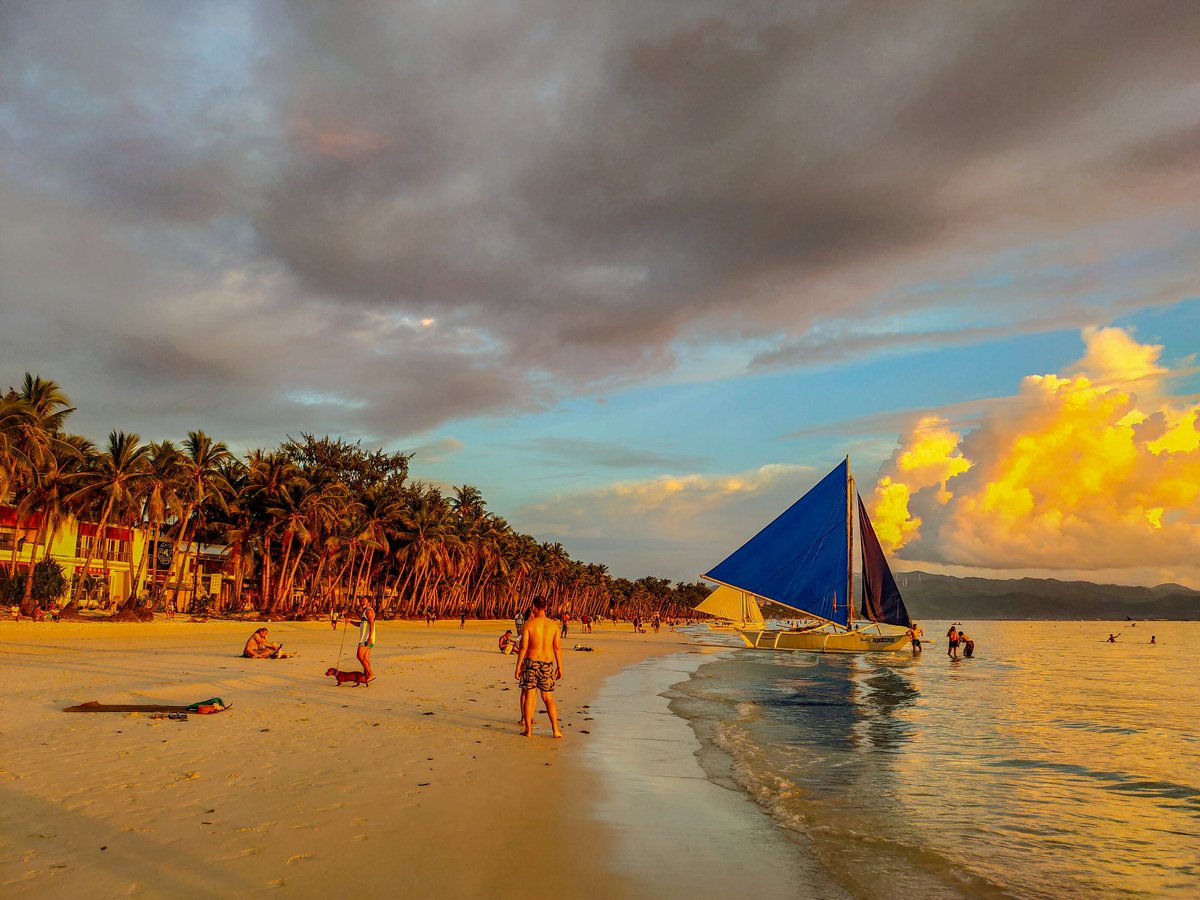
Boracay's shopping scene sits almost entirely along the 4-kilometer stretch of White Beach, split into three station areas that each carry a different price tag and personality. The island's commercial gravity pulls toward D'Mall in Station 2, a compact open-air complex where souvenir stalls, boutiques, and food vendors crowd a network of narrow walkways. You won't find department stores or big malls here. Most retail happens in small, family-run stalls selling puka shell jewelry, coconut oil, and locally sewn beachwear. Worth noting, the island's 2018 closure for environmental rehabilitation cleared out a lot of unlicensed vendors, and the retail landscape that reopened tends to be tidier, if a bit more tourist-facing. For practical currency context, 1 USD currently converts to about 62.80 PHP, which means a few hundred pesos goes a long way at the market stalls lining the beachfront path.
Shopping districts
-
D'Mall, Station 2
mid-range to tourist-premiumD'Mall is Boracay's commercial center, a maze of covered walkways between Station 2's beachfront and the main road. The complex holds maybe 200 small retail spaces alongside restaurants and money changers. Most souvenir shopping on the island happens here, from t-shirt stalls to coconut-product vendors to pearl sellers. The atmosphere is loud, warm, and a little chaotic during peak evening hours. You'll hear competing sound systems from neighboring bars, smell grilled seafood from the food stalls at the edges, and feel the slightly sticky tropical air that never quite dries out in the covered corridors. To be fair, prices here run higher than what locals pay in Caticlan on the mainland, but the convenience of having everything in one spot keeps visitors circling back. GCash and credit cards work at the larger shops, though the smallest stalls remain cash-only.
Best for: Souvenirs, beachwear, coconut products, pearl jewelry, and evening browsing
-
Station 1 Beachfront Path
upper mid-range to highThe northern stretch of White Beach near Station 1 tends toward the upscale end of Boracay's retail spectrum. Resort boutiques here sell imported swimwear brands, handmade jewelry with semi-precious stones, and linen resort clothing. The foot traffic is quieter than Station 2, and shop owners are less likely to call out to passersby. Sand underfoot, frangipani in the air, and the sound of waves right beside you. Some of the island's better pearl vendors operate in this section, carrying South Sea and Akoya varieties sourced from Palawan and Mindanao. Prices reflect the neighborhood. A woven beach bag that might cost 250 PHP at D'Talipapa could run 500 PHP or more in a Station 1 boutique.
Best for: Resort wear, imported swimwear, quality pearl jewelry, and linen clothing
-
Station 3 and the Main Road
budgetStation 3 sits at the southern, quieter end of White Beach, closer to Cagban jetty port where most visitors first arrive by boat from Caticlan. The commercial strip along the main road between Stations 2 and 3 is where you'll find Filipino chain convenience stores, hardware shops, and the kinds of stores that serve island residents rather than tourists. Prices drop noticeably. This is where tricycle drivers buy their phone loads, where guesthouse owners pick up supplies, and where you might stumble across a no-name clothing stall selling board shorts for under 150 PHP. The vibe is practical, a little dusty, and genuinely local. Mind you, the selection of souvenirs is limited compared to D'Mall, but the few stalls that do operate here tend to price closer to mainland rates.
Best for: Everyday goods, budget clothing, and local convenience shopping away from tourist markups
-
Balabag Commercial Area
mixedBalabag is the barangay that contains most of Boracay's commercial infrastructure, including D'Mall and the roads behind it. The streets running parallel to White Beach hold a handful of dive shops selling gear, pharmacies, ATM clusters, and a few small grocery stores. Shoppers heading here are typically looking for something functional rather than decorative. You'll find SIM card vendors, laundry services, and the occasional second-hand bookshop tucked between internet cafes. The Balabag Wetland Park sits nearby, a reminder that this dense commercial pocket borders a conservation area that survived the 2018 rehabilitation overhaul.
Best for: Practical supplies, SIM cards, dive gear, and pharmacy needs
Markets
-
D'Talipapa Market
wet market and souvenirD'Talipapa is Boracay's closest thing to a traditional Filipino wet market, though it has increasingly shifted toward tourist souvenir sales in recent years. The market sits a short walk inland from D'Mall and occupies a covered structure with tightly packed stalls. The seafood section still operates, selling fresh fish, prawns, and shellfish that you can take to a nearby cook-for-hire restaurant for preparation. The smell of raw seafood, damp concrete, and frying garlic hits before you see the stalls. Souvenir vendors here sell puka shell necklaces, woven bags, dried mango, coconut vinegar, and carved wooden figures. Prices start lower than D'Mall, but bargaining is expected and the first quoted price might be double the eventual sale price. Mornings are best for the seafood section. By late afternoon, the souvenir stalls dominate.
Daily, roughly 6 AM to 9 PM, with seafood vendors closing earlier around 5 PM
-
Boracay Night Market
night food marketA row of open-air food stalls that sets up along the main road near Station 1 after sundown. The night market leans heavily toward eat-in street food rather than retail goods. Grilled squid, chicken inasal, and Filipino barbecue skewers for around 50 to 100 PHP per serving. Some stalls sell fresh fruit shakes and local ube ice cream. A few vendors at the edges display handmade bracelets and anklets. The concrete still radiates the day's heat underfoot, and the smoke from charcoal grills drifts across the whole strip. It draws a mix of budget travelers and Filipino families staying in the nearby guesthouses.
Nightly from around 5 PM to 11 PM, busiest between 7 PM and 9 PM
-
Beachfront Blanket Vendors
informal beachfrontNot a formal market, but a consistent feature of Boracay's retail landscape. Independent vendors set up blankets or small folding tables along the White Beach sand path between Stations 1 and 3, mostly in the late afternoon and evening. They sell handmade anklets, temporary henna tattoos, sunglasses, and woven friendship bracelets. Prices are negotiable and tend to be the lowest on the island for impulse-buy items. A shell bracelet might start at 100 PHP and settle around 40 to 60 PHP. The sand is still warm from the day, the sunset is right there, and the sellers are generally relaxed about whether you buy or walk on.
Late afternoon through evening, weather permitting
Souvenirs worth bringing home
The genuinely local Boracay souvenirs are rooted in the island's shell-diving and coconut traditions. Puka shell jewelry remains the signature item. The shells wash up naturally on Puka Beach at the island's northern tip, and local artisans string them into necklaces, anklets, and earrings. Look for unpolished, irregular shells rather than the uniformly smooth ones, which are more likely mass-produced imports from other regions. Coconut-derived products are another honest local buy. Virgin coconut oil, coconut vinegar, and coconut jam (locally called bukayo) all come from Aklan province, the same province that contains Boracay. Dried Philippine mangoes from Cebu are widely available and make practical gifts, though they originate from a different island. Woven abaca bags and placemats, made from a fiber plant grown across the Visayas, carry more regional authenticity than the mass-printed t-shirts. If you're interested in pearls, Boracay vendors source primarily from Palawan's pearl farms. South Sea pearls in golden and white varieties are the premium tier. Ask for a certificate of authenticity at any of the more established pearl shops near Station 1. That said, unset loose pearls tend to offer better value than pre-mounted jewelry, and you can have them set by a jeweler back home.
Practical tips
- Bargaining
- Bargaining is standard at D'Talipapa and with beachfront blanket vendors. A reasonable target is 40 to 60 percent of the first quoted price. At D'Mall's fixed-price shops and branded stores, prices are generally firm. If a vendor won't move much on price, the item might already be near its floor. Aggressive haggling tends to be counterproductive on a small island where sellers remember faces.
- Payment methods
- Cash in Philippine pesos is king at market stalls and small shops. GCash, the Philippines' dominant mobile wallet, has spread widely across Boracay since 2020 and many mid-range shops display GCash QR codes. Credit cards work at resort boutiques and the larger D'Mall retailers but expect a 2 to 3 percent surcharge at some. ATMs cluster near D'Mall and along the Balabag main road, though they sometimes run dry on weekends during peak season. Bringing enough pesos from Caticlan or Kalibo airport is a practical hedge.
- Opening hours
- Most D'Mall shops open around 10 AM and stay open until 9 or 10 PM. D'Talipapa's seafood section starts as early as 6 AM but winds down by late afternoon. Beachfront vendors follow the sunset schedule, appearing around 4 PM and packing up by 10 PM. During the Amihan season (roughly November through May), expect longer hours and more vendors. The Habagat wet season, which covers June through October, sees some stalls close early or skip days entirely when the weather turns rough.
- Tax refunds
- The Philippines does not currently operate a VAT refund scheme for tourists at point of sale. The 12 percent VAT is built into retail prices. Duty-free shopping is available at Kalibo airport's small duty-free section, though selection is limited compared to Manila's larger facilities.
- Shipping purchases home
- For bulkier items like woven furniture or large shell decorations, several logistics offices near D'Mall offer domestic and international shipping via LBC, JRS Express, or Philippine postal services. Packing fragile items like pearl jewelry yourself and carrying them in hand luggage is more reliable than trusting cargo handling on the Caticlan boat transfer.
FAQ
Is Boracay a good place to buy pearls?
Boracay's pearl vendors source primarily from Palawan's farms, which produce well-regarded South Sea and Akoya varieties. The island is a reasonable place to browse and buy, particularly near the Station 1 beachfront where more established sellers operate. Prices tend to run slightly higher than buying directly in Puerto Princesa or Manila's pearl districts, but the convenience and selection are decent. Always request a certificate of authenticity for any pearl purchase above a few thousand pesos.
What are typical prices for souvenirs at D'Talipapa?
Puka shell necklaces start around 50 to 150 PHP depending on complexity. Woven abaca bags range from 150 to 400 PHP. Dried mango packs (200g) typically sell for 80 to 120 PHP. Coconut oil in small bottles runs around 60 to 100 PHP. These are post-bargaining estimates. Initial asking prices may be 50 to 100 percent higher, especially if you arrive with a large tour group.
Can I use credit cards for shopping on Boracay?
Credit cards work at resort boutiques, larger D'Mall retailers, and some restaurants, but the majority of market stalls, beachfront vendors, and smaller shops operate on cash only. GCash mobile payments have become widely accepted since 2020 and cover a middle ground that credit cards miss. Carrying Philippine pesos in small denominations (100 and 500 PHP notes) is the most practical approach for market shopping.
What time should I visit D'Talipapa for the best seafood selection?
The seafood stalls at D'Talipapa receive their freshest stock in the morning. Arriving between 7 and 9 AM gives you the widest selection of fish, prawns, and shellfish before the popular items sell through. By early afternoon the choices narrow considerably, and by 5 PM most seafood vendors have packed up for the day.
Is it safe to shop alone on Boracay?
Boracay scores 7.2 out of 10 for solo-traveler safety (see the TTDI Solo-Safety Index). The main commercial areas around D'Mall and the White Beach path are well-lit and busy through late evening. Standard precautions apply. Keep valuables in a front pocket or cross-body bag, particularly in crowded market areas. Petty theft of unattended belongings on the beach is the most commonly reported issue rather than any personal safety concern.
Last verified by automated review (v1.7.2) on . What is automated review?