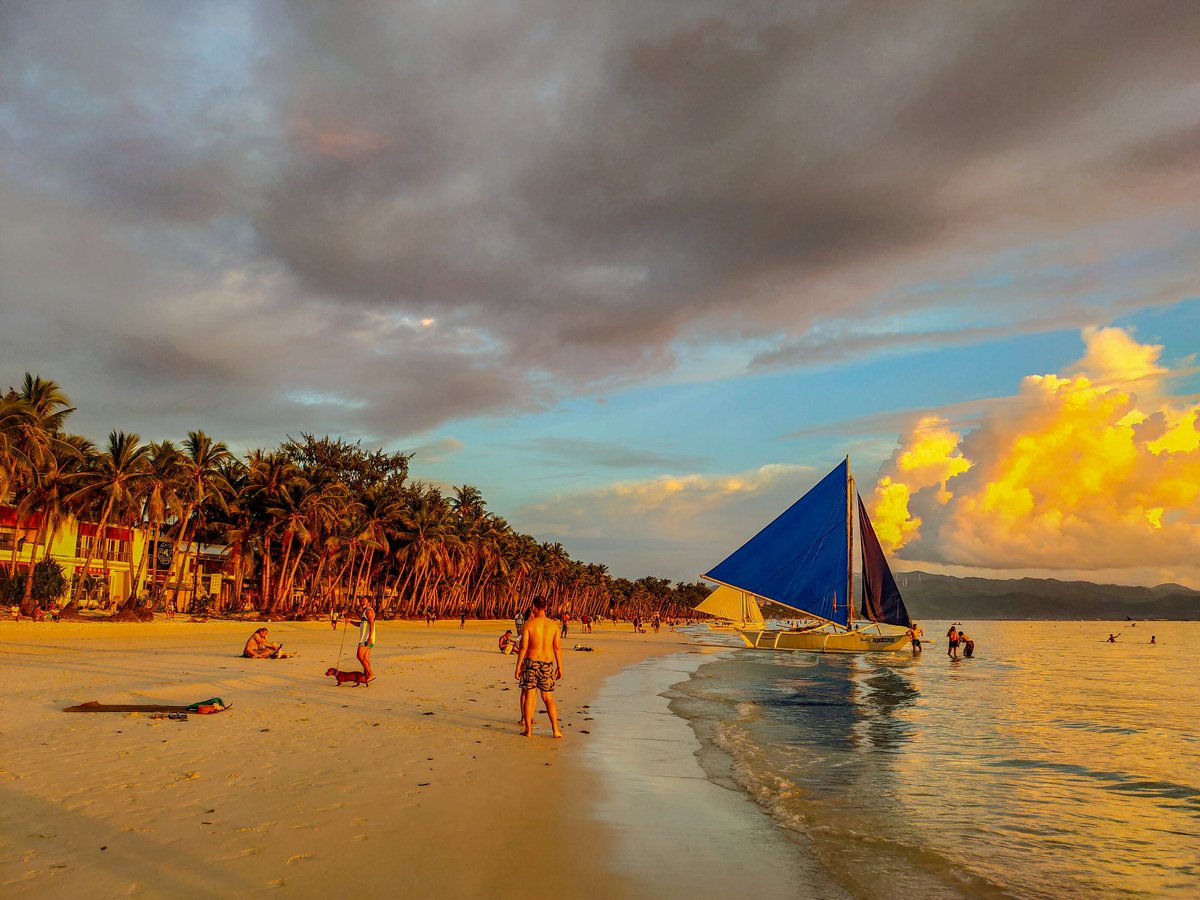
Boracay's nightlife sits within a 4-kilometer strip of White Beach, from Station 1 in the north to Station 3 at the southern end. After dark, most of the energy funnels into the D'Mall area around Station 2, where bar fronts open directly onto the sand and the bass carries down the beachfront path. Filipino group-drinking traditions set the rhythm. Tables fill with shared plates of sisig and chicharon bulaklak, beers arrive in buckets, and someone at the next table is always singing. The scene runs hotter during the Amihan dry season, when Manila weekenders and international visitors pack the sand. During the Habagat wet months, the crowd thins and some beachfront bars cut back their hours or close midweek.
The island went through a 6-month government-mandated closure in 2018 for environmental rehabilitation, and the nightlife that came back is noticeably tamer. Noise ordinances from the municipality of Malay now cap outdoor sound levels along the beachfront. The sunrise beach raves of the mid-2010s are gone. What you get now is a strip along Station 2 that still fills up on a Friday in high season but quiets down well before sunrise.
The Bar Scene
The densest cluster of bars runs along the beachfront path near D'Mall, where you can walk from one open-air setup to the next in about 30 seconds. The beachfront spots sell buckets of 5 beers for 400 to 500 PHP and mix coconut-shell cocktails that lean sweet. You'll sit on beanbags in the sand with your feet bare while grilled-squid smoke from nearby food stalls drifts through the salt air. Cocktail bars as a distinct category are a newer development on the island, mostly clustered along the Station 1 end where boutique hotels opened after the rehabilitation period. A well-made drink using Philippine calamansi or dalandan might run 250 to 350 PHP at one of these spots. The handful of rooftop bars in the same stretch look west over the Sibuyan Sea and are worth catching around golden hour. The dive bars sit along the back streets of Balabag, behind the commercial strip. These are bare-bones setups with plastic chairs, fluorescent tubes, and a karaoke machine in the corner. Filipino island workers and long-term expats drink here at prices that can run half of what the beachfront charges. Wine bars as a standalone concept barely exist on Boracay. Resort restaurants carry wine lists, but this is a rum-and-beer island. The Wikivoyage community maintains an updated list of specific Boracay drinking spots at https://en.wikivoyage.org/wiki/Boracay#Drink.
The Club Scene
Boracay's club scene concentrates in a tight zone around Station 2, where a handful of dedicated venues and a larger number of bars-that-become-clubs handle the late-night crowd. The music leans heavily toward EDM and Top 40 remixes, with Filipino pop mixed in. Hip-hop nights surface occasionally, but electronic music dominates after midnight. Dress codes are loose by any standard. Flip-flops and board shorts clear the door at most spots, though a few of the newer venues prefer closed shoes after 10 PM. Cover charges where they exist tend to fall in the 200 to 500 PHP range, usually including one drink. Holiday weekends push fees higher. The crowd skews young, mostly in their 20s and early 30s. Korean visitors have been a significant presence on Boracay since the early 2000s, and you'll notice Korean-language signage and K-pop tracks mixed into the DJ rotation. The rest of the room blends domestic Filipino tourists with Southeast Asia backpackers and the occasional group fresh from one of the island's dive shops. Weeknight clubs can feel nearly empty. The real energy arrives Friday evening with the afternoon flights from Manila. Saturday peaks late. By Sunday the exodus begins, and Monday night on Boracay feels like a different island entirely.
Live Music
Filipino cover bands are the backbone of Boracay's live-music scene. The Philippines has one of the deepest cover-band traditions in Southeast Asia, and the island draws solid musicians from the Visayas and Manila who work through 4-hour sets of Western pop, rock, and R&B without breaking. The vocal range you'll hear in a Station 2 beachfront bar rivals what Manila's top hotels book for their lobbies. Whitney Houston, Bon Jovi, and Journey are permanent fixtures in the setlists. Original Pilipino Music (OPM) ballads surface too, especially later when the crowd tilts more Filipino. Fire dancing is Boracay's other signature nightly performance. Groups set up along the Station 2 sand after sundown, typically between 7 PM and 9 PM, spinning flaming batons and ropes while crowds form around them. You can feel the heat off the flames from 3 meters away. The performers rotate between positions along the beach each night and work for tips. Beachfront restaurants with live bands generally start sets around 7 PM, which makes them a good early-evening stop. Sunday and Monday tend to be the weakest nights, with some spots switching to acoustic-only or skipping performances. Friday and Saturday bring the full band lineups, occasionally with a guest DJ taking over around 10 PM when the live set wraps.
Nightlife neighborhoods
-
Station 2 and D'Mall
The loudest stretch of Boracay after dark. Music bleeds from one bar front into the next along the sand. Hawkers work the crowd selling cocktail buckets and fire-dance shows. The beachfront becomes an open-air floor of beanbag seating and LED-lit tables, backed by the smell of charcoal-grilled seafood from D'Mall's food stalls.
- Best for
- First-timers, groups, weekend party crowds, anyone who wants everything within walking distance on the sand
-
Station 1
Quieter and more resort-oriented, with cocktail bars attached to boutique hotels. The beach stretches wider here, with fewer people after 9 PM. Conversations happen at normal volume. The newer rooftop bars perch above the palm canopy with Sibuyan Sea sunset views. Diniwid Beach lies north of this stretch, nearly silent at night.
- Best for
- Couples, travelers over 30, anyone who wants a well-made drink without a sound system drowning it out
-
Station 3
The budget end of White Beach, where backpacker hostels keep prices low and the crowd international. Bars are simpler. More plastic furniture, fewer cocktail menus, and a slower pace than Station 2. You're more likely to end up in conversation with a solo traveler from Europe or a Filipino family on a weekend trip.
- Best for
- Budget travelers, backpackers, people who prefer conversation over bass
-
Balabag (behind D'Mall)
The off-beach interior where the island's workers unwind after their shifts. Karaoke rooms, billiard halls, and no-frills bars line the roads. The lighting is fluorescent. The snacks are fried. You'll hear Aklanon and Tagalog more than English, and prices run about half of what the beachfront charges.
- Best for
- Travelers who want to drink where locals drink, karaoke enthusiasts, late-night cheap eats
-
Bulabog Beach (east side)
Boracay's windward shore draws kitesurfers when the northeast monsoon brings consistent wind across the strait. A few beach bars cater to the watersports crowd, with reggae leanings and mellow closing times. The breeze runs cooler here than on the sheltered White Beach side. During the wet monsoon months, things quiet down considerably.
- Best for
- Kitesurfers during the windy season, wind-sport travelers, anyone who wants a mellow evening by the water
Safety after dark
Boracay scores 7.2 out of 10 for solo-traveler safety (see the TTDI Solo-Safety Index), and the well-lit beachfront path between the three stations generally feels secure into the early morning hours. The interior roads behind D'Mall and the route toward Cagban port get dark once you leave the main strip.
The most common scam involves inflated bar tabs, where extra items appear on your bill at the end of the night. Check your receipt line by line before paying, especially at busier beachfront spots. Drink spiking is a risk in any tourist-heavy party zone. Keep your glass in hand and be cautious about accepting drinks from strangers.
Swimming at night is discouraged by local authorities. The undertow along White Beach picks up after dark, particularly during the wet-monsoon months. The Wikivoyage safety overview at https://en.wikivoyage.org/wiki/Boracay#Stay_safe covers broader precautions for the island.
For LGBTQ+ travelers, the island scores 4.5 out of 10 for friendliness (sourced from TTDI's editorial rubric). Filipino culture tends to be socially tolerant in daily interactions, but public displays of affection between same-sex couples may draw stares outside the more tourist-oriented bars in Station 2.
Practical tips
- Currency and prices
- The Philippine peso currently trades at about 62.80 PHP to 1 USD. Most beachfront bars accept credit cards, but the back-street Balabag spots and tricycle drivers are cash-only. ATMs cluster around D'Mall, and foreign-card withdrawals typically carry a 200 to 250 PHP surcharge per transaction.
- Tipping
- Tipping is not obligatory in the Philippines, but leaving around 10% at sit-down bars is appreciated. For the fire dancers performing on the beach, 50 to 100 PHP per person in your group is a reasonable gesture. Rounding up at casual spots is common enough, though bartenders don't expect it.
- Closing times
- Since the island's rehabilitation, the local government has enforced closing-time rules more firmly. Most bars wind down between 1 AM and 2 AM, with some indoor venues pushing to 3 AM on Friday and Saturday. The pre-closure all-night beachfront parties are not coming back.
- Getting home at night
- Tricycles are the island's late-night transport and run throughout the night along the main road. Short hops between stations cost roughly 50 to 100 PHP per person, though fares tend to double after midnight. Walking the beachfront path works if your hotel faces White Beach, but a few stretches between stations go dark. Wikivoyage covers the local transport layout at https://en.wikivoyage.org/wiki/Boracay#Get_around.
- What locals drink
- San Miguel Pale Pilsen is the standard order across the Philippines. Red Horse, at 6.9% ABV, is the stronger lager and popular with groups settling in for a long session. Tanduay rum is the local spirit, almost always mixed with Coca-Cola or calamansi juice. Ordering a beer bucket is the fastest way to settle into a Filipino drinking night.
- Monsoon season timing
- The Amihan dry season runs from November through May and brings peak tourist crowds, with nightlife at full capacity. That northeast monsoon also drives kitesurfing season on Bulabog Beach, which adds a different social energy to that shore. The Habagat wet season from June through October thins visitor numbers, and some bars reduce hours or close midweek.
FAQ
What time does nightlife start on Boracay?
Beachfront bars along White Beach begin filling up around sunset, roughly 5:30 PM to 6 PM. Fire dance performances follow in the early evening. The bar-hopping and club energy picks up after 10 PM on weekends, though weeknights stay quiet until the Friday arrivals from Manila land.
Is Boracay still a party island after the rehabilitation?
Boracay still has an active nightlife scene, but it is quieter and more regulated than before the closure. The government imposed noise limits, tighter curfews, and environmental rules that ended the beachfront rave culture. What remains is a solid bar strip along Station 2 that gets busy on weekends, particularly during dry-season months. The annual LaBoracay gathering around the May 1 holiday, once the island's wildest weekend, has been curtailed by authorities since the reopening.
Is it safe to walk around Boracay at night?
The beachfront path from Station 1 through Station 3 is well-lit and busy into the early morning hours. Interior roads and the area near Cagban port are darker and less traveled. Stick to the main beach path if walking late, and use tricycles for anything off the strip.
Do I need to dress up to go out on Boracay?
Boracay is casual. Flip-flops, shorts, and a tank top will get you through the door at most bars and clubs on the island. A few cocktail spots along Station 1 lean slightly dressier, but nobody gets turned away in sandals. Leave the heels at home unless you enjoy sinking into sand.
Where do locals go out on Boracay?
The bars and karaoke rooms along the interior roads behind D'Mall in the Balabag area are where island residents spend most of their evenings off. Prices run lower, the music is Filipino, and the food trends toward pulutan, the Filipino tradition of drinking snacks meant to be shared. The beachfront strip caters primarily to tourists.
Can I still find beach parties on Boracay?
The organized all-night beach parties that defined pre-closure Boracay are gone. Station 2 still has bars that open directly onto the sand with music and outdoor seating, and the atmosphere on a peak-season Friday night gets close to the old energy. But the sound systems quiet down earlier than they used to, and the crowd clears by the early morning hours.
Last verified by automated review (v1.7.2) on . What is automated review?