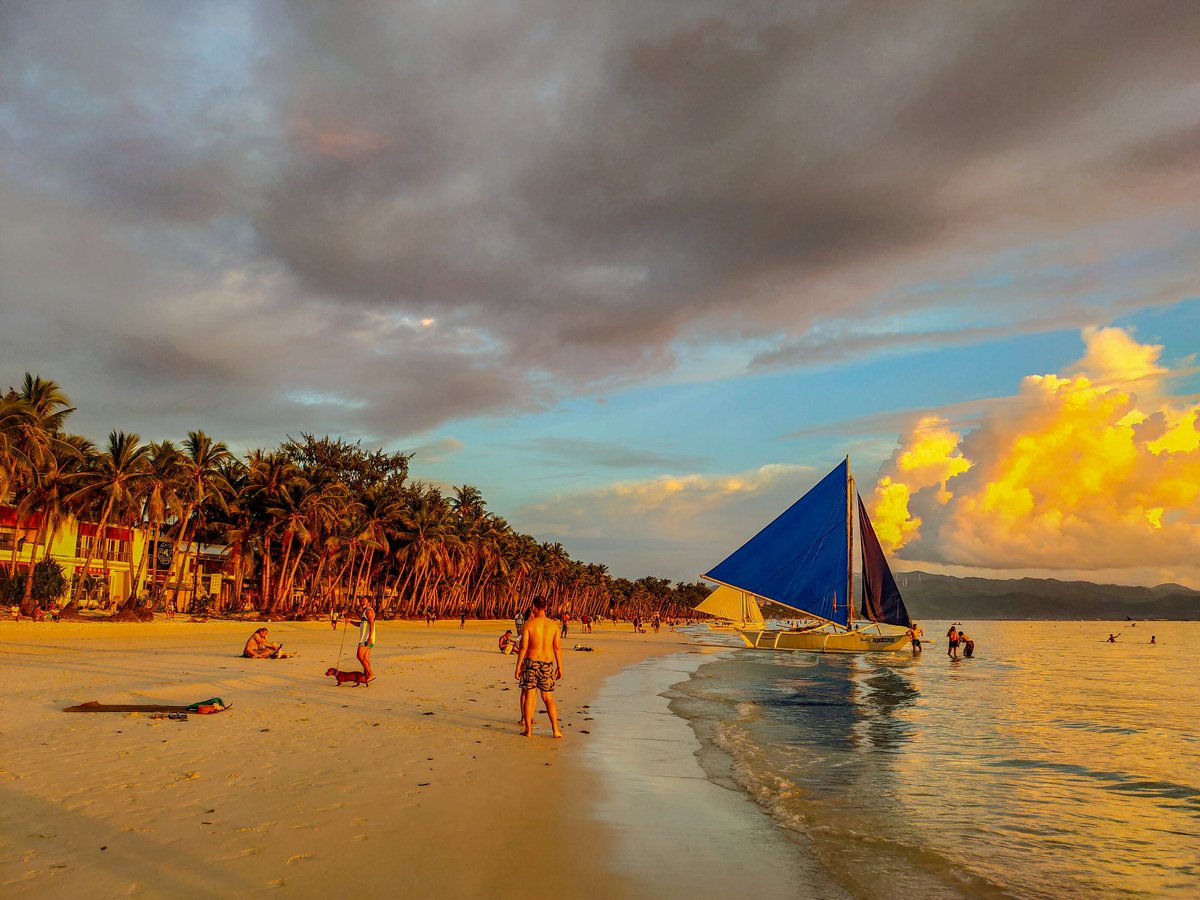
Where do locals actually go in Boracay?
Station 3 and Manoc-Manoc are where Boracay's service-industry workers live, eat, and spend their days off. D'Talipapa wet market in Balabag is the morning grocery run, not a tourist attraction. A San Miguel at a Station 3 sari-sari store runs 45-50 PHP, about a sixth of what Station 1 bars charge for the same bottle.
Station 3 sits at White Beach's southern tip, where the sand narrows and the crowd thins. Filipino families grill bangus here on weekends. The charcoal smoke mixes with coconut oil from the massage tables a few meters away. Kids chase each other through the shallows after 4pm when the heat eases off. Smoke Restaurant on the beachfront path does grilled squid and tuna jaw at 180-250 PHP per plate. Tables fill with dive instructors and hotel staff between 7pm and 9pm. To be fair, Station 3's wifi coverage tends to run weaker than the tourist core around Stations 1 and 2. Globe's 4G signal holds at roughly 15-25 Mbps on a clear day but drops hard during the afternoon storms that roll in from June through November. Tethering to a Globe or Smart SIM is often more reliable than any cafe's shared connection at Station 3.
Manoc-Manoc, the barangay near Cagban port at the island's south end, is the closest thing Boracay has to a residential neighborhood. The main road has Andok's (whole roast chicken at 189 PHP), Mang Inasal (chicken inasal with unlimited rice at 139 PHP), and a row of carinderia where adobo or sinigang runs 60-80 PHP per plate. The air smells like roasting meat and diesel from the tricycles idling at the Manoc-Manoc junction. The basketball court next to the barangay hall fills after 5pm, and Friday nights bring out karaoke machines with tinny speakers pointed at the street. Most long-stay apartment rentals for island workers sit here, running 8,000-15,000 PHP per month for a basic studio. That compares to 25,000-50,000 PHP in the tourist belt around Stations 1 and 2. The trade-off is a 15-20 minute tricycle ride to White Beach, at 50-100 PHP per trip.
D'Talipapa wet market opens around 6am. Fishermen haul in the overnight catch from the Sibuyan Sea, and the stalls reek of brine and melting ice by 9am. Locals buy prawns or lapu-lapu by the kilo and take them to a grill-for-hire next door, paying 100-200 PHP for cooking. The tourist version involves a guided seafood walk at 2-3x the local price, so skip it. Bulabog Beach on the island's east side stays local-feeling through most of the year. Kiteboarding schools line the shore from November to April, but from May onward it's fishermen mending nets and the odd surfer testing the break. The wind carries a constant salt mist, and the sand here is darker and coarser than White Beach. No fire dancers, no thumping bass from bar speakers, no 200-PHP entry fees.
The island's workers mostly run split shifts, so local spots feel emptiest between 10am and 4pm. Station 3's beach strip gets its local crowd by dinnertime, and Manoc-Manoc's main road follows about an hour later. Sunday is the big day off for hotel and restaurant staff, and the Balabag basketball leagues draw afternoon crowds. Boracay scores 5.2/10 for digital-nomad suitability (sourced from TTDI's editorial rubric), held back mainly by infrastructure. Power outages still hit 2-3 times monthly during wet season. They can last from 30 minutes to 4 hours. Globe and Smart both sell prepaid SIM cards at Cagban port arrivals for 300-500 PHP with 15-30 day data packages. If you're settling in for more than a month, Globe's GoPLAN 599 postpaid gives 30 GB and better throttled speeds than any prepaid option.
Where they actually go
Smoke Restaurant
Station 3: Plastic chairs on sand, wood-smoke from the grill drifting across tables. Off-duty dive staff and hotel workers claim the front row. Seafood plates, no tourist markup.
D'Talipapa Wet Market
Balabag: Brine-soaked concrete floors, overnight catch sold by the kilo at daybreak. Locals haul their pick to grill shacks next door. Loud, wet, heavy with the smell of the sea.
Manoc-Manoc Basketball Court
Manoc-Manoc: Concrete court beside the barangay hall. Island workers play pickup games most evenings. Karaoke machines come out late on Fridays, tinny speakers aimed at the road.
Bulabog Beach
East side: Coarser dark sand, steady onshore wind, fishermen mending nets. No bars, no sunbed vendors, no fire dancers. Kiteboarders November to April, then near-empty.
Carinderia row on Manoc-Manoc main road
Manoc-Manoc: Filipino comfort food at worker prices. Plastic tables, handwritten menus, no English needed to point and order. Air thick with roasting meat and tricycle diesel.
Station 3 sari-sari stores
Station 3: Cold bottles from a cooler planted in sand. Filipino families gather on weekends, massage therapists sit between clients. No sign, no menu, no pretense.
Best times to visit
Station 3 fills up from about 6:30pm on weeknights. Manoc-Manoc's road gets loud Friday and Saturday after 8pm. Sunday from 3pm onward for Balabag basketball. Daytime shift hours leave most local spots quiet.
Last verified by automated review (v1.7.2) on . What is automated review?