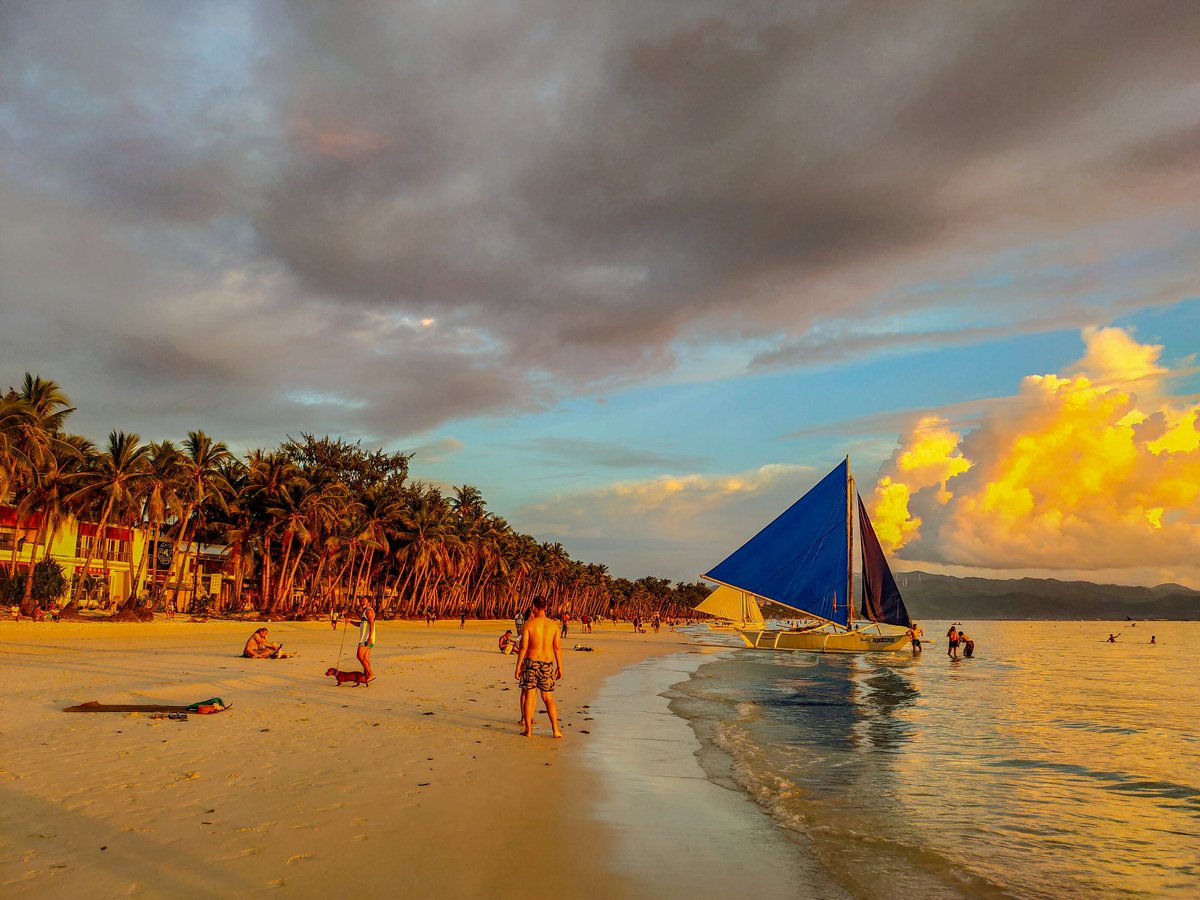
What should I avoid in Boracay?
Skip the helmet diving operators along White Beach Station 1, the tricycle drivers who quote three to five times the regulated fare from Cagban port, and any beachfront restaurant with a laminated photo menu. Avoid the Bulabog Beach side of the island during habagat season from June through October, when southwest winds push rough surf and plastic debris onto shore.
Your introduction to Boracay's pricing games starts the moment you step off the plane at Caticlan's Godofredo P. Ramos Airport. The bangka crossing from Caticlan Jetty Port to Cagban takes 10 minutes and costs ₱100 for the boat plus ₱25 in terminal fees. Porters on the Caticlan side will grab your luggage before you can object, then expect ₱50-100 per bag. That's fine if you wanted the help. The ₱500 'VIP boat' is harder to justify, since it's the same wooden outrigger on the same 10-minute route. At Cagban, tricycle drivers know you're disoriented and tired. The regulated fare to Station 1 is ₱100 per person, posted on a board near the exit. Walk past the first cluster of drivers quoting ₱300-500, and you'll find the ones who run the posted rate. Worth noting, the fare board is small and easy to miss in the crowd.
White Beach Station 1 is where the helmet diving operators set up shop. You walk on the sea floor wearing a weighted helmet connected to an air hose, staring at dead coral and silty water stirred up by foot traffic. Twenty minutes costs ₱1,200-1,500. To be fair, some visitors enjoy the novelty, but a two-tank scuba dive at Crocodile Island or Yapak reef runs ₱2,500-3,500 with a licensed PADI shop and puts you over living reef where visibility often reaches 15-20 meters. The parasailing hawkers between Stations 2 and 3 quote ₱2,500 per person, and the harness rigging tends to look frayed and sun-bleached. Bulabog Beach draws kiteboarders from November through May, when the northeast amihan wind is steady. The rest of the year, skip Bulabog entirely. Jet ski operators there run a well-known damage hustle, pointing to pre-existing scratches after your ride and demanding ₱5,000-15,000. Photograph the machine from four angles before you climb on, if you go at all.
The beachfront restaurants between Station 1 and D'Mall survive on foot traffic, not return customers. You'll spot them by the laminated photo menus and the plastic chairs planted in the sand. A plate of garlic butter shrimp costs ₱280 at a carinderia along the main road but runs ₱650-800 at those spots. For seafood worth the markup, walk to D'Talipapa, the wet market near Station 2. You pick your fish, prawns, or crab from the vendors and carry it across the lane to a paluto grill. The smell of charcoal smoke and calamansi hits before you round the corner. A kilo of grilled prawns with rice and a San Miguel Pale Pilsen totals about ₱600, roughly $10 at current rates. That meal, eaten on a wobbly plastic table with smoke drifting over from the next grill, is what Boracay does better than anywhere else in the Visayas.
Habagat, the southwest monsoon, runs from June through October and reshapes the island. Bulabog Beach becomes a brown-water wind tunnel that smells of seaweed and churned sand. Stay on the White Beach side during those months, where the island's ridge blocks the worst gusts. September and October carry the highest typhoon risk. Flights from Caticlan cancel without warning when wind shear picks up, and the backup route through Kalibo adds a 2-hour van ride on a winding mountain road. The island closed for six months in 2018 after the national government ordered an environmental rehabilitation. Wastewater infrastructure improved since then, but drainage near Station 2 still backs up during heavy downpours. You might notice the warm, sulfurous smell of standing water near the low-lying sections after a strong rain. Mid-September conditions currently sit around 25°C air that feels like 31°C in 96% humidity, with afternoon thunderstorms most days.
Boracay's nightlife concentrates along the Station 2 beachfront, mostly at Epic, Cocomangas, and Exit Bar. Bucket drinks go for ₱350 for five Red Horse beers, and the strip gets rowdy between 1am and 4am. The island rates 7.2 out of 10 on the solo safety index (cities.solo_safety_score), with most risk concentrated in those late-night hours. Petty theft from bags left on the sand is the most commonly reported problem. Mind you, violent crime is rare. LGBTQ+ travelers should know Boracay rates 4.5 out of 10 for friendliness (cities.lgbtq_friendliness_score). The island is more relaxed than Manila or Cebu City on this point, but public affection between same-sex couples still draws stares outside the expat-heavy bars near Station 2. For island-hopping, book through your hotel's front desk at ₱1,500-2,000 per person for the standard Crystal Cove, Puka Shell Beach, and Crocodile Island loop. The freelance sellers along Station 3 beach charge ₱3,000-4,000 for the same route on the same boat.
Tourist traps to skip
- Helmet diving at White Beach Station 1, dead coral and ₱1,200-1,500 for 20 minutes in murky shallows
- 'VIP boat' from Caticlan to Cagban, same vessel and same 10-minute crossing as the ₱100 standard fare
- Beachfront restaurants between Station 1 and D'Mall with laminated photo menus, 2-3× the local price for identical dishes
- Parasailing operators between Stations 2 and 3, frayed rigging and no visible safety certification
- D'Mall souvenir stalls selling shells and sarongs at double the D'Talipapa market price
Common scams
- Tricycle drivers at Cagban port quoting ₱300-500 for the ₱100 regulated fare to Station 1
- Jet ski scratch scam at Bulabog Beach, operators claim pre-existing damage is yours and demand ₱5,000-15,000
- Fake 'environmental fee' collectors approaching on the beach, the real ₱75 fee is paid once at Caticlan Jetty Port
- Uninvited porters at Caticlan who grab your luggage and demand ₱100+ per bag
- Commission-inflated island-hopping packages sold on the beach at ₱3,000-4,000, the same boats run ₱1,500-2,000 via hotels
Seasonal hazards
- Habagat (southwest monsoon) June through October brings rough surf and debris to the Bulabog Beach side
- September and October carry the highest typhoon risk, Caticlan flights cancel with little notice and the Kalibo route adds 2 hours by van
- Heavy monsoon rain causes drainage overflow and standing water near Station 2
- Mid-September through October is deep low season, some restaurants and dive shops close temporarily
Last verified by automated review (v1.7.2) on . What is automated review?