Is Boracay safe?
Boracay scores 7.2 out of 10 for solo-traveler safety (see the TTDI Solo-Safety Index). The island runs about 7 km tip to tip, and the main beachfront path stays lit and busy after dark. Violent crime against tourists is rare. Real risks are rip currents at Bulabog Beach, tricycle fare disputes, and limited medical facilities. Dial 911 for emergencies.
The Philippine government shut Boracay down for six months in 2018, and the island that reopened operates under tighter regulation than before. Tourist Police patrol the White Beach path from Station 1 to Station 3 nightly, and the beachfront stays well-lit past midnight. Violent crime against visitors on Boracay is close to nonexistent. Tricycle drivers sometimes quote 200-300 PHP for rides with posted rates of 75-100 PHP, which adds up when 1 USD currently buys about 62.80 PHP. Beach vendors sell island-hopping tours at inflated prices to anyone who hasn't compared shops at D'Mall first. Petty theft happens if you leave a bag unattended on White Beach, same as any tourist beach. That cleanup removed much of the unlicensed nightlife that used to cluster near Station 2. The atmosphere after dark feels calmer than the mid-2010s, but Station 2 still gets loud past 11pm.
Solo women report feeling comfortable on the beachfront path between Station 1 and D'Mall after dark. The path is concrete, lit by bar and restaurant frontage, and busy until about 1am. North of Station 1, toward Diniwid Beach, things get quieter and darker fast. I'd walk it at 10pm but would take a tricycle past midnight. The interior roads behind White Beach are poorly lit in places, and locals sometimes ride motorcycles without headlights on narrow paths, so ears matter as much as eyes. If your accommodation sits on the inland side, a 50-75 PHP tricycle ride beats walking unlit roads. The Cagban Jetty Port area at the island's south end is functional but not somewhere to linger alone after the last boats leave around 6pm. Station 3 tends to draw a quieter, slightly older crowd, and the guesthouses there cost less. You'll hear surf rather than bass from bar speakers past 10pm.
The bigger safety concern on Boracay is water, not people. Bulabog Beach sits on the island's eastern shore and gets stronger currents than White Beach, with fewer lifeguards on the sand. September falls in the Habagat, the southwest monsoon, which brings daily thunderstorms, swells that can cancel island-hopping routes, and reduced underwater visibility for divers. Boracay has no hospital. Small private clinics handle stitches and stomach bugs, but anything requiring surgery means a boat to Caticlan and a road transfer to Kalibo, roughly 2 hours total. For Boracay, travel insurance with medical evacuation coverage is the single most important thing you'll pack.
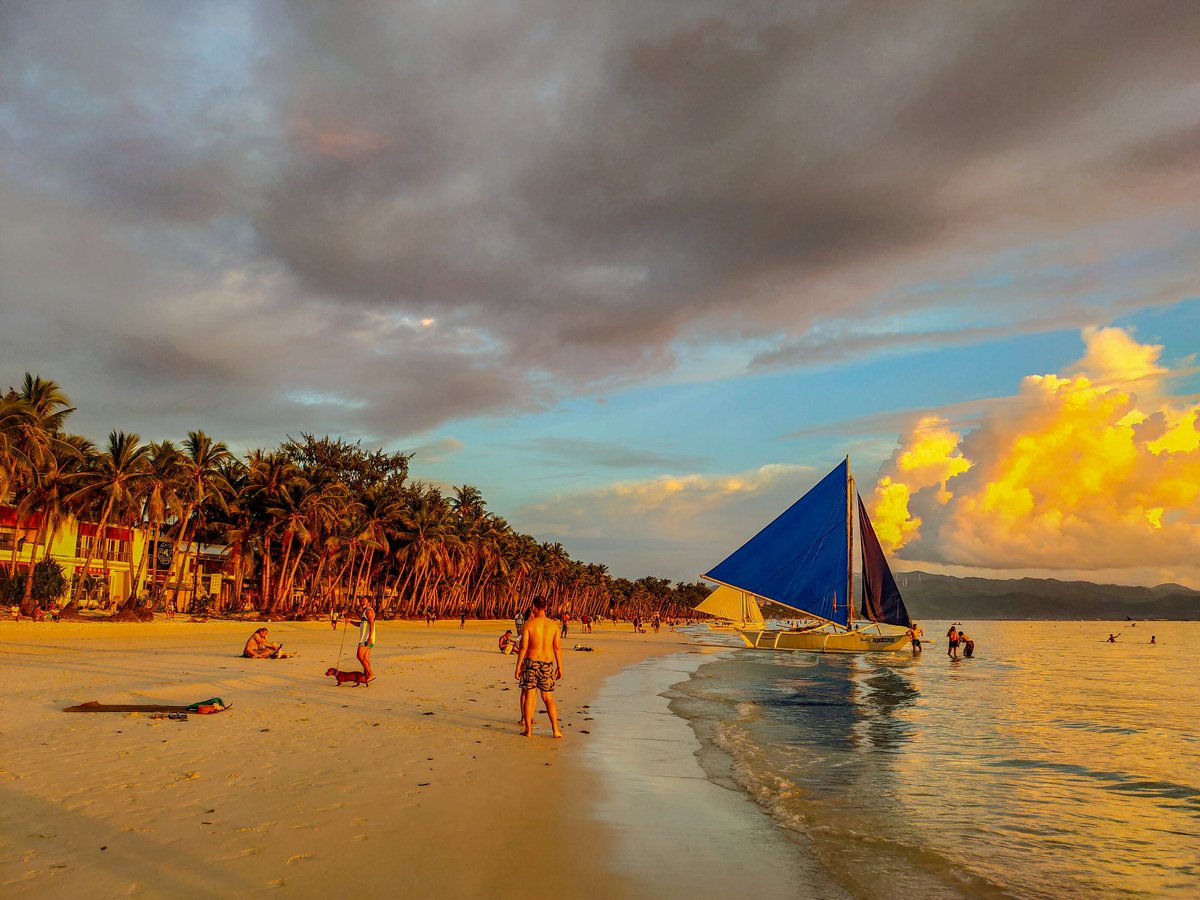
For solo travelers worried about isolation, Boracay is one of the easier Philippine islands to find company on the first day. Hostels along Station 2 run communal bar nights, and the island-hopping boats that leave from Station 1 beach around 9am carry 10-15 passengers, enough to start conversations without group-tour fatigue. D'Mall's restaurants seat singles without a two-top minimum or awkward negotiations. Diving shops at Station 1 pair solo divers into small groups of 4-6 for reef trips off the island's north end. By 5:30pm, the beachfront between Stations 1 and 2 fills with people sitting on damp sand, cold San Miguel Light sweating in hand, watching the sky go copper over the Sibuyan Sea. That warmth on your arms as the afternoon heat lets go is half the reason people extend a 3-night Boracay booking.
Emergency number: 911
Official travel advisories
Exercise increased caution the most cautious of 2 government assessments
- Government of CanadaLevel 2Exercise a high degree of caution View advisory
- US State DepartmentLevel 2Exercise Increased Caution View advisory
Verified from the issuing governments' own feeds.
Areas to avoid
- Cagban Jetty Port area after the last boats leave (around 6pm)
- Interior roads behind White Beach after midnight (poorly lit, no sidewalks)
- Bulabog Beach for swimming (stronger currents, limited lifeguard coverage)
- Station 2 bar strip after 2am (not dangerous, but drunk-tourist hassle)
Common concerns
- Tricycle fare disputes (no meters; agree on price before boarding, check posted rates)
- Rip currents at Bulabog Beach and during Habagat monsoon season
- No hospital on the island (nearest surgical facility is in Kalibo, roughly 2 hours away)
- Beach theft of unattended bags while swimming
- Inflated island-hopping tour prices from unlicensed beach vendors
- Poorly lit interior roads and motorcycle traffic without headlights after dark
- Habagat monsoon (June through October) cancels some boat and diving excursions
Last verified by automated review (v1.7.2) on . What is automated review?