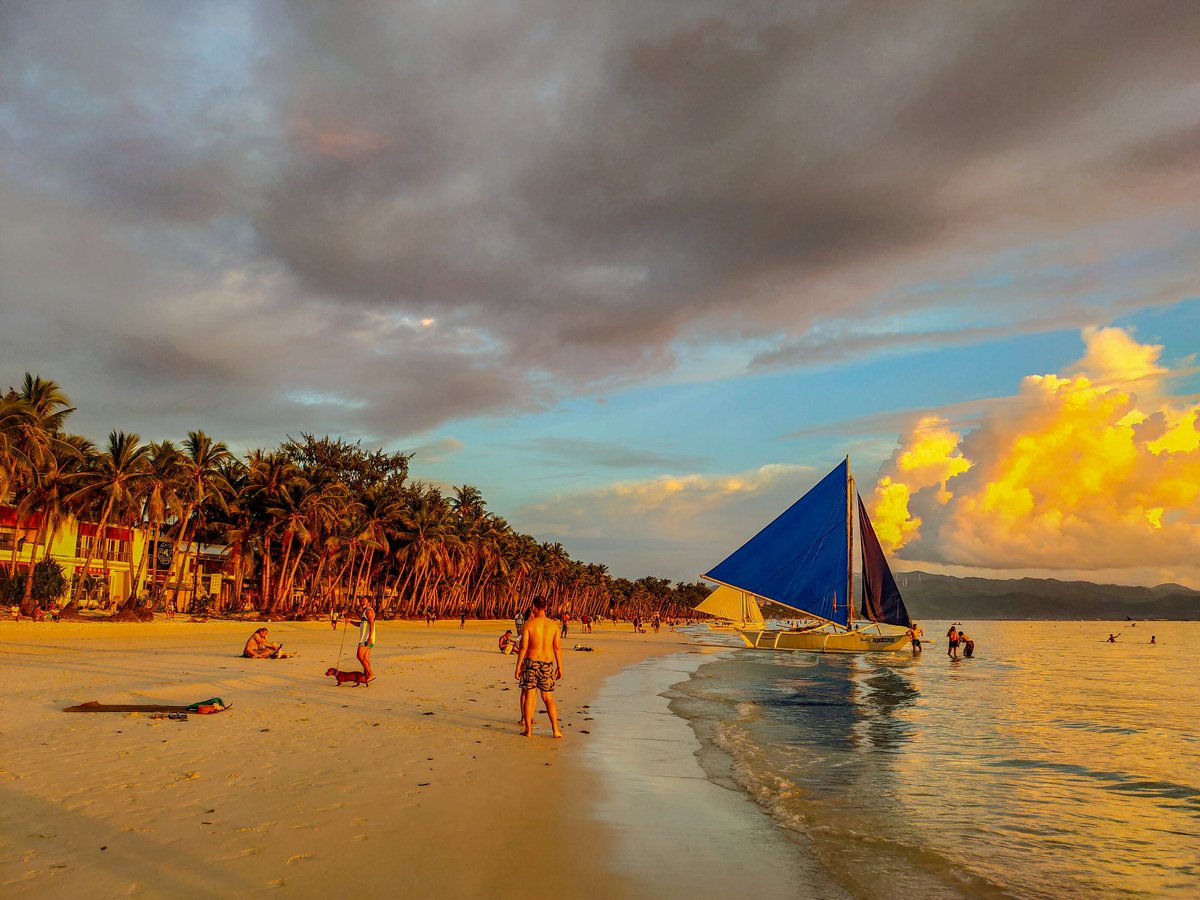
Boracay covers roughly 10 square kilometers, and its most valuable feature, the 4-km White Beach on the western shore, costs nothing to walk onto. All Philippine beaches are public land under national law, a principle the government reinforced when it closed the island for 6 months in 2018 and cleared commercial encroachments from the beachfront. That effort produced wider public easement zones and cleaner sand than Boracay had seen in a decade. Beyond White Beach, the island holds wetland parks, quiet coves on the eastern coast near Bulabog, and enough walkable terrain that a full day of free sightseeing rarely exceeds 10 km of walking. The island stretches about 7 km from Yapak in the north to Manoc-Manoc in the south. Boracay scores 7.8 out of 10 for family friendliness (see the TTDI Family-Friendliness Index), and the walk between any two free attractions on this list rarely exceeds 30 minutes.
Free attractions
-
White Beach
Stretches along the western shore, split informally into three stations. Station 1 at the northern end tends to be quieter, with finer sand and less commercial activity. Station 2 sits near D'Mall, the island's main commercial strip. Station 3 at the southern end has a more local atmosphere and slightly lower restaurant prices. The sand here has an almost talcum-like texture, cool underfoot in the early mornings and warm by midday.
Stations 1-3beach -
Bulabog Beach
Faces east across the Tablas Strait, about a 10-minute walk from White Beach through the island's narrow interior near Station 2. Wind conditions from November through April make this Boracay's primary kitesurfing and windsurfing spot. The beach is rockier than the western shore, and the water tends to be choppier, but swimming is fine in the calmer months. Several kite schools line the beachfront.
Eastern shorebeach -
Diniwid Beach
A short, rocky path north of Station 1 leads to this cove. Diniwid is smaller and quieter than White Beach on most days, with rocky outcrops framing both sides. Some beachfront restaurants will let you sit if you order a drink. Mind you, the sand and water are public regardless. Carabao Island is visible on the horizon to the northwest.
North of Station 1beach -
Puka Beach
Occupies the northern tip of the island, about 3.5 km from Station 1 by road. Surf here runs rougher than on White Beach, and the sand has a coarser grain with bits of coral mixed in. Fewer vendors operate here compared to the main tourist strip. A tricycle from Station 1 runs around 150 PHP each way, but walking the road north takes about 45 minutes.
Yapakbeach -
Willy's Rock
A volcanic rock formation at the edge of White Beach near Station 1, topped with a small grotto dedicated to the Virgin Mary. You can wade out at low tide when the water drops to shin level. No fee to approach or photograph. The sunset behind the grotto draws a crowd most evenings.
White Beach, Station 1landmark -
Balabag Wetland Park
A protected wetland in Barangay Balabag, between the island's two coasts. A boardwalk winds through mangroves where egrets and monitor lizards appear regularly. The park's infrastructure expanded after the island rehabilitation, and it now serves double duty as part of Boracay's wastewater management system. No entrance fee.
Balabagpark -
Boracay Wetland Conservation Park
This conservation area sits in the island's interior, closer to the eastern shore. It protects native vegetation and freshwater habitats that feed Boracay's aquifer. The canopy blocks direct sunlight, temperatures might sit 2 to 3 degrees Celsius below White Beach, and the air carries a thick, vegetal smell from native plants and standing water. Free to visit, though the paths are less maintained than at Balabag Wetland Park.
Interiorpark -
Balinghai Beach
A small cove along the northwestern coast, between Diniwid Beach and Puka Beach. Access routes currently pass through resort properties, and availability might vary depending on the property's current policy. The cove itself is public Philippine waterfront, but reaching it can require asking for passage. The walk from Diniwid takes about 15 to 20 minutes along a coastal path with uneven footing.
Northwestern coastbeach -
Cagban Beach
Near the Cagban Jetty Port, where most visitors first arrive by boat from Caticlan on the Panay mainland. The beach tends to be overlooked by tourists heading straight to their hotels. Morning light on this eastern shoreline gives the water a particular blue-green clarity that the busier western side rarely shows. Clean sand, calm water on most days, and no vendors.
Near Cagban Jetty Portbeach -
Banyugan Beach
On the eastern coast between Bulabog and Cagban. This stretch sees very little tourist foot traffic. The sand mixes white grains with darker volcanic material, and the northeast monsoon can make the surf choppy during the dry season. Free to visit, with no beachfront facilities.
Eastern coastbeach
Free activities
-
White Beach Sunset Walk
The full stretch from Station 3 at the south end to Station 1 in the north makes for a roughly 50-minute walk at a comfortable pace. Sunset typically draws the biggest crowds near Willy's Rock, where the Sibuyan Sea fills with orange and copper light from about 5:30 PM through 6:15 PM depending on the month. You'll pass D'Mall around the midpoint. Worth noting that the northern section near Station 1 is the least crowded spot for sunset watching.
Stations 1-3walk -
D'Talipapa Market Browsing
Boracay's main wet market sits near Station 2 on the path between White Beach and Bulabog Beach. The stalls sell fresh seafood, tropical fruit, souvenirs, and pearl jewelry. The smell of fresh fish and grilled corn drifts through the narrow aisles on most mornings. Browsing costs nothing, and vendors are generally relaxed about people looking without buying. If you pick out raw seafood, several nearby restaurants will cook it for a fee of around 200 to 400 PHP per dish.
Near Station 2market -
Puka Beach Shell Collecting
Puka Beach is named for the small, disc-shaped shells that wash ashore after storms and high tides. The shells are naturally perforated, which is why they've been strung into jewelry by locals for generations. Picking up a few from the sand is free. The Malay municipal government discourages large-scale harvesting to protect the shoreline ecosystem.
Yapakactivity -
White Beach to Bulabog Beach Cross-Island Walk
The island narrows to about 1 km between White Beach and Bulabog Beach at the level of D'Mall near Station 2. The walk between the two coasts takes roughly 10 minutes through a mix of narrow roads, souvenir stalls, and local eateries. On a windy January afternoon, the western shore can be glass-flat while the eastern side has whitecaps.
Central Boracaywalk -
Beachfront Easement Pathway
After the island reopened, a public easement zone roughly 30 meters wide was enforced along the length of White Beach. This pathway is now lined with native vegetation and maintained by the municipal government of Malay. It runs the full distance between Station 1 and Station 3, providing a shaded pedestrian corridor between the sand and the commercial strip. The plantings include talisay trees and coconut palms.
White Beachwalk
Free events
-
Nightly Beach Fire Dancing
Nightly, year-roundFire dancers perform along White Beach after dark, typically near the bars between Station 1 and Station 2. The shows happen on the sand and are visible to anyone walking the beach, with no drink purchase required. Performances tend to start around 8 PM and run 15 to 20 minutes. The heat from the spinning flames is noticeable even from several meters back.
White Beach, Stations 1-2 -
Ati-Atihan Festival Celebrations
Third week of January, annuallyBoracay hosts satellite celebrations of the Ati-Atihan Festival each January, with street dancing, drum processions, and face-painting honoring the indigenous Ati people. The main Ati-Atihan takes place in Kalibo, the provincial capital of Aklan on the Panay mainland. On Boracay, free performances happen along the beachfront and near D'Mall. The drums are loud enough to hear from several blocks away.
White Beach and D'Mall -
LaBoracay
Late April to early May, annuallyThe island's biggest party weekend falls around the Philippine Labor Day holiday at the end of April and into early May. Hotel prices rise sharply, but the beach fills with free-to-attend live music and spontaneous gatherings. Some ticketed events run alongside the open ones, though the general beachfront atmosphere and outdoor stage performances remain accessible. The festival has run since the early 2000s.
White Beach
What Nearly Free Looks Like on Boracay
At approximately 62.7 PHP to 1 USD, even the paid activities on Boracay cost less than many visitors expect. A tricycle ride between stations runs about 50 to 100 PHP (see https://en.wikivoyage.org/wiki/Boracay#Get_around for route details). A plate of chicken adobo from a carinderia near D'Talipapa Market might cost 80 to 120 PHP. Street food on the beachfront, including fish balls, kwek-kwek, and banana cue, rarely tops 30 PHP per serving. A full day on the island with three local meals can come in under 500 PHP if you skip the tourist-facing restaurants. Drinking water is not potable from the tap on Boracay, so budget around 25 PHP for a 1-liter bottle from any sari-sari store. For the full range of local food options and regional specialties, see https://en.wikivoyage.org/wiki/Boracay#Eat.
Boracay in the Wet Season
The habagat monsoon runs from roughly June through November, and September tends to bring the heaviest rainfall on Boracay. Rain usually arrives in 1- to 2-hour bursts rather than all-day downpours, and sunny windows appear on most days even at the peak of the season. The western beaches see bigger surf during this period, which makes for dramatic wave-watching even when swimming gets less comfortable. Room rates at many Station 2 hotels drop 40% to 60% compared to the December-May peak, which means thinner crowds at every free beach. For practical tips on coping with monsoon conditions, see https://en.wikivoyage.org/wiki/Boracay#Cope. Both Balabag Wetland Park and the inland conservation area reach their greenest state during these months, with higher water levels and more active birdlife along the boardwalks.
FAQ
Is White Beach free to access year-round?
No beach on Boracay charges an entrance fee at any time of year, and the public-access protections that apply to all Philippine shorelines have no seasonal exception. The beachfront easement zones ensure pedestrian access even in front of resort properties along White Beach and the smaller coves. Every beach in this guide, from Puka in the north to Cagban near the jetty port, follows the same open-access rule.
Are there free museums on Boracay?
Boracay does not currently have a traditional museum with regular public hours or free-admission days. That said, the island's educational and cultural experiences lean toward nature. The two wetland parks serve an ecological education role and both charge nothing. Small galleries and exhibition pop-ups appear occasionally in the D'Mall area during high season, but none operate on a fixed year-round schedule. For an overview of what to see on the island, see https://en.wikivoyage.org/wiki/Boracay#See. For the nearest full-scale museums, you would need to travel to Kalibo or Iloilo City on the Panay mainland.
What is the best time of year for free outdoor activities on Boracay?
The dry season from December through May has the calmest western seas and clearest skies. The amihan wind during those months pushes swells to the eastern shore, keeping White Beach calm for swimming. The monsoon months have their own pull on Boracay, with accommodation prices falling, crowds thinning, and rain arriving in short bursts rather than daylong soaks. To be fair, even during the wettest weeks, a 3- to 4-hour dry stretch is normal on most days.
Do I need to pay any fees to reach Boracay?
Visitors arriving through Caticlan Jetty pay a terminal fee and an environmental fee before boarding the boat. Combined, these typically run under 300 PHP for Filipino travelers, with a higher rate for foreign nationals. The fees cover your entire stay and are not charged per day. Once on the island, every attraction in this guide costs nothing. For current fee schedules and transport options from Manila or Kalibo Airport, see https://en.wikivoyage.org/wiki/Boracay#Get_in.
Is Boracay safe for solo travelers?
Boracay scores 7.2 out of 10 for solo-traveler safety (see the TTDI Solo-Safety Index). The main tourist areas along White Beach stay well-lit and busy into the late evening hours. The island's compact size means you are rarely more than a 15-minute walk from a populated area. Standard precautions apply for quieter stretches of road away from the beachfront after dark. For detailed safety guidance, see https://en.wikivoyage.org/wiki/Boracay#Stay_safe.
Last verified by automated review (v1.7.2) on . What is automated review?