How do I get around Boracay?
Walking and e-trikes. Boracay is 7 km long and barely 1 km wide at its narrowest, so most trips take under 15 minutes by e-tricycle. A shared ride costs 25-50 PHP (under $1 USD). The beachfront path from Station 1 to Station 3 covers 4 km on foot in about 45 minutes. No Grab or taxi service operates on the island.
E-trikes are Boracay's only motorized transport. The island replaced its old gas-powered tricycles after the 6-month rehabilitation closure in 2018, and the white electric three-wheelers now run the single main road from Cagban port in the south to Yapak in the north. A shared ride, called "hop-on" locally, runs 25-50 PHP per person depending on distance, roughly $0.40-0.80 at the September 2026 rate of 62.80 PHP per dollar. A "special" private hire for the whole vehicle costs 100-150 PHP for most routes. There are no meters. Drivers quote the fare before you board, and the regulated rate card is posted at the D'Mall terminal near Station 2. Worth noting, the e-trikes do not run along the beachfront itself. They stick to the paved interior road, which means a ride from Station 1 to Station 3 drops you at the road entrance to each station, not at your resort's front door. You walk the last 2-5 minutes through sandy lanes to reach the beach side.
Walking is how you'll spend most of your time here. The beachfront path from Station 1 to Station 3 runs about 4 km along White Beach, and the sand is firm enough below the high-tide line to cover it in 40-45 minutes at a comfortable pace. The stretch between Station 1 and D'Mall at Station 2 is the most pleasant, with powder-fine sand still cool under your feet in the early morning. South of Station 2, the path narrows and foot traffic picks up near the bars and souvenir stalls. Flip-flops work everywhere on the beach side. For the interior road and the hillier path toward Diniwid Beach, bring proper shoes. The 350-step climb to Mt. Luho's viewpoint at 100 meters elevation is the island's only real cardio, and the concrete steps get slippery in rain. At 96% humidity and 25°C with thunderstorms rolling through, which is typical for mid-September, even a short walk leaves you thoroughly damp.
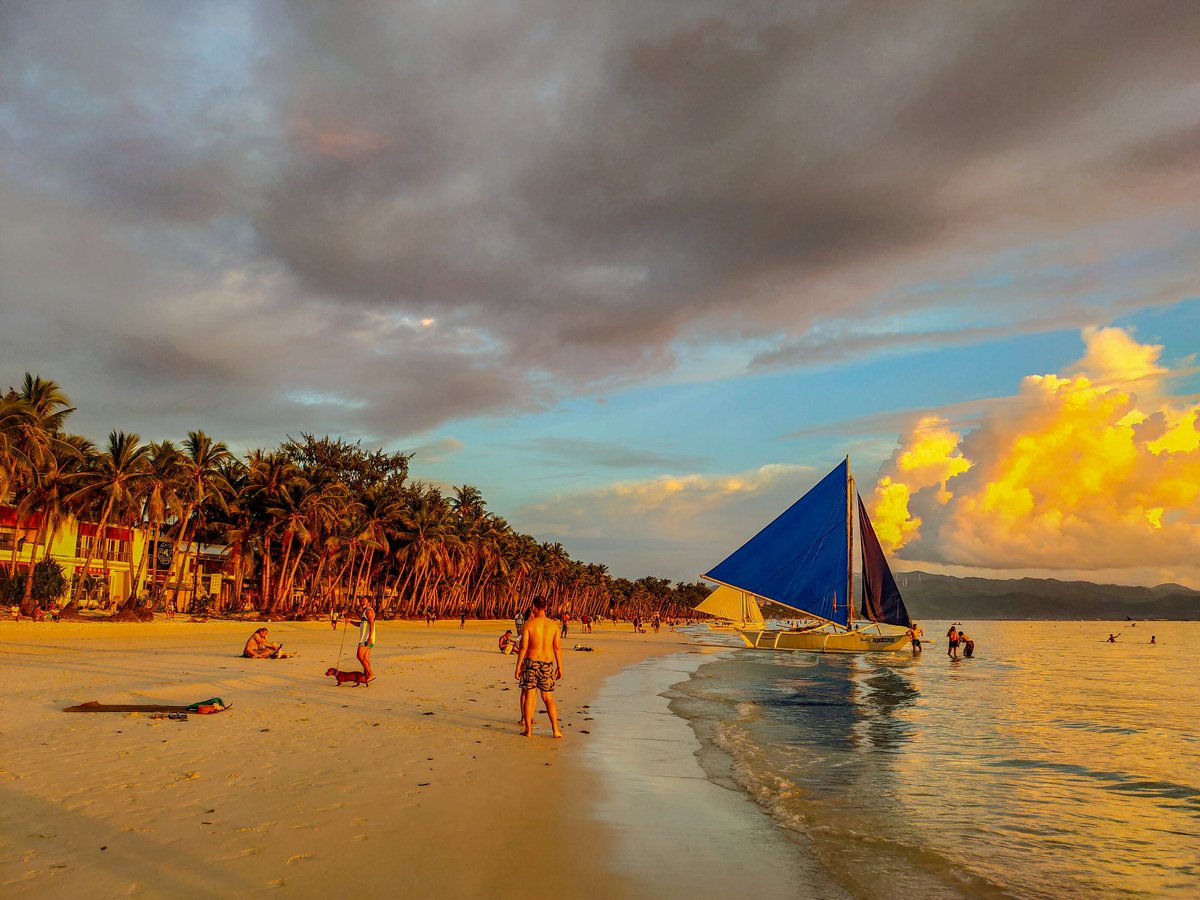
Boats fill the gap for beaches the road doesn't reach. Puka Beach on the island's northern tip sits about 2 km past where the e-trikes stop, and a bangka (outrigger boat) from White Beach Station 1 costs around 300-500 PHP for a round trip with waiting time. Diniwid Beach is a 10-minute walk north of Station 1 along a rocky path at low tide, but the route gets cut off when the water rises. Island-hopping tours, typically 1,500-2,500 PHP per person for a half-day with snorkeling gear, leave from the Bulabog Beach side and loop through Crystal Cove and Crocodile Island. The boats are wooden bangkas with bamboo outriggers, and the ride can get rough during the habagat (southwest monsoon) from June through October. If you're visiting in those months, the Bulabog side catches the wind and swells can reach 1-2 meters.
Grab does not operate on Boracay. Neither do taxis or motorcycle ride-hails. That surprises visitors who land expecting the same app-based convenience they had in Manila or Cebu, but the island is small enough that nothing is truly far. The longest possible e-trike ride, Cagban port to Puka Beach, takes about 20 minutes and costs around 100 PHP. Renting a bicycle from shops near D'Mall is technically possible, but the single main road gets congested during the late-afternoon rush when day-trippers head back to Caticlan, and there are no bike lanes. Mind you, the paved surface only runs about 5 km. If you're staying near Station 2, the most common tourist base, almost everything sits within a 15-minute walk. That makes the e-trike more of a convenience for port arrivals and cross-island hops to Bulabog Beach than a daily necessity.
Plan to walk or take taxis between key sights.
Primary modes of transit
- e-tricycle
- walking
- bangka boat
More transport questions
How do I get from the airport to Boracay?
Boracay has no airport on the island. Fly to Caticlan (MPH) for the shortest transfer, about 30 minutes total. A tricycle reaches Caticlan Jetty Port in 10 minutes, then a 15-minute bangka boat crosses to Cagban Port. Total fees run about 295 PHP ($4.70). Kalibo (KLO) works too but adds a 2-hour van ride before the same crossing.
Full answerHow do I get to Boracay?
Fly to Caticlan (MPH), 2 km from the jetty, or to Kalibo (KLO), 67 km north. Cebu Pacific and Philippine Airlines run 12-15 daily flights from Manila to both airports, costing PHP 2,000-6,000 one way. From Caticlan Jetty Port, a 10-minute bangka boat crosses to Cagban Port on Boracay's south tip. Budget PHP 400 for terminal and environmental fees.
Full answerWhat are the best day trips from Boracay?
Ariel's Point in Buruanga, 12 km by boat, is the strongest full-day trip from Boracay at around 2,500 PHP per person with cliff jumping and an open bar. Crystal Cove Island and Carabao Island are shorter bangka excursions. Tibiao's kawa hot bath in Antique Province, 80 km via Caticlan, is the romantic mainland option but requires a 6 AM start.
Full answerLast verified by automated review (v1.7.2) on . What is automated review?