Stay in Boracay in September
67 hotels in the Trip.com pool for Boracay, from US$10 a night.
Opens Trip.com on Fri 25 Sep to Sun 27 Sep 2026; change the dates there.
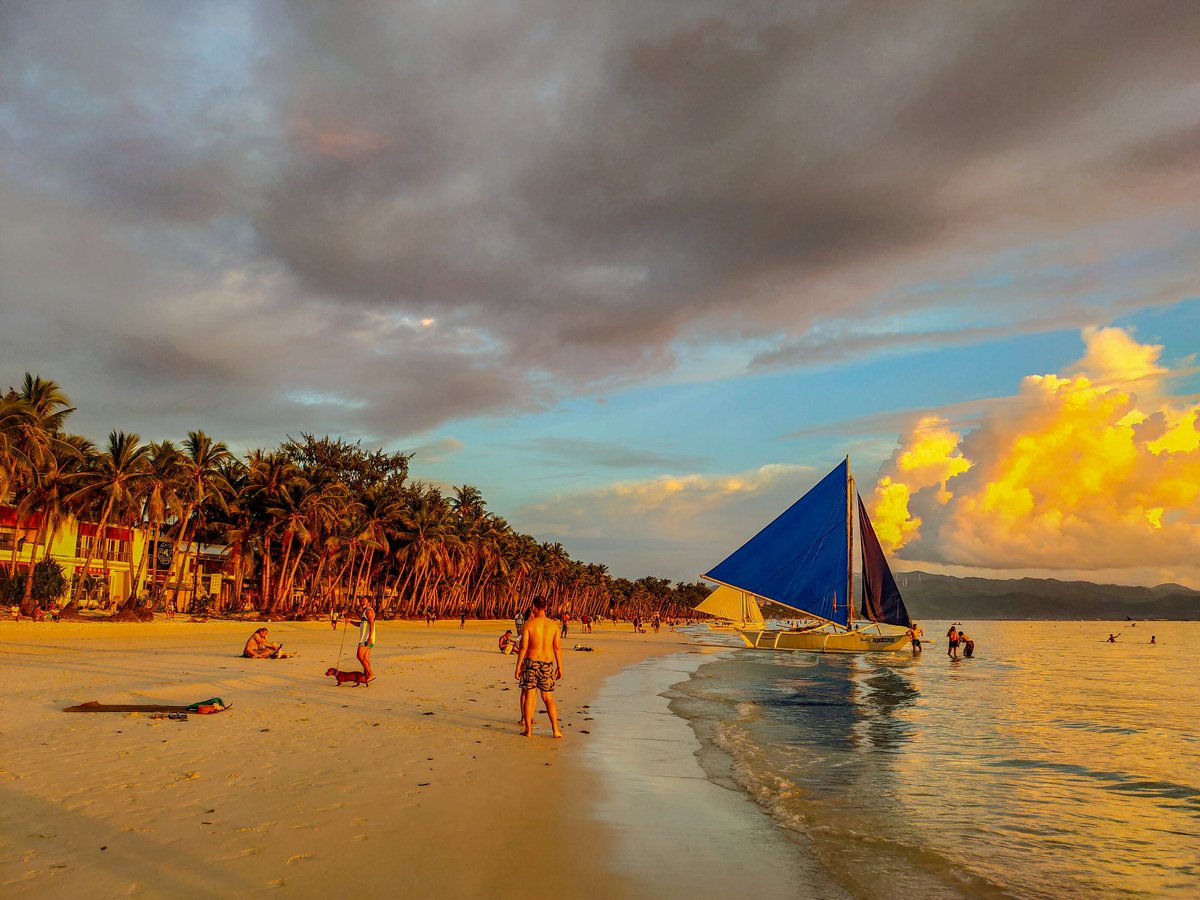
September sits deep in Boracay's habagat season, the southwest monsoon that pounds the island's western shore from June through October. Rain falls on most days, often in heavy afternoon bursts that stretch into evening. The air runs sticky enough to fog your phone camera the moment you step outside any air-conditioned room in Station 2. White Beach, the island's 4-kilometer (2.5-mile) western strip, turns rough and murky through these months. Lifeguard stations between Station 1 and Station 3 fly red flags more days than not.
That said, September has a side most visitors never encounter. Bulabog Beach on the island's eastern shore catches consistent habagat winds that draw kiteboarders from across Southeast Asia. Accommodation rates across the island drop to their lowest point of the year. Spots like Diniwid Beach and Puka Shell Beach up in Yapak sit almost empty. You might walk 200 meters (650 feet) of sand in the morning without seeing another person.
Here is the honest read. If you need calm, swimmable seas at White Beach, come between March and May. If you are chasing wind, solitude, or bottom-of-the-calendar rates, September delivers Bulabog at peak season and resort lobbies with more staff than guests.
Why visit in September
- Accommodation rates reach their lowest point of the year, with significant seasonal discounts and walk-in negotiations that regularly beat online booking platforms
- Bulabog Beach in Balabag barangay receives consistent habagat winds that make it one of Southeast Asia's premier kiteboarding destinations during this window
- Crowd levels drop to their annual minimum, and beaches like Balinghai Beach and Diniwid feel practically private on weekday mornings
- The island's interior turns intensely green after months of monsoon rain, and Balabag Wetland Park and Boracay Wetland Conservation Park reach their most photogenic state
Worth knowing
- Rainfall reaches the second-highest monthly total of the year, with near-daily precipitation that arrives as heavy afternoon and evening downpours lasting several hours
- White Beach swells make swimming dangerous on most days, with red-flag conditions common from Station 1 through Station 3
- Boat transfers between Caticlan Jetty Port and Cagban in Manoc-Manoc can be suspended during rough seas, stranding travelers for half a day or occasionally longer
- Some restaurants and shops along D'Mall in Station 2 close entirely for the low season or reduce to weekend-only hours
Best for
Think twice if
September brings Boracay's second-heaviest rainfall of the year at 347mm across approximately 26 rainy days. Most precipitation arrives as intense afternoon and evening showers rather than all-day drizzle. Humidity holds at 87%, making even the 28.8°C (84°F) average high feel oppressive. Mornings tend to offer a few clearer hours before clouds build after midday. Overnight lows around 25.3°C (78°F) bring little relief from the damp warmth. The habagat pushes swells onto the western shore while keeping the eastern coast comparatively calmer.
Seasonal caution
- September falls within the Philippine typhoon belt's most active corridor, roughly June through November. Boracay in the Western Visayas sits off the most common typhoon tracks through Luzon, but tropical storms can form with 48 to 72 hours notice and cause multi-day boat cancellations between Caticlan and the island.
- Rough habagat seas can produce 2 to 3 meter (6.5 to 10 foot) swells on White Beach. Red-flag swimming conditions are frequent, and rip currents form near rocky outcrops between Station 1 and Diniwid Beach.
- Flash flooding occurs in low-lying sections of Manoc-Manoc and along the main road near Balabag during sustained heavy rain. Drainage is limited in several stretches, so avoid walking through standing floodwater.
Year-round climate
Averages from the last 5 years.
| Month | Avg high (°C) | Avg low (°C) | Rainfall (mm) |
|---|---|---|---|
| Jan | 27 | 24 | 279 |
| Feb | 27 | 24 | 194 |
| Mar | 28 | 25 | 133 |
| Apr | 29 | 26 | 109 |
| May | 30 | 26 | 129 |
| Jun | 30 | 26 | 177 |
| Jul | 29 | 25 | 310 |
| Aug | 29 | 25 | 225 |
| Sep | 29 | 25 | 347 |
| Oct | 29 | 25 | 362 |
| Nov | 29 | 25 | 264 |
| Dec | 28 | 25 | 293 |
Best things to do in September
Kiteboarding on Bulabog Beach
water sportsBulabog's flat, shallow lagoon and consistent onshore winds make it a top kiteboarding destination in Southeast Asia. Several schools along the beach offer lessons for beginners and gear rental for experienced riders. The sandy bottom and waist-deep water for the first 200 meters (650 feet) provide a forgiving learning environment.
September's habagat delivers the most reliable wind window of the year, with 15 to 25 knot southwest winds blowing almost daily from mid-morning through late afternoon.Booking tipBook a multi-day lesson package rather than single sessions. Weather cancellations are common, and schools typically reschedule within the same package at no extra cost.
Wetland birding at Balabag Wetland Park
natureThis restored wetland in Balabag barangay sits a short walk inland from White Beach. Boardwalks thread through mangroves and marshy terrain that attracts egrets, herons, and migratory shorebirds. The park is rarely crowded in any month, but September's low tourism means you might be the sole visitor for an hour.
Monsoon rains fill the wetland to capacity, attracting the widest variety of wading birds. Early migratory species from northern Asia begin arriving in late September.Booking tipNo booking needed. Arrive before 07:00 for the best birding light and activity.
Snorkeling at Balinghai Beach
water sportsA small, sheltered cove on the island's northwestern tip. Balinghai sits between rocky headlands that block the worst of the habagat swells. The reef here supports soft corals, clownfish, and the occasional sea turtle. Access runs through a resort property, though day visitors can arrange entry.
While White Beach is too rough for water activities, Balinghai's protected position keeps conditions snorkeling-friendly on most September mornings before afternoon winds build.Booking tipGo in the morning before 10:00, when winds are lightest and visibility tends to be best.
Storm watching from Mount Luho
sightseeingAt 100 meters (330 feet) above sea level, Mount Luho in Yapak is the island's highest point. The observation deck provides 360-degree views over the Sibuyan Sea, both coastlines, and on clear mornings, Panay Island's mountains across the strait.
September's monsoon produces towering cumulonimbus formations and dramatic cloud breaks that photographers prize. The contrast between dark rain curtains and sudden sun shafts over the sea is striking after a downpour clears.Booking tipArrive by 06:30 for the best chance of clear visibility before clouds build. A motorbike from Station 2 takes about 15 minutes.
Spa and wellness sessions
wellnessBoracay's spa scene runs from beachfront bamboo huts offering Thai-style massage to resort wellness centers with herbal compress treatments. The island has dozens of licensed practitioners, most concentrated along the Station 1 and upper Station 2 stretch.
Low season means shorter wait times and discounted packages. Many spas bundle multi-treatment sessions at rates well below peak pricing. Rainy afternoons become productive rather than wasted.Booking tipAsk about rainy-day promotions. Several operators offer same-day discounts when afternoon showers arrive.
Island hopping to Crocodile Island
water sportsCrocodile Island is a rocky islet shaped like a crocodile's back, about 15 minutes by boat from Bulabog Beach. The coral formations along its southern edge drop into deeper water with schooling jacks and occasional reef sharks. The snorkeling here tends to be some of the best near Boracay.
September boat operators need the business and often reduce group sizes, meaning a more personal experience. Eastern departure from Bulabog avoids the rougher western seas entirely.Booking tipBook through Bulabog-side operators rather than White Beach ones, as eastern departures face fewer habagat-related cancellations.
Exploring Boracay Wetland Conservation Park
natureThis conservation area in the island's interior features elevated walkways through dense tropical vegetation, interpretive signs about local ecology, and a viewing platform. The park protects a freshwater wetland that filters part of Boracay's groundwater supply.
September's heavy rainfall fills the wetland system completely, producing the lushest vegetation and most active wildlife of the year. Frogs, monitor lizards, and freshwater crabs are most visible after rain.Booking tipBring insect repellent. The combination of standing water and dense vegetation means mosquitoes are aggressive, particularly after 16:00.
What to eat in September
In season: fruit
Lanzones
This small, translucent-fleshed fruit hits peak season across the Visayas in September and October. You will find bags of them at the Balabag wet market and from roadside vendors near D'Mall. The sweetest ones come slightly soft with golden-brown skin. Mind you, the sap from the rind stains fingers black for hours.
Rambutan
The tail end of rambutan season means these hairy red fruits still appear at Boracay's markets through September, usually sourced from Panay Island orchards. Look for firm, bright-red specimens with green-tipped spines. The flesh tastes like a sweeter, less acidic lychee.
On menus now
Sinigang na hipon
Shrimp sour soup made with tamarind broth, tomatoes, kangkong, and long green peppers. Rainy-season comfort food across the Philippines. September's cooler, wetter evenings make a steaming bowl feel earned. Most local eateries in Station 3 and Manoc-Manoc serve it daily.
Kinilaw na tanigue
Filipino ceviche made with Spanish mackerel, calamansi juice, vinegar, ginger, and chili. September's calmer eastern waters off Bulabog still yield good tanigue catches. The fish is served raw, diced into small cubes, tart and bright. Stalls near Cagban Beach tend to carry it in the mornings.
What to drink
Buko juice
Fresh young coconut water, served straight from the husk or over crushed ice. Coconut palms produce year-round across Boracay, but September's thick humidity makes this the month you reach for buko three or four times a day. Vendors along the main road through Balabag sell it for a fraction of beachfront stall prices.
Regular events in September
Boracay International Funboard CupFree
An annual windsurfing and kiteboarding competition held on Bulabog Beach, drawing regional competitors from the Philippines, Japan, South Korea, and Australia. The event coincides with peak habagat wind conditions and includes amateur categories alongside professional heats.
Late September through early October, dates shift by wind forecastFeast of the Nativity of the Blessed Virgin MaryFree
Catholic parishes across Boracay hold special masses and small processions for this Marian feast day. The chapel in Balabag and the church in Manoc-Manoc host the largest local observances, with morning mass followed by a community meal open to visitors.
September 8World Tourism Day observanceFree
The Malay municipal tourism office and local resort associations mark the UNWTO's annual tourism day with beach cleanup events, discounted island-hopping packages, and a small ceremony near D'Mall. The cleanup portion is consistently well-attended by island residents.
September 27Best places this September
Bulabog Beach
beachThe island's eastern shore transforms into Boracay's primary beach during habagat season. While the western beaches churn, Bulabog's comparatively calmer waters and steady onshore winds make it the center of activity from June through October. The beach runs about 1.5 kilometers (0.9 miles) through Balabag barangay.
BalabagDiniwid Beach
beachA roughly 200-meter (650-foot) stretch of sand north of Station 1, partially sheltered by a rocky headland that blocks some habagat swells. On calmer September mornings the water here is swimmable when White Beach is not. A footpath from the northern end of Station 1 takes about 10 minutes along the rocks.
DiniwidPuka Shell Beach
beachBoracay's second-longest beach sits on the island's northern tip in Yapak barangay. The beach takes its name from the puka shells that wash ashore here. It sees almost zero foot traffic in September. The water can still be rough, but the setting, with tall coconut palms and no beachfront development, feels remote.
YapakBalabag Wetland Park
natureA restored mangrove and freshwater wetland with boardwalk trails, less than 10 minutes on foot from D'Mall. September's rains bring the water level to its annual high, and early-morning visits yield sightings of egrets and the occasional Philippine water monitor.
BalabagAviary Park
attractionA small bird park in the island's interior housing native and tropical species in open-air enclosures. Worth a rainy-afternoon visit when beach conditions close off outdoor options. Covered walkways keep visitors mostly dry between exhibits.
BalabagWilly's Rock
landmarkThe volcanic rock formation at Station 1 topped with a small grotto shrine to the Virgin Mary. It becomes more dramatic during habagat season when waves crash against its base. One of the few landmarks on White Beach worth visiting even when swimming conditions are poor.
Station 1Mount Luho observation deck
viewpointThe highest point on the island, offering panoramic views of both coastlines. September mornings before the clouds build present some of the year's most photogenic conditions, with mist on Yapak's hills and rain curtains visible far out over the sea.
Yapak
Your packing checklist
Tick items off as you pack. Your progress saves in this browser.
All packed — have a great trip.
Insider tips
Bulabog Beach effectively becomes Boracay's main beach during September. Most travelers default to White Beach because that is what appears in every photo, then spend their trip staring at red flags. Head to the eastern side from day one.
Negotiate room rates at the front desk rather than booking through aggregator sites. September occupancy drops low enough that managers have real flexibility to offer deeper discounts, room upgrades, or complimentary breakfast for walk-in guests.
The solo-traveler safety score on Boracay sits at 7.2 out of 10 (see the TTDI Solo-Safety Index). The island is generally safe after dark around Station 1 and Station 2, but being stranded at Caticlan port during a boat cancellation is the more common frustration for solo visitors. Build at least one buffer day into each end of your trip.
September 1 marks the unofficial start of the Filipino Christmas season across the Philippines. Expect Christmas carols playing in shops and restaurants throughout Station 2 and Station 3 from the first morning of the month. It sounds unlikely, but the Philippines celebrates Christmas longer than any other country.
Avoid these mistakes
- Booking a beachfront room on White Beach expecting calm turquoise water. During habagat season, the western shore is rough, murky, and often closed to swimming. Choose a Bulabog-side or inland property if beach access is your priority.
- Planning a tightly packed itinerary with no weather flexibility. September showers can cancel boat trips, outdoor tours, and beach plans for an entire afternoon or longer. Build at least two unscheduled days per week into your trip.
- Arriving on the last flight into Caticlan with no overnight backup plan. If afternoon seas are too rough for the boat transfer, you risk being stuck on the mainland with limited accommodation options near the jetty port.
- Skipping insect repellent at sunset. The combination of monsoon rain and tropical heat breeds mosquitoes aggressively in the Western Visayas, and dengue cases in the region tend to climb between July and October.
Practical tips for September
Book flights into Caticlan (MPH) rather than Kalibo (KLO) to minimize overland transfer time and reduce exposure to weather delays. The Caticlan airport sits minutes from the jetty port, while Kalibo adds a 90-minute van ride that can stretch beyond two hours in rain. Confirm your chosen resort is open before booking, as some smaller properties in Station 3 and Manoc-Manoc close entirely from August through October. Bring cash in Philippine pesos. ATM availability on the island is limited to a few machines near D'Mall in Station 2, and some run empty during low-season restocking gaps. The digital-nomad suitability score sits at 5.2 out of 10 (sourced from TTDI's editorial rubric), reflecting inconsistent Wi-Fi and limited coworking infrastructure across the island. LGBTQ+ friendliness scores 4.5 out of 10 (sourced from TTDI's editorial rubric), reflecting conservative local attitudes in Malay municipality, though resort areas along Station 1 tend to be more welcoming in practice. Cell signal from Globe and Smart covers most of the island but speeds drop noticeably during heavy rain. Tricycles are the main transport around Boracay, with fixed-route rates posted at the Balabag terminal. Water taxis along White Beach operate sporadically in September due to surf conditions. Monitor weather forecasts from PAGASA, the Philippine weather bureau, daily during your trip.
FAQ
Is September a good time to visit Boracay?
For a typical beach holiday, no. September falls deep in the habagat monsoon season, with near-daily rainfall and rough swimming conditions on White Beach. It ranks 11th out of 12 months for visiting the island. That said, if you are a kiteboarder, Bulabog Beach's wind conditions peak this month. And if your priority is low prices and empty beaches rather than guaranteed sun, September can work with flexible expectations and buffer days built into your schedule.
Can you swim at White Beach in Boracay during September?
On most September days, no. The habagat pushes southwest swells directly onto White Beach, creating rough surf and dangerous rip currents. Lifeguards frequently fly red flags across all three stations. On occasional calmer mornings, sections may open briefly. For more reliable swimming, try Diniwid Beach or Balinghai Beach, which are partially sheltered from the monsoon swell by rocky headlands on the island's north side.
Is September typhoon season in Boracay?
September falls within the Philippine typhoon season, which runs roughly June through November. Boracay's position in the Western Visayas means it is less frequently in the direct path than Luzon, but tropical storms can still bring heavy rain, high winds, and multi-day boat cancellations between Caticlan and the island. Check forecasts from PAGASA in the days before and during your trip, and keep buffer days in your itinerary.
What is there to do on Boracay when it rains in September?
Rainy afternoons are common, so indoor options matter. Spa treatments drop in price during low season and fill wet hours well. Aviary Park in Balabag offers a partially covered nature walk through bird enclosures. Cooking classes at several resorts teach Filipino dishes like sinigang and adobo in covered kitchen spaces. The restaurants and bars that remain open along D'Mall serve as comfortable spots to wait out a downpour. Boracay Wetland Conservation Park's boardwalks are passable in light rain with waterproof footwear.
How empty is Boracay in September compared to peak season?
September is one of Boracay's two quietest months alongside October. You will find shorter queues at the Caticlan jetty on departure, near-empty sand at Puka Shell Beach and Diniwid, and a noticeably slower pace along what remains open of the Station 2 commercial strip. The contrast with the packed December through February peak season is stark.
Last verified by automated review (v1.7.2) on . What is automated review?