Stay in Boracay in June
67 hotels in the Trip.com pool for Boracay, from US$10 a night.
Opens Trip.com on Fri 4 Jun to Sun 6 Jun 2027; change the dates there.
June marks the arrival of the habagat, the southwest monsoon that reshapes Boracay for the next five months. Expect afternoon downpours on roughly 24 of the month's 30 days, though most last 30 to 90 minutes before the sky clears. Daytime temperatures hold around 29.7°C (85°F) with lows near 25.7°C (78°F), and humidity at 84% makes the air feel thick on your skin the moment you step off the ferry at Cagban Jetty. The wind shift pushes swells onto White Beach's western shore and stirs up the normally glassy water, while Bulabog Beach on the east coast turns calmer than it has been since November.
This is Boracay at its quietest. The larger resort complexes in Station 1 still operate at full service, but smaller guesthouses in Station 3 and Manoc-Manoc drop their rates considerably. D'Mall in Station 2 stays open, yet the crowds that pack its walkways in February and March are largely gone. You will not compete for a sunbed along the 4-kilometer White Beach frontage. You might, though, find yourself waiting out a squall under a nipa hut near Station 2 with a San Miguel in hand more than once.
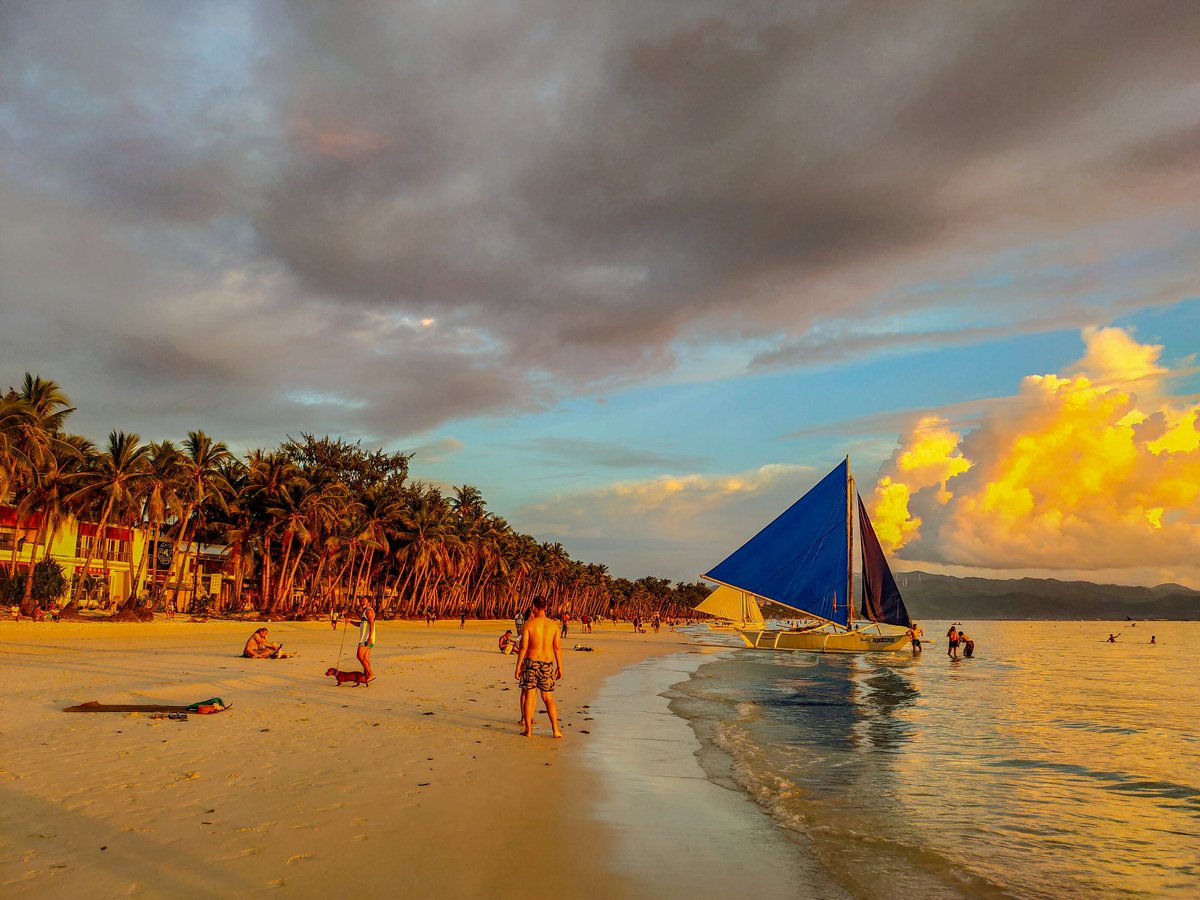
If you need guaranteed sunshine and flat water every day, pick March or April instead. If you want the island at low-season rates and can accept tropical unpredictability, June can reward the flexibility. The rain rarely erases an entire day, the sea is still warm at 28°C (82°F), and the evenings when the clouds break tend to produce more dramatic sunsets than anything the dry season offers.
Why visit in June
- Accommodation across the island drops well below the December-to-May peak, with Station 3 guesthouses and Manoc-Manoc homestays seeing the steepest reductions.
- White Beach, Diniwid Beach, and Balinghai Beach carry a fraction of peak-season visitor numbers, well below the local government's daily cap enforced in busier months.
- Bulabog Beach on the east coast turns calmer once the habagat replaces the amihan winds, making it more comfortable for swimming than during the windy November-to-May stretch.
- Monsoon cloud formations at sunset create layered evening skies that the clear dry-season months rarely produce, particularly visible from Station 1's north end near Willy's Rock.
Worth knowing
- Rain falls on most days, typically as afternoon squalls between 14:00 and 17:00. One or two full-day washout events per month add to the tally.
- The habagat pushes rougher surf onto White Beach and reduces water clarity on the western shore. On strong-wind days, lifeguard stations may post red advisory flags along the beachfront.
- Several kiteboarding and windsurfing operators along Bulabog Beach scale back or close once the amihan winds that power those sports fade in late May.
- Persistently high humidity means cotton clothing stays damp for hours and outdoor exertion in midday heat feels heavier than the thermometer reads.
Best for
Think twice if
June is Boracay's transition into the wet season. The habagat establishes itself by mid-month, delivering daily afternoon showers that push total rainfall to 177mm. Mornings tend to be the driest window, with cloud buildup starting around noon and squalls typically arriving in the early-to-mid afternoon. The rain comes in concentrated bursts, not all-day gray. Temperatures barely fluctuate between day and night in the tropical marine climate, and sea surface temperature near the island stays warm enough for extended swimming without any wetsuit.
Seasonal caution
- June opens the Philippine typhoon season. While Boracay in the western Visayas is less directly exposed than Luzon's Pacific coast, tropical storms can close the Caticlan strait crossing for multiple days. Build buffer days into your itinerary and carry travel insurance.
- Rough habagat surf on White Beach's western shore triggers periodic red-flag swimming advisories. Municipal lifeguard stations along Stations 1 through 3 post daily conditions. Check flags before entering the water, especially toward the Station 3 end where currents can strengthen.
- UV radiation remains significant at Boracay's 11°N latitude even under overcast skies. Sunburn through June cloud cover catches tourists who assume gray mornings mean zero risk.
Year-round climate
Averages from the last 5 years.
| Month | Avg high (°C) | Avg low (°C) | Rainfall (mm) |
|---|---|---|---|
| Jan | 27 | 24 | 279 |
| Feb | 27 | 24 | 194 |
| Mar | 28 | 25 | 133 |
| Apr | 29 | 26 | 109 |
| May | 30 | 26 | 129 |
| Jun | 30 | 26 | 177 |
| Jul | 29 | 25 | 310 |
| Aug | 29 | 25 | 225 |
| Sep | 29 | 25 | 347 |
| Oct | 29 | 25 | 362 |
| Nov | 29 | 25 | 264 |
| Dec | 28 | 25 | 293 |
Holidays and festivals in June
Public holidays
- Independence Day(Araw ng Kalayaan)12 June 2027
Best things to do in June
Snorkeling at Crocodile Island
water sportsThis reef site lies about 15 minutes by bangka (outrigger boat) off Boracay's southeast coast. Coral gardens sit in 3 to 8 meters of warm water, and morning trips offer the calmest surface conditions. Local operators run small-group boats from the east-coast shoreline near Bulabog Beach.
The habagat wind shift calms Boracay's eastern waters starting in June, improving surface conditions and swim comfort at this southeast reef compared to the choppy amihan months.Booking tipBook morning departures before 09:00. Afternoon trips risk squalls mid-crossing, and operators cancel in rough weather.
Low-tide rock pooling at Diniwid Beach
natureThis 200-meter cove sits north of Station 1, past a short rocky headland. At low tide, rock pools along the base of the cliffs reveal sea urchins, small crabs, and anemones. The sand here is coarser than White Beach, but the setting feels considerably more private.
June's low visitor count means the cove is often empty before 08:00. During peak months, even Diniwid fills with day-trippers by mid-morning.Booking tipCheck tide tables for Boracay before heading out. Low tide in the early morning gives the widest rock pool access.
Birdwatching at Balabag Wetland Park
natureA 10-minute walk inland from D'Mall, this wetland area draws egrets, herons, and kingfishers. Raised paths keep your feet above the marsh level while the surrounding vegetation thickens with the seasonal rains.
The first sustained habagat rains refill the wetland after the drier April-May stretch, concentrating wading birds along the shallows and greening up the vegetation.Bangka trip to Balinghai Beach
beachThis sheltered cove on Boracay's northern coast sits between limestone rock formations. Reachable by outrigger boat from Diniwid or by a steep rocky trail over the headland, the sandy pocket rarely sees more than a few visitors at a time even in high season.
Fewer tourists means bangka operators have open schedules and are more flexible on timing. The beach itself may have only a handful of people on a June weekday.Booking tipNegotiate the boat at Diniwid Beach. Low season reduces demand, and operators are more willing to wait while you swim.
Monsoon sunset photography
photographyThe view from Station 1's north end, near the Willy's Rock formation, faces almost due west over the South China Sea. On evenings when the afternoon clouds break apart, the sky layers into bands of orange, copper, and deep purple behind scattered cumulus towers.
Habagat-season cloud structures create more dramatic, textured evening skies than the uniformly clear sunsets of the dry amihan months. June's transitional weather produces some of the most varied palettes.Mangrove boardwalk at Boracay Wetland Conservation Park
natureA wooden boardwalk threads through this mangrove reserve inland from the Station 1 area. The trail takes roughly 30 minutes and passes through a landscape that contrasts sharply with the beach strip barely 500 meters away.
June rains replenish the mangrove channels, raising water levels along the boardwalk and making the canopy visibly greener than during the dry months.Swimming at Banyugan Beach
beachThis rocky beach on the island's northeast side has deeper water close to shore. Local swimmers use the rock outcrops for jumping into the pools below. The setting is raw and undeveloped compared to White Beach's groomed resort frontage.
The habagat calms Boracay's eastern and northeastern waters, making Banyugan's rocky shoreline more approachable than during the amihan months when easterly swells churn the surface.Booking tipBring water shoes. The entry points are over rock and coral, not sand.
What to eat in June
In season: fruit
Carabao mango
June is the tail end of the Philippine mango season that runs from March onward. The Guimaras and Zambales carabao varieties at D'Mall fruit stalls reach their final peak sweetness before supply tapers in July. Eaten green with bagoong (shrimp paste) or ripe on their own.
Rambutan
Fresh Visayan rambutan starts appearing in Boracay's local markets in June. The hairy red-shelled fruit hides translucent, lychee-like flesh inside, and prices stay low through the summer abundance.
On menus now
Kinilaw
Boracay's take on ceviche uses fresh tanigue (Spanish mackerel) or yellowfin tuna cured in coconut vinegar with ginger, chili, and calamansi. The calmer east-coast waters in habagat season keep local fish supply fresh at D'Talipapa wet market in Station 2.
Sinigang na hipon
Sour tamarind-based shrimp soup, a Visayan comfort staple that pairs well with a June downpour rattling the roof. Restaurants around Station 2 serve it with locally caught prawns and kangkong (water spinach).
What to drink
Buko juice
Young coconut water served from a freshly cracked husk by beachfront vendors. Consumption rises with the humidity, and the drink is effectively Boracay's default hydration during the sticky habagat months.
Regular events in June
Araw ng Kalayaan (Philippine Independence Day)Free
The national holiday commemorates Philippine independence declared on June 12, 1898 in Kawit, Cavite. Boracay's municipal government in Malay holds a civic ceremony, and some beachfront establishments display flags along the White Beach frontage. Domestic visitor numbers rise slightly for the long weekend.
June 12World Oceans Day beach and reef cleanupsFree
Local dive shops and the DENR Boracay field office organize shoreline and underwater cleanup events around the internationally observed date. Volunteers can join reef cleanups at nearby dive sites or beachfront collection along White Beach. These events gained momentum after the island's 2018 rehabilitation closure.
June 8 or nearest weekendPista ng San Juan (Feast of St. John the Baptist)Free
The traditional Filipino water-dousing feast day sees residents in Balabag and Manoc-Manoc barangays splashing water on passersby near local chapels. On a beach island the tradition blends naturally into the setting, though it is quieter here than the Manila street celebrations.
June 24Best places this June
Diniwid Beach
beachA 200-meter cove north of Station 1, reached by walking past the headland rocks at low tide or by a short path from the main road. In June, the reduced visitor count makes early mornings feel almost secluded. A handful of small restaurants sit above the tideline.
YapakBulabog Beach
beachBoracay's east-coast beach runs roughly parallel to White Beach on the opposite side of the island. During habagat months, this shore loses the strong amihan winds that drive the peak-season kiteboarding scene. The trade-off is calmer water suitable for casual swimming, with far fewer visitors than the western side.
BalabagBalabag Wetland Park
parkA pocket wetland about 10 minutes on foot from D'Mall, fed by seasonal rains. The first habagat showers fill the marsh and attract wading birds to the shallows. Raised walkway sections keep visitors above the water level.
BalabagBalinghai Beach
beachA small sheltered cove on the northern coast, framed by limestone formations. Accessible by bangka from Diniwid or a rocky scramble over the headland. With boat traffic lighter in June, you can often arrange a drop-off and pickup at your own pace.
YapakBoracay Wetland Conservation Park
parkA mangrove reserve with a boardwalk trail, located inland from Station 1. June rains raise the water in the mangrove channels and thicken the canopy overhead. The 30-minute walk offers a sharp contrast to the sand and sun barely 500 meters away.
YapakD'Talipapa Wet Market
marketStation 2's seafood market, where vendors sell fresh prawns, squid, lapu-lapu (grouper), and tuna. Nearby eateries will cook your purchases for a preparation fee. In June the stalls operate without the peak-season scramble, giving you time to browse and choose.
BalabagBanyugan Beach
beachA rocky northeast-coast beach with deeper water near the shore and rock outcrops locals use for jumping. The ungroomed setting contrasts with the resort frontage on the western side. Calmer eastern waters in habagat months make the approach less rough.
YapakAviary Park
parkA small bird sanctuary in the island's interior with walk-through enclosures housing local and exotic species. Worth a brief visit between rain spells, and a change of pace from the beachfront.
Balabag
Your packing checklist
Tick items off as you pack. Your progress saves in this browser.
All packed — have a great trip.
Insider tips
D'Talipapa wet market sells fresh seafood that neighboring eateries will cook for a small preparation fee. In June, the market runs without the peak-season frenzy, giving you time to pick through the prawns, squid, and lapu-lapu at your own pace. Point to what you want, agree on a price per kilo, and carry it next door.
Ferry cancellations at the Caticlan strait crossing happen more frequently during stronger habagat episodes. Book return flights with flexible change policies from either Caticlan (Godofredo P. Ramos Airport) or Kalibo International Airport, and keep at least one buffer day before any onward connection.
Morning is the reliable window. Plan outdoor activities, boat trips, and beach time before noon. Clouds typically build by early afternoon, and the squall follows within an hour or two. Evenings usually clear again for sunset.
The beachfront path between Station 1 and Station 3 floods at low points during heavy downpours. Locals detour to the main road running parallel, roughly 100 meters inland. Follow their lead when the path goes ankle-deep.
Boracay scores 4.5 out of 10 for LGBTQ+ friendliness (sourced from TTDI's editorial rubric). The tourism industry is broadly welcoming, but public displays of affection between same-sex couples may draw attention outside the main Station 2 tourist strip.
Avoid these mistakes
- Booking a tight 3-day trip with no weather margin. A single full-day rain event, which happens once or twice in June, can erase a third of a short itinerary. A 5- to 7-day stay provides enough clear windows to see everything without stress.
- Planning every activity on White Beach only. The habagat stirs the western shore, making the water murky on rougher days. Visitors who explore Bulabog on the east side, or take bangka trips to northern coves like Balinghai, have better alternatives when White Beach is churned up.
- Skipping sunscreen on overcast mornings. UV at Boracay's latitude penetrates cloud cover effectively. Second-degree burns happen to tourists who equate gray skies with zero risk.
- Failing to carry cash in smaller bills. Some beachfront vendors and bangka operators in the quieter June months may not have change for large denominations. ATMs in Station 2 function, but lines form when one goes offline.
Practical tips for June
Caticlan (Godofredo P. Ramos) Airport is the closer arrival point, roughly 10 minutes to the jetty, but flights from Manila fill up around the Independence Day long weekend. Kalibo International Airport, about 1.5 to 2 hours by van to Caticlan Jetty Port, tends to have more carrier options and often lower fares. Ferry tickets for the Caticlan-to-Cagban crossing can be purchased at the jetty without advance booking in June's lighter traffic. The island's environmental fee and terminal fee are collected at the Caticlan side before boarding.
Shops in D'Mall and along the Station 2 beachfront keep regular hours throughout June, though some smaller beach-activity operators along Bulabog reduce their schedules once the amihan winds end. Lightweight breathable fabrics work all month. A sarong doubles as a beach towel, rain wrap, and evening cover-up. Pharmacies in Station 2 carry basics, but bring any specific medications from Manila or Kalibo. Mobile data from Globe and Smart networks is generally reliable on the western beach side but patchier in Yapak to the north.
The island's digital-nomad suitability sits at 5.2 out of 10 (sourced from TTDI's editorial rubric), reflecting limited coworking infrastructure and internet speeds that vary sharply between resorts. If you need to work remotely, confirm Wi-Fi quality with your accommodation before booking.
FAQ
Is June a good time to visit Boracay?
June is the start of Boracay's wet season, so it is not the strongest month for guaranteed beach weather. Rain falls on most days, though typically as afternoon squalls that clear within an hour or two. The advantages are significantly lower prices and far fewer tourists than during the peak amihan months from December through May. If your schedule allows flexibility to wait out the occasional rainy spell and you value a quieter island, June works. If you need clear skies every day, March through May is the safer window.
What is the weather like in Boracay in June?
Warm and humid, with consistent tropical heat through the day that barely drops at night. Showers fall on the majority of days, concentrated in afternoon bursts rather than all-day drizzle. Mornings are typically the clearest and sunniest window. The sea stays warm enough for comfortable swimming without any wetsuit, and the overall feel is sticky but not oppressively hot.
Is Boracay crowded in June?
No. June is one of the quieter months. Most international and domestic visitors come during the dry amihan season from November through May. In June, expect shorter queues for island-hopping boats, open stretches of White Beach, and walk-in availability at restaurants and accommodations that require reservations in peak months.
Can you still swim at White Beach in June?
Yes, though conditions differ from the calm amihan months. The habagat pushes swells onto the western shore, making the water choppier and less clear on windier days. On calmer days swimming is perfectly fine. Lifeguards post daily flag advisories along the beachfront. When White Beach is rough, Bulabog Beach on the east side tends to be calmer during habagat season.
Is typhoon season a concern for Boracay in June?
June marks the beginning of the Philippine typhoon belt's active period, though the peak risk window runs August through November. Boracay sits in the western Visayas, which is somewhat less exposed than Luzon's Pacific coast. Tropical systems can still disrupt the strait crossing for a day or two. Flexible bookings and travel insurance are sensible precautions for any visit during this stretch of the calendar.
Last verified by automated review (v1.7.2) on . What is automated review?