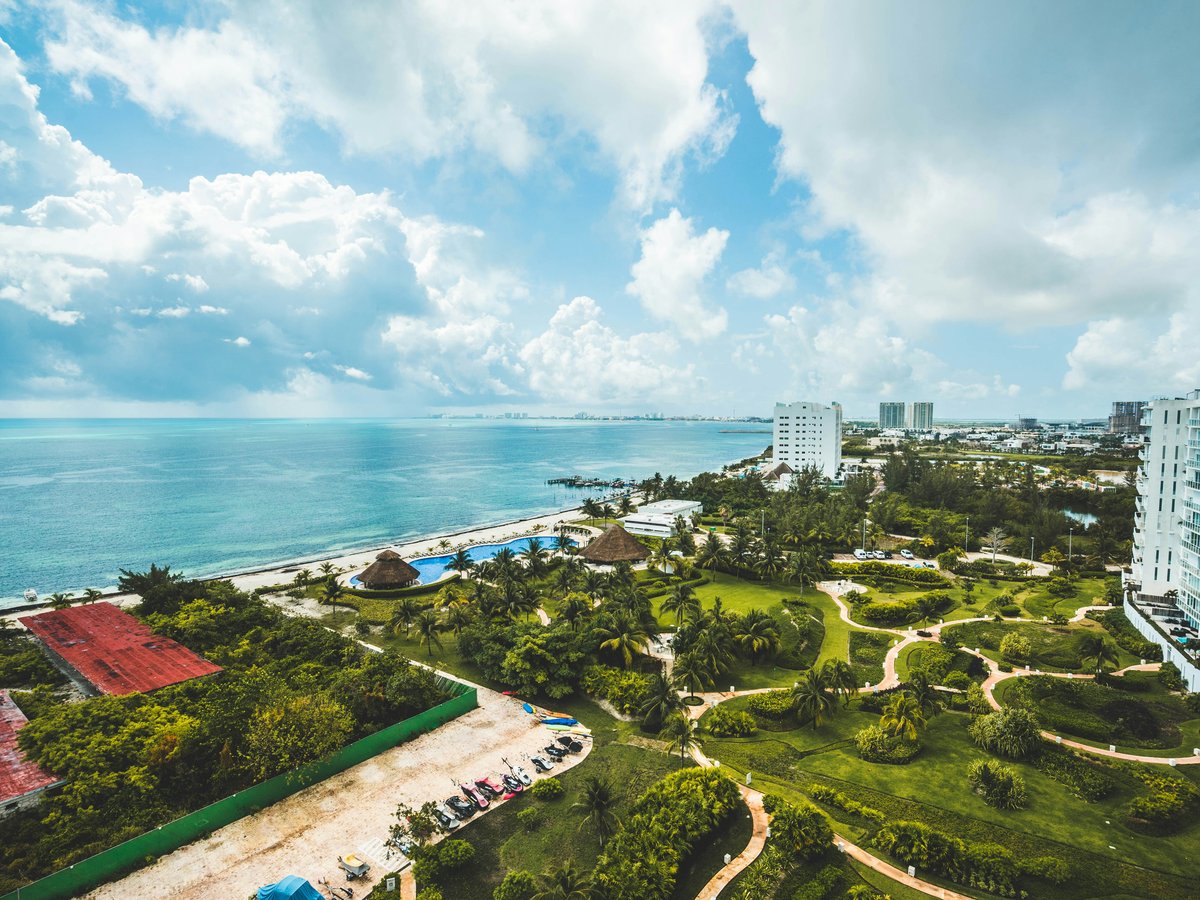
March in Cancún is defined by Spring Break. From the first week through late March, tens of thousands of American and Canadian university students flood the Zona Hotelera, and Boulevard Kukulcán's beachfront clubs operate at full volume. The bass from Coco Bongo and the open-air bars near Punta Cancún carries for blocks on warm evenings. If you're coming for that energy, March delivers it every year without fail. If you're not, you'll need to plan around the party or stay in Centro instead.
The weather, to be fair, is some of the best Cancún gets all year. Daytime highs reach about 28.6°C (83°F) with lows near 23.4°C (74°F), and March averages only 37mm of rainfall across roughly 10 rainy days. Most of those are brief afternoon showers that clear within 20 minutes. Humidity sits around 73%, noticeable when you step off the plane at CUN but genuinely comfortable compared to the 85%+ that arrives by July. The Caribbean water temperature hovers near 26°C (79°F), warm enough for long swims without a rashguard.
The other headline is the Spring Equinox at Chichén Itzá on March 20-21, when the shadow of the feathered serpent Kukulcán appears to descend the northern staircase of El Castillo. Around 30,000 people pack the archaeological site on those two days. Outside the Hotel Zone, downtown Cancún around Parque de las Palapas and the Mercado 23 neighborhood stays calmer and more affordable. March ranks about 3rd among the 12 months for a Cancún visit, with excellent weather but peak prices and Spring Break crowds keeping it from the top spot.
Why visit in March
- March averages only 37mm of rain, making it one of the two driest months of the year in Cancún. You can plan outdoor days with real confidence.
- Underwater visibility at snorkeling and dive sites near Isla Mujeres and Punta Nizuc tends to reach 25-30 meters (80-100 ft) in March, among the clearest of any month.
- The Spring Equinox at Chichén Itzá (March 20-21) is one of the most visually striking astronomical events in the Western Hemisphere, and Cancún is the closest major tourist hub to the site.
- Caribbean water temperature around 26°C (79°F) is warm enough for extended open-water swimming and snorkeling without a wetsuit.
- The dry weather and consistent northeast winds make March the peak month for kiteboarding at Isla Blanca, about 25 km (16 miles) north of the Hotel Zone.
Worth knowing
- Spring Break drives hotel rates in the Zona Hotelera to their annual peak. Expect to pay 50-80% above Cancún's yearly average for beachfront properties, and many all-inclusive resorts sell out by January.
- The party atmosphere in the Hotel Zone from mid-morning through 3 AM can make the area uncomfortable for families and travelers seeking quiet. Noise from pool parties and clubs is constant along the northern stretch of Boulevard Kukulcán.
- Chichén Itzá on March 20-21 draws around 30,000 visitors, creating 2-3 hour waits at the entrance and making it nearly impossible to photograph El Castillo without dense crowds.
- Flights from major US cities to Cancún International Airport (CUN) are at their most expensive in March, with fares from East Coast hubs typically running 40-60% above the September-October low.
Best for
Think twice if
March sits in the heart of Cancún's dry season, with warm days, comfortable nights, and minimal rain. Humidity is noticeable, the kind that fogs your sunglasses when you step out of air conditioning, but it's well below the oppressive levels of July and August. Morning skies over the Hotel Zone are typically clear. When rain does come, it tends to arrive as a short afternoon shower that passes in 15-20 minutes. Winds from the northeast blow steady at 15-20 km/h (9-12 mph), keeping the air moving and the kiteboarding spots active. The Caribbean water feels warm from the moment you step in.
Seasonal caution
- The UV index in Cancún reaches 10-11 throughout March, classified as 'very high' by the WHO. Unprotected skin can burn in under 15 minutes during midday hours (10 AM to 3 PM). Apply SPF 50+ every 90 minutes when outdoors, even on overcast days. The reflected glare off white sand and limestone at archaeological sites like Chichén Itzá intensifies exposure.
Year-round climate
Averages from the last 5 years.
| Month | Avg high (°C) | Avg low (°C) | Rainfall (mm) |
|---|---|---|---|
| Jan | 27 | 22 | 82 |
| Feb | 27 | 22 | 52 |
| Mar | 29 | 23 | 37 |
| Apr | 30 | 24 | 34 |
| May | 31 | 25 | 59 |
| Jun | 30 | 25 | 220 |
| Jul | 31 | 26 | 113 |
| Aug | 32 | 26 | 136 |
| Sep | 31 | 25 | 181 |
| Oct | 30 | 24 | 129 |
| Nov | 28 | 23 | 120 |
| Dec | 27 | 22 | 98 |
Headline events
Equinoccio de Primavera at Chichén Itzá
March 20-21 (effect visible approximately March 17-24)
The Spring Equinox creates a shadow effect on the northern staircase of El Castillo (the Temple of Kukulcán) that resembles a feathered serpent descending the pyramid. The phenomenon lasts about 45 minutes in the late afternoon as triangular shadows form along the balustrade. Around 30,000 visitors gather at the archaeological site on the peak days. Chichén Itzá sits about 200 km (125 miles) west of Cancún, roughly a 2.5-hour drive on the Mérida highway. The effect is visible for roughly a week around the equinox, though the alignment is sharpest on March 20-21.
Best things to do in March
Snorkeling at MUSA (Museo Subacuático de Arte)
water sportsThe underwater sculpture museum between Cancún and Isla Mujeres holds over 500 permanent sculptures on the sea floor. You snorkel or dive among life-size human figures now encrusted with coral growth. The site sits in 3-8 meters (10-26 ft) of water, accessible to beginners. The scale is unlike anything else in the Caribbean.
March's low rainfall and calm Caribbean seas produce some of the year's best underwater visibility, often reaching 25-30 meters (80-100 ft). Summer and fall rain runoff clouds the water significantly.Booking tipBook with a licensed operator from the Punta Nizuc or Isla Mujeres departure points at least 3-4 days ahead. Morning trips with 8-9 AM departures have the best light and fewest boats.
Witness the Spring Equinox at Chichén Itzá
culture and historyOn March 20-21, the late afternoon sun casts triangular shadows on the northern balustrade of El Castillo that create the illusion of a serpent descending the pyramid. The phenomenon lasts about 45 minutes before sunset. The site is a 2.5-hour drive west from Cancún on the Mérida highway, or you can take an organized tour bus.
The equinox shadow effect occurs only twice a year, in March and September. The March event draws the larger crowd because it falls in dry season. The alignment is visible for roughly a week, but the precision on March 20-21 is the sharpest.Booking tipIf visiting on March 20-21, arrive before 8 AM. The site opens at 8 and the shadow appears around 3-4 PM, but by noon the grounds approach capacity. Going on March 18-19 gives you a nearly identical visual effect with a fraction of the crowd.
Kiteboarding at Isla Blanca
water sportsThe sandbar peninsula about 25 km (16 miles) north of the Hotel Zone offers flat, shallow water on the lagoon side and wave riding on the Caribbean side. The area is less developed than the Hotel Zone, with a handful of kite schools and taco stands along the sand road. No high-rises, no pool parties.
March sees consistent 15-25 knot northeasterly trade winds, and the dry weather means fewer sessions get rained out compared to summer months. Water temperature around 26°C (79°F) means no wetsuit needed.Booking tipKite schools at Isla Blanca fill up during Spring Break weeks. Book lessons at least a week ahead if visiting mid-March. Sessions run about 2,000-3,000 pesos for 2-3 hours.
Day trip to Isla Contoy for bird watching
natureIsla Contoy is a protected island nature reserve about 30 km (19 miles) north of Isla Mujeres. Only 200 visitors are allowed per day. The island hosts over 170 bird species, including frigatebirds, brown pelicans, and double-crested cormorants. The beaches are empty white sand with zero development.
March is peak nesting season for several seabird species on Isla Contoy. Frigatebird males display their inflated red throat pouches to attract mates, one of the most striking sights in Caribbean bird watching. The calm March seas also make the 45-minute boat crossing smoother than in winter.Booking tipOnly a few licensed operators run trips to Isla Contoy, and the 200-person daily cap means advance booking is essential. Reserve at least a week ahead, especially during Spring Break weeks.
Cenote swimming along the Ruta de los Cenotes
natureThe Ruta de los Cenotes runs along a 20 km stretch of road west of Puerto Morelos, about 35 km (22 miles) south of Cancún. A dozen cenotes line the route, ranging from open-air pools to underground caverns with stalactite formations. Water temperature stays around 24-25°C (75-77°F) year-round. The limestone filters the water to an almost unreal clarity.
March's dry weather means the cenote water is at its clearest, with less sediment runoff from rain. The air temperature of 29°C (83°F) makes the slightly cooler cenote water feel refreshing rather than chilly, unlike December-January when the air-to-water contrast is less comfortable.Booking tipArrive before 10 AM to beat tour bus crowds. The cenotes closer to the highway entrance get the heaviest traffic. Drive further along the route for quieter spots.
Sunset at Playa Delfines
beachCancún's widest public beach sits at km 17.5 in the southern Hotel Zone, with the iconic Cancún sign and unobstructed Caribbean views. No hotels sit directly on this stretch. The sand is coarser than the northern beaches, the waves are stronger, and the crowd is a mix of locals and tourists. No vendors, no lounge chair rentals, no cover charges.
March sunsets at Playa Delfines hit around 6:30-6:45 PM, and the dry-season sky tends toward clear oranges and reds rather than the cloud-heavy wash of summer. The 23°C evening temperature is comfortable for sitting on the sand well after sundown.Booking tipNo booking needed. Arrive by 5:30 PM to get a spot near the sign for sunset photos. The small parking lot fills up on weekends.
Explore El Rey archaeological zone
culture and historyA small Maya ruin site sitting right in the Hotel Zone at km 18 on Boulevard Kukulcán. It's nowhere near the scale of Chichén Itzá or Tulum, but the site holds about 47 structures and a resident population of iguanas that outnumbers the tourists. The setting is surreal, with ancient limestone platforms backed by resort towers on the horizon.
The dry March weather makes the stone paths and grassy areas comfortable to walk. In the rainy season from June through October, parts of the site get muddy and mosquito-heavy. March's lower humidity also means fewer biting insects overall.Booking tipEntry costs about 55 pesos. Go in the late afternoon when the tour groups have moved on and the light is softer. The iguanas are most active in the warm mid-afternoon sun.
What to eat in March
In season: fruit
Mamey sapote
This creamy, salmon-colored tropical fruit peaks from February through May in the Yucatán, and March is prime season. You'll find it at Mercado 23 in Centro, sold whole or blended into licuados. The flesh sits somewhere between sweet potato and avocado in texture, with a flavor that combines pumpkin, almond, and brown sugar all at once. Street vendors in Centro sell mamey licuados for around 30-40 pesos.
On menus now
Poc chuc
A Yucatecan grilled pork dish marinated in sour orange juice and served with pickled red onions, black beans, and handmade tortillas. March's dry season means the outdoor grilling culture is in full swing. Restaurants in the Centro neighborhood serve it for about 120-180 pesos. The sour orange marinade gives the pork a tangy, almost citrus-burnt character you won't find in other Mexican regional cuisines.
Ceviche de caracol
Conch ceviche made with queen conch from the Caribbean waters off Quintana Roo. March's calmer seas mean the fishing is steady and the catch comes in fresh. You'll find it at seafood stalls in Mercado 28 and at restaurants along the Puerto Juárez waterfront. The conch has a firm, slightly chewy texture, dressed in lime, habanero, red onion, and tomato.
Street food peaks
Marquesitas
Crispy rolled crepes filled with Edam cheese (queso de bola) and your choice of Nutella, cajeta, or condensed milk. They're a Yucatecan street food staple sold from carts in Parque de las Palapas most evenings after 6 PM. The warm cheese melts against the crunchy shell. March evenings around 23°C make standing around a marquesita cart comfortable rather than sweltering.
What to drink
Agua de chaya
A bright green drink made from chaya leaves (tree spinach), blended with lime juice and pineapple. It's a Yucatecan specialty you won't see much outside the peninsula. March's warming temperatures make it especially refreshing after a morning at the beach. Look for it at juice stands in Centro and at Mercado 23, typically 20-30 pesos per glass.
Regular events in March
Natalicio de Benito JuárezFree
National holiday honoring the birth of President Benito Juárez, one of Mexico's most important historical figures. Government offices, banks, and some businesses close. The observed date often creates a long weekend (puente) for Mexican domestic travelers, adding to the Spring Break crowds already in the Zona Hotelera.
Third Monday of March (observed), actual birthday March 21Spring Break season in the Zona Hotelera
The defining social phenomenon of March in Cancún. American and Canadian university students arrive in waves from early March through early April. The northern stretch of the Hotel Zone, particularly the area around Forum by the Sea and the Coco Bongo block near Punta Cancún, becomes the epicenter. Pool parties, beach concerts, and nightclub events run daily. The atmosphere peaks during the 2nd and 3rd weeks of March.
Throughout March, peaking mid-monthCancún International Boat Show
Annual marine industry exhibition held at a Hotel Zone marina, featuring yacht displays, sailing demonstrations, and maritime equipment. The event draws buyers and boating enthusiasts from across Mexico and the Caribbean region.
Late February to early March (varies by year)Best places this March
Parque de las Palapas
parkThe social heart of downtown Cancún. This open plaza in Centro fills up on weekend evenings with families, food vendors selling marquesitas and elote, and occasional live music. In March, the dry weather makes evening visits especially pleasant. It's the antidote to the Hotel Zone, a place where Cancún feels like a Mexican city rather than a resort destination. No entry fee, open daily.
CentroMercado 23
marketThe market where Cancún residents actually shop. Unlike the tourist-oriented Mercado 28, this one sells produce, meat, spices, piñatas, and prepared Yucatecan food at local prices. Cochinita pibil tacos here run 15-20 pesos each. March's mamey sapote season means the fruit stalls are stocked with the creamy pink-fleshed fruit. The market is small, unglamorous, and operates without air conditioning, but the food is better than most Hotel Zone restaurants.
CentroMuseo Maya de Cancún
museumThe largest Maya archaeology museum in the region, at km 16.5 on Boulevard Kukulcán in the Hotel Zone. The collection spans over 400 artifacts from sites across the Yucatán Peninsula. Admission includes access to the adjacent San Miguelito archaeological zone. The air-conditioned galleries provide a welcome break from the March midday sun. Entry runs about 90 pesos.
Zona HoteleraPunta Nizuc
reef and beachThe southern tip of the Hotel Zone where the Caribbean Sea meets Laguna Nichupté. The reef here is part of the Mesoamerican Barrier Reef system and includes the southern section of MUSA's underwater sculptures. The water is calmer than the open Caribbean beaches further north, making it a good snorkeling spot. March's clear water conditions make the coral and fish especially visible from the surface.
Zona HoteleraPuerto Juárez waterfront
waterfrontThe small port area north of downtown where ferries depart for Isla Mujeres. The waterfront has a handful of seafood restaurants serving ceviche de caracol and pescado frito at prices well below the Hotel Zone. Morning light over the water towards Isla Mujeres is worth the early trip. In March, the ferry crossing to Isla Mujeres takes about 15 minutes on calm seas.
Puerto JuárezLaguna Nichupté
natureThe large lagoon separating the Hotel Zone from the mainland. March's calm conditions are ideal for kayaking and stand-up paddleboarding, particularly along the western shore where mangrove channels shelter herons and the occasional crocodile (they're real, so stay in your kayak). Sunset paddles on the flat March water offer a good alternative to the crowded beachfront bars.
Zona HoteleraMercado 28
marketThe tourist-oriented market in the SM 28 neighborhood, known for hammocks, silver jewelry, handicrafts, and souvenir shopping. Prices run higher than Mercado 23 and bargaining is expected, so start at about half the first quoted price. The food court area serves decent Yucatecan fare. The covered stalls keep you out of the March sun while you browse.
Supermanzana 28
Your packing checklist
Tick items off as you pack. Your progress saves in this browser.
Insider tips
Mercado 23 in Centro is where Cancún residents buy groceries and eat lunch. Cochinita pibil tacos run 15-20 pesos there, compared to 80-120 pesos for the same dish at a Hotel Zone restaurant. It's a 10-minute taxi from the Hotel Zone, about 80-100 pesos each way.
The equinox shadow effect at Chichén Itzá is visible for about a week around March 20-21, not only on the exact date. Visit on March 18 or 19 instead. You'll see essentially the same phenomenon with 3,000-5,000 people rather than 30,000.
Colectivos (shared vans) run along Boulevard Tulum between Centro and the Hotel Zone for about 12 pesos per person. They cover the same route a taxi charges 200-400 pesos for. Look for the white vans marked 'R-1' or 'Hoteles' heading toward the Hotel Zone from Avenida Tulum.
For a quiet beach in March, skip the northern Hotel Zone entirely. Playa Delfines at km 17.5 is a public beach with no adjacent hotels, no vendors renting loungers, and a wider sand strip than the party-heavy beaches near Punta Cancún. Locals use it on weekends for a reason.
Book Hotel Zone restaurant reservations for 5:30-6:00 PM during Spring Break weeks. The Spring Break crowd tends to eat late, around 8-9 PM, so early dinner slots are easy to get and noticeably calmer.
Avoid these mistakes
- Booking a hotel near the Forum by the Sea and Coco Bongo cluster at Punta Cancún without checking proximity to Spring Break nightlife. If you want to sleep before 3 AM in March, book south of km 14 on Boulevard Kukulcán, or stay in Centro entirely.
- Visiting Chichén Itzá on March 20 or 21 without a plan. The entrance queue reaches 2-3 hours by mid-morning, and the afternoon sun on the open plaza without shade is punishing at UV index 10-11. Go a day or two before the equinox for a similar visual effect and about 80% fewer people.
- Spending an entire week in the Zona Hotelera and eating only at Hotel Zone restaurants. A 15-minute taxi to Centro opens up Yucatecan cooking at Mercado 23, taquerías along Avenida Tulum, and the evening food carts at Parque de las Palapas, all at a fraction of Hotel Zone prices.
- Bringing non-reef-safe sunscreen. This is state law in Quintana Roo, not a guideline. Eco-park staff and snorkeling tour operators check your sunscreen before water entry. Non-compliant products get confiscated. Buy reef-safe sunscreen before arriving, because the airport and hotel shops charge a heavy markup.
Practical tips for March
Book flights and hotels for March by December at the latest. Cancún's March inventory, particularly beachfront all-inclusives in the Zona Hotelera, sells out earlier than any other month due to Spring Break demand. The Natalicio de Benito Juárez holiday (third Monday of March) creates a long weekend for Mexican domestic travelers, adding pressure on top of the international crowds. Car rentals from CUN airport are significantly cheaper when booked in advance. March walk-up rates at the airport counters can run double the pre-booked price. If you plan to visit Chichén Itzá, either book a guided day tour or rent a car for the 2.5-hour drive each way on the Mérida highway. Dress code across Cancún is relaxed everywhere except a handful of upscale Hotel Zone restaurants, where long pants and closed-toe shoes might be expected for dinner service. Tipping runs 10-15% at restaurants. Check that a servicio charge hasn't already been added to the bill, which happens frequently at Hotel Zone establishments. ATMs at banks along Avenida Tulum in Centro tend to give better exchange rates than the cambios in the Hotel Zone. Colectivos stop running around 10:30 PM, so plan for taxis or ride-hailing apps for late returns from downtown.
FAQ
Is March a good time to visit Cancún?
March is a good time for weather. It's one of the driest months, with average highs near 28.6°C (83°F) and only 37mm of rain. Caribbean water temperature sits around 26°C (79°F), and underwater visibility at dive sites is among the best of the year. The trade-off is cost and crowds. March is peak Spring Break season, which means the highest hotel prices of the year, the largest crowds in the Zona Hotelera, and a heavy party atmosphere along the northern Hotel Zone beaches. If you want the Spring Break experience, March is the month. If you want similar weather without the chaos and price premium, late April or early May is likely a better choice.
What is the weather like in Cancún in March?
Warm and dry. Average highs reach 28.6°C (83°F) with lows around 23.4°C (74°F). March sees about 37mm of rainfall spread across roughly 10 days, and those showers tend to be brief afternoon events lasting 15-20 minutes before clearing. Humidity sits around 73%, which feels warm and slightly sticky but is well below the 85%+ of summer's rainy season. The UV index regularly hits 10-11, so strong sun protection is essential every day. Evenings cool to a comfortable temperature for outdoor dining, and you'll rarely need more than a light layer.
Is Cancún crowded in March?
Yes. March is likely the most crowded month in Cancún, driven by American and Canadian Spring Break travel. The Zona Hotelera, especially the northern stretch near Punta Cancún and Forum by the Sea, reaches peak capacity. Popular restaurants in the Hotel Zone need reservations, pool areas at all-inclusive resorts fill by mid-morning, and Chichén Itzá around the equinox (March 20-21) draws upward of 30,000 visitors. Downtown Centro, Isla Mujeres, and the cenotes south of the city are noticeably less crowded. The southern Hotel Zone from about km 14 to km 22 on Boulevard Kukulcán is also quieter than the northern party corridor.
How far in advance should I book a March trip to Cancún?
For the best selection and rates, book 3-4 months ahead, meaning by late November or December. Beachfront all-inclusive resorts in the Zona Hotelera tend to sell out early for March, and flight prices from US cities rise steadily after January. If you're flexible on location, downtown Centro hotels remain available closer to the travel date and typically cost 40-50% less than comparable Hotel Zone properties. Car rentals from CUN airport should also be booked in advance, since walk-up rates in March can run double the pre-booked price.
Can I see the equinox at Chichén Itzá if I visit Cancún in March?
Yes, and it's one of the strongest reasons to visit in March specifically. The shadow of the feathered serpent appears to descend the northern staircase of El Castillo on March 20-21, typically becoming visible around 3-4 PM and lasting about 45 minutes. The site is roughly 200 km (125 miles) west of Cancún, about a 2.5-hour drive. Mind you, the shadow effect is visible for roughly a week around the equinox, so visiting on March 18 or 19 gives you a nearly identical view with far fewer people. On the exact equinox dates, expect 30,000+ visitors, long queues at the entrance, and very limited shade on the open plaza.
Things to Do in Cancun in March
 Free cancellation
 Chichen Itza, Cenote, and Valladolid Tour
Day trip — 12 hours, free cancellation.
via Viator Free cancellation
 Chichen Itza, Cenote & Valladolid Tour with Tequila and Lunch
Day trip — 12 hours, free cancellation.
via Viator Free cancellation
 Early morning Chichen Itza Tour: Cenote and Tequila Tasting
Day trip — 12 hours, free cancellation.
via Viator Free cancellation
 Tulum, Reef Snorkeling, Cenote & Mayan Ceremony
Outdoor experience — free cancellation.
via Viator Free cancellation
 Chichen Itza Early Access All Inclusive & optional Hotel Pick up
Day trip — 9 hours, free cancellation.
via Viator Free cancellation
 Isla Mujeres Luxury Sailing: Adults Only or Family Friendly
Cruise — 5.5 hours, free cancellation.
via ViatorLast verified by automated review (v1.7.2) on June 21, 2026. What is automated review?