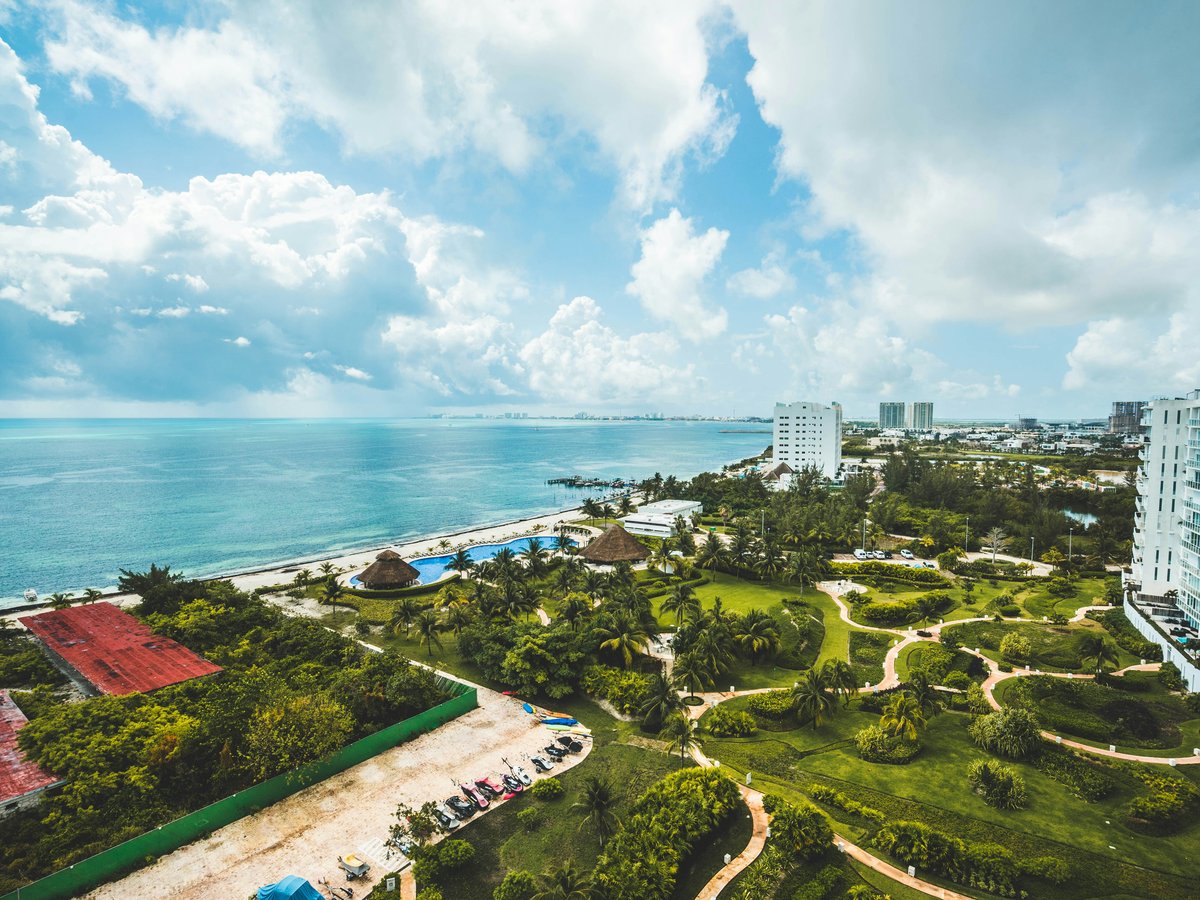
August in Cancún sits right in the heart of Atlantic hurricane season, and that single fact colors everything about a visit this month. Daytime temperatures reach about 32°C (90°F) with overnight lows around 26°C (79°F), but the 80% humidity makes the air feel considerably heavier than those numbers suggest. You feel it the moment you step from the air-conditioned terminal at Cancún International Airport into the open air. The heat is immediate, thick, the kind that fogs your sunglasses before you reach the transfer van.
The trade-off is real, though. Hotel rates across the Zona Hotelera typically drop 40-50% compared to December or January peak pricing. Whale shark season hits its peak off Isla Mujeres and Isla Contoy during August, and this is genuinely one of the top marine wildlife encounters in the Western Hemisphere. Sea turtle hatchlings begin emerging from nests along Playa Delfines and other protected beaches. Restaurants in El Centro that require reservations during high season seat you on the spot. Tourist numbers fall to roughly 30-40% of peak-season levels.
But you need to be honest with yourself about what August here looks like. Expect around 136mm of rain spread across roughly 21 days, usually arriving as short, powerful afternoon downpours that clear within 30-45 minutes. Sargassum seaweed accumulates on east-facing beaches in varying amounts, sometimes turning turquoise water brown and filling the air with a sulfurous smell. And there is always the low-probability, high-consequence risk of a tropical storm rearranging your plans entirely. If you can stay flexible and you came for the water rather than the beach lounger, August rewards that mindset with savings and wildlife encounters the peak-season crowd never sees. If you need a guaranteed postcard week, February or March is your month.
Why visit in August
- Hotel rates in the Zona Hotelera drop 40-50% from peak season prices, with 4-star resorts often available at less than half their January rate
- Whale shark season peaks off Isla Mujeres and Isla Contoy, offering swimming encounters with the world's largest fish in warm 28°C (82°F) water
- Sea turtle hatchling releases happen on protected beaches along the coast, with organized evening programs run by conservation groups through August and September
- Crowds at sites like Museo Maya de Cancún, Zona Arqueológica El Rey, and the underwater sculptures at MUSA thin to a fraction of high-season levels
- Water temperatures stay around 28-29°C (82-84°F), making snorkeling, diving, and cenote swimming comfortable for long sessions without a wetsuit
Worth knowing
- Sargassum seaweed accumulates on east-facing beaches in unpredictable quantities, sometimes producing a strong sulfur smell and turning nearshore water brown along stretches of the Zona Hotelera
- August falls in the statistical peak of Atlantic hurricane season. While a direct hit in any single August is unlikely, tropical storms can disrupt flights and close beaches for 2-3 days
- Humidity sits at around 80% throughout the month, making midday walking tours through El Centro or outdoor archaeological sites feel exhausting by noon
- Afternoon rainstorms hit on roughly 21 of 31 days, typically between 2pm and 5pm, which can cut short beach afternoons and cancel boat excursions to Isla Contoy on short notice
Best for
Think twice if
August in Cancún is hot, humid, and wet. The 32°C (90°F) daily high combines with 80% humidity to create a feels-like temperature that often exceeds 38°C (100°F) between 11am and 3pm. Mornings typically start warm and partly cloudy around 26°C (79°F). By early afternoon, towering cumulonimbus clouds build over the Caribbean, and rain arrives in sudden, heavy bursts that can drop 10-20mm in 30 minutes before clearing to sticky sunshine. These storms tend to roll through between 2pm and 5pm, leaving evenings warm and calmer around 28-29°C (82-84°F). The Caribbean Sea stays warm at 28-29°C (82-84°F). Wind tends to be lighter than in the winter trade-wind months, which contributes to both the oppressive feel of the heat and the calmer water conditions that make snorkeling and diving more comfortable.
Seasonal caution
- August falls within the peak months of Atlantic hurricane season (August through October). Monitor NOAA and Mexico's Servicio Meteorológico Nacional forecasts throughout your stay. Most Zona Hotelera resorts have established hurricane protocols and will assist with evacuation if a named storm approaches within 72 hours.
- UV index in Cancún regularly reaches 11-12 (extreme category) during August. Sunburn can develop in under 15 minutes of unprotected midday exposure, even through partial cloud cover. Afternoon storm clouds do not block UV radiation effectively.
- Rip currents strengthen along east-facing beaches during and after storms. Red and yellow flag warnings at Playa Delfines and along the Zona Hotelera should be taken seriously. Multiple drownings occur annually when swimmers ignore posted flags.
Year-round climate
Averages from the last 5 years.
| Month | Avg high (°C) | Avg low (°C) | Rainfall (mm) |
|---|---|---|---|
| Jan | 27 | 22 | 82 |
| Feb | 27 | 22 | 52 |
| Mar | 29 | 23 | 37 |
| Apr | 30 | 24 | 34 |
| May | 31 | 25 | 59 |
| Jun | 30 | 25 | 220 |
| Jul | 31 | 26 | 113 |
| Aug | 32 | 26 | 136 |
| Sep | 31 | 25 | 181 |
| Oct | 30 | 24 | 129 |
| Nov | 28 | 23 | 120 |
| Dec | 27 | 22 | 98 |
Headline events
Whale Shark Season
Throughout August (season runs June through mid-September)
The waters north of Isla Mujeres and around Isla Contoy host the largest known annual aggregation of whale sharks in the world from June through September, with August typically seeing peak numbers of 300-400 individuals in the feeding area. Boats depart daily from Punta Sam marina and Isla Mujeres harbor for snorkeling encounters. The sharks feed on plankton near the surface, and swimmers enter the water in pairs with a certified guide. Mexican regulations (NOM-171-SEMARNAT-2018) limit each boat to 2 swimmers at a time and prohibit touching the animals. The water is warm at 28°C (82°F) and visibility usually runs 5-15 meters depending on plankton density.
Sea Turtle Nesting and Hatching Season
Throughout August, hatchling releases most common in late August
Cancún's beaches, particularly Playa Delfines, Playa Tortugas, and stretches south toward Puerto Morelos, are nesting habitat for green, loggerhead, and hawksbill sea turtles. August marks the transition from late nesting to early hatching. Conservation groups including Flora, Fauna y Cultura de México run organized nighttime hatchling release events on protected stretches of beach, typically around 8pm. Volunteers help guide hatchlings toward the water by moonlight. The programs have operated for over 20 years along this coastline.
Best things to do in August
Whale shark snorkeling off Isla Mujeres
wildlifeBoats from Punta Sam marina and Isla Mujeres harbor run daily 3-4 hour excursions to the whale shark feeding grounds north of Isla Contoy. You swim in pairs with a certified guide alongside sharks that can reach 12 meters in length. The water sits at 28°C (82°F) and the plankton-rich conditions that attract the sharks give the sea a greenish tint.
August typically sees peak aggregation numbers of 300-400 whale sharks in the feeding area, the highest concentration of the June-September seasonBooking tipBook at least 3-4 days ahead through a CONANP-licensed operator. Tours leave early, usually 7am, to maximize calm water before afternoon storms build.
Cenote diving and snorkeling along the Ruta de los Cenotes
adventureThe Ruta de los Cenotes runs about 20km inland from Puerto Morelos along a jungle road dotted with over 30 cenotes. Underground rivers connect limestone sinkholes where the water stays a constant 24-25°C (75-77°F) year-round. Visibility in the filtered groundwater often exceeds 30 meters. The stalactites and light shafts in places like Cenote Verde Lucero and Cenote Siete Bocas look otherworldly.
August rain replenishes water levels and feeds the underground rivers, improving flow and clarity. The above-ground heat makes the cool cenote water feel especially refreshing. Low-season crowds mean you might have a cenote to yourself on a weekday.Booking tipRent a car or hire a taxi from Puerto Morelos. Some cenotes are only accessible by dirt road, which can get muddy after heavy rain.
Snorkeling at MUSA (Museo Subacuático de Arte)
cultureOver 500 life-size sculptures sit on the seafloor between Cancún and Isla Mujeres at depths of 3-8 meters. The figures, created by Jason deCaires Taylor and other artists starting in 2009, are colonized by coral and marine life. Visibility between storms typically runs 15-25 meters, and you'll see sergeant majors, parrotfish, and barracuda circling the installations.
Calmer seas between storms and water temperatures of 28-29°C (82-84°F) make snorkeling comfortable without a wetsuit. Fewer boats at the site mean less chop and more time at each installation.Booking tipGlass-bottom boat tours show you the sculptures but the snorkeling experience is far better. Morning departures from Punta Nizuc avoid the worst of the afternoon weather.
Kayaking through the Nichupté Lagoon mangroves
natureThe Nichupté Lagoon sits between the Zona Hotelera and the mainland, its western shore lined with red mangrove forests. Guided kayak tours wind through narrow channels where herons, egrets, and cormorants perch in the roots. The water is calm and shallow, rarely more than 1.5 meters deep, and small rays sometimes scatter beneath the hull.
The lagoon is sheltered from Caribbean swells, so it stays navigable even when ocean beaches are rough from storms. Birdlife is active in August as migratory species begin arriving. The mangrove canopy provides shade from the midday sun.Booking tipEarly morning tours (7-8am start) avoid both the heat and the afternoon rain. Bring insect repellent. Mosquitoes along the mangrove channels are persistent at dawn and dusk.
Exploring Zona Arqueológica El Rey
cultureThis small Postclassic Maya site sits right in the Zona Hotelera at km 18 on Boulevard Kukulcán. The ruins date to roughly 1200-1500 CE and include a main platform, several temple foundations, and around 47 structures spread across a grassy site. Iguanas outnumber visitors most days. Dozens of them bask on the stone platforms, completely unbothered by people.
Peak-season crowds at this site can reach 200-300 visitors on a busy afternoon. In August you might share it with 10-15 other people. The lower visitor count makes it easier to photograph the iguanas and explore at your own pace.Booking tipGo early morning or late afternoon to avoid the worst midday heat. The site has minimal shade.
Day trip to Isla Contoy
natureIsla Contoy is an uninhabited island and national park about 30km north of Isla Mujeres. CONANP limits daily visitors to 200 people. The island hosts over 150 bird species, including magnificent frigatebirds, brown pelicans, and double-crested cormorants nesting in the low vegetation. The beaches on the leeward side have white sand and typically less sargassum than the mainland coast.
Frigatebird nesting continues through August. Low-season demand means the 200-person daily cap is rarely reached, so trips are easier to book on shorter notice than in winter. Whale shark excursions sometimes combine an Isla Contoy stop.Booking tipOnly authorized operators can land on the island. Trips typically depart from Isla Mujeres or Punta Sam and run about 8 hours including snorkeling stops.
Evening at Parque de las Palapas
cultureThis open-air plaza in downtown Cancún's El Centro neighborhood comes alive after 7pm when the heat breaks. Food carts sell marquesitas, elotes, esquites, and aguas frescas around the perimeter. Local families gather on benches, kids run through the central area, and there are often free music or dance performances on the stage. The atmosphere is thoroughly local, not tourist-facing.
The evening cool-down after August's heavy daytime heat makes the outdoor plaza comfortable from about 7:30pm onward. Fewer tourists in town means the crowd is almost entirely Cancunense families and couples.Booking tipNo booking needed. Walk from any El Centro hotel or take the R-2 bus from the Zona Hotelera. The food vendors typically stay until 10-11pm.
What to eat in August
In season: fruit
Mango Manila
The Manila mango season peaks through August across the Yucatán Peninsula. You'll find them sliced with chili and lime from cart vendors along Avenida Tulum in El Centro, sweet enough that the juice runs down your wrist.
On menus now
Ceviche de caracol
Queen conch is at its most abundant in the late summer waters off Quintana Roo. Street vendors and restaurants across El Centro serve it chopped raw with lime, habanero, red onion, tomato, and cilantro. The texture is firm and slightly chewy, nothing like fish ceviche.
Cochinita pibil
This Yucatecan slow-roasted pork dish, marinated in achiote and sour orange then wrapped in banana leaves, is available year-round but the low-season quiet at places like Lonchería El Pocito in Mercado 28 means no wait for a table. The pork falls apart with a fork and the habanero salsa on the side has a delayed, slow-building heat.
Street food peaks
Marquesitas
These crispy rolled crepes filled with Edam cheese (queso de bola) and Nutella or cajeta originated in Mérida but cart vendors sell them nightly around Parque de las Palapas in Cancún. The warm cheese melts against the sweet filling. They run about 3-4 minutes from order to hand.
What to drink
Agua de chaya
Chaya is a leafy green native to the Yucatán Peninsula. It gets blended with lime and pineapple into a bright green drink sold at juice stands in Parque de las Palapas. Slightly vegetal, slightly sweet. It tends to be more common in the hotter months when vendors lean toward cooling drinks.
Regular events in August
Festival de la Tortuga MarinaFree
Conservation groups along the Riviera Maya coast organize sea turtle awareness events through August. Activities include nighttime beach patrols to locate and protect new nests, educational talks at wildlife centers, and public hatchling releases. Flora, Fauna y Cultura de México coordinates many of the events in the Cancún-Puerto Morelos corridor.
Throughout AugustNoche de Leyendas at Parque de las PalapasFree
Storytelling events in the El Centro park where local performers recount Yucatecan legends and ghost stories. Performed in Spanish with occasional bilingual nights. The performances draw families who sit on the plaza benches and surrounding grass. Free admission, funded by the municipal culture office.
Select Friday eveningsCancún Jazz Festival (when scheduled)
This festival has appeared intermittently in August, typically held at outdoor venues in the Zona Hotelera or El Centro. Lineups have mixed Mexican jazz acts with Caribbean and Latin fusion groups. Check local listings closer to your visit, as scheduling varies year to year.
Varies, typically mid-to-late August when heldBest places this August
Isla Mujeres
islandA 20-minute ferry from Puerto Juárez, this 7km-long island has calmer west-facing beaches that tend to collect less sargassum than the mainland coast. Playa Norte, on the island's northern tip, consistently ranks among Mexico's best beaches. The snorkeling at the southern tip near the Garrafón area is good in calm conditions. Golf cart rental is the standard way to get around.
Cenote Verde Lucero
natureLocated on the Ruta de los Cenotes road outside Puerto Morelos, this semi-open cenote has a large swimming area with clear turquoise water filtered through limestone. Rope swings and wooden platforms line the edges. The surrounding jungle provides shade. Water temperature stays around 24°C (75°F) year-round, a welcome contrast to August's surface heat.
Puerto MorelosMuseo Maya de Cancún
museumOne of Mexico's most important archaeological museums, located in the Zona Hotelera at km 16.5 on Boulevard Kukulcán. The collection spans 3,500 years of Maya civilization with over 400 artifacts. The adjacent San Miguelito archaeological site is included in the admission. Air-conditioned galleries make this an ideal midday refuge from August heat.
Zona HoteleraPlaya Norte, Isla Mujeres
beachThis north-facing beach on Isla Mujeres is sheltered from the prevailing easterly currents that push sargassum onto mainland beaches. The water is shallow, calm, and stays warm at about 29°C (84°F) in August. Palapa restaurants and beach bars line the sand. The sunset view looking back toward the mainland coast is worth timing your afternoon around.
Isla MujeresMercado 28
shoppingA covered market in El Centro selling hammocks, silver jewelry, vanilla, ceramics, and other crafts. The food court on the market's north side has lonchería stalls serving cochinita pibil, panuchos, and salbutes. August's low tourist traffic means vendors are more open to negotiation and the aisles are navigable without the shoulder-to-shoulder crush of February.
El CentroSian Ka'an Biosphere Reserve
natureThis UNESCO World Heritage site starts about 2 hours south of Cancún, past Tulum. Over 500,000 hectares of tropical forest, wetlands, and coastal lagoons. Boat tours through the reserve's canal system pass through mangroves where manatees, crocodiles, and hundreds of bird species live. The reserve has no crowds to speak of even in peak season. In August it feels truly remote.
Parque de las Palapas
parkThe social heart of El Centro Cancún. A large open plaza surrounded by food carts, with a stage for performances and plenty of bench seating. This is where Cancunenses spend their evenings, not the Zona Hotelera. The atmosphere after 8pm, when the heat fades and families come out, gives you a sense of the actual city behind the resort strip.
El CentroMUSA Underwater Museum
museumOver 500 submerged sculptures across two galleries (Salon Manchones near Isla Mujeres and Salon Nizuc off Punta Nizuc). The installations serve as artificial reefs, now heavily colonized by coral, sponges, and fish after over 15 years underwater. Accessible by snorkel or scuba. The Manchones gallery at 8 meters depth offers the most developed reef growth.
Zona Hotelera
Your packing checklist
Tick items off as you pack. Your progress saves in this browser.
Insider tips
The R-1 and R-2 public buses run between El Centro and the Zona Hotelera for about 12 pesos (under a dollar). They run roughly every 5-10 minutes from 5am until midnight along Boulevard Kukulcán. Far cheaper than taxis, which charge fixed rates between zones.
Playa Norte on Isla Mujeres faces north rather than east, which means it typically avoids the sargassum that plagues the mainland's east-facing beaches. If the seaweed situation is bad on the Zona Hotelera coast, take the 20-minute ferry from Puerto Juárez.
Book whale shark tours with operators licensed by CONANP, Mexico's national parks commission. Unlicensed boats sometimes approach the sharks too aggressively, stress the animals, and can be fined or impounded. Your hotel concierge may steer you toward a specific operator for commission reasons, so verify the license independently.
The Servicio Meteorológico Nacional (SMN) and NOAA's National Hurricane Center both issue tropical weather outlooks. Check both before booking any boat excursion. Tour operators will cancel if a tropical storm warning is issued within 48 hours, and most offer full refunds for weather cancellations.
Restaurants in El Centro consistently serve better food at lower prices than Zona Hotelera equivalents. Mercado 28's food court and the taco stands on Avenida Yaxchilán are where locals eat. The 15-minute R-2 bus ride from the hotel zone is worth the trip.
Cenotes along the Ruta de los Cenotes near Puerto Morelos are a reliable backup plan on rainy days. The underground and semi-open ones are unaffected by surface weather, and the water temperature stays at a constant 24-25°C (75-77°F) regardless of what the sky is doing.
Avoid these mistakes
- Booking a non-refundable, fixed-itinerary trip. August sits in peak hurricane season, and a tropical storm watch can cancel 2-3 days of planned activities. Flexible booking policies and travel insurance with weather coverage are worth the modest premium.
- Assuming every beach will have clear turquoise water. Sargassum seaweed arrives in unpredictable quantities on east-facing beaches and can turn the nearshore water brown and smelly for days at a time. Have a cenote or lagoon backup plan.
- Spending every day in the Zona Hotelera. The resort strip is comfortable but insular. El Centro's Parque de las Palapas, Mercado 28, and the taco stands along Avenida Yaxchilán give you a sense of the actual city. August's lower tourist density makes it an especially good time to explore the local side.
- Underestimating UV exposure on cloudy days. The UV index hits 11-12 (extreme) in August even through partial cloud cover. Afternoon storm clouds do not meaningfully reduce UV. Reapply sunscreen every 90 minutes, especially after swimming.
- Scheduling outdoor excursions between 2pm and 5pm. This is the daily storm window. Morning departures for boat trips, ruins visits, and cenote excursions avoid both the worst heat and the afternoon rain. Plan indoor activities or pool time for mid-afternoon.
Practical tips for August
August in Cancún demands schedule flexibility above all. Build your days around a morning activity window (7am to noon) when heat and rain are both manageable, then plan for indoor or sheltered options in the 2-5pm storm window. The Museo Maya de Cancún, shopping in Mercado 28, or a late lunch in El Centro all fill that slot well. Evenings cool to about 28°C (82°F) and are reliably dry, making them the second-best window for outdoor activities. Download the NOAA and SMN weather apps before arrival, as tropical weather systems can develop quickly in August. If you are renting a car for the Ruta de los Cenotes or a Sian Ka'an day trip, note that dirt roads can flood temporarily after heavy afternoon rain. Give them 2-3 hours to drain. Carry cash in pesos for the R-1 and R-2 buses, smaller cenotes, and market vendors. Most Zona Hotelera restaurants accept cards, but El Centro street food operates on cash. ATMs at major banks (HSBC, Banamex, Santander) along Avenida Tulum in El Centro typically offer better exchange rates than airport or hotel currency desks.
FAQ
Is August a good time to visit Cancún?
August is a fair-weather gamble with significant upside. Hotel rates drop 40-50% from peak, whale shark encounters peak off Isla Mujeres with 300-400 individuals in the feeding area, and crowds thin to 30-40% of winter levels. The trade-offs are real, though. You'll deal with 80% humidity, afternoon storms on about 21 of 31 days, unpredictable sargassum seaweed, and the low-probability risk of a tropical storm. If you are flexible and prioritize marine wildlife and savings over guaranteed beach weather, August can be rewarding.
How bad is the sargassum seaweed in Cancún in August?
It varies dramatically and is genuinely unpredictable. Some August weeks see clean turquoise water along the Zona Hotelera, while others bring thick mats of brown seaweed with a sulfurous smell that lingers at the waterline. East-facing beaches get the worst of it. North-facing Playa Norte on Isla Mujeres tends to stay cleaner. Hotels deploy cleanup crews daily, but heavy arrivals can outpace removal. Having a cenote or lagoon backup plan is essential.
Can you swim with whale sharks in Cancún in August?
Yes, August is typically the peak month. Boats depart daily from Punta Sam marina and Isla Mujeres harbor for 3-4 hour snorkeling excursions to the feeding grounds north of Isla Contoy. Mexican regulations limit swimmers to pairs with a certified guide, and touching the animals is prohibited. The sharks feed on plankton near the surface in 28°C (82°F) water. Book 3-4 days ahead with a CONANP-licensed operator.
What happens if there is a hurricane in Cancún during my August trip?
Direct hits in any single August are statistically unlikely, but tropical storms and hurricanes are a real possibility during peak Atlantic hurricane season (August through October). If a named storm approaches within 72 hours, Zona Hotelera resorts activate established evacuation protocols and will coordinate shelter or transport. Flights may be grounded for 24-48 hours. Travel insurance with weather coverage and refundable bookings are strongly recommended for August visits. Monitor NOAA and Mexico's SMN forecasts throughout your stay.
Is it too hot to do outdoor activities in Cancún in August?
The 32°C (90°F) daytime high with 80% humidity creates a feels-like temperature that can exceed 38°C (100°F) between 11am and 3pm. Morning hours from 7-11am are the most comfortable window for outdoor activities like ruins, walking tours, or kayaking. Evenings after 6pm cool to about 28°C (82°F) and are reliably dry. Water activities like cenote swimming, snorkeling, and diving are comfortable all day because the water itself is refreshing at 24-29°C (75-84°F) depending on the location.
Are there fewer tourists in Cancún in August?
Significantly fewer. Tourist numbers drop to roughly 30-40% of the December-through-March peak. In practical terms, this means shorter lines at the Museo Maya de Cancún, near-empty ruins at Zona Arqueológica El Rey, walkable aisles in Mercado 28, and same-day restaurant seating at places that require 2-week reservations in January. Whale shark tours and popular cenotes still draw visitors, but the overall density across the Zona Hotelera and El Centro is noticeably lower.
Things to Do in Cancun in August
 Free cancellation
 Chichen Itza, Cenote, and Valladolid Tour
Day trip — 12 hours, free cancellation.
via Viator Free cancellation
 Chichen Itza, Cenote & Valladolid Tour with Tequila and Lunch
Day trip — 12 hours, free cancellation.
via Viator Free cancellation
 Early morning Chichen Itza Tour: Cenote and Tequila Tasting
Day trip — 12 hours, free cancellation.
via Viator Free cancellation
 Tulum, Reef Snorkeling, Cenote & Mayan Ceremony
Outdoor experience — free cancellation.
via Viator Free cancellation
 Chichen Itza Early Access All Inclusive & optional Hotel Pick up
Day trip — 9 hours, free cancellation.
via Viator Free cancellation
 Isla Mujeres Luxury Sailing: Adults Only or Family Friendly
Cruise — 5.5 hours, free cancellation.
via ViatorLast verified by automated review (v1.7.2) on June 21, 2026. What is automated review?